6 February 2018
Al Jazeera Media Network (AJMN) appoints Euronews Group as its content and brand syndication agent to represent Al Jazeera’s digital flagship brand AJ+ at a worldwide scale.
Euronews Group is now in charge of marketing and promoting AJ+ digital channels to third party clients and specifically to its well established worldwide network of content and syndication partners.
Since 2014, AJ+ is available on its own social networks and through its mobile app in English, Arabic, Spanish and soon in French. Euronews has proposed its expertise to AJMN to develop the online infotainment brand. Euronews will make AJ+ content available on new media partners’ digital products and will propose creating new programmes tailored to specific markets and partners.
| |
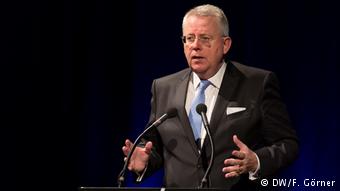
Michael Peters, CEO, Euronews |
“We are proud to have been chosen by AJMN to participate to AJ+ future development, which has gained worldwide recognition among young people at a very fast pace since its launch.
Our experience in marketing content licence agreements in coordination with a fantastic product such as AJ+ provides a solid platform for the success of this collaboration. This partnership is an exciting milestone for both our companies in terms of global commercial roll-out and paves the road for potential additional collaboration with AJMN in the future.”
| |
Dr. Yaser Bishr, Executive Director of Digital, Aljazeera Media Network |
“Al Jazeera has made great strides over the last few years to organically target younger segments of audience through its digital native AJ+. The growth has been organically fuelled through social media, but it is time to consider strategic partnerships for direct scaling of our message. We are very pleased to partner with Euronews to explore untapped distribution opportunities through their impressive & multicultural network within Europe and globally. This collaboration cannot come at a better time as we flourish AJ+ into a diverse audience centric digital network with the recent launch of its French and 4th language edition.”
| |
Abdulla Alnajjar, Executive Director, Global Brand and Communications |
“I am delighted by this strategic engagement with Euronews, which will further extend the reach of the AJ+ brand to new markets and diverse audiences across the globe. This marks the beginning of a strategic commercial relationship between our organisations and I look forward to continuing this fruitful collaboration into the future.”
[Source: Euronews press release]
1 February 2018
65 years ago, DW was founded to offer multilingual news to foreign audiences abroad and to promote democratic values. In our anniversary year, we are launching DW Freedom, an initiative encouraging freedom of speech.
“Freedom of speech and media freedom are the foundations of our daily work,” said DW Director General Peter Limbourg. “It is the right of journalists to do their job. Like it is the right of artists to express themselves. As it should be the right of everybody on this planet to speak their minds freely, without fear of harassment or arrest.”
Highlighting the topics of free speech
DW Freedom is an online and social media platform which highlights the topics of free speech and media freedom around the world. On the website dw.com/freedom, on Twitter (@dw_freedom), and Facebook (DW Freedom) users will find reports by and interviews with activists, academics, artists, cartoonists, hackers, and authors from all corners of the world. Digital privacy, secure communication and data protection, critical topics for journalists and free speech advocates, will also be discussed. User can engage in dialogue on social media and contact the DW editors directly.
Publishing and explaining content from all DW editorial teams and DW Akademie projects, DW Freedom strives to heighten DW’s coverage of complex issues surrounding free speech and media freedom. It sheds a light on – sometimes forgotten – crises, victims of human rights violations and initiatives striving to improve the current situation and fosters a greater debate on these issues.
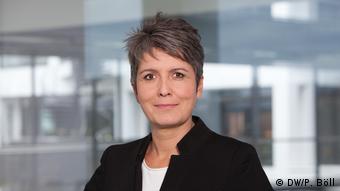
DW Editor-in-chief Ines Pohl: ”Our journalists report on human rights in 30 languages. We believe that freedom is the ultimate human right, whether it concerns freedom of speech, of the media, of assembly or freedom of religion. So all of us at DW are supporting this important project whole-heartedly.”
In addition to providing news and information, Deutsche Welle also supports freedom of expression and media freedom through DW Akademie’s activities in 50 countries around the world.
DW Freedom of Speech Award
In 2015, Germany’s international broadcaster launched the DW Freedom of Speech Award to honor those engaged in a daily fight for free expression. The first winner was – still imprisoned – Saudi blogger Raif Badawi. In 2016 Sedat Ergin, former editor-in-chief of the Turkish newspaper Hürriyet, received the award, and last year, DW recognized the US-American White House Correspondents’ Association.
From now on, DW Freedom will help promote the stories behind these free speech heroes.
(Source: DW press release)
30 January 2018
The review, which covers correspondents, presenters and on-air editors in news and news-related areas, found no evidence of gender bias in pay decision-making, but identified a number of issues in relation to pay which have resulted in anomalies that need addressing, including:
- Too many pay decisions being made at local levels because of the absence of clear pay frameworks.
- A lack of clarity and openness about the basis for pay decisions because of the absence of pay ranges for on-air roles.
- A slower rate of pay progression for both men and women over the past decade because of a period of significant pay restraint.
PwC makes a number of recommendations including a clear pay framework, narrower pay ranges, simpler contracts and allowances and improved transparency. The BBC wants a fair, equal and transparent pay framework for the future, so we will now consult our presenters on this to help ensure we get it right.
On-Air Review
BBC Management Response
The plan unveiled by the BBC today means:
- Substantial pay cuts for some men and increases for some male and female presenters – prominent men in BBC News have already accepted pay cuts. We have already addressed close to half of the 230 cases raised of pay unfairness and equality by women and men – on and off air. We aim to conclude the rest by the summer.
- A new on-air framework for determining the pay of people on air – an equal, fair and transparent structure for the future. We will have narrower pay bands because they have become too wide; cut the number of contracts and allowances to be simpler and fairer; and have clear criteria for how pay reflects skills, experience and audience impact. We will fully consult on this to make sure we get it right.
- Greater pay transparency – we aim to be the most transparent organisation when it comes to pay. When our reforms are complete, everyone will be able to see the pay range for virtually every job in the BBC. Where there are more than 20 people in a job, staff will also be able to see where everyone else is positioned. We will do more to explain the pay of each presenter paid over £150,000, especially where they do more than one role.
- Review of career progression and working practices for women – we will look at what more we can do to make the BBC a better place for women to work. We already, for example, allow and encourage job shares and other flexible forms of working. We will review what we do to ensure we have the best in class processes and opportunities. We want to help more women progress more quickly at the BBC.
- We will also accelerate our work to achieve 50:50 representation across the BBC by 2020. Through the year we will continue to make changes to our on-air line-ups at a faster rate.
The BBC is committed to equal pay and will not discriminate on the basis of gender, race, disability, social background or any other characteristic. But, as in any organisation, that does not mean everyone is paid the same. People bring different skills and experience, and take on different responsibilities or risks. But we must apply those factors fairly, transparently and without discrimination.
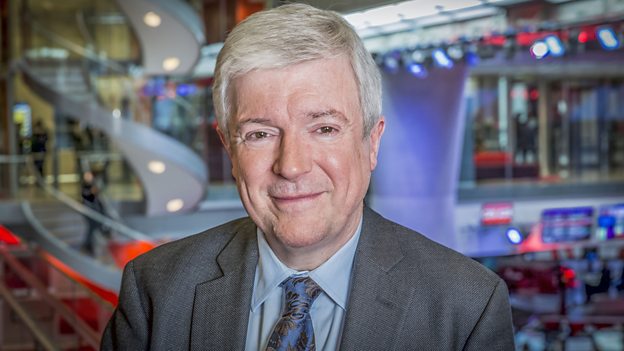
Director-General Tony Hall says: “The BBC believes in equality. No one should be paid differently because of their gender. The BBC has a special role representing Britain. That is why we need to be and want to be an exemplar on gender pay, and equal pay.
“Today’s report does not find evidence of gender bias in decision-making, but it shows that we have real and important issues to tackle, particularly in some areas of news and current affairs, and I’m determined to get it right. The plans we’re setting out today go further and are more important steps in modernising the BBC and making it fairer.
“We’ve already made an important start. We’re addressing unfairness in individuals’ pay and want to close the gender pay gap and have women in half of our on-air roles by 2020. Those are big, bold commitments I’m really serious about.
“We are clear we’re going to tackle this and change for the better, and I hope other organisations take the same approach. The BBC can and must lead the way. I am determined that we will.”
The report by PwC covers around 800 on-air roles. It makes a series of recommendations, which form the basis of a proposed new pay framework.
PwC’s recommendations are: proposing a grading structure for the on-air group; using narrow pay ranges; addressing outliers both above and below the pay ranges; publishing pay ranges; reviewing the current approach to contracting; simplifying allowances; creating an on-air talent team to help manage the governance for this population; conducting regular reviews; reporting regularly; and continuing to improve diverse representation.
In October we published an equal pay audit of around 18,000 staff which concluded there was no systemic discrimination against women at the BBC. We also published our audited gender pay gap report, which shows the gender pay gap is 9.3 percent against a national average of 18.1 percent.
At the same time we set out a range of actions we were taking including access for staff to specialist advice if people have questions about pay, ensuring managers review pay in their team every six months to ensure fairness, and ending single-sex panels for job interviews, as well as striving for diverse shortlists for jobs.
Notes to Editors
- The PwC review covers around 800 individuals consisting of Presenters, On-Air Editors and Correspondents. These individuals work within one of the following areas: Network News, Radio Continuous Programmes, Nations, English Regions, World Service or Sport. The review is published here
- The BBC’s response is available here
- The BBC has already published an equal pay audit of the majority of its workforce here. Our gender pay gap report is also available here
Below is the BBC’s performance against a range of gender and diversity targets:
- 48% of staff are women (2020 target 50%)
- 42% of leadership are women (2020 target 50%)
- Target for 50:50 gender split in lead roles on air across all genres by 2020.
- 14.5% of staff are BAME (2020 target 15%)
- 10.3% leadership are BAME (2020 target 15%)
- Target for 15% BAME on screen, on air and in lead roles across all genres by 2020.
- 10.2% staff are disabled (target 8%)
- 9.6% leadership are disabled (target 8%)
- Target for 8% disabled people on screen and on-air including some lead roles by 2020.
- Tony Hall has also committed to closing the gender pay gap by 2020.
(Source: BBC press release)
29 January 2018
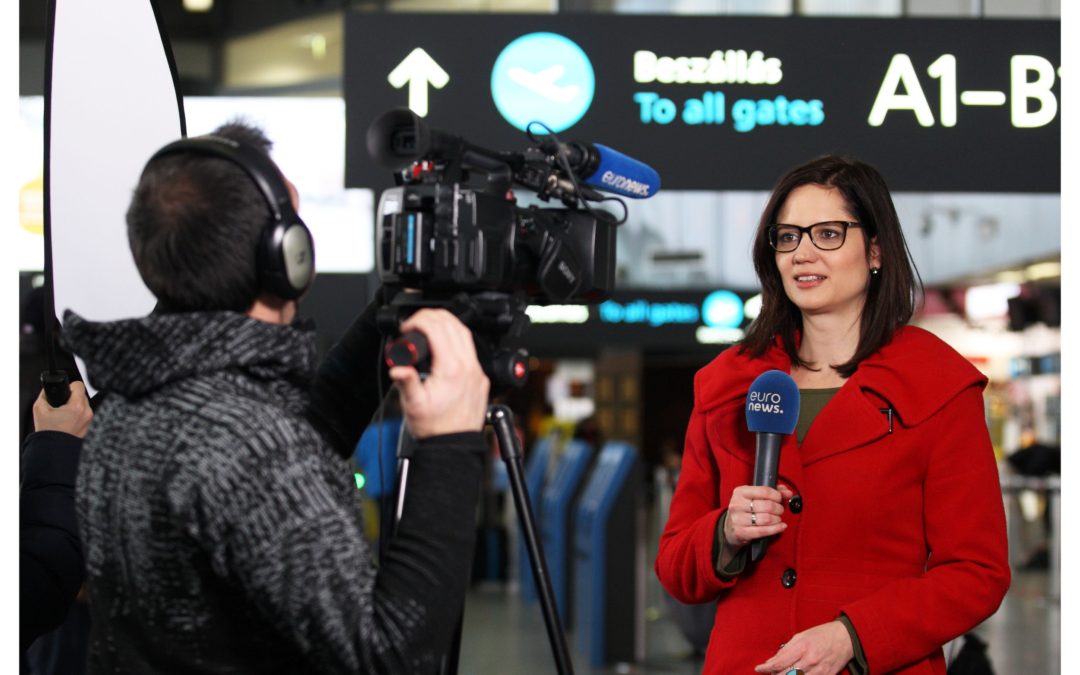
Hungary’s first pay TV operator Magyar Telekom adds Euronews Hungarian, the only international news media produced in Hungarian to all its platform’s basic-level offers.
Launched in May 2013, Euronews’ Hungarian service is a 24/7 news outlet dedicated to the Hungarian market, produced from Budapest.
Magyar Telekom, part of Deutsche Telekom Group, has now included Euronews Hungarian to the basic packages on IPTV and cable and to the family package on satellite allowing Euronews to reach more than 860,000 subscribers.
With this new distribution agreement, Euronews Hungarian is now available in 1.2 million homes throughout the country.
Euronews Hungarian
Produced by a team of 31 people including 24 journalists at the Budapest bureau, two at the Euronews HQ in Lyon and three in the Brussels bureau, the 24/7 Hungarian news service will celebrate its fifth anniversary in May 2018.
Attila Kert, a renowned Hungarian journalist with 25 years of experience, is the Director of Euronews Hungary Kft., a wholly-owned subsidiary of Euronews SA.
Euronews Hungarian TV is available across Europe thanks to the Eutelsat Hot Bird 13B satellite. The Hungarian newsroom also provides news and reports for hu.euronews.com, the mobile app, the YouTube channel, and also for its social media accounts: Twitter @euronewshu and Facebook
Since May 2017, as part of the new Euronews strategic plan to adapt itself to the expectations of its multiple local audiences, Euronews Hungarian has started to shape its international news bulletins and to produce specific stories to resonate with the Hungarian audience’s interests. To fully implement the new strategic plan, Euronews’ Hungarian team is set to launch a range of new flagship programmes in the coming years.
(Source: Euronews press release)

24 January 2018
Off-the-shelf solution offers broadcasters a quick and easy way to extend portfolios and break into new markets
Arqiva, the leading UK communications infrastructure and media services company, has today announced the launch of a new Central Processing Platform for channel delivery within the broadcast industry.
Against a backdrop of constant change, insatiable consumer demand and evolving audiences, the scalable platform will effectively bridge the gap between channel or content and provider – handling the content aggregation, technical processing and delivery of new channels in a single place.
For broadcasters looking to offer international content to a local audience, or deliver local content to a wider demographic, Arqiva will acquire and aggregate the target channels into a single feed and process everything in the specific formats to suit their requirements – rather than them having to ‘collect’ all the content themselves.
Alex Pannell, Commercial Director, Satellite & Media at Arqiva, commented: “In today’s data-driven TV market, deep insights offer exciting opportunities to tailor services, packages and content to audience tastes and expectations. But the broadcast industry has to be able to respond quickly and nimbly if it wants to take full advantage of this.
“Through Arqiva’s Central Processing Platform, customers will have access to thousands of channels, from every corner of the globe – all already processed and primed for delivery from one central location – so they can continue to build their business to match evolving demand.”
To find out more about the Arqiva Central Processing Platform, visit: https://www.arqiva.com/overviews/tv/channel-processing/