Learning in lockdown: DW offers digital learning packages

Learning in lockdown: DW offers digital learning packages

Learning in lockdown: DW offers digital learning packages

Students are at home due to Corona, with some facing a lack of digital teaching materials on environmental topics. DW’s Global Ideas project offers seven learning packages for students and teachers.

These support children and young people between 12 and 16 years of age as well as teachers. Multimedia-based, playful and interesting, the materials can be used free of charge for non-commercial educational purposes.

“We deliver exciting and modern educational content that inspires, is multimedia and interactive,” says DW Editor-in-Chief Manuela Kasper-Claridge. “For this project, we draw on image-rich video footage and reports from our correspondents, as well as graphics and in-depth texts and photos.”

DW’s Global Ideas project is funded by the International Climate Initiative (IKI) of the German Federal Ministry for the Environment. Games, films, articles and interactive worksheets provide comprehensive information and solutions on the respective topic. Children and young people can relate to their living environment and are given ideas for experiments and building instructions. For teachers, there are instructions for teaching units. 

There is great international interest in the teaching and lesson materials, which are available in German, English and Spanish. They are used worldwide in classrooms and also as part of project days at schools or in environmental groups or associations.

The first learning package on “Plastic waste and the consequences for the environment” was published in 2017. “A few years ago, the problem was not as present in the media as it is today,” says Kasper-Claridge. “Now there are seven learning packages that can support digital school lessons even in the pandemic.”

(Source: DW press release)
NHK WORLD programme highlights January 2021

NHK WORLD programme highlights January 2021

NHK WORLD programme highlights January 2021

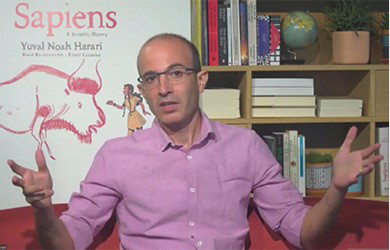
Sapiens and Pandemic

A special discussion with

Yuval Noah Harari


January 15, Fri

23:10/ 5:10 / 10:10 / 17:10


Join historian Yuval Noah Harari, author of the best-selling book Sapiens: A Brief History of Humankind, as he engages with young people studying in Japan. How should we interpret the changes that COVID-19 has brought to everyday life? How are we to survive in a post-pandemic world? Harari draws upon lessons from history and encourages a spirited discussion with students.

In a year when countless sporting events were cancelled, an unprecedented long-distance race was born: “UTMB for the planet.” Online participants ran a set distance at places around the world. Top pros from Ultra-Trail du Mont-Blanc and world-class runners from Japan were among those involved in the intense challenge. Watch passionate runners bring the world together, at a time when the pandemic has kept people apart.

3/11 The Tsunami 


Episode 1: The First 3 Days

January 9th

1:10 / 7:10 / 13:10 / 19:10


Episode 2: The First Year    

January 16th

1:10 / 7:10 / 13:10 / 19:10


Experience the mega-tsunami with footage filmed at the center of the disaster. 


On March 11, 2011 at 2:46 pm, a M9 earthquake off the Pacific coast of Japan triggered a huge tsunami, destroying many cities and towns and claiming the lives of over 18,000 victims. What were people’s experiences on that day? What hardships were they faced with in the aftermath? Footage filmed in 2011-2012 by NHK and eyewitnesses in the disaster-hit areas have been collected and edited together in chronological order to convey the impact of this unprecedented mega-disaster that crushed buildings and cars and led to the nuclear meltdowns at the Fukushima Daiichi power plant.This special 2-part series serves as a valuable lesson. In the event of a powerful tsunami, what action can be taken to survive?           


Darwin’s Amazing Animals

Saturdays

0:25 / 6:25 / 12:25 / 18:25


Rarely seen. Up-close with some of the planet’s most amazing animals. Enter a world of unique creatures from Asia, Africa and the Americas.

(Source: NHK WORLD press release)

TRT WORLD expands global reach via Azerbaijan’s Azerspace-1 satellite

TRT WORLD expands global reach via Azerbaijan’s Azerspace-1 satellite

TRT WORLD expands global reach via Azerbaijan’s Azerspace-1 satellite

The Turkish public broadcaster TRT’s international news platform TRT WORLD is now available on Azercosmos Azerspace-1 satellite located at 46.0 °E. Azercosmos which operates Azerspace-1, Azerspace-2 and Azersky satellites provides video and data services and solutions to its customers across more than 50 countries in Central Asia, Europe, Africa and Middle East. Through this partnership, both companies aim at better serving global viewers who look for a reliable source of information.

Founded in 2015 with studios in Istanbul, London and Washington D.C., TRT WORLD broadcasts in English language to communicate a Turkish perspective on current affairs to global audience. As the international face of Turkish Radio and Television Corporation (TRT) – a European Broadcasting Union founding member – TRT WORLD hopes to encourage dialogue between viewers by offering a different viewpoint on current affairs.

Furkan Han, TRT WORLD’s Head of Global Digital & Satellite Distribution & Partnership, stated that “We are glad to launch TRT WORLD on Azerspace-1 46.0°E satellite. TRT WORLD’s satellite expansion in strategic regions is quite important for us. This partnership with Azercosmos will bring TRT WORLD’s rich and humanitarian content to more viewers in the region.”

“Working with the TRT WORLD has become a well-established practice, and we are looking forward to our continued good cooperation. Thanks to the  TRT WORLD,  our firm and principled position on the occupied territories of Azerbaijan has steadily communicated to the global community. Our fruitful cooperation enables us to attract potential new customers and further expand our services,” said Yolchu Hasanov, Head of Azerspace Commercial Team at Azercosmos.

[Source: TRT WORLD press release]

Global audience for USAGM programming hits record high

Global audience for USAGM programming hits record high

Global audience for USAGM programming hits record high

The U.S. Agency for Global Media’s five networks together reached 354 million people in a typical week during fiscal 2020, the biggest audience ever.


That total is an increase of 4 million from last year’s record audience, according to the 2020 Performance and Accountability Report, which USAGM recently presented to Congress.


“People around the world crave independent, unbiased news and I’m so proud that USAGM’s federal networks and grantees were able to deliver it, especially during COVID-19 when there was so much disinformation,” said USAGM CEO Michael Pack.


USAGM’s networks — Voice of America (VOA), Radio Free Europe/Radio Liberty, the Office of Cuba Broadcasting (OCB), Radio Free Asia (RFA), and the Middle East Broadcasting Networks (MBN) — deliver news and programming via radio, television, and internet in 62 languages.


As people worldwide struggled with COVID-19 and other events of 2020, they increasingly turned to USAGM digital platforms. USAGM networks registered upticks in digital activities beginning in January 2020, which resulted in an overall 32 percent growth in web visits and 83 percent growth in social media engagement actions over the previous year.


For example, RFA Mandarin saw a nearly 400 percent rise in audience engagement and an 800 percent increase in video views on Facebook in FY 2020 as a result of its coverage of COVID-19 and the Hong Kong political crisis.


USAGM networks also are using creative ways to distribute content to audiences digitally. For example, VOA Spanish uses WhatsApp to distribute programs, video, audio, and text content to subscribers in Venezuela. RFE/RL uses Telegram in Iran, Russia, and Central Asia to push news updates as well as to solicit user-generated content.


Overall audience growth occurred in several key markets, including in Iraq, by 2.9 million for MBN content, and in northern Iraq, where the weekly audience for VOA content increased 1.4 million. In Venezuela, the audience for USAGM content increased 0.8 million, a 44 percent increase from 2016.


Of note was the 3.3 million increase in the Democratic Republic of Congo’s weekly audience, where VOA launched Lingala-language programming in 2019. VOA is the first international broadcaster to have a service in Lingala, which is understood by 80 percent of the DRC population.


USAGM also continued to reach large audiences in countries of key U.S. national security and foreign affairs interest, notably China, which ranks first in USAGM weekly audiences with 65.4 million. Iran and Russia also make the top 10.


The growth came in the middle of a global pandemic when it was a challenge to not only report the news, but also to collect data to see how many people were getting information from USAGM. Travel restrictions implemented by foreign governments to limit the spread of COVID-19 resulted in delaying in-person survey research planned for FY 2020 to FY 2021.


Also in 2019 and 2020, USAGM launched new digital-only services in Bulgaria, Hungary, and Romania and those services will be measured in future reports.


The gains more than offset audience declines due to the loss of key affiliates in Turkey and Cambodia because of government crackdowns in those countries. The shift from radio to digital-only transmission for Radio Sawa outside of the Levant also reduced the total audience but USAGM anticipates that future surveys will show audience gains in those markets through increased usage of new digital offerings.

[Source: USAGM press release; Image: Adobe Stock/Jo Panuwat D]

Significant increase in usage figures on DW websites during U.S. election week

Significant increase in usage figures on DW websites during U.S. election week

Significant increase in usage figures on DW websites during U.S. election week

Last week, news and background information on the U.S. election on the DW websites accounted for about a quarter of the total usage. From November 3 to 8, DW provided comprehensive multimedia programs in 30 languages.

DW’s coverage of the U.S. elections featured interviews and live talks with more than 30 German and international politicians and renowned political, legal and human rights experts. DW correspondents shared perspectives from Moscow, Brussels and other locations around the world.

The usage figures are proof of the worldwide interest in DW’s reporting. DW Managing Director of Programming Gerda Meuer: “We benefit from our high credibility values. The audience trusts our journalism, which is tailored to the respective markets and media channels in our target regions. That is our strategy and it is successful.”

DW Editor-in-chief Manuela Kasper-Claridge: “With the coverage of the U.S. election, DW was able to make full use of its strengths through its diverse language and regional departments. Live ticker and analytical articles as well as continuous fact-checking were requested by users around the world in different languages. The interest in the social media offerings was also very high.”

One highlight was the more than nine-hour live TV broadcast on election night. “We followed two goals: First, to provide our audience with all the correct and necessary information quickly and reliably,” says DW Head of News Max Hofmann. “And second, to provide the context for a better understanding of what was happening. In the U.S., it’s often only about domestic political aspects, but we wanted to show what this election means for Germany, Europe and the whole world. Looking at the usage figures and the feedback from our audience, we have definitely achieved these goals.”

DW’s fact-checking team researched, evaluated facts and figures and explained its findings on complex issues on TV and online. “Never before has an election been influenced by so much disinformation as this one – probably also because President Trump himself disseminated countless fake news,” says DW Head of Fact-checking Joscha Weber. “We countered the rumors and false statements with facts.”

Washington Bureau Chief Ines Pohl, whose team of reporters traveled through numerous U.S. states in the six weeks leading up to the election and talked to people from all groups of voters, on DW’s election coverage: “After 7,000 miles from California back to Washington, our ‘Road Trip to the White House’ came to an end shortly before the election on November 3. Owing to the experiences we gained on our trip, we were not only able to convey the euphoric mood on the streets on this historic day, but also to explain to our international audience, with analyses and assessments on all channels, the problems that the divided American society and its future president Joe Biden and his vice president Kamala Harris now face.”

DW websites

From November 3 to 8, coverage of the U.S. election on the DW websites generated an average of 770,000 visits per day. On November 4 and 8, there were even more than one million visits per day.
The following languages services accounted for most of the traffic: English (26 percent), Russian (18 percent) and Arabic (16 percent). Live updates in these three languages as well as in Chinese were particularly popular.

[Source: DW press release]