NHK WORLD Monthly Focus: China targets seabed supremacy

NHK WORLD Monthly Focus: China targets seabed supremacy

NHK WORLD Monthly Focus: China targets seabed supremacy

In its ‘Monthly Focus’ for September NHK WORLD reports on the following:

Tracking China’s Mystery Ships: The Race for Seabed Supremacy

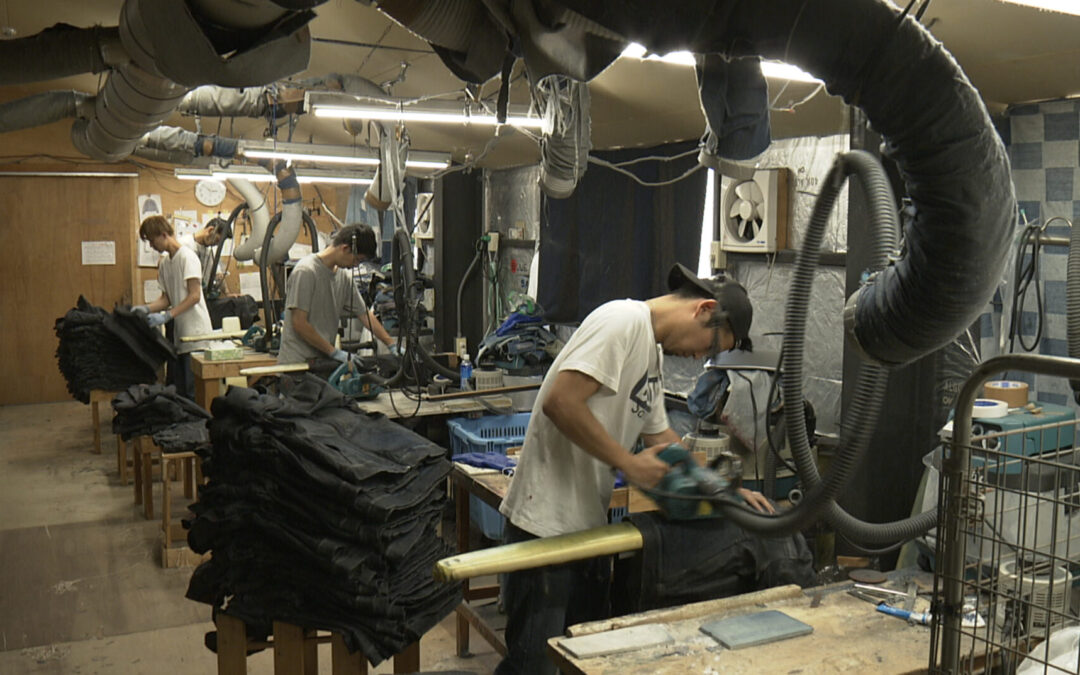
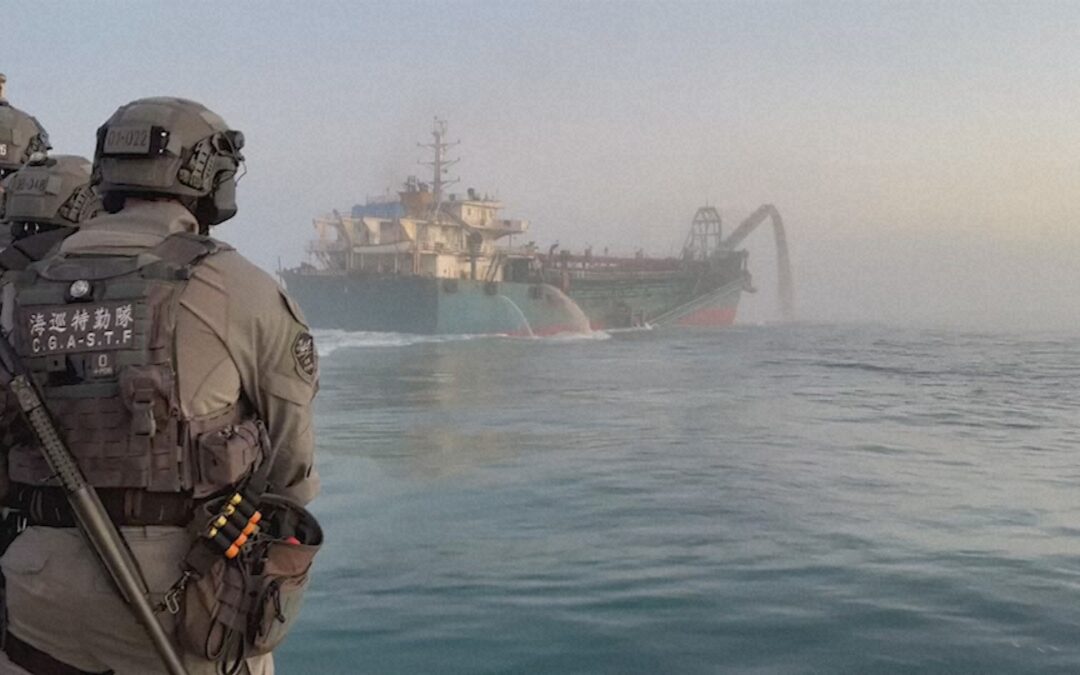
The international competition for resources has reached the depths of the seas. China is looking to earth’s “last frontier”—the deep ocean floor—for oil and natural gas, and for minerals used in smartphones and electric vehicles. In this documentary, NHK analyzes China’s activities using both maritime and satellite data. 

The crisis in Ukraine has sharpened the need for countries to find stable energy supplies. The ocean floor may ultimately determine the future of security and the global economy.

September 10 Sat. 15:10/22:10

September 11 Sun. 5:10/10:10

September 12 Mon. 19:00 (UTC)


Momo and the Seven Papagenos 

Momo gets on well enough with her parents, and finds her boyfriend acceptable and her job only mildly annoying. This is not enough to prevent her from having thoughts of death, however. Momo thus begins a series of encounters with people she has connected with on social media who have found reasons to go on living despite suicidal thoughts. These Papagenos, named after the character in the opera “The Magic Flute,” provide her with ideas on what makes life worthwhile.

September 10 Sat.

1:00/7:00/13:00/18:00 (UTC)

DOSUKOI Sumo Salon First-Time Title Winners

DOSUKOI Sumo Salon delves deep into Japan’s traditional sport using newly acquired data. In this episode we look at first-time title winners. Which of the six annual tournaments is most likely to have a newly minted title winner? How many tournaments does it take a wrestler new to the top division to win his first title, typically? What changes do wrestlers make after they take their first title? We go behind the scenes to answer these questions and more!

September 3 Sat. 

0:10/6:10/12:10/18:10 (UTC)


Japanology Plus

Fresh insights into Japan. Stories behind Japanese life and culture through the eyes of Peter Barakan, a 45-year resident and watcher of Japan.

Thursdays

2:30/7:30/13:30/19:30 (UTC)

[Source: NHK WORLD press release]

Statement on arrest of VOA freelance journalist in Juba, South Sudan

Statement on arrest of VOA freelance journalist in Juba, South Sudan

Statement on arrest of VOA freelance journalist in Juba, South Sudan

Voice of America issued the following statement following the arrest of their freelancer Diing Magot in South Sudan: “We are extremely distressed by the arrest of Diing Magot, a VOA freelance journalist for our English to Africa language service on our South Sudan in Focus program, over this past weekend. Magot was covering a protest over the hardships and skyrocketing commodity prices there. She was arrested alongside the protesters in Konyokonyo Market, as she did not have her ID or press card with her, and she was initially detained at the Malakia police station. To obtain her release, the South Sudan Media Authority demanded a letter from VOA, confirming she is our freelance journalist and she was there on assignment. We have provided the letter to the Media Authority, and we had expected word of her immediate release. However, according to a lawyer with the South Sudan Union of Journalists, Diing Magot and five protesters were relocated to Juba Central Prison. Magot is waiting for a court date. We are asking South Sudan authorities for the immediate release of our journalist.”

[Source: VOA press release]


UN raises ‘grave concern’ with Iran over harassment of BBC News Persian staff

UN raises ‘grave concern’ with Iran over harassment of BBC News Persian staff

UN raises ‘grave concern’ with Iran over harassment of BBC News Persian staff

The United Nations have raised concerns with Iran over the ongoing harassment of BBC News Persian staff, in a formal communication requesting Iran’s response and explanation. The UN communication comes after the BBC filed an urgent appeal to the UN in February 2022 against Iran’s ongoing harassment of BBC News Persian journalists. This includes online violence and gendered attacks faced by women journalists as well as increased financial pressure from an ongoing asset freeze, which operates as a blunt financial sanction against BBC News Persian journalists and their extended families.

The UN communication was sent to Iran on 28 May 2022 and has now been published along with Iran’s response.

The UN experts expressed their “grave concern over the continuation of reported harassment and intimidation of the BBC News Persian staff and their family members, which appears to be aimed at preventing them from continuing their journalistic activities with BBC News Persian.”

The communication was sent by four UN specialist experts who work on arbitrary detention, freedom of speech, violence against women and Iran. It set out the pattern of harassment that BBC journalists have suffered over the past decade, including “the systematic attacks, including harassment, asset freezing, serious threats, and defamation campaigns implemented by the authorities against BBC News Persian journalists”. The UN experts also raised concern about the surveillance of journalists and the harassment of their journalistic sources in Iran, the interrogation of family members of BBC journalists, and the pressure placed on BBC journalists ‘to leave their jobs’ – all of which may have a ‘chilling effect’ on journalism. 

According to the UN experts, these measures “show a pattern and practice of employing these measures by the authorities of the Islamic Republic of Iran to hinder journalists from carrying out their work”. 

The BBC filed a new UN complaint earlier this year which focused on online harms and threats directed at women journalists working at BBC News Persian. The UN experts said they were “particularly concerned at the gendered physical and psychological threats and attacks against women journalists of BBC News Persian including death and rape threats online”.

They further stated: “Given the importance of an online presence for the exercise of contemporary journalism, online violence undermines women journalists’ ability to fully participate in the profession.”

In Iran’s response to the UN experts, it seeks to justify its treatment of BBC journalists by falsely claiming their journalism is aimed at ‘the overthrow of the Islamic Republic’, complains of ‘hostile’ coverage which ‘tarnishes’ the regime, and falsely asserts that BBC reporting has ‘incited riots’.

The UN experts made a number of specific requests for information about the status of the asset freeze and an explanation of the justification and legal basis for it, as well as a request that Iran provide “information about the legal and factual basis for interrogating the families of journalists working abroad” and how it is compatible with Iran’s international human-rights obligations. They also requested specific measures that Iran is taking “to protect women journalists, including in the digital space and against online threats”. Iran’s response failed to answer these requests.

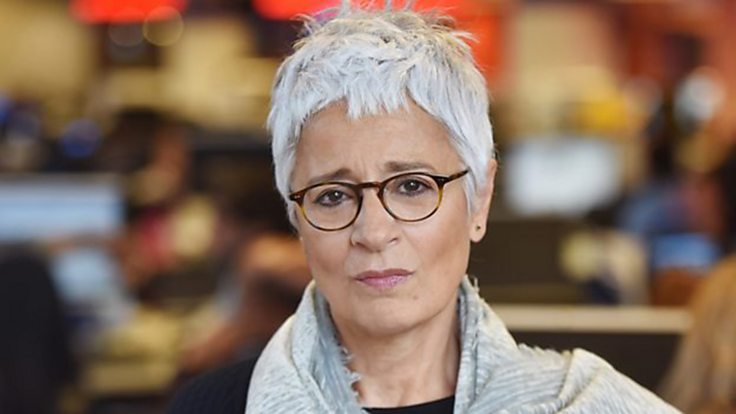
Liliane Landor, Director of BBC World Service (pictured) says: “We are grateful to the United Nations for raising our grave concerns about the treatment of our BBC News Persian journalists. We reject Iran’s attempt to justify its behaviour – the sanctions and harassment against our colleagues and their families must stop.”

Caoilfhionn Gallagher QC and Jennifer Robinson of Doughty Street Chambers, counsel for the BBC World Service, said: “Iran’s aggressive, defensive response to the UN experts provides a revealing insight into how it considers independent journalism: a threat to its power, which must be silenced. Iran’s words confirm the accuracy and urgency of the grave concerns raised by the UN. The international community must now hold Iran to account and take steps to ensure that our brave clients from BBC News Persian are no longer targeted and harassed simply for doing their jobs – simply for being journalists.”

Michelle Stanistreet, National Union of Journalists General Secretary, said: “The NUJ thanks the UN for taking up the cases of our journalists and their families at BBC News Persian, who have been subjected to a horrific policy of abuse from the Iranian authorities, with women being made the target of dirty tricks and false stories often of a sexual nature. Iran’s response has been deeply shocking. BBC News Persian journalists uphold the best of journalistic standards in their reporting of the situation in Iran. The UN must follow up on the refusal of the Iranian government to drop its freezing of assets and again seek assurances to guarantee it will stop the targeted attacks on journalists and their families.”

The UN experts also warned Iran that they intend to raise public concern about the treatment of BBC News Persian staff, stating “the wider public should be alerted” to Iran’s conduct towards journalists.

Since 2017, the BBC World Service has filed a number of UN complaints over the treatment of BBC News Persian staff and their families, represented by Caoilfhionn Gallagher QC and Jennifer Robinson at Doughty Street Chambers and supported by the National Union of Journalists (NUJ) and the International Federation of Journalists (IFJ).

Notes for Editors

  1. The UN communication was sent by four experts:
  • Mumba Malila, Vice-Chair of the Working Group on Arbitrary Detention;
  • Irene Khan, Special Rapporteur on the promotion and protection of the right to freedom of opinion and expression;
  • Javaid Rehman, Special Rapporteur on the situation of human rights in the Islamic Republic of Iran; and
  • Reem Alsalem, Special Rapporteur on violence against women, its causes and consequences.
  1. The UN communication to Iran is accessible here: https://spcommreports.ohchr.org/TMResultsBase/DownLoadPublicCommunicationFile?gId=27277
  2. The Islamic Republic of Iran government response is accessible here: https://spcommreports.ohchr.org/TMResultsBase/DownLoadFile?gId=37044
  3. UN procedures on communications to governments are available here: https://www.ohchr.org/en/special-procedures-human-rights-council/what-are-communications. After UN communications are made, the relevant government has 60 days to respond and only after this is the complaint made public.

[Source: BBC press release]

Shahid nearly doubles telecommunications operator partnerships in just 12 months

Shahid nearly doubles telecommunications operator partnerships in just 12 months

Shahid nearly doubles telecommunications operator partnerships in just 12 months

Shahid – the world’s leading Arabic streaming platform (part of MBC GROUP) – has announced that it has nearly doubled its partnerships with telecommunications operators (telcos) in just one year. As a result, the number of user subscriptions for its premium offering, Shahid VIP purchased via mobile payment has more than doubled in just 12 months.

Since Shahid’s relaunch in 2020, the video on demand (VOD) and subscription video on demand (SVOD) platform has strengthened its distribution through telco partners in the Middle East and North Africa (MENA), jumping from 17 by the end of 2020 to over 30 in 2021.

During that time, Shahid has expanded into territories including Morocco, Libya, Tunisia, Iraq, and Palestine, enabling direct carrier billing (DCB) for users to be able to purchase Shahid VIP via their mobile device rather than through a credit card, for example.

EXPANSION & MORE PARTNERSHIPS

DCB is just one of multiple methods users across the region can now enjoy Shahid VIP. For example, Shahid has also actively expanded its distribution through special bundles with telco partners in the region, including with Stc KSA, Zain KSA, Zain Kuwait, Stc Bahrain, Vodafone Egypt, Ooredoo Qatar, Asiacell Iraq, and Omantel. Here, customers of these operators can enjoy complimentary Shahid VIP as part of select mobile and broadband service plans.

Additionally, Shahid has launched an exclusive mobile plan, Shahid VIP Mobile, allowing better offerings for those using a prepaid mobile plan. A budget-friendly single-device package available across MENA, Shahid VIP Mobile is aimed at entertainment fans who prefer to only stream their content on the go. Available for either a single smartphone or tablet device, this special plan was first launched with an introductory two-month trial offer with Orange Morocco and Tunisia in Q4 of 2021, generating significant subscriber uptake. Building on the successful launch with Orange, Shahid VIP Mobile has gone on to already launch with seven operators and is planning more launches in the future in more markets. Multiple telecommunications companies have shown interest in this introductory package as a strong fit for their low Average Revenue Per User (ARPU) subscriber segment.

Natasha Matos-Hemingway, Chief Commercial and Marketing Officer, Shahid commented: “We’re delighted with our telco partnerships so far, and we will continue to create more exciting partnerships to bring Shahid VIP’s outstanding content to more viewers across the region. To have more than doubled our Shahid VIP subscribers in 12 months via DCB alone is phenomenal.

“Thanks to the significant efforts made by the team and our partners, Shahid has launched new and relevant partnerships in key markets that allow users to access Shahid VIP in more ways. This is significant because we want our users to be able to choose from a number of payment methods based on their needs, such as the ease of subscribing through their telecommunications operator.

She continued: “As mobile networks strengthen and speeds get faster than ever in the MENA region, it also makes sense for us to expand on our exclusive Shahid VIP Mobile. Many consumers want an affordable way to watch premium content on the go, and we’ve met that need.”

MBC GROUP is the largest and leading media company in MENA.

[Source: MBC press release]

NHK WORLD Monthly Focus: Idealism+AI=Utopia?

NHK WORLD Monthly Focus: Idealism+AI=Utopia?

NHK WORLD Monthly Focus: Idealism+AI=Utopia?

Teen Regime

Imagine a Japan facing deep stagnation. The government launches the experimental Utopi-AI to revitalize the nation. This involves using artificial intelligence to select new leaders. The AI’s pick is a boy of 17 who heads a leadership team of other youngsters. The aim is to combine the idealism of youth and the wisdom of the past provided by the AI. With an original screenplay by Yoshida Reiko, creator of many hit anime, Utopi-AI offers a bold vision of the future.

August 21 Sun. Ep.1

August 28 Sun. Ep.2

Subtitled 0:10/12:10

Dubbed   6:10/18:10 (UTC)

Artists Against War

Morimura Yasumasa, a contemporary artist who has drawn praise in Japan and abroad, is known for self-portraits in which he poses as well-known figures from history and paintings. In this episode of Artists Against War, we take a look at Morimura’s reaction to Russia’s invasion of Ukraine. Will he use Putin as a starting point for a future work? Join us as we hear his incisive views on how artists should respond to recent events.

 August 3 Wed.

1:30/6:30/12:30/17:30/22:30 (UTC)

Daily Life in Times of War

What was life like during World War II? What can we learn from the survivors? Through interviews, animation and games, young people are trying to preserve their stories for future generations.

August 6 Sat. 

0:10/6:10/12:10/18:10 (UTC)


Sharing the Future

Creating the future together. Inspiring stories of projects by Japanese people working with communities in developing countries with new ideas and efforts to help solve issues.

August 3 Wed. 

2:30/7:30/13:30/19:30 (UTC)

[Source: NHK WORLD press release]