DW to broadcast across Eastern Europe and Africa via SES satellites

German broadcaster expands internationally by delivering two channels using ASTRA 4A, ASTRA 5B and SES-5
SES S.A. (NYSE Euronext Paris and Luxembourg Stock Exchange: SESG) announced today that German broadcaster Deutsche Welle has signed a new long-term capacity agreement on three SES satellites to broadcast two channels in Eastern Europe and Africa.

Deutsche Welle will be broadcasting its German-language TV channel DW via the ASTRA 4A satellite, allowing more than six million direct-to-home households in Eastern Europe and 40 million cable and IPTV households in Europe to receive the channel directly and indirectly.

Deutsche Welle will also broadcast its new English-language channel across Eastern Europe and Africa via the ASTRA 4B and SES-5 satellites. The 24-hour news and information channel, which broadcasts events from Germany and around the world, was already launched on 22 June via ASTRA 19.2 degrees East.

GuidoGuido Baumhauer, Director of Distribution and Technology at Deutsche Welle (pictured right), said, “Deutsche Welle produces high-quality content in 30 languages ​​for the whole world. We are very pleased that we have found, in SES, a reliable technical partner that complements our global satellite portfolio and helps us to broadcast news and information to two of the most important regions in the world.”

“We are very pleased that Deutsche Welle is once again relying on SES to expand its coverage. The latest agreement with Deutsche Welle is an example of how our global satellite network can enable broadcasters to expand beyond their domestic markets to reach international audiences on all continents,” said Norbert Hoelzle, Senior Vice President, Commercial, Europe at SES.

Related story

Watch the interview with DW Director General Peter Limbourg here.

DW kicks off Global Media Forum and English TV channel

Deutsche Welle opened its Global Media Forum on 22 June with a focus on foreign policy in the digital age, in Bonn. The conference also marked the official launch of DW’s new English TV channel.

GMF 2015 Eröffnung Peter Limbourg und Monika Grütters Sendestart

In his opening address at Bonn’s World Conference Center on Monday, DW director general Peter Limbourg highlighted both the opportunities and challenges ushered in by the digital revolution. While it enables an unprecedented level of information and interaction, it also presents new problems. The state of the media, particularly for quality journalism, is dire in many places around the world, said Limbourg. Economic pressures and a lack of knowledge of how to practice good journalism are partly to blame for this development. “But frequently, the reasons behind journalistic impoverishment are political,” said Limbourg. In many parts of the world, both freedom of expression and press freedom are increasingly being threatened by those in power who want to control what kind of information is being disseminated, he added.

Dangers for journalists

“For journalists it’s becoming increasingly dangerous to investigate, report, and share their comments – in short: to speak the truth,” noted DW’s director general. But citizens in many countries are not only blocked from accessing information freely, they are also being confronted with disinformation and propaganda carried out by various actors, he added:

GMF 2015 Eröffnung Peter Limbourg

“International broadcasters controlled by non-democractic regimes are ramping up.” While their effort is reminiscent of the Cold War era, in today’s digital age, the possibilities for propaganda are much greater, said Limbourg. “Writers hired by government-affiliated ‘troll factories’ pollute the Internet. Religious fanatics upload their videos of inhuman brutality.” To counter that trend is one of the goals of this year’s Global Media Forum, explained Limbourg. With more than 2000 participants from some 130 countries attending, the three-day conference will serve as an important venue to share opinions and values.

Honouring freedom of speech

Even more than that: By honoring Saudi Arabian blogger Raif Badawi with Deutsche Welle’s Freedom of Speech Award, the Global Media Forum is “sending out a clear signal to the world that we fully defend media freedom and security,” said Limbourg. “Badawi is synonymous with everyone being held in custody and suffering for expressing their opinions.”

And finally, DW’s new English-language TV channel as well as its overall restructuring has the clear aim “to provide more information, be more international and address people more regionally, we want to be heard – loud and clear – as the voice of freedom and peaceful cooperation,” noted Limbourg.

GMF 2015 Eröffnung GästeL-R: John Momoh and Kayode Akintemi of Channels TV with the AIB’s Tom Wragg and Simon Spanswick at the Global Media Forum

In her keynote address, Monika Grütters, Germany’s federal government commissioner for culture and the media, stated that she considered instituting the democratic rules we value in the analogue world into the digital world as the primary political objective for society today. Fortunately, added Grütters, journalists, publishers, entrepreneurs and others fight and defend freedom of speech and freedom of the press worldwide.

Countering disinformation

“That is exactly what Deutsche Welle has been doing for over 60 years now and is continuing to do amid numerous crises, for instance massive Russian disinformation, for instance in the Baltics,” said Grütters. “It’s good that we have DW.” “As an ambassador for our constitutional democracy Deutsche Welle, especially for many people living in crisis regions and authoritarian-governed countries, serves as a connection to the free world,” she said. “I am glad that today marks the start the English-language information program DW News, which will provide a lot of people worldwide with independent, objective news and information.” Commissioner Grütters and DW director general Limbourg then symbolically launched DW’s new English channel by jointly pushing a large red button.

Watch DW Director General Peter Limbourg in conversation with the AIB’s CEO Simon Spanswick:

https://youtu.be/-fPhARSHD8Q 

DW and ONTV coproduction: Public officials end broadcasts in Egypt

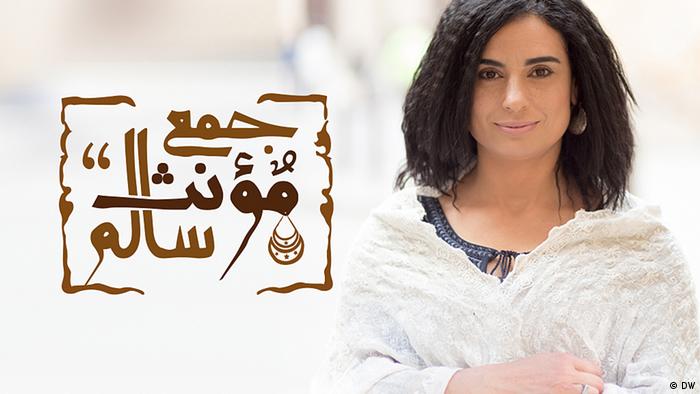
Egyptian security officials have demanded that DW partner broadcaster ONTV stop showing “Women at a Turning Point.” The interview format, hosted by Egyptian journalist Reem Maged, is produced by DW and ONTV in Cairo.

Reem Maged

Deutsche Welle has broadcast the show weekly since May 2 as part of its Arabic TV programming. DW condemns the Egyptian officials’ intervention as a massive affront to press freedom and free expression. Germany’s foreign broadcaster has pledged its support to ONTV in the latter’s efforts to continue to produce and broadcast the show for an Arab audience. On Saturday, May 16, DW proceeded to present the third episode online and on TV. ONTV says it is exhausting all avenues to continue producing the show and possibly distribute it on other platforms.

In the series “Women at a Turning Point,” courageous women take a stance on social and political issues. Reem Maged is one of the most influential voices and popular presenters in Egypt. “Economic, social and cultural topics must also finally be taken up and discussed widely,” she said at the beginning of May, marking the first broadcast of the German-Egyptian coproduction.

“The show is culturally valuable and important for our Arab audience. Women can learn many things first-hand about significant personalities and their projects,” explains Naser Schruf, head of DW’s Arabic program. “DW is promoting socially critical discourse, emphasizing dialogue and the presentation of cultural diversity along the way,” Schruf adds.

In the first edition of “Women at a Turning Point,” Egypt’s cultural heritage was in focus through a conversation with researcher Shahira Mihrez. The second episode featured the renowned Egyptian photographer Iman Hilal as Reem Maged’s interview partner. The topics discussed included her pictures of the Egyptian revolution.

Reem Maged has already hosted a political talk show for Egyptian broadcaster ONTV in the past. The new series stems from a partnership between DW and ONTV that has been in place for four years. As part of this collaboration, Reem Maged will be a guest from June 22 to 24 at Deutsche Welle’s Global Media Forum in Bonn.

Deutsche Welle’s new English TV channel to start June 22

Deutsche Welle will launch its new English TV channel on June 22. The news and information channel will officially go on air during DW’s annual media conference, Global Media Forum.

The global competition of values plays out primarily in the English language, says DW Director General Peter Limbourg. “Germany is highly regarded around the world, and on the international stage many look to Germany to orient themselves. Therefore, we want to meet this demand in the English language,” says Limbourg, stressing that international media coverage of German perspectives should not be left solely to other international broadcasters.

“Deutsche Welle expects more than 2000 international guests from politics, media and other areas of public life – among them numerous partners who will rebroadcast DW’s flagship programs via their platforms – to attend the Global Media Forum,” says Limbourg. “They will all be able to witness the launch of our new channel, live.”

DW, the new 24-hour TV channel in English, with hourly news as well as magazine programs and documentaries, will be broadcast around the world. In Europe it will be available via the Astra satellite, among others.

Starting June 22, Deutsche Welle will offer four additional 24-hour TV channels for   various parts of the world.

  • DW (Amerika) can be received across the entire American continent and offers 20 hours of German and 4 hours of English programming;
  • DW (Latinoamérica) informs people in Latin America in Spanish around the clock;
  • DW (Asien) broadcasts in German 24 hours a day;
  • DW (Arabia) targets viewers from the Arab world – 17 hours in Arabic and 7 hours in English.

The regional TV channels will remain unchanged in their respective languages, complementing the 24-hour English channel. Only DW (Europe), with its English-German programming via Hotbird, will be discontinued.

“By the time we launch the new English TV channel we will have optimized the new technical components and processes to the point that we can confidently go on air,” says Limbourg.

(Source: DW press release)

DW expands social media reach in Africa

DW's Crossroads Generation appDW’s Crossroads Generation is being offered as in-app content on Mxit – a South African mobile social network with millions of monthly active users.

Deutsche Welle has added to its portfolio of partners in Africa with Mxit – one of the largest mobile social networks on the continent. DW and Mxit worked together to develop an app for Crossroads Generation, which makes the educational audio content available to users throughout Africa. Users with any Internet-enabled mobile phone can listen to the program for free after adding “crossroadsgen” as a contact in their Mxit account.

Crossroads Generation is an educational radio novella designed to help Africa’s youth deal with everyday challenges in a fun and easy way. Listeners learn about real-life issues like drug abuse, teenage pregnancy and domestic abuse.

“The new deal with Mxit will ensure that we reach our target audience in Africa even better,” says Petra Schneider, Director of Distribution at DW. “We can definitely imagine expanding the partnership in the near future to include online and audio content in several African languages, as well as video content in English.”

Ben Carl Havemann, Marketing and Communications Manager of Mxit, called Crossroads Generation app as a format featured by the platform “especially valuable for our core target group.”

With nearly 5 million users in South Africa alone, Mxit is particularly popular among young people and rivals heavyweights like Facebook. The majority of Mxit users are located in South Africa, and other key markets include India, Nigeria and Indonesia.

Mxit compresses digital content to make it accessible on all types of handsets and over all types of networks – something that is especially important in Africa, where network speeds have remained slow in many places. Mxit users can engage in private chats, group chats, play games or read news, and most of the content is free.

Crossroads Generation is broadcast on DW radio in Amharic, English, French, Hausa, Kiswahili and Portuguese and rebroadcast by 260 DW partner stations in Africa. It is being offered initially on Mxit in English.