International Public Service Media’s essential role in global fight against the COVID-19 pandemic

International Public Service Media’s essential role in global fight against the COVID-19 pandemic

International Public Service Media’s essential role in global fight against the COVID-19 pandemic

Since the beginning of the global health crisis linked to the Covid-19 pandemic, the seven members of the DG7 group of international public service media (comprising France Médias Monde, Deutsche Welle, BBC World Service, USAGM, NHK World, CBC/Radio-Canada and ABC Australia) have recorded strong audience increases, illustrating the confidence of global audiences in the reliable and independent information they deliver on television, radio and digital media, in a large number of languages, on all continents.

The organisations have adapted to the consequences of the crisis and their teams – journalists, technicians, correspondents, part time workers and employees – have mobilised to pursue their mission tirelessly, informing people about the new coronavirus and helping to combat its spread by delivering prevention messages, in conjunction with the health authorities.

The international public service media in the seven countries have opened their platforms to the best scientific experts and specialists, to major political and economic leaders, on all aspects of the worst pandemic the world has seen in decades.

The fight against the proliferation, particularly on social networks, of fake news about the disease and its treatments has mobilised all the DG7’s editorial offices, which are used to cooperating in this field at a time when, more than ever, reliable information is protecting lives.

The international media are on the front lines, in all languages, even in the remotest corners of the globe to deliver reliable information, but also to entertain by bringing culture to life and artists to express themselves, or to educate by ensuring, through dedicated programmes, a mission of educational continuity for children and their parents.

The humanist values of solidarity that underpin our action have led the DG7 media to join in the worldwide drive to pay tribute to healthcare personnel, researchers and all frontline workers, and to pay special tribute to women, whose role has often been crucial at all levels of society. They have also sought to raise awareness of the increase in domestic and family violence in times of lockdown and how to prevent it.

The DG7 content is global and universal, but it is also local, thanks to their multilingualism, which makes it possible to reach the citizens of the world in their mother tongues, and to the hundreds of reports produced on the ground every day by their networks of correspondents in all countries.

DG7 leaders say that this period should encourage us to draw lessons about the way the world works and changes, about social relations, about the importance of public services and access to information. Their media contribute to the international reflection and debate needed to build the post-pandemic future and make the most of it.

This common mission at the service of the general interest, democratic values and freedom of expression, which brings us together, is particularly illustrated in the light of the health crisis. DG7 say they will do their utmost to build on on this public confidence in our media, which is more precious and greater than ever.

With more than one billion weekly users, DG7 media play a major role in the world in the service of free information.

All DG7 broadcasters are members of the Association for International Broadcasting.

DG7 members :

  • Marie-Christine Saragosse, Chairwoman and CEO, France Médias Monde
  • Peter Limbourg, Director General, Deutsche Welle
  • Jamie Angus, Director, BBC World Service Group
  • Grant Turner, Chief Executive Officer and Director, USAGM
  • Takai Takaaki, Managing Director, NHK World-Japan
  • Catherine Tait, President and Chief Executive Officer, CBC/Radio-Canada
  • David Anderson, Managing Director, ABC Australia
Public Media Serving in the time of a pandemic…

Public Media Serving in the time of a pandemic…

Public Media Serving in the time of a pandemic…

The year 2020 will be forever etched in our minds. No matter where we live, we share common experiences of fear, grief and the suffering that comes with uncertainty.

And yet in this time of crisis, we are seeing communities come together as never before. We are discovering an even deeper respect for our health workers and other first responders, as well as for the many unsung heroes who are putting the needs of others ahead of their own, often at considerable risk.

Rarely has the role of public service media been of greater importance than it is now. That is why we, the members of the Global Task Force for public media, would like to add our salute to the essential service being provided at this time by public broadcasters around the world.

Our countries may differ by culture and language, but we all share the common duty to Inform, Educate and Entertain. Our engagement with audiences of all ages across a range of broadcast and online services is critical to our success in serving them whenever, wherever and however they want.

We are seeing audiences turn to public media in record numbers for the trusted news and reliable information that is our hallmark – and that has become a matter of life and death. As with all organisations, we have had to adapt to cover COVID-19 in depth. Each of us is also playing an important role for our democracies and holding our public institutions and politicians to account, to ensure there is transparency in their actions.

The Global Task Force is particularly proud of the speed with which public media across the world have responded to the challenge of supporting the education of children who are learning at home by bringing together brilliant partners from across the public and private spheres. Public service media is uniquely placed to play this role.

Meanwhile our promise to entertain helps keep spirits up, especially among our older audiences who are the most vulnerable. We continue to support the performers and creative talent who inspire us and help define our cultures, bringing us closer in a time of social distancing.

To achieve these aims, our employees, our freelancers, our creative industry partners, and of course our private media colleagues, have shown unwavering commitment to provide essential services in these difficult times. The audio, film and television production sectors are a vital and growing part of our economies. Policy makers must take steps to protect the long-term health of this sector.

For all these reasons, we, the members of the Global Task Force, urge policy makers and politicians to support and defend the independence of public media and of journalism more broadly. Truly independent public service media has never been more precious to democracies around the world. Together, we will get through the current crisis.

We thank you, our public, for your continued support and for inviting us into your homes and lives.

Signed, Global Task Force for public media

David Anderson, Managing Director, ABC (Australia)
Thomas Bellut, Director General, ZDF (Germany)
Delphine Ernotte Cunci, President & CEO, France Télévisions (France)
Tony Hall, Director General, BBC (United Kingdom)
Jim Mather, Chair of the Board, RNZ (New Zealand)
Hanna Stjärne, Director General , SVT (Sweden)
Catherine Tait, President & CEO, CBC/Radio-Canada, GTF Chair (Canada)

ABC chair statement on raid and media freedom

ABC chair statement on raid and media freedom

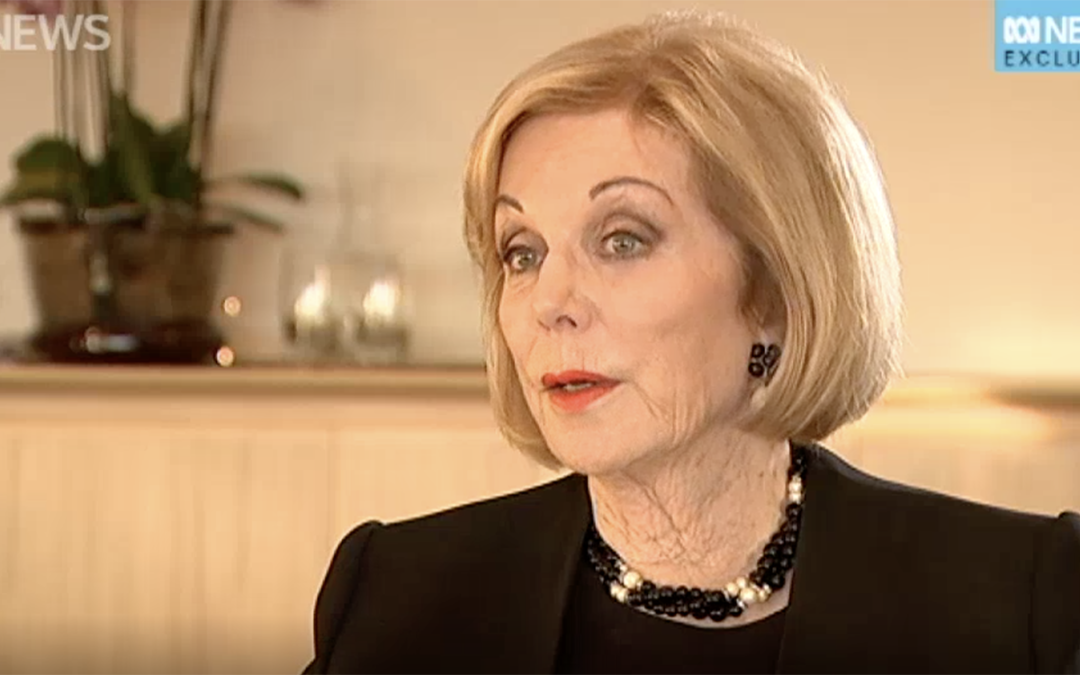
Following the raid on the ABC, the Corporation’s chair Ita Buttrose issued this statement:

On behalf of the ABC, I have registered with the Federal Government my grave concern over this week’s raid by the federal police on the national broadcaster.

An untrammelled media is important to the public discourse and to democracy. It is the way in which Australian citizens are kept informed about the world and its impact on their daily lives.

Observance of this basic tenet of the community’s right to know has driven my involvement in public life and my career in journalism for almost five decades.

The raid is unprecedented – both to the ABC and to me.

In a frank conversation with the Minister for Communications, Cyber Safety and the Arts, Paul Fletcher, yesterday, I said the raid, in its very public form and in the sweeping nature of the information sought, was clearly designed to intimidate.

It is impossible to ignore the seismic nature of this week’s events: raids on two separate media outfits on consecutive days is a blunt signal of adverse consequences for news organisations who make life uncomfortable for policy makers and regulators by shining lights in dark corners and holding the powerful to account.

I also asked for assurances that the ABC not be subject to future raids of this sort. Mr Fletcher declined to provide such assurances, while noting the “substantial concern” registered by the Corporation.

There has been much reference in recent days to the need to observe the rule of law.

While there are legitimate matters of national security that the ABC will always respect, the ABC Act and Charter are explicit about the importance of an independent public broadcaster to Australian culture and democracy.

Public interest is best served by the ABC doing its job, asking difficult questions and dealing with genuine whistle-blowers who risk their livelihoods and reputations to bring matters of grave import to the surface. Neither the journalists nor their sources should be treated as criminals.

In my view, legitimate journalistic endeavours that expose flawed decision-making or matters that policy makers and public servants would simply prefer were secret, should not automatically and conveniently be classed as issues of national security.

The onus must always be on the public’s right to know. If that is not reflected sufficiently in current law, then it must be corrected.

As ABC Chair, I will fight any attempts to muzzle the national broadcaster or interfere with its obligations to the Australian public. Independence is not exercised by degrees. It is absolute.


Proposal for new Australian International Broadcasting Corporation

Proposal for new Australian International Broadcasting Corporation

Proposal for new Australian International Broadcasting Corporation

“Australia’s international broadcasting service is a wasting and wasted asset,” according to a strategy paper published by the Australian Strategic Policy Institute [ASPI].
 
As Radio Australia heads towards its 80th anniversary in 2019 and Australia’s international TV services approaches a quarter of century of operations, the Australian government is consulting on the country’s soft power in the Asia-Pacific region.
 
The paper from ASPI, authored by Graeme Dobell, Geoff Heriot and Jemima Garrett, laments the lack of a strong voice from Australia in a region where other powers are exerting considerable influence but where news and current affairs is in short supply. The authors lament the way that the ABC has been used as a political football with the Corporation’s international services often suffering as a result.
 
The report calls for the establishment of the Australian International Broadcasting Corporation [AIBC], a ring-fenced organisation that doesn’t compete with ABC domestic services for funding. It claims that current legislation allows for the establishment of a subsidiary organisation by the ABC exists, making this new international corporation relatively easy to set up. It says that the AIBC should have its own chair and board and separate budget. Alongside the deputy chair and the managing director of the ABC, the head of the Special Broadcasting Corporation [sic] should also sit on the board.
 
It’s going to be interesting to see how this proposal is received by the Australian government, and what other responses are submitted to the consultation.

ABC web access blocked in China

ABC web access blocked in China

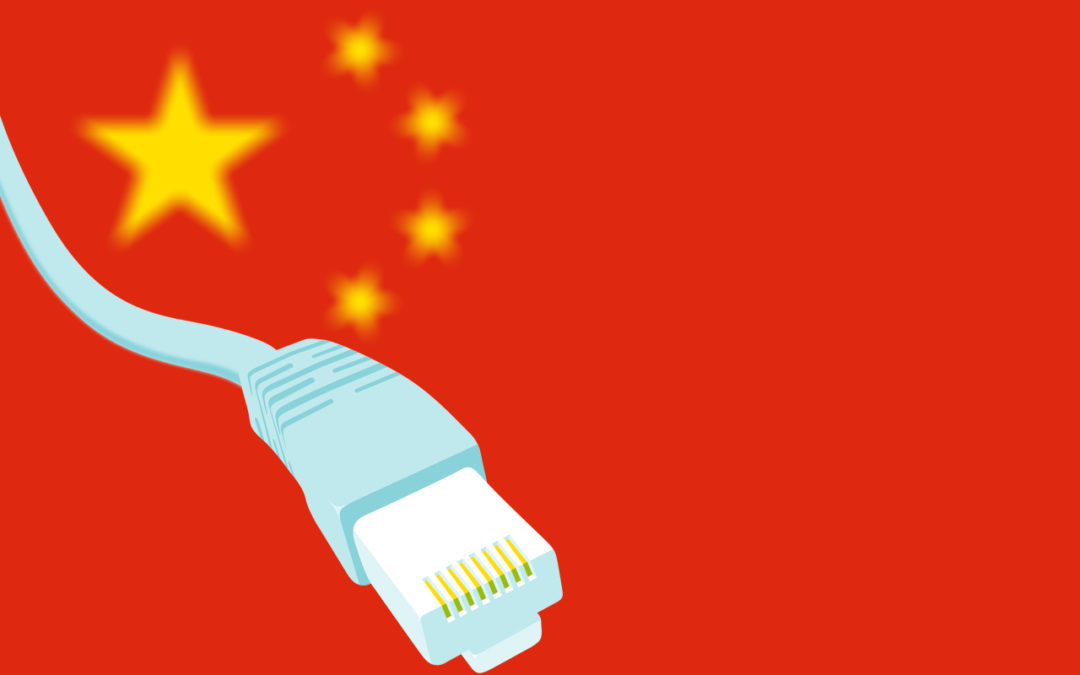
Australia’s ABC has complained about the blocking of its website in China. Access to the website and mobile applications of the Australian Broadcasting Corporation have been cut off in China for ten days, said the ABC’s board on 3 September.

The Central Cyberspace Affairs Commission, which is directly controlled by Chinese President Xi Jinping, confirmed that it has classified ABC as a media “damaging [China’s] national pride” that should be banned.

ABC’s critical coverage of China, especially its publication of a 2017 report denouncing the growing influence of the Chinese Communist Party (CCP) in Australia, appears to have triggered Beijing’s recent shutdown of the Australian broadcaster’s service.

According to the ABC, officials at two separate Chinese government departments have declined to specify how the ABC allegedly violated Chinese laws or cite any content as an example. Access to other Australian news websites inside China, including those of Fairfax, News Limited and SBS, appears not to have been affected.

In a statement, Reporters Without Borders (RSF) denounced China’s increasing censorship of foreign media. “Given the Chinese government’s stranglehold on the media, foreign websites such as ABC are the only platforms providing independent information to Chinese citizens,” said Cedric Alviani, director of the RSF East Asia bureau. “By adding ABC to its blacklist, which already counts more than 8,000 domain names, Beijing again demonstrates its commitment to keep Chinese citizens in ignorance.”

According to official sources, over two million people are involved in China’s censorship and internet surveillance effort. The “Great Firewall of China” keeps 800 million Chinese netizens away from a wide range of foreign news websites, including Wikipedia, Radio Free Asia, the New York Times, BBC and Bloomberg News.

China is towards the bottom of the 2018 RSF World Press Freedom Index, ranking at 176 out of 180 countries.