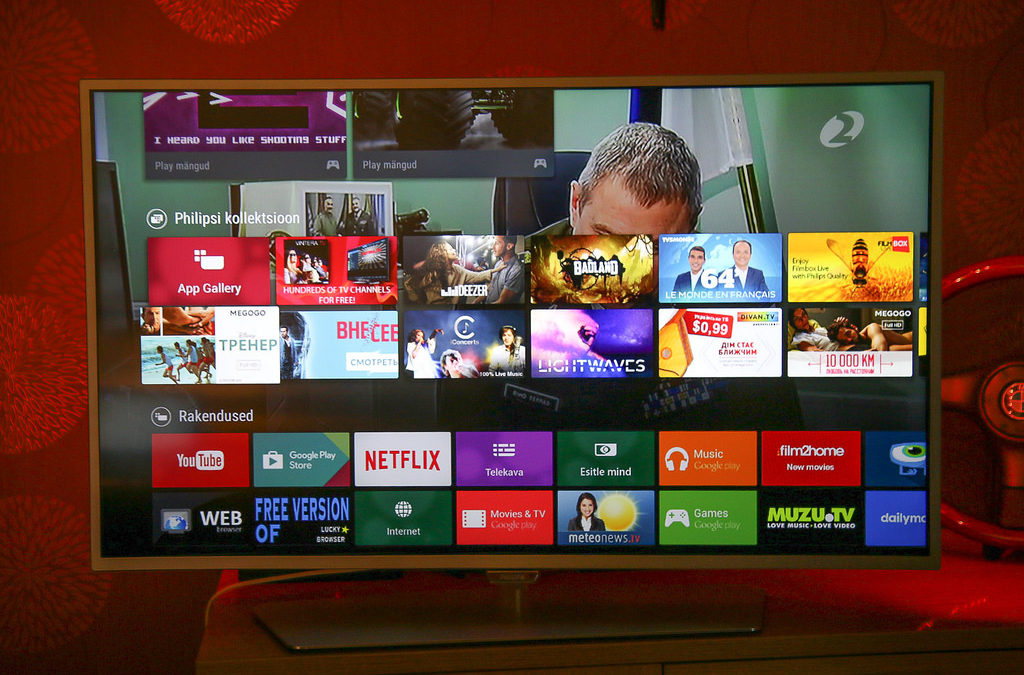
At its 85th meeting, the DVB Steering Board approved updates to TS 102 809 “Signaling and carriage of interactive applications and services in Hybrid broadcast/broadband environments” introducing an authentication mechanism to help prevent ‘Man in the Middle’ attacks in Smart TVs supporting interactivity.
This update was triggered by a security researcher demonstration showing that it was possible for attackers to modify the broadcast TV signal and so exploit bugs in the software of Smart TVs to gain control over the TV. A successful ’Man in the Middle’ attack could enable a hacker to access TV features such as its camera, microphone, and potentially other devices connected to the set. The new version will provide additional security to interactive solutions like the HbbTV specification, which relies heavily on TS 102 809.
The updated specification enables broadcasters to add authentication information to the signaling of their interactive services. In essence, the television receiver learns the legitimate transmission on each channel and will then identify and reject any subsequent tampering. This provides an extra layer of defense for TV sets and their owners in addition to manufacturers’ activities to improve their products security.
Commenting on this important action by the Steering Board, DVB Chairman, Peter MacAvock said “Although ‘Man-in-the-Middle’ attacks have been demonstrated, there is little real-world evidence of such attacks. Even so DVB acknowledges the potential risks, and has moved to address these with a comprehensive and appropriate specification to re-assure consumers and industry alike.”
Security across all parts of the broadcast chain is vital and the Association for International Broadcasting has an active Cyber Security Working Group to help its Members share expertise and information. See our Working Groups section for more information.
RMIT University and ABC News have partnered to relaunch award-winning news service Fact Check, to be based in Melbourne at the University’s new state-of-the-art Media Precinct.
From March, RMIT ABC Fact Check will once again test and adjudicate on the accuracy of claims made by politicians, public figures, advocacy groups and institutions engaged in public debate.
Dean of the School of Media and Communication, Professor Martyn Hook, said the nonpartisan, non-profit collaboration aimed to reduce the levels of deception and confusion around public policy issues and debates.
“This partnership with the ABC builds on RMIT’s reputation for producing journalism graduates with integrity, credibility and commitment to the highest standard and principles of media practice,” Hook said.
“In a time of ‘post-truth’, ‘alternative facts’ and ‘fake news’, it is ever more critical to hold public figures to account and ensure that public discourse – the basis of democracy – is based in fact.
“RMIT is thrilled to join with the ABC to relaunch Fact Check and support this crucial public service.”
ABC Director of News Gaven Morris said the innovative partnership would bring great value to audiences.
“ABC News is delighted to be able to work with the academic community, as well as other groups and institutions, in this way,” he said. “Sharing resources, and collaborating on analysis and original research, helps us better serve the broadest possible audience.
“Fact-check journalism is a great way of providing more of the essential context people need to help them fully understand the major stories and important issues of the day.”
RMIT ABC Fact Check will research and publish Fact Checks, Fact Files and restart the Promise Tracker. Content will be published through the ABC’s Digital platforms and a dedicated RMIT portal.
It will be headed by Director Russell Skelton, a Walkley Award-winning journalist who founded and ran the original ABC Fact Check from 2013 until mid-2016.
RMIT will also appoint a Senior Editor and Fact Check Researchers, along with interns drawn from RMIT journalism students and alumni. Journalism academic staff will also work with the Fact Check team to research the emergence and value of Fact Check journalism in today’s media landscape.
The assembled RMIT ABC Fact Check team will be an anchor tenant in the new RMIT Media Precinct, an industry-leading studio, teaching and production facility opening in March.
The ABC will retain final editorial control of, and responsibility for, all Fact Check content published by the ABC. Content will be subject to all the ABC’s Editorial Policies and its normal complaints handling procedures.
HD pace accelerates across Eutelsat video neighbourhoods
240 new channels in 2016 represents ↗30% growth
High Definition TV continues to gain ground across the broadcast satellites operated by Eutelsat Communications (NYSE Euronext Paris: ETL) with the 240 HD channels launched in 2016 equalling the total number launched during the previous two years.
The symbolic landmark of 1,000 channels was crossed this month with the launch at Eutelsat’s HOTBIRD neighbourhood of CGTN HD, the news and current affairs channel of China’s CCTV media organisation, marking its first foray into HDTV in Europe.
Eutelsat’s key video neighbourhoods all saw HD growth in 2016, with three distinguished for exclusive content and market leadership.
Accelerating HD growth at the HOTBIRD neighbourhood
The upwards curve of HD take-up was particularly strong at Eutelsat’s flagship HOTBIRD position where HD channels increased by 25% to 250, now accounting for almost one in four channels in the HOTBIRD line-up. This dynamic is driven by three key trends:
Progressive HD adoption by public broadcasters including RAI that has transitioned nine channels to HD and CCTV that launched three channels
New premium pay-TV content in flagship platforms including Sky Italia, Polsat, nc+ and Nova
A wave of new free-to-air channels that include Euronews HD and Al Jazeera English
Eutelsat 7/8° West position sets the trend in Middle East, North Africa and features exclusive HD channels
With almost 150 HD channels (up 40% in one year), of which 100 are exclusive, the 7/8° West position hosted by Eutelsat and Nilesat satellites leads the transition to HD in the Middle East and North Africa. Free-to-air channels in HD now outnumber pay, with strong brands launched exclusively at this neighbourhood including five channels launched by Kuwait TV and Echourouk News HD, the 24/7 Algerian news channel.
Eutelsat 36° East neighbourhood hits new high spot in Russia and Africa
Eutelsat satellites at 36° East that serve Russian and African markets clocked 14 additional HD channels over the last 12 months, rising to 114 HD channels. Russia’s leading NTV+ and Tricolor platforms each broadcast around 40 channels, to which can be added 32 HD channels broadcast to homes in Siberia from 56° East. In Africa, MultiChoice Africa and Zap are in the vanguard of HD, broadcasting 16 and 17 channels respectively and underscoring the trend towards higher resolution in Africa’s TV market.
Michel Azibert, Commercial and Development Director at Eutelsat, said: “2016 marked a tipping point for High Definition TV across our portfolio of video neighbourhoods, culminating in a new landmarkof 1,000 channels, many of which are exclusive to Eutelsat. We are fully equipped to accommodate this accelerating pace and to work closely with broadcasters as they transition to an enhanced viewing experience.”
London-based Celebro Media are in trials with a new type of HD OB Vehicle.
On Monday 20th February the studio and facilities company is offering a free trial to all broadcasters.
The new truck will be outside the UK Parliament at College Green (right) for planned coverage of the two parliamentary debates relating to the visit of Donald Trump. 15 minute slots will be available from Midday (1200GMT) till 1830 (GMT). Camera and sound is provided.
You can simply book a slot for a reporter or guest stand-up and Celebro Media will provide downlink details and IFB. The signal can be picked up at BT Tower for downlink (it may also be possible to arrange feeds to Reuters and EBU, by agreement) and there are no hidden costs or charges. We can also hand-off the signal via Streambox if required.
This is a totally free trial day with no commitment. Please pass on to your relevant Sat-Desk or bookings team – or any colleagues in international news media.
AIB welcomes Hum Network as first Member in Pakistan
National and international broadcaster set to benefit from full range of AIB services
The Association for International Broadcasting, the trade association for television, radio and online, is pleased to announce that Hum Network has become its first Member in Pakistan.
Hum Network is Pakistan’s only publicly-quoted media company, operating a range of television channels that are available across the country. Hum Network also offers its television channels in North America, the UK and the Middle East.
Established in 2004, Hum Network has expanded into production for television and film, and has plans for further development in a range of areas of the media both at home and abroad.
“We are delighted to welcome Hum Network as a Member of the Association for International Broadcasting,” said Simon Spanswick, AIB chief executive. “HUM Network is a dynamic company that has developed fast over the past 13 years. The AIB and its Members look forward to working with Hum Network and its executives as they expand their reach and introduce new services. As part of the AIB, Hum Network will benefit from the expertise that exists within the Association and from the opportunities of collaboration with our global membership base.”
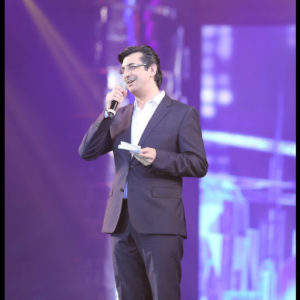
“In joining the AIB, Hum Network is reinforcing its position as the pioneer of Pakistan’s media industry,” commented Duraid Qureshi, CEO of Hum Network (pictured). “We are pleased to be the AIB’s first Member in Pakistan, benefiting from the work that the Association undertakes for all its Members across the world. My colleagues and I are looking forward to working closely with the AIB and its Members.”
As a Member, Hum Network now has access to the full range of the AIB’s work, ranging from market intelligence briefings to participation in working groups that focus on key areas of activity such as cyber security, sustainability and audience measurement. The AIB also supports its Members on key issues that affect their business through its international lobbying activities.
The Association for International Broadcasting is a not-for-profit, non-governmental organisation that works for the benefit of its Members and of the wider media industry.
CCTV has disappeared as a brand from China’s consumer-facing international TV channels, replaced by a new name: China Global Television Network (CGTN). Overnight on 30 December, CCTV’s English, Arabic, Spanish, Russian and French channels were rebranded under the CGTN umbrella, while new mobile apps were launched.
According to the South China Morning Post, CCTV carried out the rebranding to “integrate resources and to adapt to the trend of media convergence”, with foreign language channels, video content and digital media falling under the new group.
This rebranding – and the new apps – are part of a continuing effort by China to project its soft power internationally. It is widely reported that billions of dollars are spent each year on China’s international television channels and on its cultural initiatives in markets globally.




 “In joining the AIB, Hum Network is reinforcing its position as the pioneer of Pakistan’s media industry,” commented Duraid Qureshi, CEO of Hum Network (pictured). “We are pleased to be the AIB’s first Member in Pakistan, benefiting from the work that the Association undertakes for all its Members across the world. My colleagues and I are looking forward to working closely with the AIB and its Members.”