2 February 2015
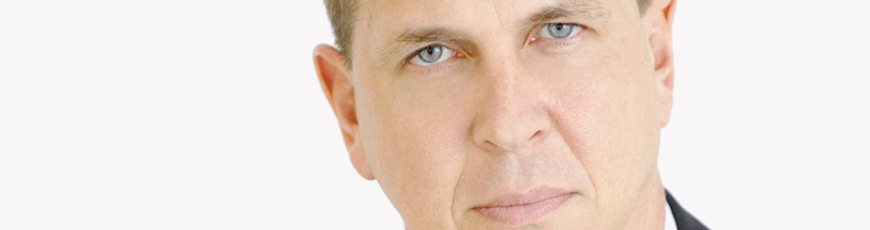
 Al Jazeera journalist Peter Greste has been released by Egyptian authorities after over a year of incarceration. Greste’s two colleagues, journalists Baher Mohamed and Mohamed Fahmy still remain imprisoned.
Al Jazeera has said that the campaign to free its journalists in Egypt will not end till all three have been released. The network says that all three must be exonerated, and the convictions against its other journalists tried in absentia also have to be lifted.
Mostefa Souag, acting Director General of Al Jazeera Media Network said:
“We’re pleased for Peter and his family that they are to be reunited. It has been an incredible and unjustifiable ordeal for them, and they have coped with incredible dignity. Peter’s integrity is not just intact, but has been further enhanced by the fortitude and sacrifice he has shown for his profession of informing the public.
“We will not rest until Baher and Mohamed also regain their freedom. The Egyptian authorities have it in their power to finish this properly today, and that is exactly what they must do.”
In an interview with AIB last month, Al Jazeera’s Head of Global Newsgathering, Heather Allan, said:
“We are fighting it every inch of the way. We don’t know which way it’s going to bounce. The first trial, quite honestly, was just a mockery of justice. You go through the evidence that was shown, there really was nothing there. Nothing there at all.
“Peter Greste had been in the country for ten days. He’d never been to Cairo before. The few reports he had done were all online. You can see them. We’ve always said to people: “Please, look at the journalism. It’s there. We’re not hiding anything.” Mohamed Fahmy had been working for everybody from the New York Times to CNN. He was a well known journalist around Cairo. Baher Mohamed worked for the Japanese – a younger journalist, and well known to the Cairo press corps. I think they were in the wrong place at the wrong time.”
29 January 2015
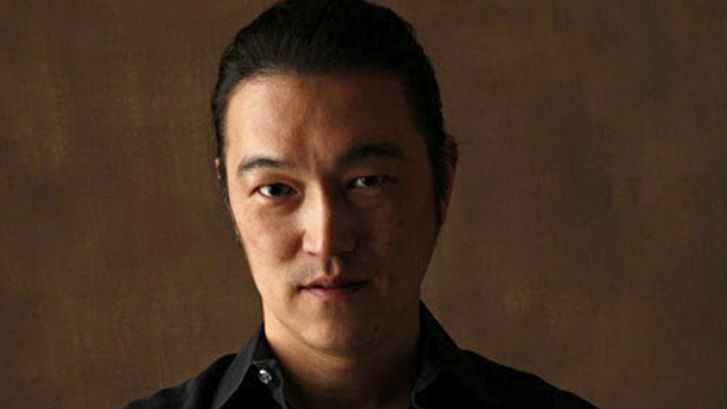
An emotional plea from Rinko, the wife of freelance journalist Kenji Goto, as deadline for his release approaches.
 My name is Rinko. I am the wife of Kenji Goto, the journalist who is being held by a group in Syria. He was taken from me on 25 October 2014, and since then I have been working tirelessly behind the scenes for his release.
I have not spoken out until now as I have been trying to protect my children and family from the media attention Kenji’s plight has created around the world.My husband and I have two very young daughters. Our baby girl was only three weeks old when Kenji left. I hope our oldest daughter, who is just two, will get to see her father again. I want them both to grow up knowing their father.My husband is a good and honest man who went to Syria to show the plight of those who suffer. I believe that Kenji may have also been trying to find out about Haruna Yukawa’s situation. I was extremely saddened by the death of Haruna and my thoughts go out to his family. I know all too well what they are going through.
My name is Rinko. I am the wife of Kenji Goto, the journalist who is being held by a group in Syria. He was taken from me on 25 October 2014, and since then I have been working tirelessly behind the scenes for his release.
I have not spoken out until now as I have been trying to protect my children and family from the media attention Kenji’s plight has created around the world.My husband and I have two very young daughters. Our baby girl was only three weeks old when Kenji left. I hope our oldest daughter, who is just two, will get to see her father again. I want them both to grow up knowing their father.My husband is a good and honest man who went to Syria to show the plight of those who suffer. I believe that Kenji may have also been trying to find out about Haruna Yukawa’s situation. I was extremely saddened by the death of Haruna and my thoughts go out to his family. I know all too well what they are going through.
I became aware that Kenji was in trouble on 2 December when I received an email from the group holding Kenji.
On 20 January I saw the video demand for $200m for the lives of Haruna Yukawa and Kenji. Since then, there have been several emails between the group and me as I have fought to save his life.
In the past 20 hours the kidnappers have sent me what appears to be their latest and final demand:
Rinko,
YOU MUST PUBLICISE AND EXPOSE THIS MESSAGE TO THE WORLD MEDIA NOW! OTHERWISE KENJI WILL BE NEXT!
If Sajida is not on the Turkish border ready for the exchange for Kenji by Thursday 29th Jan at sunset, The Jordanian pilot will be executed immediately!
I fear that this is the last chance for my husband and we now have only a few hours left to secure his release and the life of Lt. Mu’ath al-Kaseasbeh. I beg the Jordanian and Japanese Government to understand that the fates of both men are in their hands.
I thank the Governments of Jordan and Japan for all their efforts. I thank the people of Jordan and Japan for their compassion. My family was based in Jordan when I was young, and I went to school in Amman until I was 12 years old, so I have great affection and fond memories of Jordan and its people.
Lastly I thank my family, friends and Kenji’s colleges for the support they have shown my daughters and me over the last 3 months.
I pray for the lives of my husband and the Jordanian pilot Lt. Mu’ath al-Kaseasbeh.
Rinko
29 January 2015
 To mark its 77th anniversary, BBC Arabic is launching a new radio schedule, and new programmes to be broadcast from Cairo and London. The new programmes will offer listeners a modern BBC platform with a dynamic pace, less formal presentation style and strong audience participation via mobile phones and online at bbcarabic.com. BBC Arabic is also re-launching its YouTube channel.
To celebrate the anniversary, BBC Arabic will host a concert of classical Arabic music on Saturday 31 January at Broadcasting House in London, the building that saw the launch of BBC broadcasts in Arabic in 1938.
BBC Arabic has established a deep-rooted relationship with its Arabic speaking audiences by providing objective, impartial and trusted news, world-class documentaries and investigative programmes. The numerous awards for BBC Arabic output include two prestigious prizes at the Association for International Broadcasting awards in 2014: the Investigative Radio Documentary award for Forbidden Love, about interfaith marriages in Egypt, and the TV International Investigative Documentary for Saudi’s Secret Uprising.
Recent audience research (2014) shows BBC Arabic’s overall audience reach has risen by more than 11 per cent to 36.2 million adults weekly – up from 32.5 million in 2012 to 2013. Since the ‘Arab Spring’ in 2010, BBC Arabic’s weekly audience has risen from 21.6 to 36.2 million – an increase of 68 per cent.
On 27 January, BBC Arabic radio launched new-style news programmes and four new strands:
- Sport News: A daily half-hour radio round-up of regional and world sports.
- Women Today: A daily half-hour news and current affairs radio programme that focuses on women in the news in the Middle East and across the world. The programme offers a mix of reports, interviews and interactive debate.
- Midnight Talk: A daily 50-minute programme for younger listeners. The programme provides a platform to freely investigate and debate social and political issues most relevant to young people in the Middle East. The programme has a chatty, informal tone and offers live interviews, music and a stage for talented young people.
- Radio Archive: A weekly 27-minute strand, the Programme, draws on more than 70 years of BBC Arabic Radio archive with rare and exclusive material. The programme also will offer current interviews with relevant people on some of the issues which have been raised in the past and still resonate today.
Tarik Kafala, the Head of BBC Arabic says: “This is a very exciting time for BBC Arabic. We are reaching our biggest audiences in our 77 years and developing in ways that will make us more relevant and essential than ever, on all platforms. Today, we’re celebrating radio, the medium on which our reputation is built. The investment in new programmes and a new schedule shows our deep commitment to radio and our listeners, the heart and foundation of BBC Arabic.”
29 January 2015
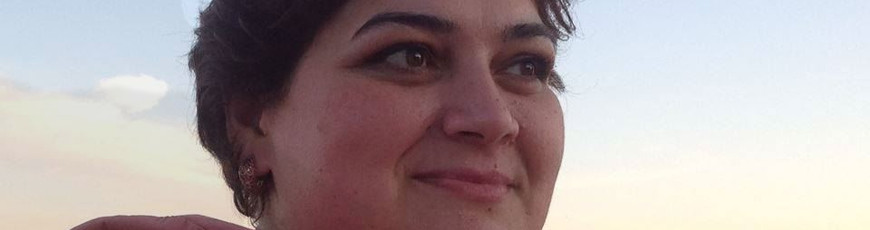
 An Azeri court has extended the pre-trial detention of independent journalist and RFE/RL contributor Khadija Ismayilova for an additional two months.
“We are devastated by this decision, which lacks any factual basis and violates the basic requirements of due process,” said Nenad Pejic, editor in chief and co-CEO of US state broadcaster RFE/RL. “The extension of her sentence can only be interpreted as an act of revenge by Azeri authorities against the country’s leading investigative reporter.”
RFE/RL’s Baku bureau was raided and sealed shut on December 26 by agents of the state’s “grave crimes investigations committee” in connection with a new law on so-called “foreign agents.” The same law was invoked to force the National Democratic Institute, IREX, and other organizations supporting civil society development to suspend their local operations.
RFE/RL sent a letter to Azeri authorities earlier this week requesting that the Baku bureau be reopened and employees resume their work without fear for their security and safety.
Ismayilova, who has reported extensively on the financial activities of family members of Azeri President Ilham Aliyev, was arrested and jailed for two months on December 5 on charges of inciting a former colleague to attempt suicide.
Azerbaijan’s crackdown on foreign journalists has been widely condemned, including by the Association for International Broadcasting.
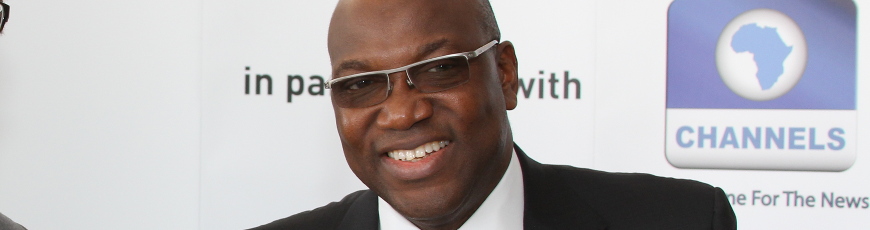
29 January 2015

John Momoh signs an agreement with BBG at AIB’s 2014 event, “Africa’s Digital Media Future”
The story of Channels TV is in some ways the story of the modern Nigerian broadcast industry. John Momoh started it in 1992, sometimes shooting, editing and presenting all himself. Now Channels TV is Nigeria’s biggest broadcaster with aims to become a channel for Africans all over the world. John Momoh will be a speaker at AIB’s #iamabroadcaster Global Media Summit, hosted by the Assocation for International Broadcasting, on 18-19 February at London’s Royal Institute of British Architects.
What has been the reason for Channels TV’s success?
I think it’s a combination of the fact that we’re very blessed, very lucky, and that from the onset, we carved a niche for ourselves. What I did when I set up Channels was to get a new crop of broadcasters, so there would be a departure from the government-controlled organisations. We tried new ways of doing things, in modes of dressing, presentation, production. We introduced graphics for the first time, we introduced sets. We were doing a lot of things that hadn’t been done before, and that put us in the eyes of the public. It was 24/7 in those formative years, and even up to now. It’s been one long journey, with a lot of hard work and a lot of dedicated staff.
You had a wide variety of broadcast experience in your early years. How did that help in starting Channels TV?
Initially I had to take the lead. I used to go out with a camera, put it on my shoulder and shoot, go back to the studio and edit, then read the news. Sometimes the newscasters would direct. And my wife, Olusola, who was a stabilising force for me, would also do a lot work. In those formative years, I would take a lot of the equipment at hhome in my car. It was all hands-on.
Channels TV will be starting in the UK this year.
Yes. We hope to settle everything by February or March 2015. We’ve pretty much done everything. We’re waiting for Ofcom to give us a licence. Every other thing is in place. There have been some challenges. We’ve had to tweak our application, but I think now we’ve got things right. And we’re just waiting for the approval.
Tickets are still available for AIB’s #iamabroadcaster Global Media Summit. Featuring two days of conversation by top figures from the global media industry, and the inaugural David Frost Memorial Lecture, #iamabroadcaster will be held at London’s Royal Institute of British Architects on 18-19 February.
In addition to John Momoh, other speakers include, Peter Limbourg, Director General of Deutsche Welle; Tom Roope, Creative Director of The Rumpus Room, and Neeraj Arora of MSM Asia Limited/Sony Entertainment Network. Download the summit agenda here.
(read this interview in its entirety in the next issue of AIB’s print magazine, The Channel)

28 January 2015
 Speaking on behalf of the international satellite community, Michel de Rosen, CEO of Eutelsat, today warned African states of the consequences for the continent if C-band resources are reallocated to mobile operators.
Michel de Rosen was speaking to delegates from African countries gathered in Nigeria for a meeting organised by the African Telecommunication Union (ATU) to prepare for the World Radiocommunication Conference scheduled to take place in Geneva from 2 to 27 November 2015. During the meeting in Abuja, African states will define their position on access to the C-band that is currently allocated to satellite operators and claimed by mobile operators.
Michel de Rosen reminded delegates that the C-band is widely used to provide vital services, including air traffic control, government and enterprise communications, disaster relief, broadcasting and Internet access. The use of C-band by mobile operators would mean the total loss of these critical services, with no possible alternatives.
“Opening the C-band to mobile operators would not herald the expansion of its use for new services. It would mean the end of services, with no guarantee that new mobile services would actually be deployed using this band. It’s a lose-lose scenario and exactly the opposite of the intended goals,” he said.
“Terrestrial operators already have access to a very broad range of spectrum and should be using this first before seeking to acquire more, particularly if this process is carried out at the expense of critical applications,” he added.

 Al Jazeera journalist Peter Greste has been released by Egyptian authorities after over a year of incarceration. Greste’s two colleagues, journalists Baher Mohamed and Mohamed Fahmy still remain imprisoned.

