Dentsu Inc., the Japan-based advertising and PR agency, has been awarded the broadcast rights for the XXIII Olympic Winter Games (2018) in PyeongChang, Republic of Korea; the Games of the XXXII Olympiad (2020) in Tokyo, Japan; the XXIV Olympic Winter Games (2022), location TBD; and the Games of the XXXIII Olympiad (2024), location TBD by the International Olympic Committee.
The deal covers 22 countries and territories across Asia, including Afghanistan, Brunei, Cambodia, East Timor, Hong Kong, Indonesia, Iran, Kazakhstan, Kyrgyzstan, Laos, Malaysia, Mongolia, Myanmar, Papua New Guinea, Philippines, Singapore, Taiwan, Tajikistan, Thailand, Turkmenistan, Uzbekistan and Vietnam. These broadcast rights are in addition to those that Dentsu was awarded in 2013 for the XXII Olympic Winter Games (2014) in Sochi, Russia and the Games of the XXXI Olympiad (2016) in Rio de Janeiro, Brazil in the 22 countries and territories.
The broadcast rights for all the Youth Olympic Games to be held until 2024 have also been awarded to the Company. Dentsu has acquired exclusive Olympic Games broadcast rights on all media platforms, including television, radio and the Internet.
Look out for our feature on sports broadcasting rights in the forthcoming edition of the AIB’s international media magazine, The Channel. It will be published in late August.
Voice of America, in partnership with AudioNow Digital, has launched an audio-only app that will allow users to listen to VOA programming over data or cellular voice connections. That option is especially valuable for VOA audiences in emerging markets where streaming audio is not available or cost prohibitive.
VOA Mobile Streamer, which is available on Apple and Android platforms, will provide broadcast audio programming in 33 languages. In addition to on-demand programming, the app also offers live 24/7 radio streams in more than a dozen languages.
“We are very pleased to add this app to our suite of mobile products,” said Kelu Chao, acting director of the Voice of America. “VOA Mobile Streamer allows us to better serve and connect with audiences in low-bandwidth countries and provide them with high-quality news and information they can’t get elsewhere. By giving our audience access to our radio broadcasts via voice VOA is now availab! le on even the simplest of mobile phones.”
“We worked with VOA and AudioNow to make a very non-traditional news app experience,” added Adam Martin, acting director of the Broadcasting Board of Governors’ Office of Digital and Design Innovation. “Mobile Streamer’s unique and refreshing design is particularly attractive to younger audiences, and its accessibility in low-bandwidth areas is crucial to reaching key audiences.”
VOA Mobile Streamer leverages AudioNow’s international Interactive Voice Response infrastructure and will showcase thousands of hours of VOA audio programmes that are produced each week.
In a new travel series which began on Monday 29 June, Euronews is sending its viewers Postcards from Kazakhstan.
Famous landmarks and hidden treasures of the Central Asian country are the focus of this colourful weekly programme presented and produced by Seamus Kearney.
Located between Russia and China, and straddling part of the Caspian Sea, Kazakhstan has a rich cultural heritage and history.
Snapshots highlight some of the best attractions, from modern architecture in the capital Astana to historic sites along the ancient Silk Road.
The five episodes of Postcards from Kazakhstan feature the following five tourist sites:
The Bayterek Tower in Astana
Episode 1: Monday 29 June at 18:45 CET
The new series begins in the capital of Kazakhstan, with a monument that has become emblematic of the city. Construction of the Bayterek Tower began in 1997, the year the capital was moved from Almaty to Astana.
The Mausoleum of Khoja Ahmed Yasawi in Turkistan
Episode 2: Monday 6 July at 18:45 CET
We visit the south of Kazakhstan and the ancient Silk Road city of Turkistan. Here the spectacular mausoleum dominates the landscape, attracting tens of thousands of Muslim pilgrims from far and wide.
The Medeu & Shymbulak mountain resorts near Almaty
Episode 3: Monday 13 at 18:45 CET
The third postcard comes from Almaty, the former capital of Kazakhstan. A nearby mountain valley provides breathtaking scenery, but it’s also popular for year-round leisure activities for locals and holidaymakers.
The Aisha Bibi mausoleum inTaraz
Episode 4: Monday 20 at 18:45 CET
Taraz is one of the most ancient cities in Kazakhstan, where historic sites are being restored. One of them is the beautiful Aisha Bibi mausoleum, which dates back to between the 11th and 12th centuries.
Monument to the founders of the Kazakh Khanate in Astana
Episode 5: Monday 27 at 18:45 CET
For the end of the series of Postcards from Kazakhstan we return to the capital, where people are this year marking the 550th anniversary of the Kazakh statehood. To get a feel for the history, there’s no better place to go than a monument to its founders.
Postcards from Kazakhstan
Five 1’30”- programmes starting on Monday 29th June at 18:45 CET
Before joining Euronews in 2003, Seamus Kearney worked as a journalist and producer for various media organisations including the BBC, Radio France International and Radio New Zealand.He recently presented and produced the Euronews programme Right On, which examined European justice and citizens’ rights issues.
Seamus has also produced Urban Visions,Focus, Life and Postcards programmes from various countries, including Russia, the US, South Korea, Brazil, Singapore, Macedonia and Ukraine, and continues to report on international and European affairs.
About Euronews
Euronews, the most-watched news channel in Europe, is an independent and multi-platform media hub. Euronews covers news worldwide, offering a unique perspective on events through factual analysis. Six hundred journalists, from more than 30 countries, report round-the-clock in 13 editions (Arabic, English, Persian, French, German, Greek, Hungarian, Italian, Portuguese, Russian, Spanish, Turkish and Ukrainian). Established in 1993 in Lyon, France, the channel is received by 420 million homes in 156 countries, and offers a complete range of products: websites, smart TV, radio, on-board technology (for cars), and portable technology (mobile apps, smartwatch).
In 2015 Euronews will launch Africanews, the first pan-African multilingual news channel.
In the wake of the well-publicised cyber attacks on Sony Entertainment and TV5 Monde – together with a range of other less-discussed attacks – that have seriously impact broadcasters’ operations, AIB is working on high-level meetings for its Members to share knowledge and to discuss possible solutions to this major threat.
“Broadcasters are natural targets for hackers and others who seek either to disrupt programming and social media, or to hijack the airwaves to distribute propaganda,” said Simon Spanswick, chief executive of the Association for International Broadcasting. “We have received an unprecedented response to our proposal for discussions on this subject and we’re now developing an initial one-day knowledge-sharing meeting for AIB Members and a number of specially-invited experts.”
The inaugural AIB meeting on cyber security and disaster recovery will take place towards on 6 October 2015 in London, co-hosted by Deloitte. The high-level, invitation-only meeting will be strictly confidential to allow sharing of knowledge among AIB Members and to help focus the minds of board-level executives including CEOs and CTOs. A range of experts from a number of key organisations involved in protecting critical national infrastructure assets will share their knowledge as AIB leads the conversation to ensure the security of its Members.
For more information about this initiative, please contact us.
This month, Zee, India’s biggest pay TV channel, celebrated its 20th birthday in the UK and Europe with a gala event in London, which featured appearances by the likes of Bollywood superstar Shah Rukh Khan. But the evening was not only a celebration of the past, but a look to the future. Zee used the evening as the platform to launch Zee’s new free-to-air channel &TV (AndTV).
During the evening, AIB had to opportunity for a one on one with one of the most influential players in Indian television, the MD and CEO of Zee, Punit Goenka.
Can you tell us a bit about your time at Zee?
My family owns the business. It’s a publicly listed business, but we are the majority shareholder, and I run this business on behalf of the family. I’ve been in this part of the business, for ten years.
I started off with running the Zee flagship channel for the network, then moved on to running all the channels for the group. And finally took over as the CEO and MD in 2008. And have been doing that ever since.
(l to r) Zee executives Rajesh Iyer, Punit Goenka, Neeraj Dhingra & Parul Goel at the press conference launching &TV
I’m sure you’ve seen a lot of changes in those ten years. Is it the same channel as it was it first began?
It’s very different from how it was. Zee has been in the UK and Europe for 20 years, and almost 23 years in India. What started from only a two-hour broadcast per day in the first years, is today 34 services running 24/7. We are no longer just a television company, we are also now moving all our content onto the internet space. We produce a lot of our own content now, rather than just acquiring it.
We now reach 179 countries, at last count, and we have gone away from just the Indian languages to include foreign languages too. We do content in Arabic, in Russian, in Bahasa for Indonesia and Malaysia, in Thai, and we just launched an English-language service in South Africa. So it’s no longer an Indian company. I think it has transformed into a global company. We have over 715 million viewers globally and counting.
How has becoming a global channel changed Zee’s strategy?
Now, because we have spread out in so many markets, the company has grown significantly in terms of size, in terms of number of people. And we have to do a lot more content than we used to do. We create about 600 hours of content on a weekly basis. That’s really a lot of content. It’s actually a factory, if you look at it from that perspective. And we do it in so many languages, apart from the Indian languages – we do it for six local languages in India also.
How has the digital shift affected Zee and how you produce content?
In India and for South Asian markets it’s still slow. It’s not moved as fast as we’ve seen here in the UK. But what we believe is that it’s the platform of delivery that’s changing, and while the delivery mechanism may change via the Internet, content companies will still have to exist and create quality content and make sure that quality content is available to viewers. And that’s what we are transforming ourselves to allow.
The &TV launch featured entertainment by the Shiamak Davar Dance Troupe
As the channel expands, are you still primarily targeting a South Asian audience?
In this market, we’ve not gone into local languages yet – English or any other language in European language, except for Russia. But we are studying some markets, like Germany, where we do think there is a market for getting into local language content. But we are still in the research phase.
Are you looking to tailor content for those different markets?
Absolutely. The content that goes into each of these markets is researched and tailored for that market. Storylines and films are selected based on how they will work in those markets. For example, in Arabic, our research showed that the local woman there really lacks romance in her life, so the romantic movies really work well in the kingdom of Saudi Arabia. That all comes from extensive research, and that’s how we’ve tailor-made the content for those markets.
What need is your newest channel, &TV, fulfilling?
Zee, being a brand that has been in existence for so long in India, has a certain loyal viewership base, and the best word to define them is they are the ‘traditionalists’. They are families – three generations of family living together. India is still largely composed of single-television homes. And the infrastructure is still not good enough for people to start consuming content on devices on a regular basis. So the kind of content we can do on Zee TV is very traditional. Whenever we tried to experiment with edgy content on Zee TV, our audience not responded.
So the need was felt that there’s a new audience base that’s been born in the last twenty years and they are looking for experimental new content. So we needed a new brand that is not Zee, and that’s how the ‘&’ franchise came about.
We first launched it with a movie channel, which showed a lot of edgy cinema. And once that was successful, we’ve moved into the entertainment sector as well. There is certainly a lot difference from what you see on Zee TV.
Was Zee’s more traditional programming in danger of losing young audiences?
Yes, younger audiences and the male audiences, who are not really attracted to the female soaps and drama. The need was felt for another brand to be created, where we can do a lot more contemporary and edgy content.
Bollywood star Shah Rukh Khan at the UK launch of &TV
What kind of content is there on the new channel?
We have everything from historicals to suggestive sex comedy to mafia-based family drama. We have game shows. And it’s all original content, produced in India. Some of the formats we’ve sourced from the overseas markets – like The Voice, Killer Karake and Who’s Asking?
What about news?
Given the regulatory scheme in India, this company cannot own news channels, because there is a restriction of 26% foreign direct investment in news. So we have a sister company that runs news businesses for us. That’s called Zee Media Corporation. Because we are majority owned by foreign direct investment, we are not legally allowed to do news.
How do you feel about the twentieth birthday celebration of Zee TV in the UK?
It’s a celebration for us. It’s a milestone that we’ve achieved in this market. But we feel that this market needs to grow further, so we are bringing the &TV franchise here to the UK.
While Zee TV will continue to play in the pay subscriber base game, &TV will go compete in the free-to-air market, with the rest of the competition, and we hope that it will be as successful as Zee TV has been to grow the market and grow our shares.
Reuters has partnered with ITN Source to make historical archive footage more accessible to producers and viewers around the world. The digitisation of the Reuters video archive is making hundreds of thousands of rare and largely unseen news clips digitally available for preview and licensing on itnsource.com.
To date, over 115,000 Reuters clips have been digitised and published on itnsource.com, expanding the available Reuters digital archive to nearly half a million clips and counting. The project is set to finish in 2016.
Footage being digitised consists of the Reuters News syndication service from 1957 to 2006 and earlier cinema newsreels from 1910 to 1959, including the Gaumont, Paramount and Universal collections. Material from 2006 onwards is already available in digital format.
ITN Source’s experienced researchers have prioritised the digitisation of material relevant to upcoming anniversaries and events, such as the 40th anniversary of the fall of Saigon and the 75th anniversary of the end of World War II – featuring a substantial collection of post-war Winston Churchill footage – in addition to material in response to specific customer requests.
Highlights of the most recently digitised Reuters material are available for viewing and are updated on a regular basis as new material is digitised and uploaded.
Ashley Byford-Bates, Global Head of Reuters Pictures and Archive, said, “Having our assets in digital format is critical. It gives broadcasters, production houses and online publishers a real opportunity to explore, discover and see the footage. With over 30,000 hours of content preserved, we can now focus on the really exciting task of making the unique Reuters collection available for new programmes, projects and audiences.”
“The Reuters archive is incredibly popular and we are delighted to play our part in making this fantastic collection far more accessible to our clients around the world,” said Andy Williams, Managing Director at ITN Source.
As part of this programme, ITN Source has also re-catalogued and published a collection of interesting and quirky clips from the early 2000s called “Reuters Life!”. This collection features international coverage of the environment, entertainment, lifestyle, arts and culture in an amusing and light-hearted style.

 VOA Mobile Streamer, which is available on Apple and Android platforms, will provide broadcast audio programming in 33 languages. In addition to on-demand programming, the app also offers live 24/7 radio streams in more than a dozen languages.


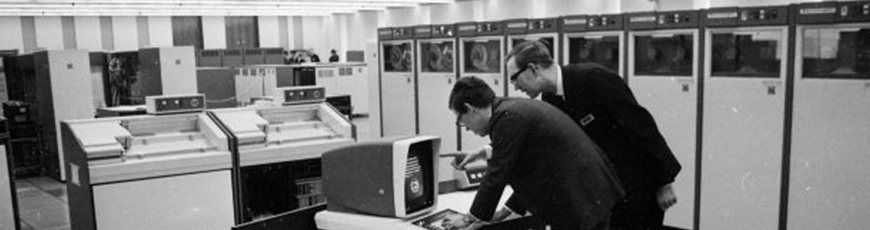
 In the wake of the well-publicised cyber attacks on Sony Entertainment and TV5 Monde – together with a range of other less-discussed attacks – that have seriously impact broadcasters’ operations, AIB is working on high-level meetings for its Members to share knowledge and to discuss possible solutions to this major threat.