Radio Farda Returns to Shortwave, Bypassing Iran’s Digital Blackout

Radio Farda Returns to Shortwave, Bypassing Iran’s Digital Blackout

Radio Farda Returns to Shortwave, Bypassing Iran’s Digital Blackout

Radio Free Europe/Radio Liberty (RFE/RL) on 10 January resumed shortwave radio broadcasts into Iran following the imposition of an internet blackout by the Islamic Republic. Working with several commercial vendors, RFE/RL’s Persian-language service Radio Farda is once again providing an alternative to state-controlled media. Radio Farda reaches 6.5 million Iranians inside the country each week across digital platforms.

As nationwide protests in Iran continue, Radio Farda remains a lifeline for the people of Iran, providing vital news and insight, amplifying the voices of activists, verifying the deaths of protesters, and delivering expert analysis on the developing U.S. response.

President & CEO Stephen Capus said:

“At this historic moment, when the Iranian people have been plunged into digital darkness by their government, Radio Farda’s return to the airwaves is an essential breakthrough. We’re reaching the people of Iran with the facts they need to stay safe – and ensuring their voices continue to be heard. Our journalists at Radio Farda are working nonstop to fulfill our commitment to the people of Iran.”

In the week leading up to the Islamic Republic’s internet blackout, Radio Farda’s digital reach surged. Between January 2-8, Radio Farda’s Instagram content was viewed at least 30 million times per day – 241.8 million views total – with 96% coming from Iran. Between December 28-January 5, Instagram video viewership rose by 411% over the previous seven-day period, with engagements soaring by 481%.

Radio Farda is a primary source of international perspectives on the crisis for Iranians, providing the latest statements from U.S. President Donald TrumpSecretary of State Marco Rubio, the House Foreign Affairs Committee Majority, and Sen. Lindsey Graham (R-S.C.), as well as analyses of the crisis and its impact on U.S. and foreign policy debates and analysis by experts such as Jack GoldstoneMichael SobolikMichael Rubin, and Ilan Berman.

For the latest information on the protests, follow Radio Farda’s live blogs in English and Persian. [Source: RFE/RL press release]

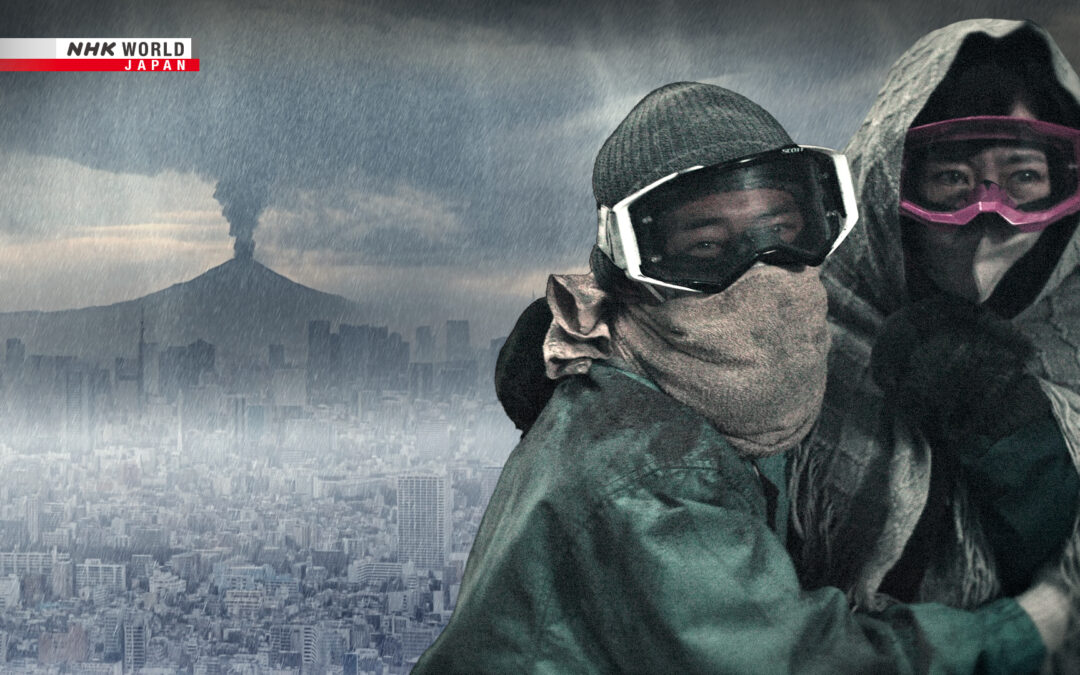
NHK WORLD-JAPAN programme focus in January: The Tales Behind Kobe’s Western Specialties

NHK WORLD-JAPAN programme focus in January: The Tales Behind Kobe’s Western Specialties

NHK WORLD-JAPAN programme focus in January: The Tales Behind Kobe’s Western Specialties

The Tales Behind Kobe’s Western Specialties

Stories from Kobe’s Western Cuisine

January 17 Sat.
1:10/7:10/13:10/19:10 (UTC)

Western-style cuisine is a comfort food the people of Kobe have passed down with love. It gave them strength as they recovered from disaster. What stories lie behind its rich, brown demi-glace sauce?

Documentary 360
BLIND SPOT: Unseen Neighbors

January 10 Sat.
0:10/6:10/12:10/18:10 (UTC)

As famine spreads in Gaza and living conditions deteriorate, many Israeli citizens turn their attention away. This documentary probes the reasons and ramifications.?

Japanology PLUS

Thursdays
2:30/7:30/13:30/19:30 (UTC) Fridays
23:30 (UTC)

Fresh insights into Japan. Stories behind Japanese life and culture through the eyes of Peter Barakan, a 50-year resident and watcher of Japan.

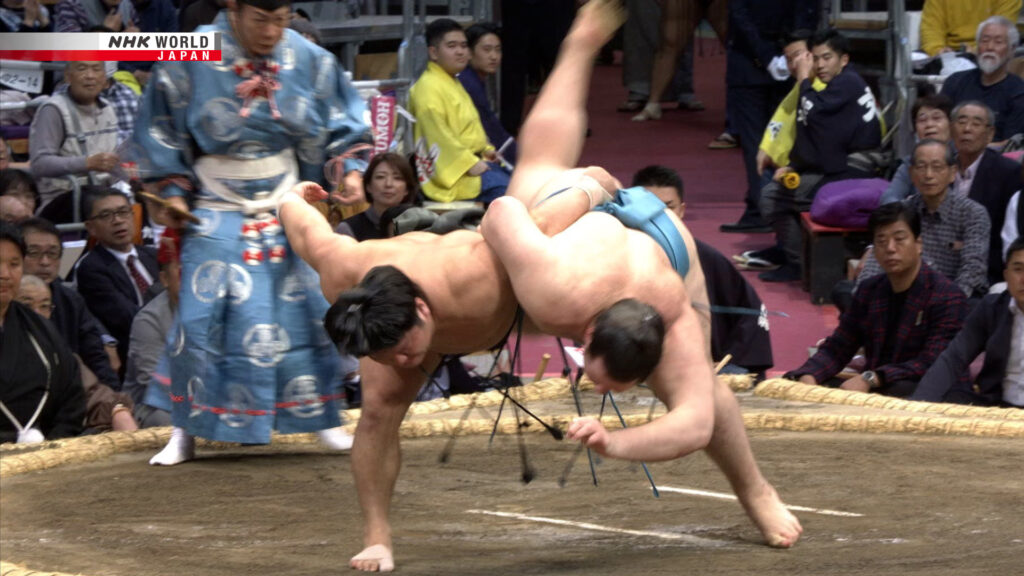
GRAND SUMO Highlights

DAILY DURING TOURNAMENTS
16:30/23:30/4:30/8:30 (UTC)

The best of today’s sumo! Enjoy daily highlights of this dynamic sport with background info and play-by-play commentary adding to the excitement!?The January Tournament of GRAND SUMO is held from January 11th to 25th. 


Russia labels DW ‘undesirable organization’

Russia labels DW ‘undesirable organization’

Russia labels DW ‘undesirable organization’

According to Russian media reports, the Russian public prosecutor’s office has classified the German international broadcaster Deutsche Welle (DW) as an “undesirable organization”. The Duma, the lower house of the Russian parliament, has welcomed the decision. This decision followed a request from the State Duma on August 20, 2024.
 
 
DW Director General Barbara Massing: “Russia may label us an undesirable organization, but that won’t deter us. This latest attempt to silence free media highlights the Russian regime’s blatant disregard for press freedom and exposes its fear of independent information. Despite censorship and blocking of our services by the Russian government, DW’s Russian-language service now reaches more people than ever before. We will continue to report independently – on the war of aggression against Ukraine and other topics about which little information is available in Russia. So that people can form their own opinions.”
 
 
In Russia, cooperating with “undesirable organizations” is a criminal offence, subject to heavy fines and, in severe cases, imprisonment. Even sharing content from such organizations—such as posting their journalistic work on social media—is considered a crime. For Russian citizens, the ban on cooperation also applies outside Russian territory. This means that Russian employees of DW are particularly affected.
 
 
Since March 2022, DW has been labeled a “foreign agent” in Russia, a designation used by Russia for individuals, media and organizations funded from abroad. Prior to this, DW faced a broadcasting ban, its Moscow studio was forced to relocate, and its website was blocked across all languages in Russia. Being labeled an “undesirable organization” is an escalation of the crackdown on DW. The decision is made by the Russian Prosecutor General or his representatives. The organization concerned is then entered into the relevant register. DW has not yet received any official notification from the Russian authorities.
 
 
In addition to DW, numerous media organizations, NGOs, and foundations are considered “undesirable organizations,” including Radio Free Europe/Radio Liberty, Bellingcat, CORRECTIV, Reporters Without Borders and TV Rain.
 
 
Censorship Circumvention for DW Users in Russia
 
 
To help users in Russia continue accessing independent information, DW is increasingly relying on digital platforms and offering tools to bypass censorship, such as the Tor browser, VPN access, and the DW app. In addition, the new DW Access app offers users another secure way to circumvent censorship and stay informed. Users can download it via the dedicated DW platform www.access-unlocked.org or share it directly via messenger services or Bluetooth.
 
 
DW Russian reaches around 10 million weekly users in 2025, mostly through video content. This makes DW Russian one of DW’s top 10 most-used services. DW also produces a daily 30-minute Russian-language video news program, DW Novosti, and the satirical show Zapovednik, produced in Riga, remains popular.
 
 
Since March 2024, DW’s Russian-language programming has also been included in the TV-Swoboda (“Freedom”) package by Reporters Without Borders. This package features around 20 independent Russian-language TV and radio channels, broadcast via Eutelsat-Hotbird satellites.
 
 
DW is Germany’s international broadcaster. As an independent media outlet, we provide unbiased news and information in 32 languages around the world so that people can form their own opinions. DW’s work focuses on topics such as freedom and human rights, democracy and the rule of law, world trade and social justice, health education and environmental protection, technology and innovation. DW’s TV, online and radio services reach 337 million users every week.  
DW Akademie trains journalists worldwide, supports the development of free media, and promotes the German language with free learning opportunities.
[Source: DW press release]
NoireTV Launches on Channelbox

NoireTV Launches on Channelbox

NoireTV Launches on Channelbox

UK audiences gain free access to NoireTV’s premium entertainment, music, and urban storytelling via Freeview channel 271

NoireTV, the global premium cable and streaming network dedicated to African-American entertainment, global politics, Hip-Hop/Afrobeats/Dancehall music, reality series, and Global Black cinema, has officially launched on Channelbox via Freeview channel 271. The channel is now available to millions of Freeview users across the United Kingdom.

Channelbox is a multi-channel platform available on connected Freeview channel 271 and through Channelbox mobile applications worldwide. Channelbox is free-to-air and hosts more than 70 international TV channels.

NoireTV is recognised for delivering authentic stories and sounds from the U.S., Africa, the Caribbean, and the global Black diaspora. As a premium African-American cable TV and streaming network, its content lineup spans music, politics, lifestyle, unscripted series, and films—bringing forward bold narratives and vibrant cultural expression from across the world.

“We are delighted to welcome NoireTV to the Channelbox platform,” said Tanya Kronfli, Channelbox Head of Content and Business Development. “NoireTV brings a vibrant mix of entertainment, music, and global Black culture, offering UK viewers a unique opportunity to discover authentic voices and perspectives from across the diaspora.”

“NoireTV was built to amplify the voices and creativity of the global Black diaspora. We’re proud to bring our culture, our stories, and our brilliance to FAST audiences around the world in a fresh, modern way. This launch is only the beginning,” said the NoireTV CEO . 

BBC asks UN to condemn Iran allegations

BBC asks UN to condemn Iran allegations

BBC asks UN to condemn Iran allegations

In a formal filing to the United Nations over the targeting of BBC News Persian staff and their families, the BBC World Service has expressed deep concern over Iran’s new and extreme language used in relation to BBC News Persian. It has urged the UN experts to condemn Iran’s conduct towards the BBC and Iran’s attempts to frame independent journalism as a form of “terrorism” and “warfare”.

In September 2025, Iran responded to the UN urgent appeal filed in June by the BBC World Service where the BBC raised concern with the escalation of harassment, targeting and threats towards the BBC News Persian staff – and their families in Iran – in the wake of the service’s reporting on the Iran-Israel conflict. The BBC also had urged the UN to take action after the publication of the report by the Intelligence and Security Committee of the UK Parliament in July this year about Iran’s transnational repression. The “Iran” report confirmed that in the previous 12-18 months there was an escalation of physical threats and consistent targeting of the UK-based Persian-language media organisations, whom Iran perceives as “deeply undermining of the Iranian regime”; that BBC News Persian was a “prominent target” of transnational repression from Iran; and that there was a “high risk of physical attacks” in the UK.

In its response to the UN, Iran justified its ongoing, unlawful actions towards BBC journalists. Using extreme language regarding the BBC for the first time in an official filing with the UN, Iran accused BBC News Persian in “media warfare”, “trying to target the security of the country by influencing the beliefs, culture, politics and behaviour of society”. Making unfounded allegations against BBC News Persian and its reporting, Iran called on the UN rapporteurs to “evaluate” the work of Western media such as the BBC as “media terrorism”. Iran’s response also marks the first time its government has officially acknowledged that legal action has been taken against BBC News Persian staff in Iran. Before this admission, attempts to obtain information on this from the judiciary in Iran have failed.

Tarik Kafala, Middle East and North Africa Regional Director, BBC World Service, said: “The extreme, highly alarming language the Islamic Republic of Iran has used in an official government filings with the UN demonstrates the Iranian authorities’ attitude towards independent journalism and our reporting of the country. We are deeply concerned that, instead of putting an end to the harassment and threats to our staff and their families in Iran, with this language Iran signals new forms of targeting them, now justifying their persecution with counter-terrorism and national security laws. We condemn these actions.”

Laura Davison, NUJ general secretary, added: “The UN must condemn the escalating intimidation and persecution of media workers by the Iranian state. Journalists at BBC Persian are paying a huge personal price simply for doing their job. It takes enormous courage and the deepest sense of duty for a journalist to continue pursuing the truth in the face of relentless state repression. The NUJ stands in solidarity with journalists under threat and demands an end to the Iranian state’s campaign against press freedom and journalists’ rights.”

Counsel for the BBC World Service has today filed with the UN a submission, expressing alarm over the extreme language used by the Islamic Republic of Iran in relation to the BBC’s reporting and over Iran’s attempt to justify the ongoing unlawful actions towards BBC staff and their families. The submission urges the UN experts to condemn Iran’s conduct towards the BBC and Iran’s attempts to frame independent journalism as a form of terrorism and warfare. The BBC calls on the UN experts to request further information from Iran about the legal action against the BBC. It urges them to directly raise concern with Iran about efforts to characterise BBC journalism as “media terrorism” or “soft war” and about abusing national security and counter-terrorism laws to target and harass journalists and their families.

The BBC World Service has engaged with the UN over the protection of its Iranian journalists and their families since 2017, after Iran launched a national security criminal investigation into 152 BBC staff and former staff, along with an asset freeze against all of their assets in Iran, including those owned jointly with family members. Since then, a number of BBC News Persian journalists have been convicted in absentia in Iran for their reporting.

BBC News Persian is part of the BBC World Service. 

When Water Burns: BBC Eye investigation into Georgia protests

When Water Burns: BBC Eye investigation into Georgia protests

When Water Burns: BBC Eye investigation into Georgia protests

When Water Burns: BBC Eye investigates potential use of World War One chemical against anti-government demonstrators in Georgia

An investigation by the BBC World Service’s award-winning BBC Eye Investigationsteam has uncovered evidence suggesting that during protests in Tbilisi last year, the Georgian government used water cannons laced with a chemical weapon against its own citizens. In the documentary When Water Burns – The Fight for Georgia, the BBC Eye finds that anti-government demonstrators are likely to have been targeted with “camite”, a chemical agent first used during World War One.

Talking to BBC Eye, the protesters describe the effect of the water cannons used against them as a burning sensation. One protester, who says he suffered from skin irritation on his face for “at least a month”, shared a photograph showing his skin peeling. He said the water “didn’t only get you wet, it also burned your skin”.

The documentary reveals the results of a medical study shared exclusively with the BBC. Having interviewed nearly 350 protesters exposed to riot-control agents and water cannons, the study by Dr Konstantine Chakhunashvili – a doctor and anti-government protester who was among those sprayed by the cannons – showed that nearly half suffered longer-term effects (beyond 30 days) such as a cough, shortness of breath, and skin irritation. In some cases, changes were observed in the lungs and heart.

BBC Eye speaks with high-level whistleblowers from inside the Georgian riot police, who helped determine the likely identity of the chemical agents used in water cannons – information which the Georgian government has so far refused to reveal. A key part of the evidence is a classified inventory from the Special Tasks Department – the main riot-police force in Georgia – that lists two chemicals and gives instructions on how to mix them. The chemicals are not regular tear gas.

A former Head of Weaponry at the riot police tells the BBC he was asked to test a mixture of two chemicals in the water cannons whilst in post. Describing the gas as 10 times stronger than regular tear gas, he says it made it difficult to breathe and caused some of his colleagues to vomit.

After reviewing the BBC’s evidence – the medical study, witness statements, whistleblower interviews and human-rights reports – world-leading expert in toxicology and chemical weapons, Professor Christopher Holstege, at the University of Virginia, believes the gas could be camite. First used as a chemical weapon by French forces at the end of World War One, camite is an obsolete riot-control agent that was dropped due to the persistence of its impact. The UN Special Rapporteur on Torture, Dr Alice Jill Edwards, says that, based on the BBC’s evidence, this could be classed an “experimental weapon”, and its use would be in violation of human-rights law.

Georgia’s ruling party, the Georgian Dream, described the allegation that unknown chemicals had been added to the water cannons as “deeply frivolous” and “absurd”. The party said that the country’s law enforcement had acted “within the bounds of the law and constitution” when responding to the “illegal actions of brutal criminals”.

When Water Burns – The Fight for Georgia is available in the UK on BBC iPlayer. It will also be part of the 1 December edition of the BBC Two current-affairs programme, Global Eye, which presents forensic journalism from BBC Eye and features reports from the BBC World Service’s global teams.  

International audiences can watch the documentary on the BBC World Service YouTube channel.

Read the story on the BBC News website – via bbc.co.ukin the UK; and internationally – on BBC.com, BBC Studios global digital news platform.