17 March 2015
SES S.A. (NYSE Euronext Paris and Luxembourg Stock Exchange: SESG) sees significant progress in the spacecraft and launch technology as a strong catalyst for the role that satellite plays in global digitisation and the roll-out of next generation video and data networks.
In the new White Paper “Creating Space – The Satellite Revolution” published by SES, the leading satellite operator summarises satellite as “a proven technology that has built a stunning track record over more than a generation and is now making another quantum leap into a new era of connectivity”.
The White Paper describes three key elements of the “new mantra for satellites”: lightness in weight, efficiency in beams and speed to market, and details how electric propulsion, digital on-board processors and modular production of satellites will benefit the industry.
This new thinking — the design and manufacture of satellites, coupled with the recent revamp of the satellite launch industry — has already resulted in the first benefits for the satellite industry. With Orbital Transfer Vehicles set to be commercially feasible in the near future, “the upside potential to play a key role in the world´s ongoing digitisation is dramatic”, concludes SES.
Read the full White Paper
SES also announced that it has increased its reach in 2014 to 312 million TV homes worldwide and thus reaches 1.1 billion people worldwide with its services. This represents an increase of 7 percent compared to the previous year.
SES’s annual market research, including the detailed Satellite Monitor studies in Europe, shows that the growth is coming from emerging markets of Africa, Asia Pacific and Latin America, where SES reaches 7 million, 44 million and 24 million homes respectively. In Europe, the household reach has increased to 154 million, and in North America to 84 million.
The direct reach from the SES fleet to satellites TV homes grew from 106 million in 2013 to 125 million worldwide in 2014. While the reach in cable slightly decreased (- 3 percent), the number of IPTV homes fed from SES satellites increased by 21 percent to 38 million. These figures confirm satellite’s continuous increase in reach and its leading role as a broadcasting infrastructure.
The SES Satellite Monitor results also illustrate the important role of satellite as an infrastructure and of SES in Europe. Satellite remains the most widespread mode of TV reception in this region, now reaching over 90 million homes directly. With over 64 million SES satellite homes, SES is serving the vast majority of these homes. Europe therefore remains the strongest SES market in terms of direct reach. Germany remains the largest DTH market for SES, with 18 million homes reached by ASTRA, while France remains by far the biggest IPTV market – with now almost 11 million homes, of which 9 million are indirectly served by ASTRA.
The reach figures have also confirmed the HD expansion in Europe, with 47 million satellite homes watching HD in 2014, compared to 38 million the previous year. Of these, 77 percent of the European satellites homes are watching HD from SES satellites. At the end of 2014, SES transmitted more than 6,500 TV channels, over 1,800 of them in HD globally.
“The results of SES’s annual market research and Satellite Monitor studies confirm SES’s leading role as a TV broadcasting infrastructure,” said Ferdinand Kayser, Chief Commercial Officer (CCO) of SES. “We are continuously investing to better serve the broadcasting industry, especially in the emerging markets. As an example, SES-9, scheduled to be launched this year, will expand SES’s capabilities to provide DTH broadcasting in Northeast Asia, South Asia and Indonesia. On the other hand, the results show that the African market is full of opportunities, and we will continue to develop our services to support TV operators and help them grow new audiences. Of course, we also keep our eyes on mature markets such as North America and Europe, where SES will play a key role in Next Generation Video.”
|
Total SES reach |
SES direct reach (DTH) |
| Europe |
154m |
65m |
| North America |
84m |
17m |
| Latin America |
24m |
200K |
| Africa |
7m |
7m |
| Asia-Pacific |
44m |
37m |
17 March 2015
European news channel Euronews and Ukrainian channel Inter Media Group have reached a cooperation agreement aimed at developing and reinforcing the Ukrainian version of Euronews.
The agreement, which includes technical and content exchange, was approved by the Euronews Supervisory Board in Paris and has been officially signed at the beginning of March, making the Inter Media Group an exclusive strategic partner of Euronews in Ukraine.
Under the agreement, which will be effectively immediately, the Ukrainian Euronews team will be based in Lyon and Kiev. This team will produce a 24/7 Ukrainian version of Euronews, broadcast worldwide, as well as expanded content aimed at the Ukrainian market. The local development plan includes the additional hiring of journalists and audio-visual professionals in Kiev.
eScan AntiVirus Edition download – eScan for Windows provides security for desktops & protection against viruses. eScan Antivirus Download: Protect Your PC, Windows from Virus Use the Best eScan Antivirus on your PC, Windows
“For us the partnership with Euronews is very promising, especially in light of the current social and political situation,” said Anna Bezliudna, Head of Inter Media Group, “It is extremely important to make concrete steps which will help form a real picture of the European way of living, enabling our citizens to obtain timely information from Europe in their own language.”
Michael Peters, Euronews CEO, said, “We are very excited to partner with the number one media group in Ukraine. There is a double benefit as this partnership will strengthen the presence and visibility of Euronews in Ukraine, but also the presence and visibility of Ukraine in the rest of the world”.
Euronews says they will release more concrete information about the specifics of the agreement in the coming months.
16 March 2015
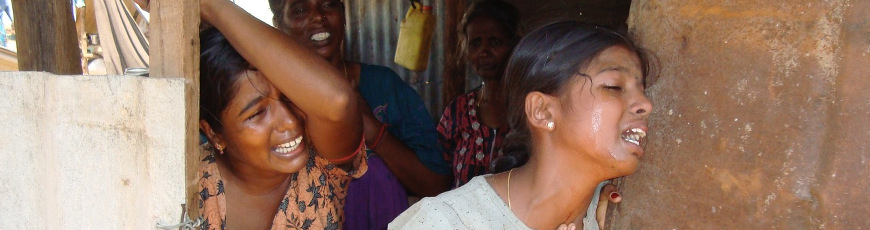
Rarely does a film launch take place at Britain’s House of Commons, but there seemed no more appropriate venue for the official release last week of the Sinhala translation of the politically charged No Fire Zone: The Killing Fields of Sri Lanka. The feature film documents the atrocities committed in the final weeks of the Sri Lankan Civil War both by government troops and the Tamil Tigers. This Sinhala translation marks the first time that the people of Sri Lanka will be able to see a film that shows their recent history in stark, unflinching clarity.

Director Callum Macrae at a House of Commons press conference with Conservative MP Lee Scott
The award-winning doc, directed by Callum Macrae was originally released in 2013, and was preceded by two Channel 4 television documentaries on the Sri Lankan Civil War, one of which was the recipient of an AIB Award (watch Channel 4’s Sri Lanka’s Killing Fields: War Crimes Unpunished).
No Fire Zone has already ignited international political debate with British Prime Minister David Cameron saying, “This documentary raises very serious questions that the Sri Lankan government must answer about what it did to protect innocent civilians. Questions that strengthen the case for an independent investigation.”
The House of Commons press conference was attended by Members of Parliament and journalists from around the world. The timing of the announcement was not arbitrary. Later in the evening, President Sirisena of Sri Lanka, on a four-day visit to London, was to have met with the Queen. The President, during his visit, described a new Sri Lanka, set on a course of reform.

Callum Macrae with Labour MP SiobhainMcDonagh
For director Callum Macrae, the new Sinhala translation of the film is a challenge to President Sirisena to show the world how genuine his reforms are. In February, the government set up a Presidential Task Force on Reconciliation (PTFR). The Task Force aims to bring about “harmony and effective reconciliation” in Sri Lanka. It remains to be seen if “truth” will also be part of that equation.
No Fire Zone exemplifies how powerful good journalism and good filmmaking can be. The film is an unflinching, meticulously documented look at atrocities committed during the war that have been continuously denied by the government. The Sri Lankan government aggressively blocked the film internationally, frequently with the cooperation of its allies. Both the filmmakers and those trying to screen it have been subjected to banning, arrest, and even death threats.
AIB had the privilege of sitting down with AIB winner and director Callum Macrae to talk about the film, Sri Lanka, and the how journalistic integrity is more important than ever.
What is your background and how did you get started as a filmmaker?
I’ve been a number of things. In American parlance, I was a “garbage collector” for two years, then a teacher, then became a print journalist, and then a TV journalist and an onscreen reporter. Then as I got older and fatter, I moved behind the camera and became a director.
You have made several films in war zones. Would you say that it’s a kind of specialty of your now?
I certainly don’t just do war, though I have covered a few conflicts. Quite a few. I’ve made all sorts of film about all sorts of issues. I’ve made films about supermarket price wars (watch The Real Price of Cheap Food – Channel 4 Dispatches) and all sorts of things. I feel happiest when I’m making films that are addressing issues of injustice, addressing issues of inequality. As journalists and as filmmakers, we actually have not just an opportunity, but an obligation to try– and this sounds very pretentious –to try and give a voice to the voiceless.
You say, “pretentious”, but isn’t that something that’s essential to good journalism? Journalists tend to be cynics, but do you also have to be an idealist?
I think that as journalists we can tell the truth. I think that as journalists we can tell the stories of people who might not otherwise be heard and that’s a great privilege that’s a great honour. With this Sri Lanka film, and with the series of Sri Lanka films, somebody said to me ‘Are you a campaigner or a journalist? Because you’ve been effectively pursuing this as a campaign.’
My attitude is: I’m a journalist, first and foremost. I’m a journalist who’s got a story and done a lot of work on that story. I also know it to be true. The reactions to the story, particularly from the Sri Lankan government have been to ban it, to say it’s lies, to attack it. So I have defended my story, because I know it’s true, and I’ve defended my right to tell that story, even though there’s been attempts to ban the film around the world. We’ve even had death threats. It makes it all the more important the story be told, because people are trying to stop it being told.
If that makes me a campaigner, it makes me a campaigner in defense of my story, in defense of the truth. In that case, I’m happy to be called a campaigner.
Should journalists try to be impartial, or is it important to have a point of view?
There’s a bit of a fetish made a bout the use of the word “impartial”. I don’t think that is the best word to use, partly because when it is used, it’s misused. If you are impartial between the rich and powerful and the poor and vulnerable, then you preserve the status quo. So I think the word “impartial” is all too often used as a kind of device or fig leaf to cover up what is shoddy, complacent and compliant journalism which does not attempt to speak truth to power.
Now there are some things that we do have to be. And I prefer to saying “impartial” that we have to be truthful and accurate and fair. They’re all slightly different things, and actually fairness is an extremely important part of that equation. So we’re not only being truthful and entirely accurate, which is a fundamental duty, but we are also being fair to all sides – that’s not the same as being impartial, at least not in the sense that “impartial” is used. I think those should be our bywords, “truthful”, “accurate” and “fair”.
 We’re clearly in a time now when journalists are being bullied and threatened globally. What has been your experience with that?
I think there’s change on a number of levels. Certainly in terms of war zones and other situation like that, we used to be seen as impartial people and have a degree of protection. We were seen as, not quite the Red Cross, but with some of the same right to immunity, as it were. That has changed.
I remember very specifically experiencing that change when I went to Iraq in 2003. For about a week we were driving around with “TV” written on the side of our van, thinking that gave us some kind of protection. Over the next two or three weeks, one by one, we took the “TV” signs off our cars and our vans. I took to driving around in battered old taxis, as anonymous-looking as possible.
Things have transformed, and that process of transformation I watched happen over the space of a few weeks. We are seen now as legitimate targets and quite often identified with where we come from and we are no longer seen as impartial. That’s one level where things have changed.
But in saying things that are unpopular – “speaking truth to the powerful, as they say – I don’t think there has been a change. Journalists have always been attacked when they say things that those in power do not want to hear. So that hasn’t changed. And I think that’s an essential and fundamental part of our job.
How did you get started making the feature documentary, No Fire Zone?
It’s a thing that perplexes the Sri Lankan government who assume that I must have an agenda and assume that I’m being paid by somebody. Interestingly, this is because the Sri Lankan government itself had such a beaten media in the previous regime. Under the previous regime, if you were independent or challenging, you were threatened, disappeared or even killed. If you wanted to survive and be successful and make money, you were absolutely compliant and kowtowed to the government. So there assumption is you can buy journalists, and I think their assumption was that I must have been bought by somebody.
The reality is completely different. It wasn’t even an area of my expertise originally. I had made films about war crimes, and I was asked, because of my experience making those kinds of films, to direct a film for TV about what happened at the end of the war in Sri Lanka. So I came into it without any prejudices, without any preconceptions and investigated what happened.
It is without doubt one of the most shocking stories I have ever worked on. I’ve seen some horrible things in real life. I’ve seen people die in front of me in wars. But the sheer scale and the deliberate barbarism was so shocking and, frankly, made me angry. That’s another thing that journalists should be allowed to be – angry.
Also more importantly, once we started speaking about this, then the victims started coming forward, saying “somebody’s listening at last”, so we got more and more material. So having been hired to do the first film, I went back to the channel and said, “Look, I think we should make another film.” And ITN productions, through the production company, agreed.
What can you do in a feature documentary that you can’t do on TV?
There are differences. In television programming you have advert breaks, you have 45 minutes, you have people going out and making a cup of tea or going to the toilet, and you need to construct it around keeping a mass audience interested. When people have decided to come to your feature documentary, they’re committed, so you can give more context and you can go into more detail. They’re both equally important. I don’t think this feature documentary would have happened without the television programmes.
Can a feature reach a different kind of audience? Is there any particular benefit to that kind of format and distribution?
It’s a very different beast. My background is making television, where you’re hired to make the film, you’re given the budget, you make the film, then it goes out and is seen instantly by a large number of people. A feature you have to win your audience, you have to campaign. The extraordinary thing about a feature is you can spend as much on the publicity and the distribution campaign as you do in making the film.
With the No Fire Zone feature documentary funding was also an issue, because we wanted to make sure when that nobody could argue that anyone who funded it had an agenda. We had to be journalistically independent. So we went to foundations. We went to Channel 4, Pulitzer Foundation, BritDoc, the Bertha Foundation, and a lot of people were very, very generous. These are all institutions that have an agenda of sorts – they all believe in freedom of speech – but they don’t have an agenda in terms of Sri Lanka. So we only raised funds from those kinds of organisations.
Once we made the film, then we went to the public. We’ve had two Kickstarter appeals, both very successful. We’ve also gone to foundations and various other people and raised the funds to keep the campaign going.
I assume the Sinhalese translation is something you were thinking about all along?
Yes, we’ve wanted to do a Sinhalese translation for a long time. When we produced the TV documentaries and then the film, the Sri Lankan government under Mahinda Rajapaksa tried to stop anybody seeing it. There were a series of attempts to prevent the film being seen.
They put pressure on foreign governments not to show it. We were at a screening in Malaysia, and it was raided, at the behest of the Sri Lankan government, by the Malaysian authorities. Over 30 police officers and censorship officials came in, and they arrested the organisers, including Lena Hendry from a Malaysian human rights NGO, Pusat KOMAS (Read a letter to the Malaysian Prime Minister from The Law Society in the UK protesting Henry’s arrest) http://international.lawsociety.org.uk/files/Lena%20Henry%20Malaysia.pdf). And Lena Henry is still facing potentially three years in jail for showing that film.
In India, they refused the film a censorship certificate on the grounds that – and this was in the letter they sent to us, extraordinarily – “it could damage friendly relations with Sri Lanka”, an open admission of political censorship. And they banned me from having a visa – they won’t let me go to India. We’ve seen that internationally.
In Sri Lanka itself, we have just seen lies told about the film. They claim that the evidence is faked, which it isn’t. They have a problem, which is that every time they claim something is faked, we get more evidence.
So when we showed footage of a twelve year old child, Balachandran Prabhakaran, dead, and said that he’d been executed, they said “No, he was killed in a crossfire.” We then were able to produce photographs of him, showing that he was alive in captivity for at least two hours before he was taken and executed.
When we said that the Tamil Tiger TV presenter Isaipriya had been executed and sexually assaulted, they said “No, she died in combat. She was fighting”. We were subsequently able to get video footage of her being captured alive, and in the new version of the film there are even more stills of her being captured alive. And of course this is a government which said they had a policy of zero civilian casualties and that no civilians had died. We now know that tens of thousands died, possibly 40,000 – possibly even 70,000 thousand, according to one UN estimate.
But inside Sri Lanka, the vast majority of the people still believe what they’re government told them. They have not seen the film, they haven’t been allowed to see the film, and they believe that it is concocted and it’s lies. And it isn’t.
Now they have a new government, which has said it will lift restrictions on the internet, said that it will allow a free press. We’re taking them at their word, and we’re making this film available. We hope this film will be seen as widely as possible in Sri Lanka, we hope it won’t be banned – we trust it won’t be banned. And we’re also calling on the Sri Lankan television stations to transmit the entire film.
The new Sinhala translation of No Fire Zone is available at the film’s website, NoFireZone.org.
12 March 2015
Gilat’s CellEdge small-cell-over-satellite solution combined with Intelsat’s fully integrated, end-to-end satellite solutions deliver rural cellular connectivity to mobile network operators worldwide
As demand for mobile connectivity increases in regions where there is an absence of terrestrial infrastructure, mobile network operators (MNOs) are looking to satellite communications to expand their subscriber base, comply with universal service obligations and most importantly, provide rural communities with the necessary connectivity to help their populations and economies thrive.
Today, Gilat Satellite Networks Ltd. (NASDAQ: GILT), a worldwide leader in satellite networking technology, solutions and services, and Intelsat SA (NYSE: I), the world’s leading provider of satellite services, announced that they have joined forces to provide MNOs with a comprehensive 2G/3G cellular infrastructure solution to better serve rural regions.
Gilat’s CellEdge small-cell-over-satellite solution, combined with Intelsat’s global satellite coverage and IntelsatOne® terrestrial infrastructure, means mobile network operators can now expand 2G/3G services quickly and profitably throughout their desired service territories.
An initial example of the collaboration between Gilat and Intelsat is RuralCom’s thousand-mile-long Alaska Highway and British Columbia Coast cellular network. Gilat’s CellEdge 3G network is leveraging Intelsat’s global satellite fleet through its Intelsat Horizons 1 satellite and its IntelsatOne terrestrial network. Gilat’s CellEdge 3G network is optimizing space segment usage through a hub located at an Intelsat teleport. Joining forces, the two companies are enabling RuralCom to quickly expand its network and extend its subscriber base at a significantly reduced capital expenditure base level.
“There are vast stretches of the Alaska Highway and BC Coast which have no existing wireless service. We believe that providing such coverage greatly benefits the public safety and brings significant protection to life and property.” claimed Bob Hillman, President and CEO of RuralCom. “We searched for the most advanced technology and equipment and chose the Gilat-Intelsat solution for their innovative cost-effective offering coupled with their vast rural expertise in deploying under harsh environmental conditions.”
“At Intelsat, our mission has always been to provide satellite solutions that can deliver broadband connectivity to any location,” stated Stephen Spengler, Deputy Chief Executive Officer of Intelsat. “The innovation and collaboration occurring throughout the satellite ecosystem, such as the optimization of Gilat’s platforms on the Intelsat EpicNG infrastructure, result in attractive and efficient solutions for MNOs that connect their subscribers and support profitable growth for their businesses. Our collaboration with Gilat provides MNOs with a seamless and cost efficient way to deploy and expand their wireless networks, and the opportunity to transition over time to the higher performance of Intelsat EpicNG as it begins entering service in 2016.”
“Teaming up with Intelsat brings tremendous value to our joint customers,” expanded Erez Antebi, Gilat’s CEO. “Intelsat’s vast global array of fully integrated, end-to-end satellite solutions, together with our innovative all-inclusive solution, allows operators to extend their cellular coverage to virtually anywhere in the world within two to three months.”
12 March 2015
The BBC today launched Make it Digital – a major UK-wide initiative to inspire a new generation to get creative with coding, programming and digital technology.
The UK is facing a significant skills shortage with 1.4m digital professionals needed over the next five years.[1] BBC Make it Digital will capture the spirit of the BBC Micro, which helped Britain get to grips with the first wave of personal computers in the 1980s, for the digital age. It will put digital creativity in the spotlight like never before, and help build the nation’s digital skills, through an ambitious range of new programmes, partnerships and projects. These include:
- A major partnership to develop and give a ‘Micro Bit’ coding device to all year 7 children across the UK for free to inspire a future generation – 1 million devices in total
- A season of programmes and online activity involving the BBC’s biggest and best-loved brands, including Doctor Who, EastEnders, Radio 1, The One Show, Children in Need, BBC Weather and many more, including a new BBC Two drama based on Grand Theft Auto and a documentary on Bletchley Park
- The Make it Digital Traineeship to create life-changing opportunities for up to 5,000 young unemployed people, the largest traineeship of its kind
- Partnerships with around 50 major organisations across the UK, including Apps for Good, ARM, Barclays, British Computing Society, BT, Code Club, DWP, Google, iDEA, Microsoft, Nesta, Samsung, Skills Funding Agency, Tech City UK, the Tech Partnership, TeenTech, Young Rewired State
- A range of formal education activities and events, including Bitesize, Live Lessons and School Report
Tony Hall, BBC Director-General, said: “This is exactly what the BBC is all about – bringing the industry together on an unprecedented scale and making a difference to millions. Just as we did with the BBC Micro in the 1980s, we want to inspire the digital visionaries of the future. Only the BBC can bring partners together to attempt something this ambitious, this important to Britain’s future on the world stage.
“BBC Make it Digital could help digital creativity become as familiar and fundamental as writing, and I’m truly excited by what Britain, and future great Britons, can achieve.”
BBC Make it Digital aims to get the nation truly excited about digital creativity. It will inspire audiences young and old through world-class TV, radio and online content, and focus on helping younger audiences discover their creative potential and take their first steps. Make it Digital will also amplify the great work already taking place across the UK through major initiatives with partners, and ensure young people can continue their learning journeys long after 2015.
[1] Digital Sector Skills Assessment, August 2014. Parthenon Analysis.


