
23 March 2017
Alhurra Television interviewed ISIS defectors and their families as part of a two-part documentary series debuting March 25th. Alhurra cameras were exclusively allowed into Mitiga prison in Libya to interview two female defectors for Women With ISIS and husband and wife defectors for A Father’s Agony.
“This is an important story that needs to be told. The defectors share first-hand accounts of what it was like living under ISIS and the horrors they witnessed,” stated MBN President Brian Conniff. MBN manages and oversees Alhurra Television. “These documentaries capture the pain felt not only by the defectors, but also by their families.”
The first documentary, Women With ISIS tells the stories of Waheda, an independent Tunisian woman who was preparing to get her Master’s Degree. She followed her husband to Libya and then Turkey, it is only then that she realized he was taking her to join ISIS. After Waheda got to Syria, she realized things where not like she thought and begged her family to come save her. As she sits in a Libyan prison, she says she lost everything in her life: her husband, her son’s health and her freedom. Through Alhurra, she record a video message to her mother begging for forgiveness for ruining her life.
Women With ISIS also profiles Gofran, who went to Syria on her own volition, looking to support ISIS and what she believed they stood for. She was married off to an ISIS militant her first day in the country. As time went on and she learned more about ISIS, she questioned their rhetoric and way of life. She found that “everything was a lie” and that ISIS fighters were killing Muslims. Gofran also talks about her harrowing escape, which ultimately left her husband dead and a life sentence in prison for her. Women With ISIS will air on Saturday, March 25 at 20:00 GMT.
In the second documentary, A Father’s Agony, Akram and his wife Asma, speak out from a Libyan prison about what drew them into ISIS. Once they got to Syria, Asma talks about being shocked at what she saw and soon wanted to leave. She shared the hopelessness that they felt, because they knew if they returned home it would mean prison. The documentary also interviews Akram’s family, who talked about the astonishment they felt when he left to join ISIS. Through Alhurra, Akram is able to talk to his family for the first time since he left for Syria. They share their pain of knowing they may never see him again. A Father’s Agony debuts Saturday, April 1st at 20:00 GMT.
Both programs will also be streamed via Facebook Live when they debut on Alhurra. Women with ISIS and A Father’s Agony was produced by the same team that produced Alhurra’s award-winning documentary series Delusional Paradise.
Alhurra Television is an Arabic-language television network that broadcasts to 22 countries in the Middle East and North Africa via satellite. It is operated by the non-profit corporation “The Middle East Broadcasting Networks, Inc.” (MBN). MBN is financed by the U.S. Government through a grant from the Broadcasting Board of Governors (BBG), an independent federal agency. The BBG serves as a firewall to protect the professional independence and integrity of the broadcasters.
(Source: Alhurra press release)

22 March 2017
Radio Sawa, the Arabic-language radio network that has changed the media landscape in the Middle East and North Africa, is celebrating its 15th anniversary on 22 March 2017.
Since its launch in 2002, the pan-Arab radio network has been known for offering an innovative format combining accurate and objective news with popular Arabic and English music. With more than 12 million listeners each week across the MENA region, Radio Sawa provides breaking news through up-to-the-minute reports on unfolding events in the Middle East as well as in-depth coverage of topics often unaddressed in the Arab media, such as freedom of speech, religious freedom, countering extremism, women’s rights, and political pluralism. The station has attracted the admiration of Arab audience and forged a reputation that has inspired imitators throughout the region.
 “Over its first 15 years, Radio Sawa has successfully broadened the perspective of our audience on issues of importance in the Middle East and around the world,” said Brian Conniff, President of Middle East Broadcasting Networks (MBN), pictured right, which manages and operates Radio Sawa. “Robust access to balanced, unbiased, and accurate journalism makes Radio Sawa an indispensable resource in the Arab media landscape.”
Today, Radio Sawa is expanding its reach by providing news and information to Arab audience through different media platforms, including mobile devices and the Internet. Radio Sawa maintains an active all-news website (www.radiosawa.com) which provides both up to the minute news and information as well as live streaming audio, making the network one of the most trusted sources of news and insights on social and political life in the Middle East and North Africa. The Radio Sawa Android and iOS mobile apps offer a mobile-first experience for engaging with millennial audiences to solicit their voices and opinions. The apps stream eight Arabic channels, feature Sawa Chat interactive conversations, newscasts and the top tech, entertainment and culture news of the day. In addition, Radio Sawa shares compelling stories, audio and photos with millions of social media users on Facebook and Twitter.
Innovative use of technology and high quality journalism earned Radio Sawa several high profile awards, including New York Festivals, AIB Awards, GSMA Global Mobile Awards, and Appy Awards.
Radio Sawa is operated by the non-profit corporation “The Middle East Broadcasting Networks, Inc.” (MBN). MBN is financed by the U.S. Government through a grant from the Broadcasting Board of Governors (BBG), an independent federal agency. The BBG serves as a firewall to protect the professional independence and integrity of the broadcasters.
20 March 2017
Arab Satellite Communications Organization – Arabsat – participates in the Broadcast, Satellite & Digital Media Event for the Middle East and North Africa, “Satellite MENA 2017”, from March 21st to 23rd at Dubai International Convention and Exhibition Centre.
As an active member of the Satellite Interference Reduction Group, Arabsat sponsors IRG workshop with the presence of many broadcasters in both public and the private sectors on Monday 20th March 2017 at the Address Hotel in Dubai.
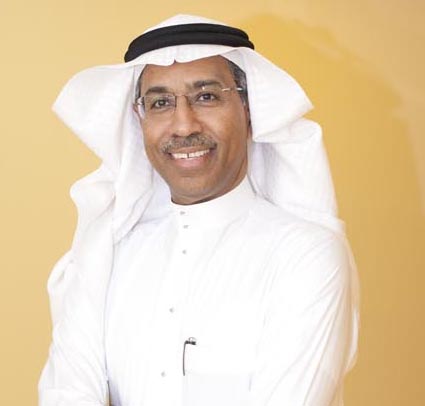
Eng. Khalid bin Ahmed Balkheyour, President & CEO of Arabsat, said that Arabsat will showcase its latest agreements to promote its exclusive orbital position 26⁰ East, such as the agreement with MBC Group – MBC has already begun to shift all its important channels to be broadcast exclusively on Arabsat satellites – in addition to many other similar agreements.
Balkheyour also added that Arabsat will showcase the capabilities of its new successfully launched satellite Badr-7 and the 6th generation satellites. This includes at present 4 satellites, three of which are being manufactured: one is scheduled to be launched by the end of 2017 and the other two will be launched in 2018. The 4th satellite 6-D agreement was recently signed in a partnership with Taqnia Space.
(Source: Arabsat press release)

16 March 2017
The BBC Academy has further expanded its global outreach, adding content in five languages. Free resources, dedicated to journalism and language use in Bangla, Kyrgyz, Somali, Spanish and Ukrainian, are now live with mobile-first new design (in the first iteration of the sites) – bringing the total number of BBC Academy’s non-English-language sites to 23.
Najiba Kasraee, Editor of Academy International Sites, says: “Language and journalism are inseparable. It’s important to provide journalists not only with skills training but also to make them aware of the importance of observing language standards that have been honed by BBC journalists, based on our guidelines of unbiased, accurate and fair reporting.”
The new websites, which offer content in three main categories – Language, Skills and Standards – provide a guide to the BBC’s editorial principles and core values. Journalists will find language tools that ensure standards such as impartiality and accuracy are maintained as they translate materials or create and deliver original content.
Covering a wide range of multimedia skills – television, radio and digital production – the sites focus on presentation, writing, and use of social media. A special focus is given to helping journalists produce and present under pressure of tight deadlines.
The new content adds to sites for BBC journalism in Arabic, Burmese, Chinese in simplified form, Chinese in traditional form, French, Hausa, Hindi, Indonesian, Kinyarwanda, Kirundi, Pashto, Persian, Russian, Swahili, Turkish, Urdu, Uzbek and Vietnamese. This development is in line with BBC Academy’s pledge to provide support for all of the BBC World Service languages – including the new language services that will start delivering content as part of BBC World Service’s expansion.
The sites are available via the BBC Academy International Language Sites and can be accessed via homepages of respective BBC World Service languages websites.
(Source: BBC press release)
15 March 2017
First European-built high-power all-electric satellite on track for launch on 25 April
Enhanced capacity and innovationfor Asia-Pacific markets
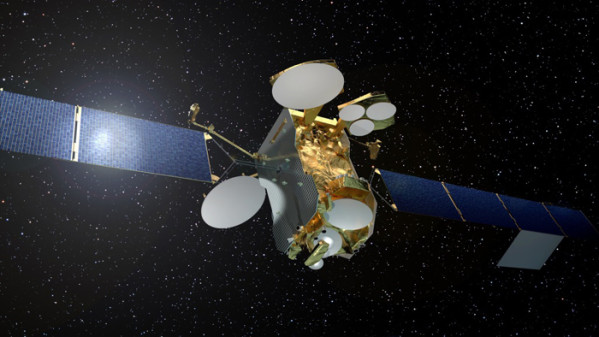
The EUTELSAT 172B satellite of Eutelsat Communications (NYSE Euronext Paris: ETL) is in the final stages of preparation at the Airbus Defence and Space facility in Toulouse and will be boarded onto a special flight to French Guiana on 20 March. The 3.5 tonne satellite is scheduled for an Ariane launch on 25 April from the European Spaceport in Kourou.
EUTELSAT 172B will deliver increased capacity for fast-growing applications that include in-flight and maritime connectivity, cellular backhaul, corporate networks, video distribution and government services. It will be located at 172° East, a key neighbourhood providing exceptional Asia-Pacific reach over land and sea, from Alaska to Australia. Eutelsat’s new satellite will replace the EUTELSAT 172A satellite to provide service continuity and improved performance via C and Ku-band payloads connected to a range of footprints.
Setting a new benchmark for in-flight connectivity over the Pacific
EUTELSAT 172B will also feature a new Ku-band multi-beam payload delivering 1.8 Gbps of throughput to serve the world’s fastest-growing region for air traffic. The Asia Pacific represents the largest opportunity for in-flight entertainment and connectivity services, with over 8,000 aircraft to be delivered to the region by 2034.
The customised High Throughput payload on EUTELSAT 172B will be a major growth platform for in-flight connectivity, notably Panasonic Avionics Corporation, one of the leading suppliers of in-flight entertainment and connectivity services for commercial airlines. Eleven elliptical spotbeams will enable Panasonic to bridge the West coast of North America to Asia, and down to Australia, supporting rapid air traffic growth in the region and surges in bandwidth use across densely used flight paths.
Innovations abound
EUTELSAT 172B satellite will be the first satellite to fly new features and capabilities devised by Europe’s industry.
- The key enabling technology for the inflight connectivity mission is the Multi-Port Amplifier (MPA) that will dynamically distribute power between the 11 spotbeams in direct response to surges in capacity on-board aircraft.
- EUTELSAT 172B will also use innovative deployable robotic arms to orientate and control thrust direction during the approximately four-month ride to geostationary orbit and for station-keeping during its minimum 15 year life.
- The satellite will also fly structural components made with 3D-printing (Additive Manufacturing) techniques that reduce the cost and time required to build spacecraft parts.
EUTELSAT 172B is expected to enter service in third quarter 2017, replacing EUTELSAT 172A that will be relocated to another orbital position.
(Source: Eutelsat press release)

15 March 2017
RFE/RL has published never-before-seen color images of life in the Soviet Union in the 1950s, from a trove of original video and still images that was recently discovered in cardboard boxes in a former auto body shop in the Pacific Northwest of the United States.
The archive belonged to U.S. Army Major Martin Manhoff, who spent more than two years in the Soviet Union in the early 1950s, serving as assistant army attache at the U.S. embassy. From his vantage point at the embassy, then located just off Moscow’s Red Square, he filmed what is thought to be the only independent footage of Stalin’s funeral procession, providing an unfiltered view of the event not conveyed in official Soviet reels.
CLICK TO VIEW THE MANHOFF ARCHIVE
Douglas Smith, the award-winning historian and author of five books on Russia who discovered the Manhoff Archive, has said that the photos have “a human quality that is missing from any other depiction” of Soviet life at the time.
This first installment of the Manhoff Archive, released by RFE/RL in English and Russian and featuring the Stalin funeral procession video, has been viewed more than 2 million times on Russian-language platforms and over 250,000 times in English, as has been shared 20,000 times on Facebook in Russian and English.
Part two of the series, which will be published on March 20, will feature Manhoff’s collection of photos of city life in the Soviet Union of the 1950’s. Part three, “On The Road,” to be issued on April 3, is a selection of his photos taken during his travels outside Moscow. On April 10, the final instalment, “Spy or Artist,” will focus on the discovery of the archive and the man himself.
About RFE/RL
RFE/RL is a private, independent international news organization whose programs — radio, internet, television, and mobile — reach 27 million people in 26 languages and 23 countries, including Russia, Ukraine, Iran, Afghanistan, Pakistan, the republics of Central Asia and the Caucasus, and the Baltic states. It is funded by the U.S. Congress through the Broadcasting Board of Governors (BBG).
(Source: RFE/RL press release)
