12 May 2017
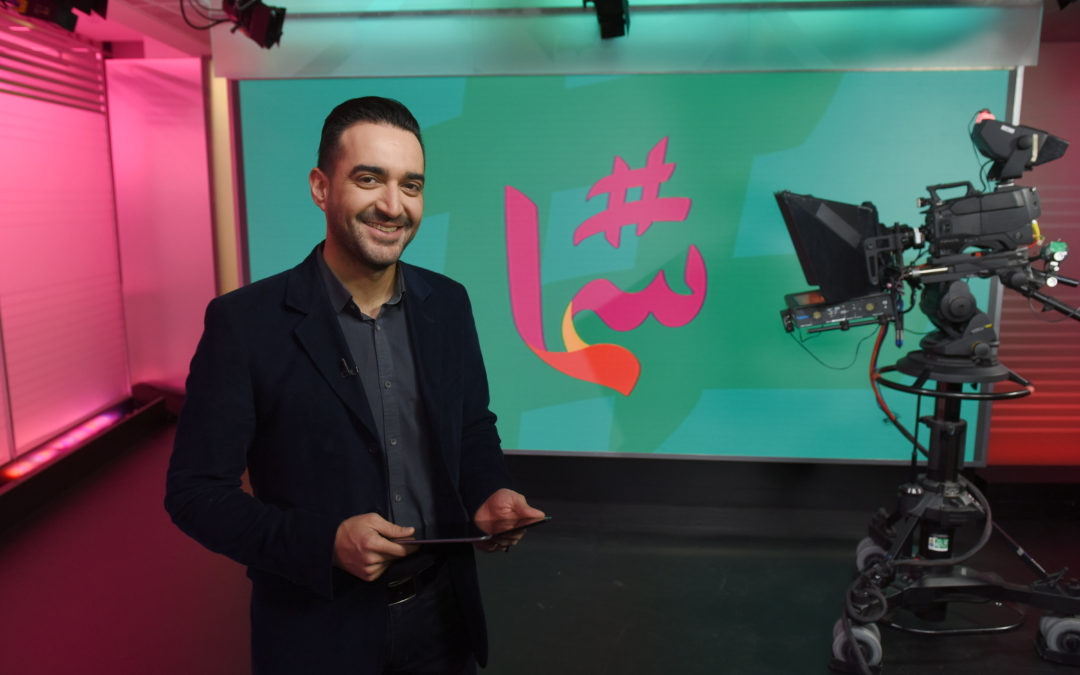
In the run-up to the elections in Iran, BBC Persian is launching its digital-first TV programme. From Saturday, 13 May, #Shoma invites audiences across platforms to share their opinions and stories.
Saturday to Wednesday live interactive programme, #Shoma (“#You”) delivers innovative and creative ways to engage with the audience on TV, the website and via social media, bringing an even greater variety of stories to the BBC Persian output. It will specifically target young digital audiences and women as well as wider TV audiences.
In addition to coverage of the daily news, #Shoma also reflects stories trending in BBC Persian’s target market across its social-media platforms: Facebook, Twitter, Instagram and Telegram messenger service. It will engage audiences in discussions about what matters to Persian-speaking viewers and listeners in Iran and across the globe.
#Shoma will be live on TV (and streamed via BBC Persian website), from Saturday 13 May at 15.00 GMT (19.30 Tehran Time, 20.30 Kabul Time, 11.00 ET), Saturday to Wednesday. It adds to the BBC Persian early evening broadcast mix of news and features.
Presenter of #Shoma, Ehsan Amertousi, sees the new programme as an exciting opportunity to deepen BBC Persian’s engagement with its audience: “In the run-up to the elections in Iran, it’s really important we give our audience the chance to share their opinions on the issues that really matter to them. Regardless of where or who you are, how old you are, #Shoma will be the place to come and tell us what is happening in your life and what you want for the future.”
The programme’s Editor, Leyla Khodabakhshi, says that #Shoma will give the audience the chance to participate and shape part of BBC Persian’s daily news agenda: “Combining the informality of social with the sense of drama often only TV programmes can bring, and delivered and shared on digital platforms, #Shoma is designed to reflect how our audience today wants to interact with us. This is a great opportunity for them to be at the heart of the BBC Persian output, and I’m so pleased we’re launching just before the election, so we can bring voters and commentators together as our audience debates the important issues.”
#Shoma can be reached via:
Tel: +44 2077650078; +44 2077650077 SMS: +44 7860063333 Twitter: @bbcshoma Instagram and Telegram: @bbcpersian, send message via @bbcshoma Facebook: /bbcpersian
BBC Persian is part of the BBC World Service.
12 May 2017
A district court in Baku today ruled in favor of a lawsuit blocking access within Azerbaijan to the website of Radio Free Europe/Radio Liberty’s (RFE/RL) Azerbaijani Service, azadliq.org.
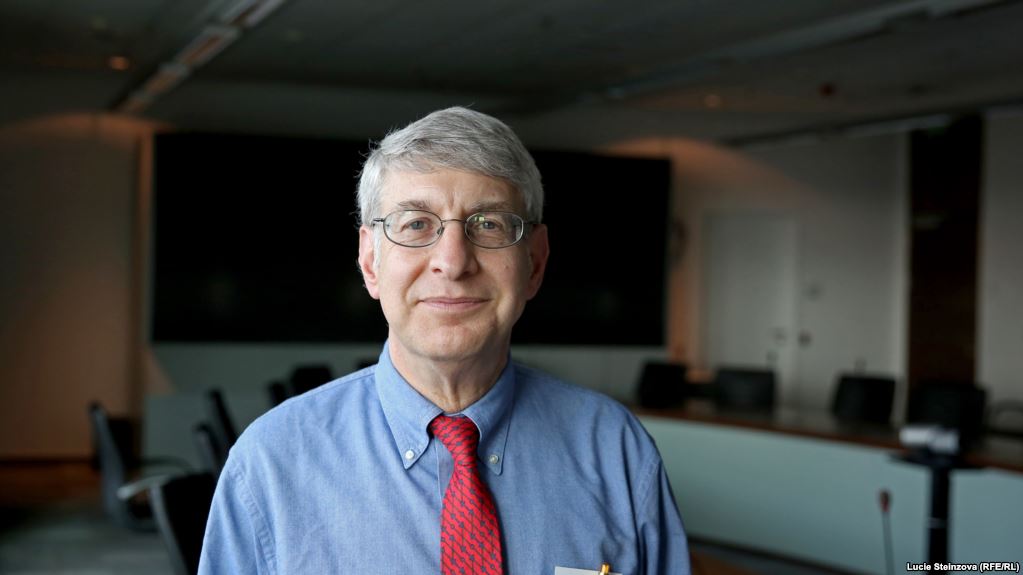
RFE/RL President Thomas Kent said, “Today’s ruling is another blatant attempt by Azerbaijani authorities to try to silence our reporting in Azerbaijan. It misrepresents RFE/RL’s work in Azerbaijan, and violates Azerbaijan’s international commitments to respect media freedom. We will appeal it.”
The Sabail district court in Baku ruled that the Ministry of Transport, Communications, and High Technology’s request to block access to the websites of five news outlets — RFE/RL’s Azerbaijani Service, the nongovernmental Azadliq newspaper (unrelated to azadliq.org), Meydan TV, and the online Turan TV and Azerbaycan Saati TV channels — must be carried out.
Access to the websites has been blocked since March 27 on the instructions of the Prosecutor General’s Office, which claims that the websites “pose a threat” to Azerbaijan’s national security, and accuses them of “posting content deemed to promote violence, hatred, or extremism, violate privacy, or constitute slander.”
The March blockage followed the publication of investigations by the Azerbaijani Service, in cooperation with the Sarajevo-based Organized Crime and Corruption Reporting Project, on financial activities linked to members of the president’s family and inner circle. The Service also recently published reports raising questions about costs associated with a September 2016 referendum that extended the term of presidential office from five to seven years, and created the post of Vice President, to which President Ilham Aliyev appointed his wife earlier this year.
According to Azerbaijani legislation, a guilty judgement by the court against azadliq.org could be used as grounds to prosecute the website’s correspondents. In 2014, authorities imprisoned prominent investigative reporter Khadija Ismayilova on charges of encouraging an attempted suicide and financial crimes in a case that foreign governments and rights advocates condemned as politically motivated.
Ismayilova’s arrest came just weeks before Azerbaijani state agents raided and sealed RFE/RL’s Baku bureau, forcing it to close in May, 2015. In December 2008, RFE/RL was formally banned from FM airwaves by Azerbaijan’s National TV-Radio Council, but continues to engage with its audience via satellite and online social media platforms.
(Source: RFE/RL press release)
10 May 2017
One day ahead of the NexTV CEO event in Mauritius, Ethiopia’s Information Network Security Agency (INSA), in charge of the transformation of the country’s high-tech and security industry, officialised the launch of Ethiosat, its new TV platform. INSA has inked a multi-year contract with Eutelsat Communications (NYSE Euronext Paris: ETL) for capacity at its 7/8° West neighbourhood, the pole position for satellite TV in the Middle East and North Africa. Launching with nine national channels, Ethiosat will progressively ramp-up with additional content.
A single satellite TV platform
Ethiopia’s national satellite TV landscape currently features more than 30 channels that broadcast from multiple satellites. The new platform offers licensed channels the opportunity to broadcast in a single platform, ensuring easy reception for TV homes across the country and accelerating digital take-up. The first channels, including EBC (Ethiopian Broadcasting Corporation) and Oromia TV[1], are available to homes on a Free-to-Air (FTA) basis. Multiple national and regional channels as well as commercial broadcasters are also candidates for inclusion in the flagship platform.
Easier route to digital entertainment
Viewers can access Ethiosat using a single 90cm antenna and set-up box rather than sourcing content through multiple providers at multiple orbital positons. The new platform also taps into the installed base of antennas already equipped for reception from the popular 7/8° West neighbourhood.
A game-changer for Ethiopia’s media landscape
Michel Azibert, Eutelsat’s Chief Commercial and Development Officer, said: “This contract puts EUTELSAT 8 West B firmly on Ethiopia’s broadcasting map and is indicative of a new wave of growth in the country’s digital TV market. The pull of our 7/8° West neighbourhood is driven by a strong channel line-up of over 1,200 channels and the diversity and exclusivity of free-to-air content.”
Gebremeskel Teklemariam, Directorate Director at INSA, added: “Ethiosat will be a game-changer for our media landscape. In drawing on the rich experience and expertise of Eutelsat, INSA can broadcast a diverse line-up of services across Ethiopia, further enriching the 7/8° West satellite neighbourhood with quality and compelling content.”
How to receive Ethiosat on EUTELSAT 8 West B
Frequency: 11 512 MHz
Vertical polarisation
DVB-S2, 8 PSK, FEC 2/3
Symbol rate: 30 MBaud
8PSK
[1] Complete line-up of channels on Ethiosat: EBC, EBC3, Adiss TV, ES TV, Oromia TV, TIGRAI TV, Southern TV, Amhara TV, Walta TV
(Source: Eutelsat press release)

10 May 2017
Euronews invests to become the world’s first Global news brand, which means the first Global media that adapts itself to the expectations of its multiple local audiences.
To succeed, Euronews reinvents its broadcast and digital offer whilst strengthening its core editorial positioning. To go even further in delivering on its ‘All Views’ mission, the organisation has embarked upon an innovative new strategy to stay ahead of consumer needs in today’s news landscape by customizing its offer for audiences, operators and advertisers.
In May, 2017, Euronews starts a key phase of implementation of its NEXT strategic plan, after a one year-development, investing in its digital transformation and delivering its new daily news offer by rethinking its journalism and production workflow, while reshaping its distribution model.
From May 10 to 24, this new strategy will see the end of the multiplex (one video signal in several languages) that has been at the core of the Euronews offer since its inception in 1993. This multiplex will be replaced by the launch of 12 distinct premium cross platform editions to meet the rapidly changing demand of consumers.

3 May 2017
Newly-launched international news channel set to work with colleagues globally through industry trade association
London, 3 May 2017
The Association for International Broadcasting, the trade association for television, radio and online, is pleased to announce that TRT World has become its newest member. TRT World is also the first broadcaster in Turkey to join the Association.
TRT World launched in October 2015 as Turkey’s first English-language international television and digital news service. Operated by the country’s public broadcaster, TRT [Turkish Radio and Television Corporation], TRT World broadcasts from its main studio complex in Istanbul and from studios that the channel has established in London and Washington DC.
“We are pleased to welcome TRT World, the newest international news channel, as a Member of the Association for International Broadcasting,” said Simon Spanswick, AIB chief executive. “The AIB’s Members across the world look forward to working with TRT World, its executives and its journalists as the channel develops its global reach. As part of the AIB ‘family’, TRT World will benefit from the expertise and knowledge that the Association has developed over the past quarter century.”
“Becoming a Member of the Association for International Broadcasting is a step on our journey to be among the world’s top international news channels,” commented Ibrahim Eren, deputy director general of TRT and CEO of TRT World. “It is important for us to collaborate with colleagues from across the international media industry and to share ideas and experiences. The AIB provides the perfect platform to help us share and learn as we develop the channel. We are looking forward to working closely with the AIB and its members across the world.”
TRT World’s membership of the Association for international Broadcasting provides access to the full range of the AIB’s work. This includes regular market intelligence briefings and participation in working groups that focus on important areas including cyber security, sustainability, emerging technology and audience measurement. The AIB also supports its Members on key issues that affect their business through the Association’s international lobbying work.
The Association for International Broadcasting is a not-for-profit, non-governmental organisation that works for the benefit of its Members and of the wider media industry. Governance rests with an elected six-person Executive Committee that includes executives from Bloomberg, the BBC, DW, France Médias Monde, Radio Taiwan International and RT.

2 May 2017
UNESCO invites radio broadcasters to celebrate
World Press Freedom Day, 3 May, 2017
Theme for 2017: Critical Minds for Critical Times: Media’s role in advancing peaceful, just and inclusive societies
Every year, 3 May is a date which celebrates the fundamental principles of press freedom; to evaluate press freedom around the world, to defend the media from attacks on their independence and to pay tribute to journalists who have lost their lives in the exercise of their profession.
Click here to access resources such as the World Press Freedom Day press kit and cartoons for your radio station’s website.
You can visit SoundCloud to download and broadcast the UN Secretary General’s message here.
Message of the UNESCO Director-General Ms Irina Bokova: EN – FR – AR – CH – ES – RU
