2 June 2017
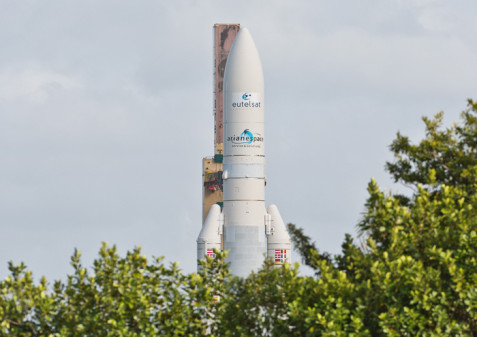
With this latest contract, Arianespace now has three further satellites to launch for Eutelsat
Following the launch earlier today of the EUTELSAT 172B satellite, Eutelsat Communications (NYSE Euronext Paris: ETL) announces a new launch services contract with Arianespace.
The Arianespace order book now includes three future launches for Eutelsat in addition to the 32 Eutelsat satellites already launched by the European launch services provider over more than 30 years for one of the world’s leading satellite operators.
Of the three satellites to be launched, EUTELSAT 7C (built by SSL) will be orbited in 2018, followed in 2019 by Eutelsat Quantum built by Airbus and the high throughput satellite built by Thales.
Commenting on this latest contract, Rodolphe Belmer, Chief Executive Officer of Eutelsat, said: “Following today’s historic Ariane launch of Europe’s first high-power all-electric satellite, we are proud to once again team up with Arianespace, a long-standing partner and a leader in Europe’s vibrant space industry. The technological diversity of the three new satellites entrusted to Arianespace is a compelling reflection of our commitment to innovation for the greater benefit of our customers, and to maintaining our competitiveness.”
Stéphane Israël, Chief Executive Officer of Arianespace, added: “This latest contract bolsters Eutelsat’s position as a benchmark customer of Europe’s heavy launcher, since Ariane 5 will launch three satellites for the European operator in 2018 and 2019. Our hope is that Ariane 6 will subsequently take over so that we can help Eutelsat meet its objectives even more efficiently.”
(Source: Eutelsat press release)
31 May 2017
NBC News and Euronews today announced the closing of a transaction in which NBC News is making a significant financial investment in Euronews. NBC News is acquiring 25% of the company, with the funding going to support expanded news coverage and programming across Europe.
Media Globe Networks will continue to be the majority shareholder in Euronews, and the existing public shareholders will remain in the company and continue to ensure its European focus and sensibility. The company’s TV and digital platforms will ultimately be co-branded EuronewsNBC.
Euronews is a widely recognized brand in Europe with nearly 500 journalists, reaching 434 million homes across 158 countries, in 12 languages, on television and on digital platforms.
Andrew Lack, Chairman of NBC News and MSNBC said “If we had started with a blank slate we still could not have designed a better partner for NBC News as we look to strengthen our global reach. Euronews has unmatched scale as well as the unique ability to offer international coverage rooted in a local sensibility in every country and language it spans.”
Michael Peters, CEO of Euronews said: “The expertise of NBC News combined with the uniqueness of Euronews’ European DNA, will allow us to fully realise our ‘All Views’ editorial philosophy. This unrivalled collaboration reflects our shared commitment to unbiased reporting. It also strengthens Euronews’ mission to empower people around the world with independent information they can trust. In the competitive international news market, Euronews aims to be the go-to media outlet for expertise on European affairs. This is a new age for Euronews and we are pleased to partner with the outstanding NBC News team.”
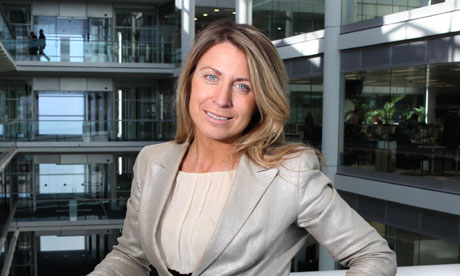
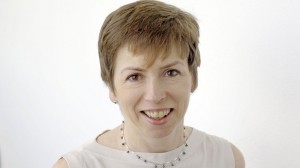
Deborah Turness (pictured), President of NBC News International, will lead the NBC side of the collaboration, providing editorial and programming leadership as well as strategic guidance. She will work in partnership with Peters.
“Euronews is a unique news organization, with unparalleled reach in 12 languages,” Turness said. “Together NBC News and Euronews will strengthen and deepen the commitment to European journalism and the ‘All Views’ brand. We will create compelling programming and content that will give voice to the people, the views and the diversity of Europe. It’s an immensely exciting time to be investing in Europe’s story.”
The coming together of the two big brands will see Euronews access NBC’s newsgathering, digital content and programming expertise. Likewise, Euronews will provide news content and resources from Europe for use on NBC News and MSNBC programs and platforms.
(Source: Euronews press release)
30 May 2017
Long-term agreement sees Arqiva become broadcaster’s exclusive provider of infrastructure and technical services
Arqiva, the leading UK communications infrastructure company, has announced a new long-term partnership with multi-channel broadcaster Information TV to provide new channels to the UK DTH market.
The agreement gives customers of Information TV the advantage of using Arqiva’s infrastructure and technical excellence to provide reliable service, as well as the ability to interconnect to different markets and platforms globally.
With Arqiva signed up to be the exclusive provider of technical services for the broadcaster, Information TV will now have a one-stop shop for all services relating to the DTH market.
Adam Bishop, Director at Information TV, said: “Our customers come to us expecting the delivery of high-quality, reliable services, and having worked with Arqiva for a number of years, we had complete confidence in selecting them as our key supplier.best gaming keyboard
“Thanks to the technical support we will receive from Arqiva, we can balance our ever-expanding operational demands – offering our customers access to top-class broadcast services, while being able to concentrate our time on developing their businesses.”
Alex Pannell, Commercial Director, Satellite & Media, at Arqiva, said: “In this age of VoD and OTT content, broadcasters are increasingly looking at new channels to unlock additional revenue streams.
“Arqiva is constantly adapting its services to market demands, and we are hugely excited to work alongside Information TV over the coming years to provide a platform to ambitious broadcasters and their audiences.”
Information TV’s current roster of channels includes Frontrunner Sports, the only free-to-air sports channel on Sky and Freeview, along with Showcase and Property Show.
(Source: Arqiva press release)
25 May 2017
The BBC is reaching a record weekly audience of 372m around the world, a rise of 7 per cent year on year, new audience figures published on 25 May 2017 reveal.
These figures – the Global Audience Measure (GAM) – show how many individuals the BBC reached weekly with its news and entertainment content in the year 2016/17.
The data show the BBC’s weekly global news audience has risen by 8 per cent to 346m, with TV, audio and social media driving the increase.
The BBC World Service has seen an increase of 9 per cent since last year, taking its total audience to 269m.
Global News Ltd, which comprises BBC World News television and BBC.com, now has an audience of 121m, an increase of 12 per cent, with weekly BBC World News TV viewers rising to 99m.
World Service English has seen another significant rise, with an audience of 75m around the world, a 14 per cent increase. This has been driven both by syndication and by the growth of digital audio, including internet audio and podcasts. The number of listeners accessing World Service English through internet audio has shot up by 147 per cent to 21m.
The GAM figures show the BBC is on track to achieve the target set by the Director General of a 500m weekly audience by 2022, the BBC’s centenary year.
 Francesca Unsworth, Director of the BBC World Service Group, says: “In a turbulent year for international news, with mounting concern about fake news and social media filter bubbles, more people than ever before are turning to the BBC for reliable, impartial information they can trust.
“We will shortly launch the first new language services in the biggest expansion of the World Service since the 1940s. Today’s audience figures show the need for the BBC is greater than ever.”
 Tim Davie, Director of Global and CEO of BBC Worldwide, says: “It is encouraging to see that BBC branded services continue to be the trusted go-to platforms for audiences across the globe.”
- Facebook is by far the biggest source of the BBC’s social media reach globally, but there are regional variations – in Iran alone BBC reaches 1.4m people on the encrypted messaging app Telegram, from a total BBC audience of 12.6m in that country.
- The top ten markets for the BBC’s international news services are Nigeria (36m), USA (34m), India (28m), Bangladesh (16m), Egypt (15m), Pakistan (13m), Iran (13m), Tanzania (10m), Indonesia (7.6m), and Canada (7.5m), where the BBC significantly boosted its presence last year.
- BBC radio saw a 12 per cent uplift in audience figures in the USA during an eventful election year – taking weekly reach to 14.6m people

24 May 2017
The Middle East Broadcasting Networks (MBN) launched the Maghreb Voices website to inform and engage with the people of the Maghreb region in North Africa. The website targets nearly 100 million people and focuses on issues that resonate with them, such as countering ISIS, the rights of women, human rights, corruption, human trafficking, slavery, minorities’ rights and illegal immigration.
 “Maghreb Voices will provide its audience an unmatched opportunity to participate in important discussions and share their ideas, issues and concerns openly and freely,” stated Brian Conniff, President of MBN (pictured right). MBN manages and oversees Maghreb Voices. “Maghreb Voices will meet the tremendous need for an uncensored interactive platform in this underserved part of the world.”
The launch of Maghreb Voices comes after the success of Raise Your Voice-Iraq, which communicates with Iraqis about the future of their country. Similarly, engagement is Maghreb Voices main feature, using Community Managers to facilitate dialogue and interact with its audience. It goes to the streets of Morocco, Algeria, Tunisia, Libya and Mauritania to interview ordinary citizens and get their views on important topics that matter to them. The website also covers the news of the Maghreb community in the United States, Netherlands, France and Spain.
Maghreb Voices also utilises social media properties to facilitate the two-way conversation. It provides a 24/7 discussion forum for all voices on topics of concern through Facebook, Instagram, Snapchat, Twitter and WhatsApp.
There are several unique sections to Maghreb Voices. One of them is dedicated to defectors’ stories. This section includes interviews and first-hand accounts of people who joined and then left extremist groups such as ISIS after they became disillusioned. Another section of the website invites readers to ask any question they have about the U.S., to be answered by the Maghreb Voices staff, or outside experts. Audiences will also find video content, polls, question of the day, citizen journalist content and articles.
Maghreb Voices incorporates VOA’s Learning English into its website, so that its audience will have access to their videos and English language tools. More information about Maghreb Voices can be found on its website and Facebook page.
Maghreb Voices is operated by the non-profit corporation (MBN). MBN is financed by the U.S. Government through a grant from the Broadcasting Board of Governors (BBG), an independent federal agency. The BBG serves as a firewall to protect the professional independence and integrity of the journalists.
(Source: MBN press release)
23 May 2017
Arabsat announced the launch of Euronews new frequency on its wide coverage satellite BADR-4, to join other tier-1 regional & international news channels run on Arabsat BADR-4 News frequency 11996 MHz. Euronews’ original frequency will remain active till the end of May 2017, while Arabsat viewers are informed about the change via Arabsat’s linear and non-linear media distribution network.
“We are delighted with our long partnership with Euronews, one of the most viewed news channels in Europe and look forward to continue to offer their uniquely rich and varied news streams through Arabsat BADR-4 News frequency 11 996 MHz,” says Khalid Balkheyour, Arabsat President & CEO. “This move supports our content strategy to deliver specialized video frequencies reflecting market demand to Arabsat audiences across the MENA & Europe and ensuring the best Free-To-Air viewing experience at home.”
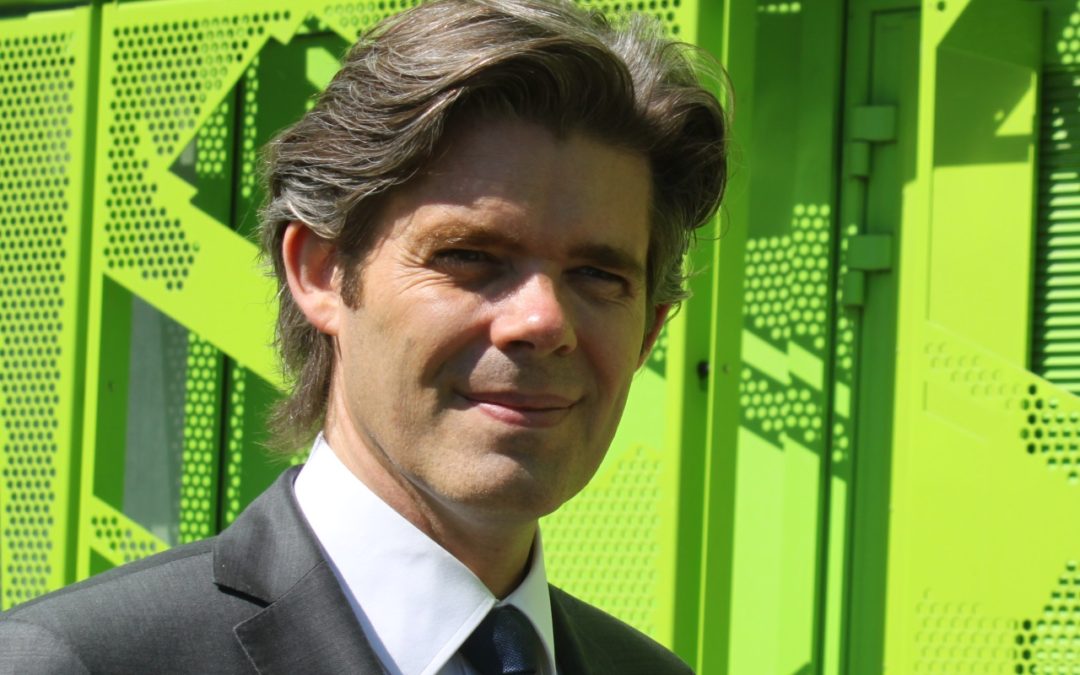
“Arabsat is a long-standing partner for Euronews and we warmly thank all the team that supported the launch of the Euronews English frequency to cover this key region.” says Michael Peters, Euronews CEO (pictured).
“With Arabsat we are guaranteed to reach a wide audience which is, in common with our consumers across EMEA, composed of curious and open-minded leaders, interested by our unique positioning. In addition to providing an expert coverage on European news, our multicultural team of 30 nationalities is also our strength. Indeed, Euronews’ journalists are the best qualified to share and analyse the diverse opinions on global events, rather than imposing a unilateral perspective as so often happens in the current news landscape. In a world of infobesity and polarized opinion, this is the uniqueness of Euronews that I’m sure will meet the interests of the Arabsat audience.”
About Arabsat Euronews new frequency:
Satellite: Arabsat BADR-4 @ 26° East
Coverage: MENA & Europe
Frequency: 11996 MHz
Polarity: Horizontal
Symbol Rate: 27500
FEC: 3/4
Transmission: DVB-S
Modulation: QPSK
Neighbouring News channels: France 24 Arabic, France 24 English, France 24 French, DW Arabia, BBC Arabic, CNBC Arabia, Sky News Arabia, Africa 24 & RTI.
(Source: Euronews + Arabsat press release)
