19 January 2018
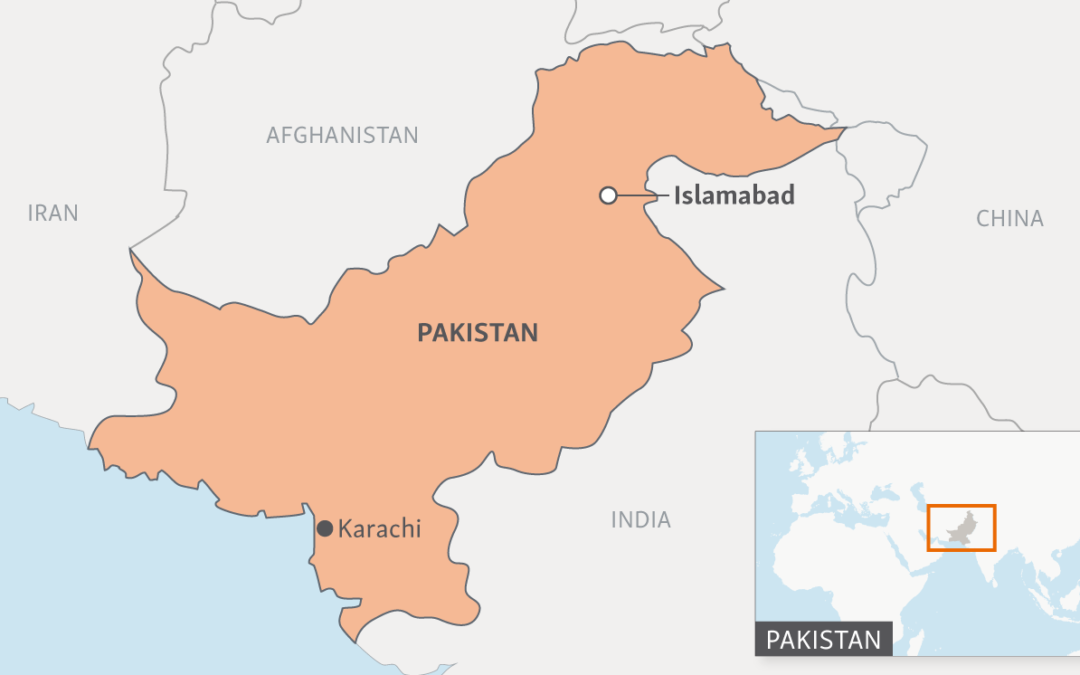
Radio Free Europe/Radio Liberty (RFE/RL) has deplored the closure by Pakistan’s Interior Ministry of its office in Islamabad, Pakistan, following accusations by the country’s Inter-Services Intelligence (ISI) agency that its programs are “against the interest of Pakistan” and “in line with [a] hostile intelligence agency’s agenda.”
“Radio Mashaal serves no intelligence agency or government,” said RFE/RL President Thomas Kent, using the local name of RFE/RL’s Pashto-language service in Pakistan. “Our reporters are Pakistani citizens who are dedicated to their country and live and raise families in the villages in which they report. We demand that their safety be ensured, and that they be permitted to resume their work without fear or delay.”
Interior Ministry officers arrived at the company’s Islamabad bureau on January 19 to present the closure order and clear and seal the premises. The order came amid deteriorating U.S.-Pakistan relations. Pakistan’s chief of army staff General Qamar Javed Bajwa stated on January 12 that Pakistan feels “betrayed” by U.S. criticism that it is not doing enough to fight terrorism and by Washington’s decision to suspend military aid for Islamabad.
RFE/RL, a private news organization supported by a U.S. congressional grant, has documented increasing threats against Mashaal journalists over the last two years as a result of their reporting. Freedom House has designated the country “not free,” and the Committee to Protect Journalists consistently ranks it among the most dangerous countries for the media.
Radio Mashaal was established in 2010 to provide an alternative to extremist propaganda in the tribal regions along Pakistan’s border with Afghanistan, reaching audiences that are otherwise subject to the “mullah” radio of Taliban extremists and the recruitment efforts of other militant groups.
Mashaal senior editor Daud Khattak spoke optimistically about the tribal regions recently. “Twenty years ago, people of [the tribal areas] saw weapons as a symbol of grandeur. Today, they want schools and colleges…[and] courts.”
While Mashaal continues to use radio to reach its audience, it also counts more than 1.6 million Facebook fans, and registered 81 million video views on Facebook and 10 million views on YouTube in 2017.
(Source: RFE/RL press release)

11 January 2018
Arab Satellite Communications Organization – Arabsat – has announced that during CABSAT (14th-16th January 2018 at Dubai International Convention and Exhibition Centre) it will showcase the capabilities and services of its Arabsat 6th generation satellites. Arabsat is preparing to launch two new satellites in 2018 to complete its 6th generation satellites project, which consists of four satellites.
Eng. Khalid bin Ahmed Balkheyour, President & CEO of Arabsat, said that at CABSAT Arabsat will also showcase the latest agreements that enhance its Hot Spot 26° East, and will announce the signature of new contracts and agreements.
On January 3-4, Arabsat held its 160th Board of Directors meeting in Istanbul, Turkey, under the chairmanship of Dr. Nasser Al-Hujailan, Deputy Minister of Culture and Information in Saudi Arabia. On the agenda were the results of 2017 as well as the estimated budget for 2018.
(Source: Arabsat press release)
10 January 2018
Yemeni security forces have closed Al-Jazeera’s bureau in the southwestern city of Taiz on the orders of the Saudi-led Arab military coalition fighting the Houthi rebels, according to media reports.
“The Higher Security Committee in Taiz today decided to shut down the office of Al-Jazeera TV in the province, attributing – in a statement – the decision to attempts by the channel to sow discord within the legitimacy [government forces] ranks and the Arab coalition,” the Saudi Okaz newpaper reported on 9 January.
The newspaper quoted the statement as saying that the committee had discussed the “negative practices” of some TV stations, including Al-Jazeera.
Al Jazeera Media Network issued a statement saying: “the Network calls on the authorities in the city of Taiz to reverse its decision and allow Al Jazeera’s journalists to carry out their professional responsibilities duties without any hindrance or intimidation.”
It is not the first time Al Jazeera journalists have been targeted in the city. Three network staff were abducted in Taiz in January 2017.
It is extremely dangerous for media workers to report throughout the war-torn country. Houthi rebels last month attacked the Yemen Al Youm TV channel and took dozens of media staff hostage.

9 January 2018
Dining with the Chef : Washoku in Paris
Part 1 – Culinary Heritage Abroad
Jan. 5 Fri. 14:30/ 20:30/ Jan. 6 Sat. 2:10/ 8:10 (UTC) <28 min.>
Part 2 – Game Changers
Jan. 12 Fri. 14:30/ 20:30/ Jan. 13 Sat. 2:10/ 8:10 (UTC) <28 min.>
Master chef Tatsuo Saito and singer/actress Yu Hayami explore Japanese cuisine in Paris. Ambitious chefs in France are devoting their talents to dishes such as sushi and ramen, striking a balance between remaining true to the tradition and adding their own signatures. Chefs from Japan also are redefining the boundaries. See how they handle the ingredients of Japanese cuisine and the five basic tastes, including umami.
One Last Vision : A Photographer’s Final Journey
Jan. 5 Fri. 23:10/ Jan. 6 Sat. 5:10/ 10:10/ 17:10 (UTC) <49 min.>
World-renowned photographer Yoshikazu Shirakawa has been taking pictures for more than half a century. His collections include “The Alps,” “The Way of Buddhism,” and “The World’s Hundred Greatest Mountains.” Now, at 82, he is working on his 12th compilation. It pays homage to the laws of nature, from which Shirakawa believes humans should learn. The program chronicles his journey to the Midwest of the United States, where he encounters nature head on.
Alain Ducasse, Japanese Cuisine Par Excellence
Jan. 6 Sat. 23:10/ Jan. 7 Sun. 5:10/ 10:10/ 17:10 (UTC) <45 min.>
Alain Ducasse, master of French cuisine and worldwide restaurateur, has long held an interest in Japan’s traditional “washoku” cuisine. He has opened a restaurant in Tokyo’s luxurious Ginza area, challenging himself to make the most of ingredients sourced from across the country. With the arrival of winter, Ducasse has selected sea urchin and pole-and-line fished cod from Hokkaido, as well as Shogoin Daikon radish from Kyoto. He draws inspiration from Japan and his homeland in turning the ingredients into delectable French dishes.
Expressions from the ObscureⅡ
Jan. 27 Sat. 23:10/ Jan. 28 Sun. 5:10/ 10:10/ 17:10 (UTC) <49 min.>
Self-taught artists are claiming respect and recognition for themselves and their work. Marie Suzuki is one such person, a creator of what has come to be known as art brut, made by artists who have learned on their own. She cultivates her skills primarily to please herself. Nevertheless, others have taken notice. The program features an exhibition of Japanese art brut in Nantes, France, including that of Suzuki. Tune in to see how boundless imagination turns into expression beyond words.
(Source: NHK WORLD TV press release)

8 January 2018
RNZ has announced a content-sharing agreement with the Auckland-based publisher Indian Newslink.
Indian Newslink publishes a fortnightly newspaper with a readership of more than 65,000, making it the most-read Indian newspaper in New Zealand. It also runs several news websites http://www.indiannewslink.co.nz, and is prominent in organising a number of awards for the New Zealand Indian community.
The new arrangement maintains RNZ’s policy of sharing content with media partners and extends to 13 the number of agreements in place with a range of media organisations. Glen Scanlon, RNZ’s head of digital, said the agreement with Indian Newslink was in keeping with RNZ’s push to work with different media outlets and reach more New Zealanders. “We really want to be a helpful partner to the broader journalism industry and believe these kind of deals allow us to do that while making sure we meet all of our charter commitments to reach Kiwis with their stories. We expect to announce more partnerships in the future.”
Editor and general manager of Indian Newslink, Venkat Raman, emphasised the importance of the new relationship. “While accuracy is paramount and sacred to any news organisation, speed is equally important in today’s world, which constantly looks for news updates. Digital technology makes that requirement standard, and our tie-up with Radio New Zealand will also enhance credibility and quality. This is an exciting development in media relationship and we in Indian Newslink look forward to meaningful and professional partnership with Radio New Zealand. The South Asian community is of growing importance to New Zealand and to the world and we believe that with Radio New Zealand, we will be in a better position to disseminate information through reports and features.”
(Source: RNZ press release)
20 December 2017
2017 saw an unusually high number of women among the 68 journalists killed doing their jobs this year, according to Killing the Messenger, a biannual analysis of journalist casualties by the International News Safety Institute (INSI).
Out of the 68 journalists and media workers killed in connection with their work this year, nine were women. That is 13 percent of the total. Last year, the figures were three women out of 112 killed, or nearly three percent. In 2015 there were 10 women out of 101 casualties, or 10 percent.
This disproportionately high number of female casualties comes after a year when women across the industry spoke out en masse against the abuse and harassment they have experienced at the hands of sexual predators.
“This is the highest proportion of women killed in comparison with their male colleagues in the eight years since I joined INSI, and it is a particularly egregious finding in the current climate,” said INSI director Hannah Storm.
High profile female deaths in 2017 included Kim Wall whose headless torso was discovered in the sea near Copenhagen; Shifa Gardi, a pioneering Kurdish journalist; Gauri Lankesh who became the most high-profile journalist killed in India in recent years; and Miroslava Breach who spent the days before her murder in March documenting the murders of others in Mexico’s drug war.
Afghanistan, Mexico, Iraq, Syria and the Philippines were the five most dangerous countries for journalists in 2017, according to Killing the Messenger which is compiled for INSI by Cardiff School of Journalism.
Statistically speaking, the overall number of journalists killed is lower than in recent years, and insecurity does not discriminate on the basis of gender.
Out of the 68 media casualties, 32 men and women died in countries supposedly at peace such as Mexico, India and Malta.
The vast majority of casualties were local journalists, living and working where they died.
Four citizen journalists lost their lives this year, all but one of them in Syria where access for professional media workers continues to be difficult and dangerous.
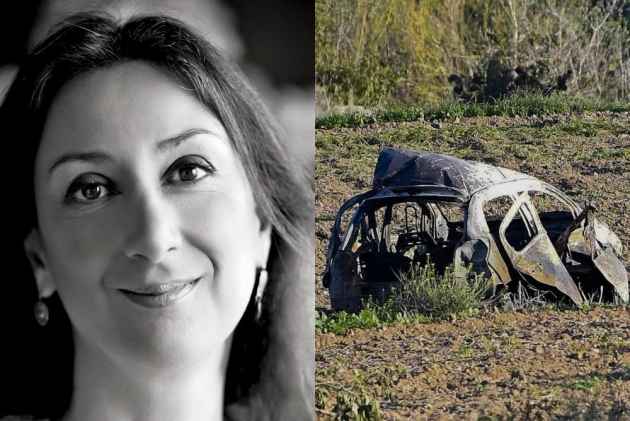
INSI identified nine cases where suspects were identified, arrests made and legal proceedings initiated. These include Peter Madsen who has been charged with the murder of Wall and three men charged in connection with the killing of Malta’s Daphne Caruana Galizia, an investigative journalist blown up by a car bomb in October.
“At INSI we pay tribute to every journalist killed doing their work, whatever their gender, ethnicity or religion. The 68 men and women killed this year have paid the ultimate price and every single one leaves a legacy of loss,” said Storm.
(Source: INSI press release)
