30 April 2018
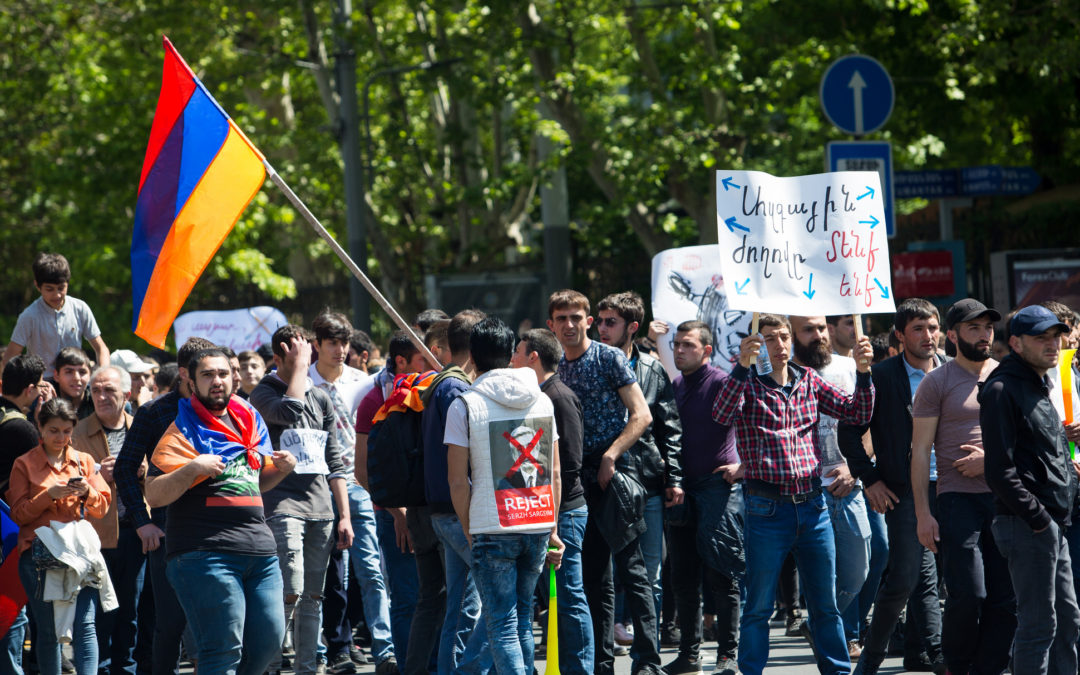
Recent and ongoing unrest in Armenia, sparked by the recent appointment as prime minister of outgoing President Serzh Sarkisian, and his resignation a week later have been widely reported in domestic and international media.
Nearly two thirds of Armenians name unemployment, poverty, corruption, and lack of peace in the country as the most important issues facing this small land-locked country of some 3 million which became independent in 1991.
Web of relations, complex international issues
A war started in 1992 after the Armenian-majority territory of Nagorno-Karabakh declared independence from Azerbaijan in 1988. It ended with a ceasefire brokered by Russia in 1994. Armenia depends on Russia for its security.
Together with Belarus, Kazakhstan, Kyrgyzstan and Russia, Armenia is a member of the Eurasian Economic Union, which it joined in 2015.
Armenia signed also a Comprehensive and Enhanced Partnership Agreement (CEPA) with the European Union in November 2017.
Mixed media landscape
The constitution guarantees the right to freedom of speech and expression.
However, press freedoms are restricted. Armenia was ranked 80th in the 2018 Reporters Without Borders (RSF) World Press Freedom Index, and Freedom House, described Armenia as not free in its latest report
According to IREX, a non-profit organization, Armenia has over 36 active print outlets, 20 radio stations, and 17 TV stations (nine channels in Yerevan, capital, including two Russian state channels and CNN, seven stations with nationwide coverage, including one public station and MIR, the TV station of the Commonwealth of Independent States (CIS). There are also 22 TV stations in regions
The relatively large number of broadcast media outlets may give the misleading impression of a diverse media landscape. However, media ownership is opaque. Many media exist for the sole purpose of supporting a specific political party or figure.
News sources
Television is by far the most popular source for information about politics and current events. However, when asked (in 2017) “how well do you think TVs in Armenia inform the population about what is actually going on in Armenia?” 14% of respondents replied “very poorly” and 25% “quite poorly”, compared to 11% who replied “quite well” and 2% who said “very well”, with 44% replying average.
Radio is used by only about 1% of Armenians as a source of news.
Few Armenians rely on newspapers as their main news source. Print runs are small (1,000-6,000) and most titles are owned by wealthy individuals or political parties.
Internet access is on the rise. More than 2 million Armenians are online; around 72.5% of the population (2018); most users access the web via mobile devices.
The language barrier forces many Armenian journalists to use Russian-language sources over western-language alternatives, given the former an edge.
Television
Public TV Company of Armenia – H1, is the leading domestic channel. The state-owned national channel, not considered yet a full public service broadcaster, was launched in November 1956.
Others channels, all private, include H2, the country’s second channel, a general-oriented channel with the largest coverage of Armenia.
Armenia TV, launched in 1999 by the US-based Cafesjian and Sarkisian family foundations, with its American offshoot launched in 2007
Kentron TV, established in 2002 (available terrestrially and via satellite,
Radio
Public radio of Armenia is the state-owned radio broadcaster. Its website offers news in Armenian, Azeri, English and Russian. Its International Public Radio of Armenia website offers web-based text news in six languages: Arabic, Assyrian, Farsi, Greek, Turkish and Yazidi; services in eight other languages were discontinued in 2016.
Foreign broadcasts and web content for Armenia
Russian TV is widely viewed in Armenia, as Russian is understood by most people. Russian state channels are included in cable packages, a few channels are available terrestrially.
Some international broadcasters provide Armenian-language services.
Russia’s Sputnik, the umbrella company for the foreign-language websites and radio broadcasts of the Rossiya Segodnya (Russia Today) news agency has an Armenian website that offers news and access to audio content.
The US Broadcasting Board of Governors (BBG) has two networks that provide services in Armenian (in addition to services in Russian).
Radio Free Europe/Radio Liberty (RFE/RL) Armenian Service, Radio Azatutyuna, which produces content in Armenian and Russian, was established in 1953.
Every week it offers 20 hours and 40 minutes of radio content, and 100+ hours of TV.
Radio is distributed via FM, satellite, Internet, mobile devices, YouTube, social media, TV programmes are rebroadcast on some local channels.
Voice of America (VOA) Armenian Service, was established in June 1951. VOA describes it as “one of the agency’s smallest but most effective services, with a weekly reach of 32 percent in Armenia”.
The service’s programmes include
– A 10-minute TV report airing Monday through Friday.
– A 20-minute weekly TV magazine airing on Sundays and repeated on Mondays.
– The service produces also a daily five-minute segment for and Armenian TV show.
News from Armenian sources in English
A number of Armenia-based private and state news agencies and Internet news services offer news in English, and in some other languages
A1+, a news website – English-language pages
Arka a private news agency created in 1996 – English-language pages
Armenpress, state-run agency established in 1918 (reports in Arabic also) – English-language pages
Arminfo – a private news agency, created in 1991 – English-language pages
Mediamax, a private portal offering “news, analysis, exclusive interviews” – English-language pages
News.am – a private agency offering “timely and reliable news and information” (reports in Turkish also) – English-language pages
This wide range of media sources will ensure that ongoing political developments will be well covered and available in the country and abroad.
Research by AIB Media Analyst Morand Fachot.
30 April 2018
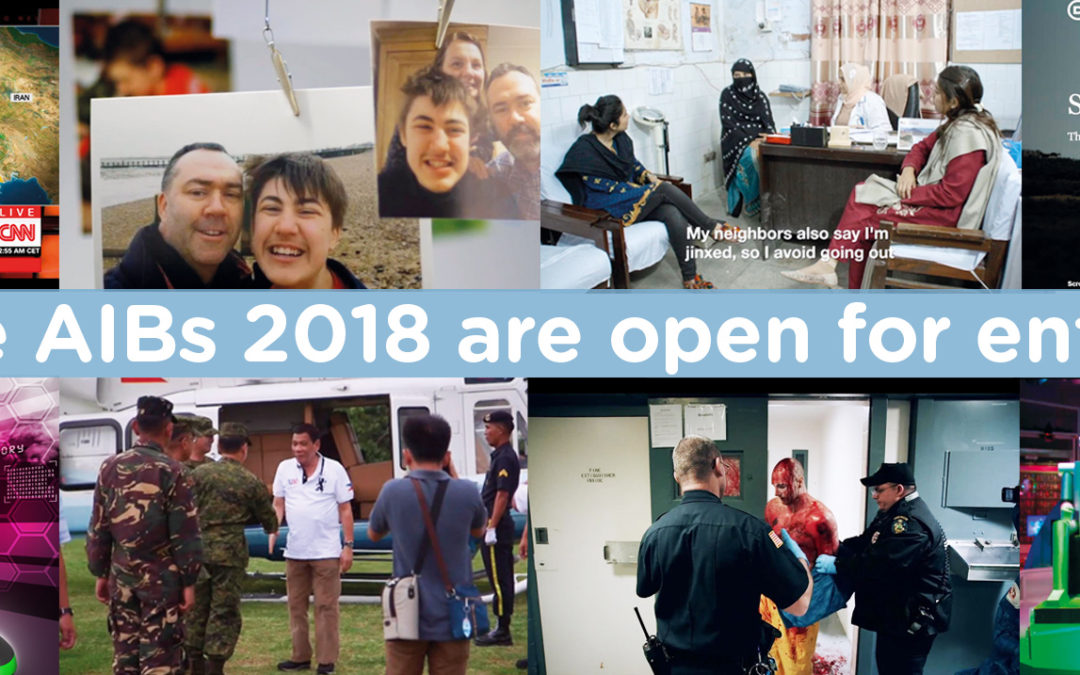
The Association for International Broadcasting has announced a major new award that is dedicated to discovering and supporting new talent in the factual production sector.
The inaugural AIBs Breakthrough Talent award will pay tribute to an individual whose emerging talent marks them out as a future leader in the factual media industry.
This new award is reserved exclusively to those working in factual productions who are under the age of 30. It will reward someone who is making a real difference in their chosen career – whether in front of, or behind, the camera or microphone.
“Factual story-telling is a vital part of the international media industry,” comments Simon Spanswick, chief executive of the Association for International Broadcasting. “This Association wants to encourage new generations to work in the sector that doesn’t always attract the same level of glitz and glamour of the entertainment side of broadcasting. We plan that this new breakthrough talent award will serve as a launchpad for all the nominees as well as the winner.”
The breakthrough talent award will be presented alongside the rest of the 2018 AIBs at the gala dinner in London on 7 November. Hosted this year by Bloomberg’s Mark Barton, the AIBs gala is attended by executives, producers, editors, journalists and key opinion formers from across the world. It’s an event where the world’s best factual productions across television, radio and online are showcased, and it’s somewhere that jobs have been secured in past years. Inaugural sponsors of this year’s AIBs are Celebro Studios and Signiant.
The new breakthrough talent award sits alongside the other 20 categories in this year’s AIBs. The AIBs are a truly international competition as work in any language can be entered. Over the past 14 years, winning entries have been in languages as varied as Czech, Arabic, Nepali, Hindi, Russian, Filipino and Spanish, as well as English.
The AIBs has a panel of independent judges who come from over 30 countries around the world, adding a further international dimension to the competition.
The AIBs are open for entry until 30 June 2018. Full information is at http://theaibs.tv.

24 April 2018
In March and April of this year, European public broadcasters in Sweden, Denmark and Switzerland have come under the spotlight as drastic funding changes are announced.
April: Sweden votes to replace licence by a “public service fee tax”
Following a proposal put forward in October 2017 by a parliamentary committee set up to look at the country’s funding of public service broadcasting, Sweden’s Culture and Democracy Minister Alice Bah Kuhnke announced on 12 April that the government was backing the idea of replacing the licence fee with an income-based tax. The new funding model would be introduced in 2019. The current system, which has been around for 60 years, is no longer considered adapted to the new media environment with programmes being accessed through a variety of devices, not just TV sets.
According to Bah Kuhnke the tax will be set at one per cent of taxable income but would be capped to a maximum of 1,300 Swedish kronor (SEK), the equivalent of $154 / £108 / €125 per person per year. Individuals earning less than SEK 13,600 a month ($1,610 / £1,130 / €1,307) will pay a lower fee. But all those over 18 who pay taxes will pay the new fee, whether they have a TV set or not. Currently only those who have a set have to pay the licence fee, and an estimated 11-15% who have one do not pay the fee, according to the parliamentary committee findings. In addition, companies, will no longer have to pay the licence fee.
The current fee (for radio and TV) is SEK 2,400 ($285 / £200 / €230) per household and is the same for all with no reduced fee for students or retirees. It funds both Sveriges Television (SVT) and Sveriges Radio (SR).The tax will be collected by the Swedish Tax Agency, and the need for the specialized licence fee collecting agency, Radiotjänst, will disappear.
The new tax is meant to strengthen independence from politics as the new public service fee is earmarked specifically for funding public service broadcasting and will also be reported separately on tax returns.
March: Denmark scraps licence fee and cuts budget of its public broadcaster by 20%
As reported in the press on 16 March, a majority of Danish parties have decided to scrap the licence fee (currently £300 or €339) and to cut the budget of DR, the Danish public broadcaster, by 20%. The cut equates to a shortfall of 740 million kroner a year (£87m or €99m).
DR’s director general Maria Rørbye Rønn warned that savings of this scale would result in DR producing and broadcasting fewer hours of Danish-language television.
DR TV programmes, such as the widely-acclaimed crime series The Bridge (Broen / Bron – coproduced with Sweden’s Sveriges Television), the political drama Borgen or the police series The Killing (Forbrydelsen), to name the best-known series only, have won many international awards and nominations. DR collaborate with other public service broadcasters within the Nordvision regional partnership, which produces and distributes programmes in the region and abroad. The cut is likely to have an impact on Nordvision.
March: Switzerland votes against change as it votes to keep the licence fee-funded model for broadcasting services.
23 April 2018
The future of digital media in the Western Balkans will be the main theme of a major conference in Belgrade organised by the BBC’s Serbian service. The Balkan media market is facing serious challenges such as the proliferation of fake news, the fragmentation of the media scene and financial instability.
The Director of BBC World Service Group, Jamie Angus and senior BBC journalists will come together with leading media representatives from around the region at the one-day conference. They will discuss some of the key issues facing the region’s digital news industry, and how the BBC’s standards, experience and insights can help serve the regional audiences on digital platforms.
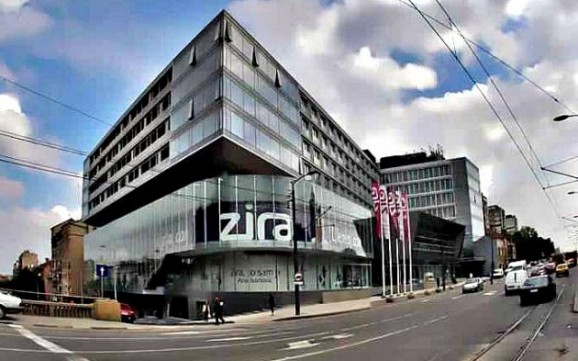
Jamie Angus will open the conference, the Future of digital news in the Western Balkans, at Belgrade’s Hotel Zira on Tuesday 24 April. UK Ambassador to Serbia, Denis Keefe, will join Jamie Angus to greet participants. First Deputy Prime Minister and Minister of Foreign Affairs of the Republic of Serbia, Ivica Dacic, will join Jamie for the closing of the conference.
Jamie Angus says: “Just as our newly launched service, BBC News Serbian, is establishing itself on the regional media scene, I am very happy to welcome our colleagues from Serbia, Montenegro, and Bosnia and Herzegovina to join us in a very timely conversation about reaching and serving digital audiences.”
The subjects to be discussed at the conference include:
- Rising to the global challenge: quality news in the age of fakes, fragmentation and financial uncertainty
- Future of digital news – regional voices
- The Serbian diaspora and digital news – what are they reading and why?
- The BBC Newsroom stylebook – creating a standard style for online journalism
- The business of digital news – where does the money come from?
BBC News Serbian (BBC News na srpskom) digital service was launched on 26 March 2018 and in its first week reached over 95 thousand people through its website, bbc.com/serbian and social media (Twitter and Facebook). BBC News Serbian was the last of the 12 new language services launched as part of the expansion of the BBC World Service between 2017 and 2018.