
6 June 2018
New awards for the best coverage of sustainability issues across the Asia-Pacific region make debut in the 14th annual competition
As the issue of sustainability continues to attract the attention of programme-makers, the Association for International Broadcasting has introduced new awards for productions covering the subject in Asia and the Pacific region.
Home to more than two-thirds of our planet’s population, the Asia-Pacific region is at the centre of challenges brought about by humankind’s actions and through the effects of climate change. In its 2018 competition, the AIBs are searching for the most compelling and engaging TV and radio productions that are telling stories around the issues of sustainability from climate change to poverty reduction, and everything in between.
“It’s one of the media industry’s responsibilities to ensure that audiences are aware of the issues around sustainability,” says Simon Spanswick, Chief Executive of the Association for International Broadcasting. “Media companies are in a unique and privileged position to help lead the conversation and ensure that people engage on key issues around sustainability. That’s why we’ll be rewarding the best programmes that cover this vital subject in this immense region.”
The AIBs 2018 Asia-Pacific Sustainability Award is open to all television, radio and independent production companies, wherever they are based in the world; programmes entered must focus on issues within the Asia-Pacific region.
These two new awards – one for radio, the other for television – form part of this year’s AIBs, the 14th annual competition for the world’s best factual productions. All entries must be submitted by 30 June 2018. The two Asia-Pacific Sustainability Awards will be presented at a gala dinner on 28 September, hosted in Taipei by the sponsor of these two awards, Radio Taiwan International. This is the 90th anniversary of Radio Taiwan International which broadcasts to the world in 13 languages.
Full information on the AIBs 2018 and the Asia-Pacific Sustainability Awards is available online at www.theaibs.tv
4 June 2018
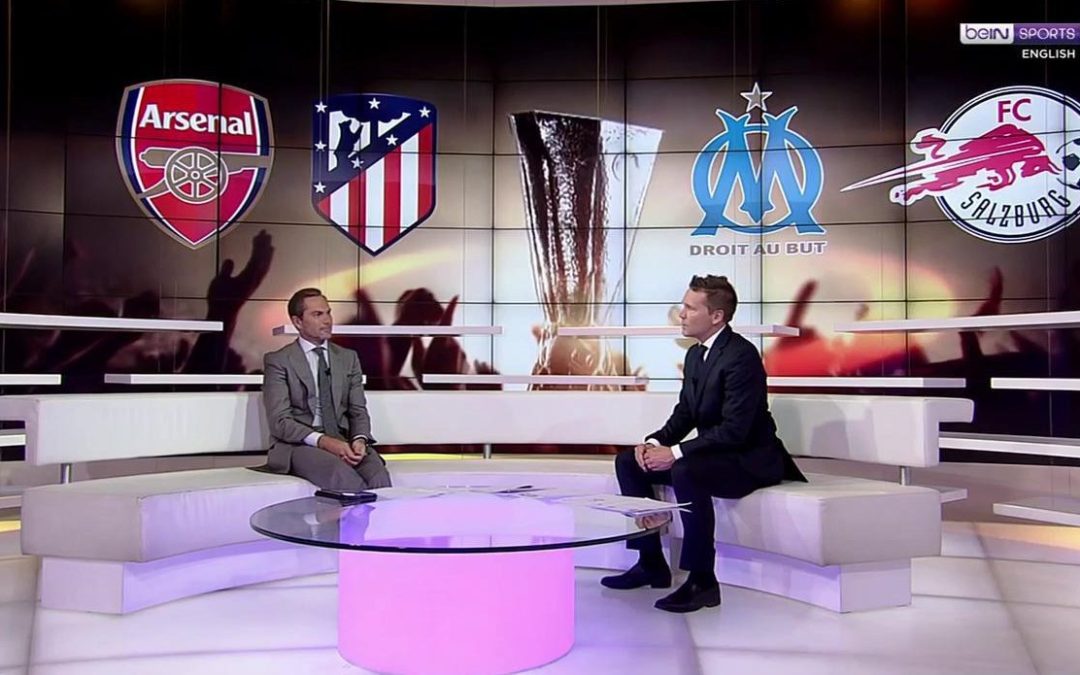
Qatari pay-TV operator claims widespread Saudi-backed piracy harming its services
Subscription TV services are often targeted by individuals and rogue operators eager to access content for free, sometimes to redistribute it for profit. Subscription-only sports and film channels are victims of choice for pirates. The Qatar-based beIN Media Group claims that its content has been pirated and distributed across the Middle East region by a Saudi-based piracy network since October 2017. Loss of subscriptions and revenues is of serious concern for the operator less than a fortnight before the start of the FIFA Football World Cup. beIN owns exclusive rights to the World Cup, but damage and losses are likely to extend after and beyond it. The attack looks to be clearly politically motivated.
Why beIN Media?
Relations between Qatar and Saudi Arabia have been quite strained over many years. Saudi Arabia, opposes the Muslim Brotherhood a political Islamist group founded in 1928, which it sees as a threat to the kingdom’s institutions and declared as a terrorist organisation in March 2014.
Saudi Arabia blames Qatar for supporting the Muslim Brotherhood, which openly supported uprisings in Arab countries from 2011, and other Islamist movements, such as Hamas, which it labelled an extremist organisation in June 2017.
Following an alleged hacking incident of Qatari news and social media websites on which false and incendiary quotes attributed to Qatar’s emir, Sheikh Tamim Bin Hamad al-Thani, were posted in late May 2017, Saudi Arabia, several Gulf Cooperation Council (GCC) countries and Egypt severed relations with Qatar. Some countries shut down all broadcasts of Qatari media inside their borders, including Al Jazeera, and expelled journalists working for the network.
Later that month these countries issued 13 demands to end the diplomatic crisis. These included calling on Qatar to end its support for extremist organisations such as the Muslim Brotherhood and Hamas, and the closure of Al Jazeera.
Saudi Arabia sees Al-Jazeera Arabic as very partisan and close to the Muslim Brotherhood.
The beIN Media Group was created in January 2014 after Al Jazeera dissociated itself from all its sports activities. The holding expanded its portfolio to include movies, general entertainment, factual and kids content, it acquired the film and television studio MIRAMAX and the largest Turkish pay-TV platform, Digiturk, in 2016. The group has now a portfolio of some 60 channels distributed in 43 countries across five continents.
beIn channels are available in the Middle East via Qatar’s Es’hailSat (25.5° East) and Egypt’s Nilesat (7.3° W) satellites.
High stakes
 beIn claims that a Saudi-based piracy network calling itself “beoutQ” has been pirating and selling subscriptions to ten satellite channels carrying premium live sports content stolen from beIN and other broadcasters since October 2017.
This is a very sophisticated and well-funded operation. Tom Keaveny, beIN’s managing director for the Middle East, told The New York Times that beoutQ’s operation “takes industrial scale knowledge and ability and multimillion dollar funding … This isn’t someone in their bedroom.”
Pirated beoutQ channels are available on set top boxes (STBs) openly sold in retail outlets across Saudi Arabia and other countries. However, Oman banned the importation and sale of beoutQ STBs in late May.
beoutQ channels are beamed from the Arabsat-operated Badr 4/5/6/7 satellites (at 26° East).
beIN called on Arabsat to cease making its facilities available to beoutQ, but the satellite operator has denied liability.
beIN general counsel Sophie Jordan told AFP “We have requested FIFA to take direct legal action against Arabsat and the indications we have, show that they are behind that.” Despite saying it supports beIN’s anti-piracy efforts, “FIFA has been reluctant to openly criticise Saudi Arabia,” according to The Independent, unsurprisingly since Saudi and UAE investors are backing a $25bn plan to create global football tournaments for FIFA.
Saudi Arabia officials told The Independent that neither Arabsat nor the Kingdom had any affiliation with beOutQ. Furthermore, they said, Arabsat does not control the content transmitted on its satellites.
It will be interesting to see if beIN will succeed in protecting its valuable content from what seems to be a hostile state-sponsored undertaking.

30 May 2018
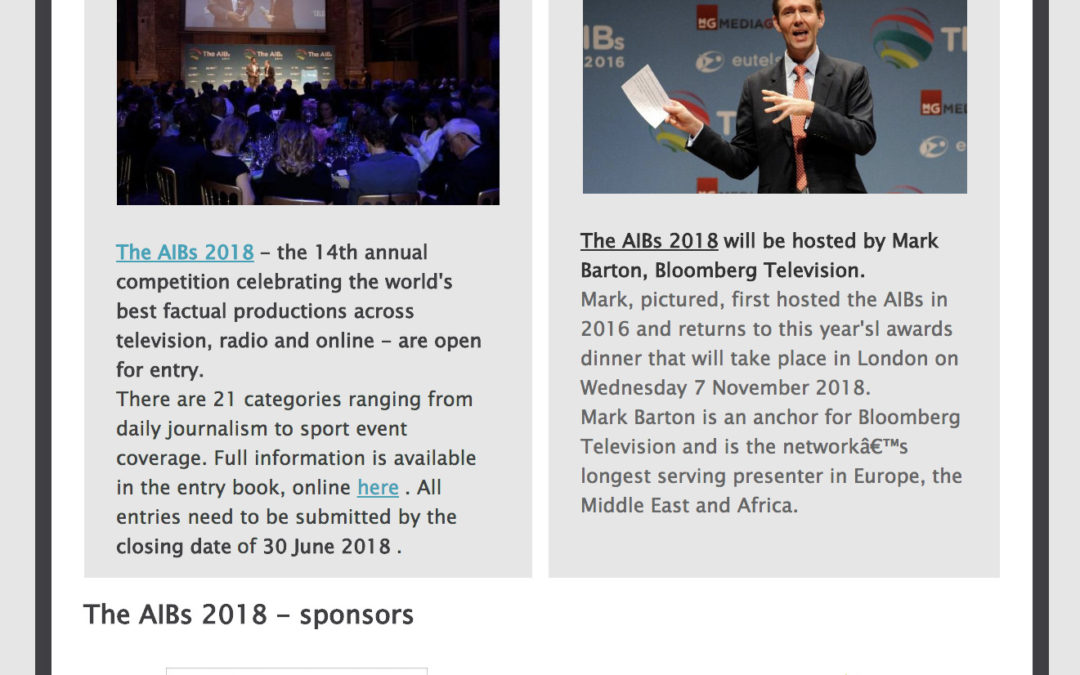
Global multimedia news agency Ruptly wins Commercial Team of The Year at the annual Drum Online Media Awards. Ruptly LIVE, shortlisted for Technical Innovation of the Year, is highly commended by the judges. The awards ceremony took place on Tuesday 22 May at the Marriott in Grosvenor Square, London.
Going up against Minute Media and Quartz, Ruptly was able to demonstrate a solid effort in growing its international client base among broadcast and online content publishers, winning the award.
Ruptly Live, which enables publishers to license and instantly stream up to 9 simultaneous live events direct to social media, including 360 live video, was shortlisted for Technical Innovation of the Year along with projects by Facebook and Ubisoft, CNN, The Times, Telegraph Media Group, TRT World, Radio Mitre and Harrods. While the award went to The Times, Ruptly and Telegraph Media Group were both highly commended by the judges.
Chief Commercial Officer, Matthew Tabaccos, highlighted that Ruptly is able to provide a service not only to big broadcasters, but also to fuel the output of new voices across the world that do not necessarily have the “cash to spend”. “We are keen to be able to scale a global agency in a collaborative process, and we are proud that our team has been recognized for commercial awards which shows our daily hard work to provide news that expands views across multiple platforms,” he said. “The award gives Ruptly confirmation that we are growing the agency in the right way, by spending time with clients, listening across markets to their individual needs”.
Last year Ruptly received the Best B2B News Site Award by The Drum.
25 May 2018
The Association for International Broadcasting has published its latest industry briefing, highlighting a selection of the stories we’ve reported here on the AIB website and adding additional news items that will be of interest to our global audience.
You can receive the briefing directly to your inbox – sign up at http://cfb.d5c.myftpupload.com/sign-up-to-the-aib-industry-briefing/.
25 May 2018
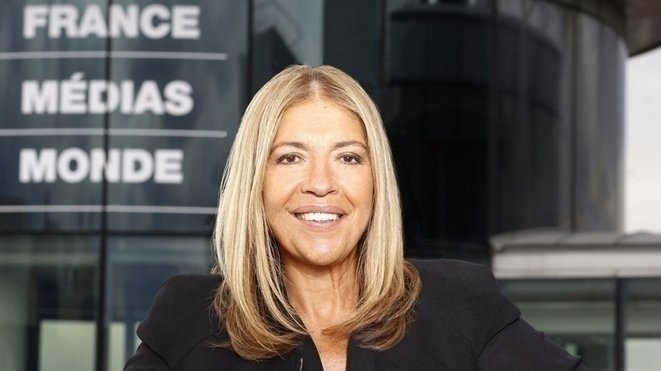
On 18 April, Marie-Christine Saragosse was reappointed CEO of the France Médias Monde (FMM) the group in charge of French international broadcasting for another five-year term. Saragosse, who had been in charge of FMM since 2012, had to leave her post in mid-February when her mandate lapsed after she failed to provide details of her statement of assets and interests on time owing to an administrative oversight.
France Médias Monde, includes the news channels France 24 (in French, English, Arabic and Spanish), RFI (Radio France Internationale), the news and current affairs radio station that broadcasts worldwide in French and in 13 other languages, and the Arabic-language radio station Monte Carlo Doualiya, which broadcasts from Paris to the Middle East, Mauritania, Djibouti, and South Sudan on medium wave, FM, via satellite and partner radio stations. FMM employs 1,856 people (full time equivalent).
According to the draft budget law being currently examined in Parliament France Médias Monde 2018 budget is to be set at some €263m.
Saragosse presented her Strategic Plan for FMM in April.
This plan lists FMM’s core principles as the need to abide by the group’s code of ethics, to defend freedom of information through increased security, including cyber security, and to combat fake news.
The plan stresses also that FMM is to strive to promote respect for human rights and diversity, by combating stereotypes.
FMM’s missions include, among others, “telling France’s narrative” in all its aspects, including in the political, social and economic spheres, but also its cultural and research achievements.

25 May 2018
Deutsche Welle (DW), Germany’s public international broadcaster, marked its 65th anniversary in May.
DW was launched on 3 May 1953 with a speech by then Federal President Theodor Heuss who addressed the “dear listeners in faraway countries”. DW started broadcasting three hours a day on shortwave in German only. It added five-minute news bulletins in English, French, Spanish in October 1954 and gradually expanded its offer.
No longer just an international radio broadcaster DW is now a global multimedia network.
DW introduced television in 1992, DW TV is now available round-the-clock in four languages: German, English, Arabic (Middle East, North Africa and Europe) and Spanish (for Latin America).
DW offers a variety of audio content and publishes online news in 30 languages on dw.com. It is seen as a trustworthy service, according to 96 per cent of its worldwide users.
In 1965 Deutsche Welle launched its Academy which has trained thousands of journalists from around the world.
Deutsche Welle’s 2017 budget was around €326m, from the federal tax budget.
DW says it employs some 3,400 people from 60 countries in Bonn and Berlin.
The Channel interviewed then DW DG Erik Bettermann in 2103 when DW marked its 60th anniversary.
