16 July 2018
BBC international services reach record audience
“Reflecting the United Kingdom, its culture and values to the world”
The BBC has just published its Annual Report and Accounts 2017/18. The 270-page document gives a detailed account of the BBC’s international services, radio, television, online and social media as well as their reach and their total international weekly audience which now exceeds 345 million for all services.
The success of these services is certainly the result of a long tradition anchored when the Empire Service of the BBC, precursor of the BBC World Service, was established in 1932 by the first director general of the BBC (1927-1938) John Reith.
As Gavyn Davies, Chairman of the BBC Board of Governors, explained in a 2003 speech, when, Reith launched the service “he had a remarkable insight. The BBC’s foreign services, he said, must not be used as a propaganda weapon to spread the views of the British government, but must be seen as an independent voice, seeking only to speak the truth to its listeners.”
The following are excerpts of the BBC 2017/2018 report that give details of the BBC’s international services activities and expansion in the past year. The report says that the BBC plays and essential role carrying the distinctive culture, voice and values of the UK to the world
BBC global reach, news offer more important than ever
“Once again, the past year has highlighted the fact that, in many parts of the world,” the report says, “the media is less free than it was ten years ago. There has been the continued growth of big state-sponsored news organisations and from news aggregated by digital platforms. Al Jazeera, China Central Television (CCTV) and RT (formerly Russia Today) can command vast resources and, while the services offered by these organisations can be of high quality production, they also reflect a particular world-view and the agenda of their backers. With the possibility of state services from less free countries influencing global debate and news provision, the value to democracy and liberty of the BBC’s global reach is higher than ever.”
One of the UK’s most important cultural exports
The former UN Secretary General Kofi Annan once described the BBC World Service as quite possibly “Britain’s greatest gift to the world in the 20th century.”
The report says that it “inspires and illuminates the lives of millions around the world, helping them make sense of the world they live in. (…) The BBC’s two commercially funded international news services, BBC World News and bbc.com, continue to provide consumers with news from one of the most trusted and reliable news providers in the world. Meanwhile, BBC Worldwide – now part of the newly merged BBC Studios – invests in, commercialises and showcases content from the BBC around the world, to build the reach and reputation of the BBC brand overseas, champion British creativity and at the same time deliver commercial returns to the BBC to invest in public service content.
Record international audience
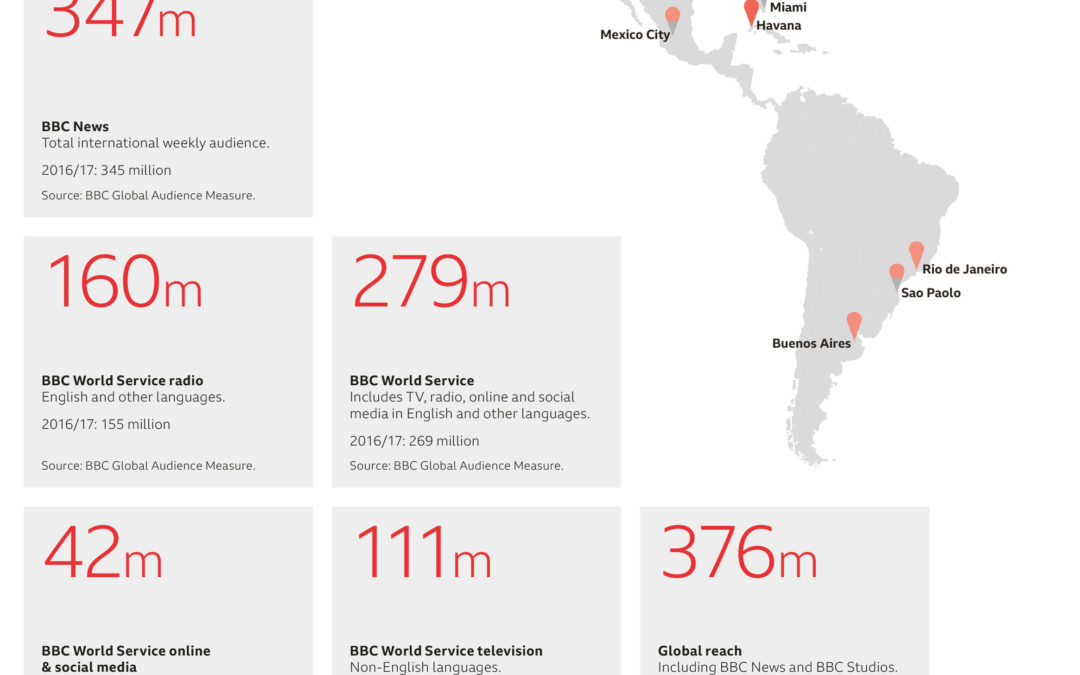
“The BBC once again attracted record audiences internationally, with the latest figures, the Global Audience Measure, revealing a total weekly audience of 376 million [taking into account de-duplication, i.e. ensuring that a person who consumes multiple BBC services or platforms or on multiple devices, is not counted many times in the top-level totals.]
“This includes all international content. This year has been a remarkable one for the BBC World Service, as it saw us carry out our biggest expansion since the 1940s, thanks to a £85 million investment during the year from the UK Government. This expansion is enabling us to bring trusted news to more parts of the world, including those in which access to free and impartial information is severely limited,” the report says.
Now available in more than 40 languages, increased international impact
The BBC World Service is “now operating in more than 40 languages around the world, from Pidgin to Korean, with new Government investment to increase the international impact and reach of the BBC.” As part of the expansion the BBC has opened new and expanded bureaux “in locations such as Dhaka, Mumbai, Nairobi, Delhi, Seoul, Bangkok, Yangon, Tunis, Cairo, Beirut and Belgrade and employed more than 1,000 new staff across the world. (…) This not only enhances our coverage for audiences abroad but also gives our UK news audiences a more in-depth view of areas that have traditionally received less coverage.”
“Having more journalists on the ground also means that we’re able to cover more under-reported areas and improve our offer to UK audiences. The BBC World Service saw its audience grow from 269 million to 279 million.”
Safeguarding World Service for future generations
“We’re aiming our international news at a new generation of users, to safeguard the World Service for future generations,” the report says, adding “this means focusing on new formats and new audiences. It is clear, for instance, that shortwave radio listening has declined rapidly again this year, and research has shown that with the increased global availability of cheap smartphones, audiences continue to switch to digital platforms for news. BBC World Service continues to do well with younger audiences internationally – a quarter of our weekly global audience is aged between 15-24.
Online offer proving an international success
The BBC’s “global commercial news website, bbc.com, continued to bring both news and features to a huge international audience. The audience for bbc.com is growing within the USA, the world’s largest media market. We have restructured our business to merge BBC Advertising with BBC Global News Ltd, the commercial subsidiary which runs both BBC World News and bbc.com. This means that the new single integrated business can develop our news content commercially,” the report says.
Global Audience Measure 2017/2018 (2016/2017) – details
347m: BBC News (Total international weekly audience – 2016/2017: 345m)
160m: BBC WS radio (English & other languages – 2016/2017: 155m)
279m: BBC WS (includes TV, radio online and social media in English and other languages – 2016/2017: 269m)
42m: BBC WS online and social media (2016/2017: 17.39m)
111m: BBC WS television non-English languages (2016/2017: 110m)
95m: BBC World News TV channel (English language global news channel 2016/2017: 99m)
37m: bbc.com (International English language) and social media
376m: Global reach, Including BBC News and BBC Studios
Note: The Global Audience Measure is an annual update of how many people are consuming the BBC weekly for all services in all countries across all platforms (television, radio, website and social media). Key to this is de-duplication i.e. ensuring that a person who consumes multiple BBC services or platforms or on multiple devices, is not counted many times in the top-level totals. For example, BBC World Service television, radio and online audience is less than the sum of its parts to ensure we do not count people more than once when looking at the total World Service audience.
59 % of foreign audience agree the BBC helps them to gain a more in-depth understanding of the news. Source: BBC Brand Tracker 2017 (not UK).
BBC is ranked No.1 for: Trust Independence Reliability (Source: BBC Brand Tracker 2017 (not UK).
13 July 2018
Euronews to air exclusive, behind-the-scenes documentary filmed on board the migrant ship that divided Europe.
Lyon, France – 13 July 2018 – On Monday, July 16 at 9 p.m., Euronews will broadcast an exclusive documentary based on its extraordinary reporting on rescue operations in the
Mediterranean, where the Aquarius became unexpectedly caught up in Europe’s bitter dispute over migration.
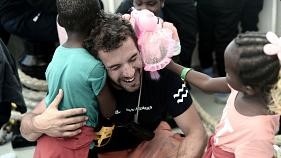
Euronews correspondent Anelise Borges spent 10 days on board the Aquarius, a rescue vessel operated by Médecins Sans Frontières (MSF) and SOS Méditerranée. Anelise was the only television journalist on board. She filmed around the clock, using only an iPhone, to capture the human story of the men, women and children who risked everything to reach Europe. Her reporting became an essential source for other media outlets covering the migration issue.
The documentary, “10 DAYS AT SEA: The Real Story of the Aquarius” begins with the rescue of more than 200 people from the Mediterranean over five hours. It was a complex
and dangerous operation during which two refugees drowned. The Italian coast guard then brought hundreds more rescued people to the Aquarius, which ended up with more than 600 refugees and migrants, including 120 unaccompanied minors and seven pregnant women.
The film then follows the decision, by Italy and subsequently Malta, to refuse the Aquarius access to their ports – and the excruciating wait to know who would take the migrants in. It also portrays the bitter debate and unresolved tensions within the EU over what to do with migrants who attempt the dangerous crossing of the Mediterranean Sea.
The documentary captures the bonds of friendship that formed between the migrants and the rescue workers during the voyage, and the emotional farewells as they disembarked in Spain to begin a new life.
Aloys Vimard
Coordinator for Médecins Sans Frontières
“I hope this will help bring a different reaction – and that Europe will focus on the
dignity and on the security of these people.”
Anelise Borges
Euronews correspondent
“I think that the most powerful aspect of the work that we journalists do is that
every story changes you in a way. Everywhere you go, you come back a different
person. Everyone you meet makes you just a little bit more human. Aquarius
was an extraordinary journey into the hopes, and fears, of people. Human beings
like you and me. And that was the most important part of the story I had to tell
during those days at sea”
Deborah Turness
President, NBC News International
“Euronews is investing in frontline journalism, capturing Europe’s story on the
ground in the places where change is happening. “Ten Days at Sea” is the result
of this commitment, and of the extraordinary work of our correspondent Anelise
Borges. Her journalism had real impact and told a story that the world would
never, otherwise, have seen. We are all very proud of Anelise and of this film.”
The documentary will be broadcast on all Euronews platforms according to this schedule:
Date Time (CET)
16/07/2018 21:00:00
17/07/2018 21:00:00
18/07/2018 21:00:00
19/07/2018 14:00:00
19/07/2018 21:00:00
20/07/2018 18:00:00
20/07/2018 21:00:00
21/07/2018 21:00:00
22/07/2018 11:00:00
22/07/2018 21:00:00
follow Euronews and Africanews teams on Twitter: @euronews_group
for breaking news follow: @euronews @africanews
Euronews
Euronews seeks to empower people by providing journalism without judgement, a trusted meeting space where
people can have conversations about the issues that matter. A team of more than 500 journalists from 30 different
countries strives to live up to the “All Voices, All Views, All Welcome” slogan, producing news in 12 languages
for television, the web, mobile apps, radio, YouTube and all major social networks. Euronews reaches 450 million
households worldwide and 125 million viewers monthly, according to the 2017 Global Web Index.
Through a partnership with NBC News, announced in June 2017, Euronews is increasing its capacity to produce
original programming and engage in cutting-edge news gathering.
Euronews Group: Euronews was launched in 1993 from Lyon, France. Africanews, the first pan-African
multilingual and independent news outlet, began broadcasting in April 2016 from Pointe-Noire, Republic of
Congo.
www.euronews.com www.africanews.com
10 July 2018
Move follows French media regulator warning to RT France
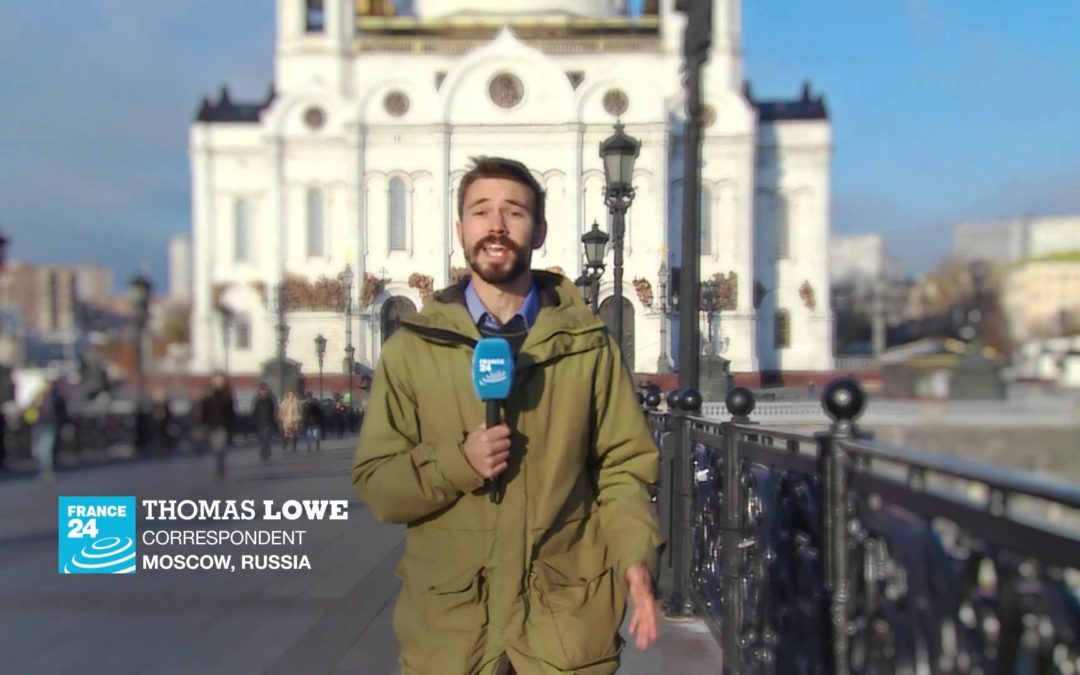
The Russian federal agency regulating the mass media and telecommunications, Roskomnadzor, warned French international TV news channel France 24 that it was in violation of a Russian media law for being “under the control of a foreign legal entity”, Russian news agency Tass reported on 29 June. The law limits foreign ownership of media companies in Russia to 20 per cent.
In a letter to the channel Roskomnadzor warned France 24 that it could be stripped of its licence.
A day earlier the French broadcast media regulator CSA had issued a warning to RT’s French-language outlet, RT France, over what it said was a misleading report about a suspected chemical attack in Syria broadcast earlier this year.
RT France said that “the misleading association between the translation and a specific video clip aired on 13 April was the result of a purely technical glitch, which has since been put right.”
The CSA didn’t fine RT France, but it has the authority to do so or to suspend its licence.
Clear retaliation
Roskomnadzor’s threat is seen as being a clear retaliation to the CSA warning, as confirmed by comments made by RT chief editor Margarita Simonyan to Russia’s state news agency RIA Novosti. “Russia is a big country, unlike many, we can afford ourselves the luxury of tit-for-tat measures,” Simonyan was quoted saying.
9 July 2018
US Department of State, Broadcasting Board of Governors, OSCE denounce the move
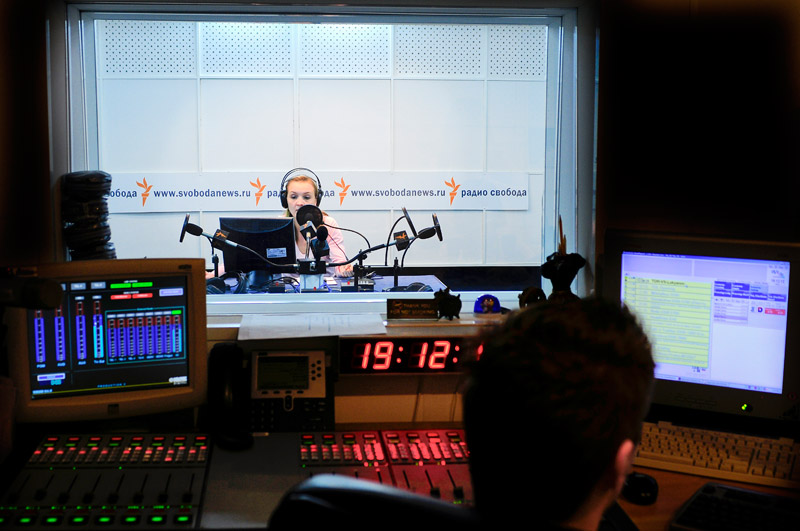
Radio Free Europe/Radio Liberty (RFE/RL) reported on 05 July that it had been fined by a Moscow district court for allegedly failing to comply with a Russian law regulating media outlets branded by the government as “foreign agents”.
The ruling comes seven months after the Russian Justice Ministry classified the following nine US international broadcasting and news services as “foreign agents”: Voice of America (VOA), RFE/RL, Current Time TV (the Russian-language TV network run by RFE/RL in cooperation with VOA), and six RFE/RL affiliated news services: the Tatar-Bashkir Service of RL (AzatliqRadiosi), Sibir.Realii, Idel.Realii, Faktograph, Kavkaz.Realii, Crimea.Realii.
“Sharp new escalation (…) worrying and unacceptable”
 RFE/RL President Thomas Kent said the prosecution of RFE/RL was a “sharp new escalation in a series of Russian actions aimed at hamstringing the work of the company and at casting public suspicion on its Russian staff.”
John Lansing, CEO of the Broadcasting Board of Governors (BBG), the federal agency that oversees the five US international broadcasting networks, released a statement condemning the ruling. Lansing described it as “worrying and unacceptable,” saying it represented “an escalation in a targeted campaign against RFE/RL and VOA,” and added that it “will not deter us from our mission to inform and engage people – in Russia and around the world – in support of freedom and democracy.”
The US Department of State spokesperson issued a statement that said “we condemn the selective targeting of Radio Free Europe/Radio Liberty (RFE/RL) and Voice of America (VOA) under Russia’s law on ‘foreign agent’ media outlets.”
The statement further called “on the Russian government to uphold its commitments under the Helsinki Final Act and its obligations under the International Covenant on Civil and Political rights to respect the exercise of fundamental freedoms, including freedom of expression, in Russia.”
OSCE and CPJ denounce foreign agents branding
For his part the Organization for Security and Co-operation in Europe (OSCE) Representative on Freedom of the Media, Harlem Désir, “denounced the fine imposed on Radio Free Europe/Radio Liberty (RFE/RL) for not complying with a Russian law regulating the activities of media outlets branded by the authorities as ‘foreign agents’.”
The day the State Duma’s information and communication committee approved legislation that would allow authorities to label private persons as foreign agents, the Committee to Protect Journalists (CPJ) released a statement condemning the move as “the latest step in the Russian authorities’ systematic policy towards obstructing the free flow of news.”
“We call on Russian authorities to reverse course and allow its citizens to receive information and opinion from a wide range of sources,” said a CPJ official.
4 July 2018
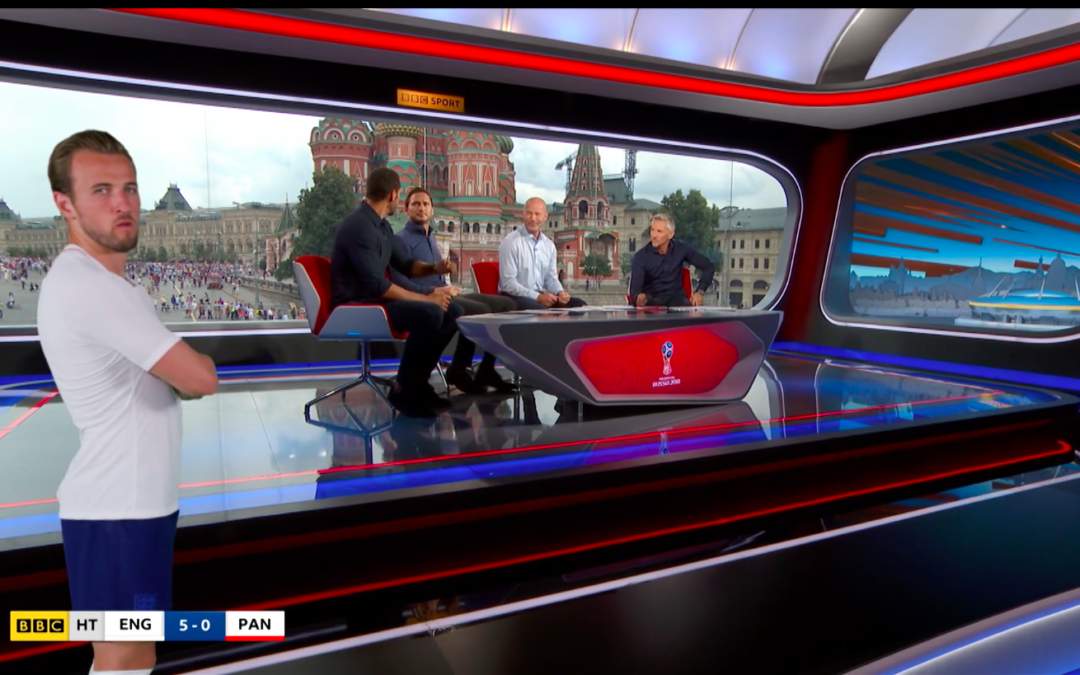
Match of the Day’s live studio in Moscow presents the most dynamic and ambitious virtual effects to date.
Moscow’s Red Square is the center of the football universe as the world’s broadcasters cover the World Cup. The BBC’s iconic Match of the Day is broadcasting to UK living rooms, as well as digital platforms and social media channels with coverage that includes hundreds of hours of match footage, studio discussion, interviews, news packages, and analysis.
Augmented reality in Red Square
Match of the Day Live’s Red Square studio features augmented reality (AR) graphics to help pundits and hosts tell the story of each match with stats, team news and a few surprises along the way. This is all set up with an impressive view of St. Basil’s Cathedral in the background.
The aim is to let the viewer feel that they are being taken directly from Red Square into the live stadium action with a 180-degree camera move.
Croatian tracking specialists, stYpe are providing tracking for six cameras in the studio while the UK’s Alston Elliott (AE) were challenged to design and are operate AR graphics to compliment the broadcaster’s teams. Vizrt’s Viz Engine is the workhorse behind all of the graphics rendering, including AR in the studio and virtual set extensions to hide the massive amounts of production systems in the Red Square studio.
“AE is delighted to be working with BBC Sport to assist with the delivery of its highly impactful World Cup studio in Moscow, said Stuart Coles, Chief Commercial Officer at Alston Elliott. “To be involved with such a high-profile event undoubtedly inspired our creative, R&D and broadcast engineering teams to really push the boundaries of what is possible and we are both proud and delighted with the results achieved.”
“BBC Sport, AE, stYpe and Vizrt have worked on many major events together, and in my view make a veritable AR dream team. We’re incredibly proud that four RedSpy systems are tracking every camera movement from the Red Square studio and truly excited to be covering the World Cup together, making it another successful collaboration,” said Stype Cajic, stYpe CEO.
“We’re very proud that BBC Sport and Alston Elliott continue to innovate with our technology, this year’s World Cup is the boldest yet for all involved, let’s hope England’s football team do us proud too” said Mark Pizzey, Vizrt’s Key Account Manager.
About Vizrt
Vizrt is a worldwide market leader in the areas of real-time 3D graphics, studio automation, sports analysis and asset management tools for the media and entertainment industry. This includes interactive and virtual solutions, animations, maps, weather, social media, video editing, compositing, and multiplatform VOD and live playout tools. Vizrt has customers in more than 100 countries worldwide including CNN, CBS, Fox, BBC, BSkyB, Sky Sports, CBS Sports, Fox Sports, Al Jazeera, NDR, ITN, ZDF, VICE, The Washington Post, TF1, CCTV, NHK and the list keeps growing. Vizrt has nearly 600 employees and operates in 40 offices worldwide. Vizrt is a privately owned company by Nordic Capital Fund VIII. For further information please refer to www.vizrt.com

4 July 2018
Latest partnership will deliver cost-effective VNO flex services across Africa and the Middle East
Cologne, Germany, and Brussels, Belgium, July 3, 2018 – SatADSL, a provider of professional VSAT services via satellite has joined forces with CETel – a leading provider of global satellite, fiber and wireless-enabled communications solutions – to deliver an expanded range of services in Ku- and C-band across Africa and the Middle East.
Under the agreement, SatADSL will provide CETel with its innovative Cloud-based Service Delivery Platform (C-SDP), a complete OSS/BSS carrier-grade, fully redundant platform. This will enable CETel to deliver cost-effective Virtual Network Operator (VNO) flex services to serve customers in Corporate & Enterprise, Energy, Mining, Construction, Telco & ISP, Marine and Government & NGO sectors.
Guido Neumann, Managing Director of CETel, said: “We’re excited to complement our product and services portfolio with volume-based vouchers and flexible, cost-effective VNO services, as this will enable us to keep costs low and service quality high. The demand for these services is growing in Africa and thanks to SatADSL’s solutions, we can guarantee access to reliable and constant connectivity via satellite across a range of industries.”
CETel is listed as one of “The Independent Top Twenty” teleport operators by the World Teleport Association (WTA). Providing a full range of fixed and mobile satellite services, CETel operates its own teleport in Germany, close to Cologne, offering turnkey solutions and value added services over Ku- and C-band to ensure reliable connectivity across the world.
Co-Founder and Chief Executive Officer at SatADSL Thierry Eltges said: “It’s an honor to be partnering with a world leader in satellite services. We have extensive knowledge of the African market and experience of overcoming the challenges of connecting remote areas that will boost CETel’s offerings even further. Our innovative C-SDP platform also complements CETel’s tailored approach to providing flexible connectivity across challenging sectors in some of the most remote areas of the world.”
For more information, please visit: www.satadsl.net and www.ce-tel.com.
ENDS
About SatADSL
SatADSL (www.satadsl.net) is a satellite Service Provider which designs and offers innovative satellite networking solutions to banks, microfinances, broadcasters, NGOs, Governments, ISPs, telecom operators and other companies in Africa and the Middle East in remote areas or where terrestrial infrastructure is not reliable.
Founded in 2010, SatADSL has already installed more than 3,000 VSAT networks in more than 45 countries. It specializes in providing tailor-made solutions based on customers’ specific requirements and flexible service plans that meet its clients’ budgets.
Through its carrier-grade Service Delivery Platform (SDP), which integrates the most advanced technologies, SatADSL provides custom-made networking solutions, tailor-made service plans and value-added services, including hierarchical service control and monitoring, traffic prioritization and online billing and payments, for any frequency band and any access technology.
About CETel
CETel is an independent German provider of global satellite, fiber and wireless enabled communications solutions. CETel offers fixed and mobile satellite services to various vertical markets. Customers take advantage of fully managed services designed to individual requirements, operated from CETel’s own teleport near Cologne, Germany. Strategic partnerships with leading satellite operators and equipment manufacturers allow for tailored solutions in a timely and cost-efficient manner. As a private and independent company, CETel is able to select technologies independently, without the limitation to one or few suppliers.
PR Contacts
SatADSL
Caroline De Vos
Co-Founder & COO
+32 478 31 13 76
Caroline.devos@satadsl.net
and
Jayne Brooks
+44 1636 704 888
jayne.brooks@proactive-pr.com
CETel
Nadine Faßbender
Marketing Manager
+49 2295 90878 – 30
fassbender@ce-tel.com
