NHK WORLD-JAPAN launches Ukrainian AI subtitling

NHK WORLD-JAPAN launches Ukrainian AI subtitling

NHK WORLD-JAPAN launches Ukrainian AI subtitling

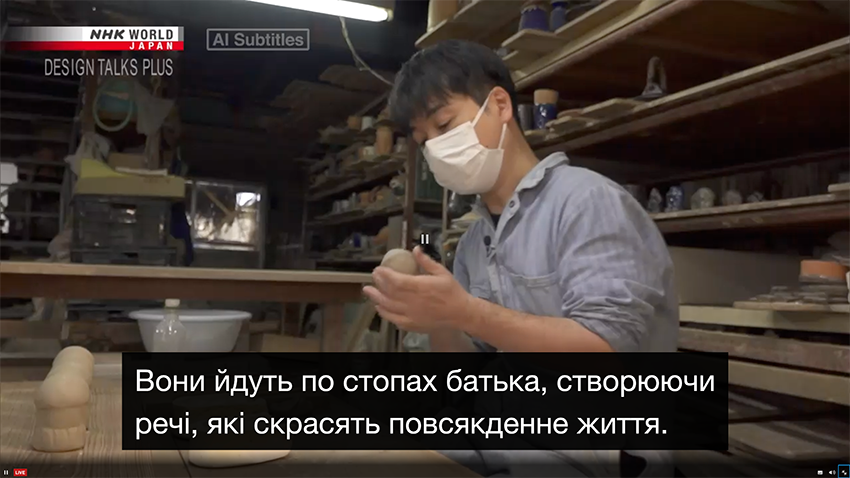
NHK WORLD-JAPAN began providing Ukrainian subtitles for its live video streaming on March 2, 2022. The translations are generated by artificial intelligence technology.  

Ukrainian subtitling is available for the 24-hour English programming streamed on NHK WORLD-JAPAN’s website: https://www.nhk.or.jp/nhkworld/uk/live_cc/

NHK WORLD-JAPAN delivers news every hour on the hour.

Currently, the channel’s AI-translated languages are:

Ukrainian, Chinese (simplified/traditional), French, Indonesian, Korean, Portuguese, Spanish, Thai, Vietnamese

How to watch                                   

Simply select a language from the list on the site at https://www.nhk.or.jp/nhkworld/en/live/

NHK WORLD has a Russian language radio service. Details are online at https://www.nhk.or.jp/nhkworld/ru/


Surge in Russian audiences for BBC News

Surge in Russian audiences for BBC News

Surge in Russian audiences for BBC News

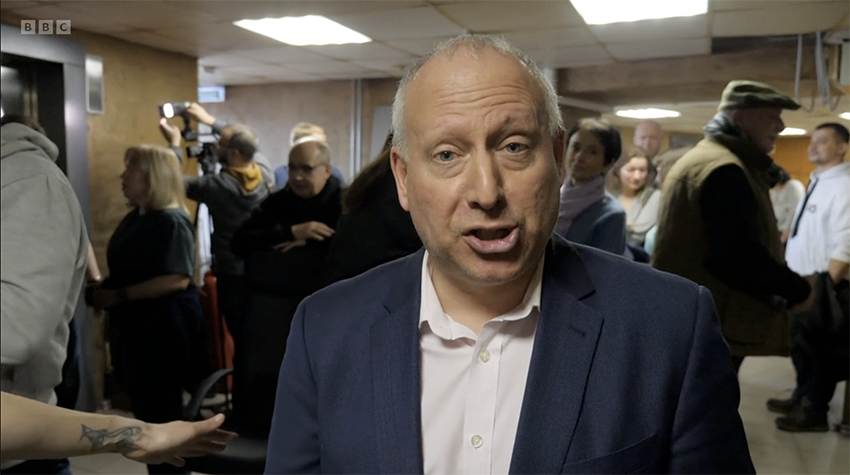
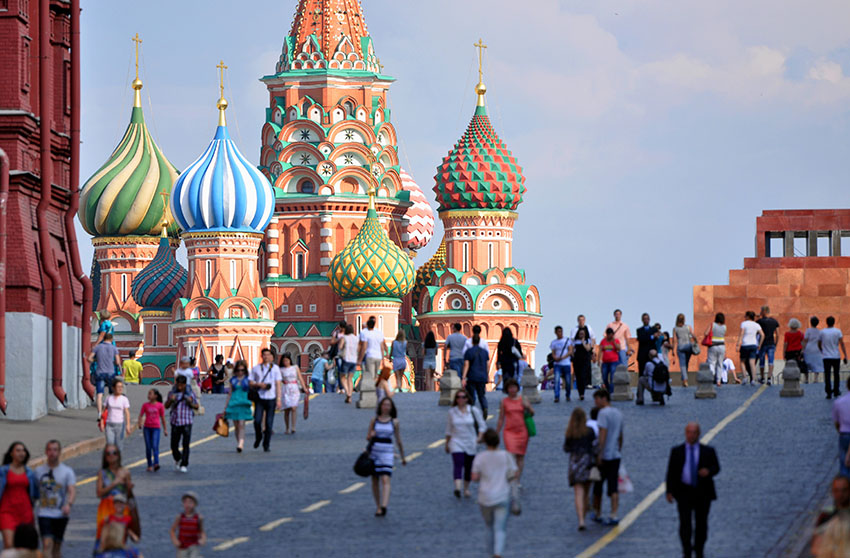
The audience for the BBC’s Russian language news website more than tripled its year-to-date weekly average, with a record reach of 10.7m people in the last week (compared to 3.1m).

In English, bbc.com visitors in Russia were up 252% to 423,000 last week.

Digital live pages, giving people updates, explanation, and reports from expert journalists on the ground, are proving hugely popular. The live page in Russian covering the invasion was the most visited site across the whole of the BBC World Service’s non-English language services, with 5.3m views.

Audiences for the Ukrainian language site more than doubled year-to-date, with a reach of 3.9m in the past week (compared to 1.7m) and the audience for bbc.com increased 154% in Ukraine.

These numbers represent direct traffic to BBC websites, and are likely to rise significantly when social media audience figures are factored in.

In total, 77.4m unique visitors consumed BBC online coverage of Ukraine in English in the first five days of the invasion, with almost 200 million views of the live page on Ukraine.

Tim Davie, BBC Director-General, says: “It’s often said truth is the first casualty of war. In a conflict where disinformation and propaganda is rife, there is a clear need for factual and independent news people can trust – and in a significant development, millions more Russians are turning to the BBC.

“We will continue giving the Russian people access to the truth, however we can.”

As part of its resilience operation to ensure news is available in Ukraine and Russia, the BBC has also stepped up services on other platforms. It has launched two new shortwave frequencies in the region for four hours of World Service English news a day. These frequencies can be received clearly in Kyiv and parts of Russia.

Tim Davie paid tribute to journalists working in Ukraine and Russia, saying: “Brave and committed journalists – from a range of news organisations – are doing vital work reporting events in Ukraine. Not only those who have travelled there to report, but journalists for whom Ukraine is home, including our talented colleagues in the BBC’s Ukrainian service. Events are moving quickly. We want to ensure the BBC’s output continues to reach people in Ukraine, Russia and beyond. Trusted news has never been more vital.”

Additional shortwave frequencies are: 15735 kHz 16:00 – 18:00 GMT and 5875 kHz 22:00 – 00:00 GMT

BBC services in Russia include news updates on Telegram, a wealth of video and text-based content on Instagram and Facebook, hugely popular video explainers and round ups on YouTube, and regular editions of popular news podcast What Just Happened.

In Ukraine, the BBC provides digital content via the BBC News Ukraine website bbc.ua, its YouTube channelFacebook, Twitter @BBC_uaInstagramTelegram and Viber, the BBC News Ukraine Monday to Friday TV news programme rebroadcast by Espreso TV in Ukraine (at 1700-1730 and 2100-2130 local time), and the BBC’s other news services including BBC World News TV, the website bbc.com/news and other language services.

DW says Turkey trying to stifle its online operation

DW says Turkey trying to stifle its online operation

DW says Turkey trying to stifle its online operation

Germany’s international broadcaster DW has responded to the Turkish media regulator’s call to apply for a licence for internet services.

In a statement, the German broadcaster said:

DW was given notice from Turkey’s media regulator RTUK on Monday [21 February] to obtain a broadcast license in Turkey within a period of 72 hours or have its online content (dw.com) blocked.

The Turkish media regulatory authority RTUK published a statement to this effect on its website on February 21, 2022.

DW Director General Peter Limbourg: “After having subjected the local media outlets in Turkey to such regulation, an attempt is now being made to restrict the reporting of international media services. This move does not relate to formal aspects of broadcasting, but to the journalistic content itself. It gives the Turkish authorities the option to block the entire service based on individual, critical reports unless these reports are deleted. This would open up the possibility of censorship. We will appeal against this decision and take legal action in the Turkish courts.”

DW, alongside other international broadcasters, is one of the few remaining news outlets from which people in Turkey can obtain independent information. In addition to DW, Voice of America and Euronews were also given notice to apply for a license.

DW had established a liaison office in Turkey in accordance with the 2019 law and has been registered with the relevant Turkish ministry since February 2020. This registration is independent of DW’s correspondent office in Istanbul.

Commenting on the situation, AIB chief executive Simon Spanswick said: “At the AIB, we are extremely concerned about the demand by Turkey’s media regulator that two of our members – Deutsche Welle and Voice of America – must apply for a licence to deliver their Turkish language service online in the country. The decision by RTÜK appears arbitrary and out of step with other regulators in Europe (RTUK is a member of the European Platform of Regulatory Authorities). There is a real danger that the decision will deprive Turkish citizens of access to the important international news sources that DW and VoA provide.”


VoA responds to Turkish regulator threat over Internet services

VoA responds to Turkish regulator threat over Internet services

VoA responds to Turkish regulator threat over Internet services

Following the announcement by Turkish media regulator RTüK about its plans to force international broadcasters to apply for licences to operate Internet-delivered services in the country [read the story here], Voice of America has issued a statement setting out its position.

On Monday, February 21, Turkish media regulator RTUK posted an official notice that the VOA Turkish language website would be blocked in 72 hours if VOA does not begin the process of applying for an “Internet broadcasting license.”

Many media organizations within and outside of Turkey have expressed significant concern that this licensing requirement is designed to enable censorship of unfavorable press coverage.

Licensing is the norm for radio and TV broadcasting, because broadcast spectrum is a finite public resource, and governments have a recognized responsibility to regulate the spectrum to ensure it is used in the broader public’s interest. The internet, by contrast, is not a limited resource, and the only possible purpose of a licensing requirement for internet distribution is enabling censorship.

VOA is a public service international broadcaster, VOA is legally required to provide “accurate, objective, and comprehensive” news coverage to audiences in all of the countries it serves. Accordingly, VOA’s Charter prevents VOA from agreeing to or allowing its coverage to be censored in any way. Our editorial decisions are required to be governed at all times by the highest professional standards of journalism. So VOA could not comply with directives from a regulator to censor or remove content; nor then could VOA willingly agree to subject itself to such censorship.

“The threat to block the websites of the Voice of America, Deutsche Welle, or any other independent, public service, professional news service in Turkey is worrisome,” said Acting VOA Director Yolanda López. “Voice of America’s independent journalism cannot be subject to this or any government’s control which results either in censorship or even the perception of it.”

Accordingly, absent an alternative, VOA believes that it will be obliged to file an objection with Turkish regulators to the request to apply for a license.

Commenting on the situation, AIB chief executive Simon Spanswick said: “At the AIB, we are extremely concerned about the demand by Turkey’s media regulator that two of our members – Deutsche Welle and Voice of America – must apply for a licence to deliver their Turkish language service online in the country. The decision by RTÜK appears arbitrary and out of step with other regulators in Europe (RTUK is a member of the European Platform of Regulatory Authorities). There is a real danger that the decision will deprive Turkish citizens of access to the important international news sources that DW and VoA provide.”

Thomas Fenton appointed Deputy Director at France 24

Thomas Fenton appointed Deputy Director at France 24

Thomas Fenton appointed Deputy Director at France 24

Marie-Christine Saragosse, CEO of France Médias Monde, has appointed Thomas Fenton as Deputy Director of France 24, in charge of the English service. He will take up his post on March 4, 2022.

A French-American graduate of Duke University in the United States, Thomas Fenton has spent his entire career working for major international news networks. He joined CNN in 1986, where for 26 years he successively held the positions of  Deputy Managing International Editor in Atlanta, Bureau Chief in Frankfurt and Jerusalem, Executive Producer in London, and Managing Editor for the Middle East in Abu Dhabi.

In 2011, he joined Al Jazeera as Executive Producer in Doha and then in New York. In 2019, he was called by CBS to help relaunch the CBS Evening News. For the past year, he has been Story Editor for “The Take”, an AJ English-language flagship podcast. Thomas Fenton has received numerous awards, including three Emmy Awards for CNN (1993, 2001, and 2012) for coverage of events during the wars in Somalia, Sierra Leone, and the Egyptian revolution.

BBC files urgent complaint to UN against Iranian harassment against BBC News Persian staff

BBC files urgent complaint to UN against Iranian harassment against BBC News Persian staff

BBC files urgent complaint to UN against Iranian harassment against BBC News Persian staff

Escalating security concerns see BBC file urgent complaint to UN against Iran’s ongoing harassment of BBC News Persian journalists and their families

The BBC has today filed an urgent complaint against Iran with the United Nations over ongoing harassment and sanctions against BBC News Persian journalists and their families in Iran. The urgent complaint is made amid escalating security concerns after a year in which Iran has conducted unlawful, extra-territorial operations against journalists and dissidents.

The urgent complaint comes as Liliane Landor, Senior Controller of BBC International News and Director of World Service, and Rozita Lotfi, Head of BBC News Persian, today address the Third Global Conference for Media Freedom being held in Tallinn, hosted by the Estonian Ministry of Foreign Affairs.

For more than a decade Iran has targeted BBC News Persian journalists and their families. Journalists have not been able to return to Iran for fear of arrest, while family members have been subjected to travel bans, interrogated and arbitrarily detained.

Based on interviews with staff members about incidents in the last year, including since the new Iranian President Ebrahim Raisi took office, the new UN complaint filed today reveals a concerning increase in harassment and security risk. The BBC has reported to the UN:

  • Increased security concerns for BBC News Persian journalists in the light of extra-territorial threats, including in the UK and in third countries;
  • Increased harassment of family members in Iran;
  • Increased financial pressure from the ongoing asset freeze, which operates as a blunt financial sanction against BBC News Persian journalists and their extended families;
  • Increased intelligence and counter-intelligence activity aimed at undermining the professional reputation of BBC News Persian and its journalists;
  • Increased and continued online attacks and online violence, particularly directed at women journalists;
  • The BBC has requested urgent action from UN experts, that the matter be communicated to Iran and that the protection of BBC News Persian journalists be raised at the UN Human Rights Council.

Liliane Landor, Senior Controller of BBC News International Services and Director of World Service said: “We appeal to the UN and the international community to continue to condemn Iran for their unacceptable treatment of our BBC News Persian colleagues. There have been escalating actions and threats, including an asset freeze which penalises the journalists and their families, online harassment, gendered attacks on women journalists and death threats. It must stop. The BBC will continue to speak up for its journalists who should be free to carry out their jobs without fear of threats or intimidation towards them or their families in Iran.”

Caoilfhionn Gallagher QC and Jennifer Robinson (Doughty Street Chambers), Counsel for BBC World Service, said: “We know from Iran’s past actions that it is willing to take cross-border and deadly action to silence its critics, and that it perceives independent journalism about Iran as a risk to their power. Our clients from BBC News Persian receive threats of death and violence simply for doing their jobs – simply for being journalists. We call on the United Nations experts and the Human Rights Council to take swift, robust action to hold Iran to account and ensure that BBC News Persian journalists can report without fear.”

The NUJ’s national broadcasting organiser, Paul Siegert, said: “It is a sad state of affairs that in 2022 these kind of attacks and abuse against individuals are still an ongoing problem. Journalists and their families are being threatened just because of the job they do. It has to stop. Our members will not be silenced and will not stop doing their jobs. We once again call on the Iranian government to put a halt to this unacceptable behaviour.”