GEO TV Editor-in-Chief makes urgent appeal to UN over his politically motivated and arbitrary detention

GEO TV Editor-in-Chief makes urgent appeal to UN over his politically motivated and arbitrary detention

GEO TV Editor-in-Chief makes urgent appeal to UN over his politically motivated and arbitrary detention

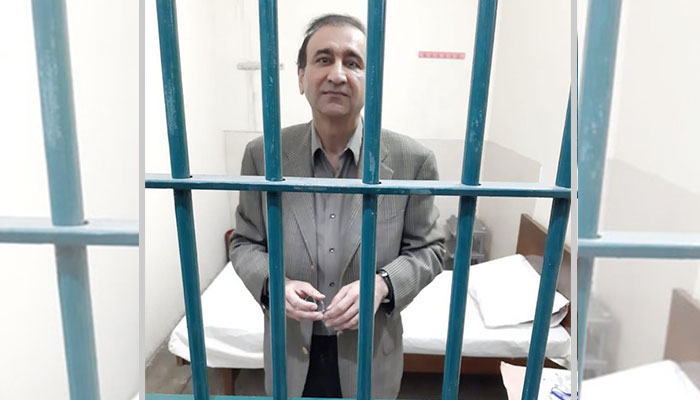
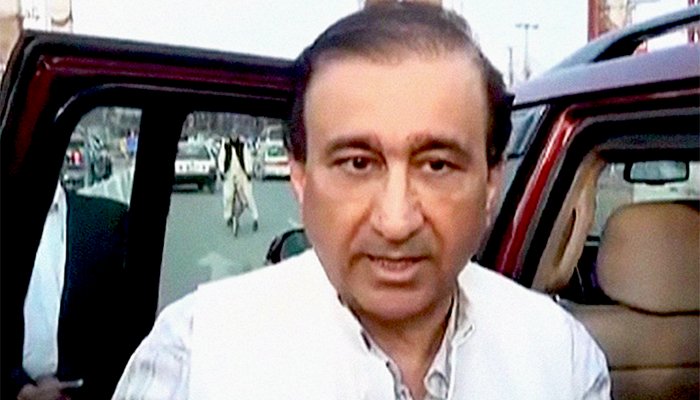
The arrest and detention of Mir Shakil-ur-Rahman, Group Chief Executive, editor-in-chief, and principal shareholder of Pakistan’s largest media group, Jang Media Group, is politically motivated, arbitrary and unlawful, the United Nations has heard.

Today, an urgent appeal has been lodged on behalf of Mir Shakil-ur-Rahman with the UN Working Group on Arbitrary Detention, and a second complaint has been made to the UN Special Rapporteur on the Promotion and Protection of the Right to Freedom of Opinion and Expression. These urgent appeals call on the United Nations experts to take action to ensure that the Government of Pakistan and the National Accountability Bureau (NAB) complies with their obligations under international law, and that Mir Shakil-ur-Rahman be released immediately.

Mir Shakil-ur-Rahman was arrested on 12 March by the NAB in Pakistan in a case concerning a property transaction that dates back 34 years to 1986. He has been imprisoned since, in unsafe and unhygienic conditions and without meaningful and regular access to his lawyers. Jang Media Group owns Geo TV as well as some of Pakistan’s largest newspapers. Mr Shakil-ur-Rahman’s arrest and detention come following many attacks upon and targeting of him, Jang Media Group and its journalists by the Government of Pakistan and the NAB, and a deteriorating climate for media freedom in Pakistan.

Commenting on the arrest, a Jang Group spokesperson said:

“In the past 18 months, the NAB sent our reporters, producers and editors, directly and indirectly, over a dozen notices, threatening shutdown of our channels, due to the Jang/ Geo Group’s reporting and its programmes about the NAB. In its defence, the NAB has in writing said that it is a constitutionally-protected institution that can’t be criticised.”

The international counsel team for Mr Shakil-ur-Rahman, Caoilfhionn Gallagher QC, Tatyana Eatwell and Jennifer Robinson of Doughty Street Chambers, London, said:

“Mr Shakil-ur-Rahman’s arrest and imprisonment – on spurious charges dating from transactions in 1986, over three decades ago – raise grave concerns. This not only violates our client’s rights to freedom from arbitrary detention and a fair trial, but this is part of a wider pattern. This is a targeted and concerted attack upon our client’s freedom of expression rights and freedom of the media in Pakistan, weaponising NAB procedures to shut down critics of the Government. His detention is arbitrary and the authorities in Pakistan must comply with their international law obligations and release him forthwith.”

Simon Spanswick, Chief Executive of the Association for International Broadcasting (AIB), added,

The Association for International Broadcasting and its Members are deeply concerned that Mir Shakil-ur-Rahman, the head of one of Pakistan’s major media groups, has been detained in contravention of both Pakistan and international law. Due process appears not to have been followed in this case and we call on the Pakistan authorities to immediately release him. We are further concerned that the Pakistan government has for the past two years been attempting to restrict access to Geo TV channels across the country, in contravention of the channels’ licences and carriage agreements. This is a blatant attempt to reduce media freedom in Pakistan that this Association deplores.”

BBC sets out plan to inform, educate and entertain during unprecedented times

BBC sets out plan to inform, educate and entertain during unprecedented times

BBC sets out plan to inform, educate and entertain during unprecedented times

The BBC issued this statement on 18 March
Today the BBC is setting out how it will ensure it keeps the nation informed, educated, and entertained in unprecedented times.

Director-General Tony Hall says: “We all know these are challenging times for each and every one of us. As the national broadcaster, the BBC has a special role to play at this time of national need.

“We need to pull together to get through this. That’s why the BBC will be using all of its resources – channels, stations and output – to help keep the nation informed, educated and entertained. We are making a series of changes to our output to achieve that.

“We will continue to deliver all the essential news and information – with special programming and content.

“We also will do everything from using our airwaves for exercise classes for older people, religious services, recipes and advice on food for older people and low-income families, and should schools close, education programming for different age groups. We will also be launching a whole new iPlayer experience for children. And of course there will be entertainment – with the ambition of giving people some escapism and hopefully the odd smile.

“Clearly there will be disruption to our output along the way, but we will do our very best.

“It will take time to emerge from the challenges we all face, but the BBC will be there for the public all the way through this.”

The BBC is announcing a wide-ranging package of measures today.

Our core role is to bring trusted news and information to audiences in the UK and around the world in a fast-moving situation, and counter confusion and misinformation.

In particular:

  • We will do everything we can to maintain Breakfast, the One, Six and Ten and ensure they continue to perform a vital role on BBC One
  • We will broadcast a weekly prime-time Coronavirus special on Wednesdays on BBC One, and move Question Time to 8pm on Thursdays, with call-in audiences and remote guests.
  • We will record a daily edition of the Coronavirus podcast, and film it where possible for News channel use in the UK and abroad.
  • We will bring listeners the most up-to-date information on Coronavirus through 5 Live. 5 Live will be answering listeners’ questions with regular phone-ins.
  • We will focus local radio breakfast and mid-morning output on news, open phone lines and expert advice for local communities between 6am and midday.
  • Under the umbrella Make A Difference, every local radio station will join up with local volunteer groups to help co-ordinate support for the elderly, housebound or at risk, making sure people know what help is available in their area.
  • We will keep Newsround bulletins on air throughout the day on CBBC.
  • We will delay the planned closure of the Red Button text news and information service.

We will help people in the UK deal with the impact of the crisis on their own lives, by providing advice, education and support.

Initiatives include:

  • Using The One Show as a consumer programme show for all aspects of the crisis. This will include health and well-being advice, keeping fit and healthy eating tips, as well as links to other BBC output that can help and support.
  • In BBC One daytime, Health Check UK Live will directly address the concerns of viewers who are in isolation, offering tips on how to keep healthy and happy at home.
  • Making BBC Homepage the BBC’s bulletin board supplying clear information – the answers to all the key questions, with public information, health advice and recipes.
  • Launching a virtual church service on Sunday mornings across local radio in England, led initially by the Archbishop of Canterbury.
  • Subject to outside broadcast capacity and our partners, we will aim to broadcast a weekly Sunday morning church service on BBC One, and explore how to support other religions and denominations, including in the run-up to Ramadan.
  • We will work with partners to get older age group exercise routines and other fitness programming into people’s homes on TV or radio.
  • We will retarget the BBC Food website around collections of recipes and advice on what can be made with essentials, especially for older people, and for low-income families.

In the event that schools are shut down, and subject to further work and discussions with the Department for Education, devolved administrations and schools, we are exploring:

  1. A daily educational programme for different key stages or year groups – with a complementary self-learning programme for students to follow, broadcast on BBC Red Button and made available on demand on BBC iPlayer.
  2. Expanding BBC Bitesize content, with our social media running daily troubleshooting Q&As focusing on a different subject each day.
  3. Increasing our educational programming on BBC iPlayer, bringing together the best from BBC Bitesize, BBC Teach and the wider BBC portfolio where educationally appropriate.
  4. Creating two new daily educational podcasts for BBC Sounds, one for primary and one for secondary.
  5. BBC Four and BBC Red Button devoting a block of programming each weekday evening to show programmes that support the GCSE and A Level curriculum. In Scotland, the Scotland channel will support the Scottish NQs and Highers in daytime.

We will keep people entertained, providing laughter, escapism, companionship, shared experiences and a sense of connection to the outside world.

Initiatives include the following:

  • We will bring back many favourite shows, allowing people of all ages to escape into some top-quality entertainment both on our channels and on BBC iPlayer. New boxsets going up shortly include Spooks, The Missing, Waking The Dead, French And Saunders, Wallander and The Honourable Woman, as well as more from BBC Three.
  • We will be launching an exciting new iPlayer experience for children, offering a wide range of entertaining and educational series. It will be easy to use and easy for them to find what’s relevant to them.
  • Radio 1, Radio 2 and Radio 4 will provide the information, explanation and escape that millions rely on. On Radio 4, we will dig into our rich archive of drama with such well-loved titles as The Complete Smiley, all of the novels by the Bronte Sisters, film noir classics by Raymond Chandler, and reassuring favourites as Rumpole and Wodehouse. We will be sharing popular podcast dramas with a wider radio audience for the first time by broadcasting the award-winning Forest 404 and The Whisperer In Darkness. We will also hope to provide some joy and laughter by running classic editions of I’m Sorry I Haven’t a Clue and Just A Minute.
  • We will do the same in BBC Sounds, looking at bringing back classic sport, comedy and drama, as well as exploring using the BBC’s programme index to allow audiences to search thousands of online archive radio programmes.
  • We will aim to create live fund-raising events, to raise money for coronavirus good causes.
  • At a time when British culture is having to close its doors, the BBC, through iPlayer and Sounds, can give British culture an audience that can’t be there in person. We propose to run an essential arts and culture service – Culture in Quarantine – that will keep the Arts alive in people’s homes, focused most intensely across Radio 3, Radio 4, BBC Two, BBC Four, Sounds, iPlayer and our digital platforms, working closely with organisations like Arts Council England and other national funding and producing bodies. This will include guides to shuttered exhibitions, performances from world-class musicians and comedy clubs, new plays created especially for broadcast featuring exceptional talent, poetry and book readings.
Significant numbers of coronavirus-related web addresses registered

Significant numbers of coronavirus-related web addresses registered

Significant numbers of coronavirus-related web addresses registered

The UK cyber security industry has identified a trend in registering Internet domains that include the words “corona”, “COVID-19” and similar. The view of cyber security experts is that these are likely to be used for malicious purposes.

The AIB advises that all journalists should be wary of visiting sites that include these keywords in the main part of their address, such as those on this list that has been compiled by UK cyber experts. This is particularly important for staff working remotely on laptops and who are contributing to live output or web services.

AIB protests arrest of Geo TV editor-in-chief

AIB protests arrest of Geo TV editor-in-chief

AIB protests arrest of Geo TV editor-in-chief

Arrest marks low point in Pakistan media freedom; AIB calls for immediate release of Mir Shakil-ur-Rahman

The Association for International Broadcasting has today – 13 March 2020 – called for the immediate release of the Chief Executive, Owner and Editor-in-Chief of the Jang Media Group, Mir Shakil-ur-Rahman. He was arrested on 12 March by the National Accountability Bureau [NAB] of Pakistan in a case over a property transaction that dates back 34 years to 1986. Jang Media Group owns AIB Member Geo TV as well as some of Pakistan’s largest newspapers. 

The arrest appears to be linked to investigations undertaken by Geo TV into the operation of the NAB during the past 18 months. The NAB is a federal institution that is responsible for anti-corruption work in the country.

Commenting on the arrest, a Jang Group spokesperson said: “In the past 18 months, the NAB sent our reporters, producers and editors, directly and indirectly, over a dozen notices, threatening shutdown of our channels (via PEMRA [Pakistan Electronic Media Regulatory Authority]) due to the Jang/Geo Group’s reporting and its programmes about the NAB. In its defence, the NAB has in writing said that it is a constitutionally-protected institution that can’t be criticised.”

“This is a significant and retrograde step for the media industry in Pakistan,” said Simon Spanswick, chief executive of the AIB. “It is deeply concerning that the head of one of Pakistan’s most widely-consumed media groups should be arrested on spurious charges relating to a transaction over a third of a century ago. Due process appears not to have been followed in this case and we call on the Pakistan authorities to immediately release Mir Shakil-ur-Rahman.”

The arrest is the culmination of a continuing campaign that has been waged against Jang Media Group – and Geo TV in particular – over the past two years. In February 2018, a number of cable operators in Pakistan suspended Geo TV from their channel packages, allegedly as a result of direct government pressure to drop the network.

In a press conference on Friday 13 March, the Special Assistant to the Prime Minister of Pakistan on Information and Broadcasting, Firdos Ashiq Aswan, denied that the government had applied any pressure on NAB to arrest Mir Shakil-ur-Rahman.

In a further development, media regulator PEMRA is reported to have directed cable operators to move Geo TV channels to the last positions in EPGs, or to cease carrying the channels.

The AIB will be raising the arrest and the wider pressure being exerted on Geo TV within the Media Freedom Coalition, an international ministerial-level group of 36 nations, at its Advisory Network meeting scheduled for the week of 16 March. In addition, the AIB is making representations to the Pakistan High Commissioner to the United Kingdom.

March 2020 AIB global industry briefing published

March 2020 AIB global industry briefing published

March 2020 AIB global industry briefing published

The latest global media industry briefing has been published by the AIB, dispatched to over 27,000 readers in 150+ countries around the world.

This regular briefing provides a summary of leading news from across the media and broadcast sectors internationally. The stories we publish are just a handful of those that come through the AIB Secretariat and are used to constantly build and refine our global knowledge of the media industry in markets across the world.

This bulletin includes stories – unsurprisingly – about coronavirus and its effects on the media industry, as well as selected news from AIB Members and the wider industry, including appointments made by media companies in different geographies. 

Sign up to receive the briefing each time it’s published straight to your email in box.

AIB Cyber Security Working Group chair talks to Feed

AIB Cyber Security Working Group chair talks to Feed

AIB Cyber Security Working Group chair talks to Feed

The chair of the AIB’s Cyber Security Working Group, Denis Onuoha, has been talking to Feed magazine about the need for broadcasters to come together to protect their infrastructure from devastating cyber attacks.

Onuoha – Chief information Security Office at UK transmission company Arqiva – is driving the work of the AIB Working Group to ensure that member companies are able to defend themselves from nation states and kids in bedrooms who – for different purposes – might seek to take a broadcaster off the air. 

There are increasing numbers of attacks, some more successful than others, on broadcasters across the world and this pressing need is what’s driving the AIB Working Group to deliver real, tangible help to AIB Member companies. One example is the work with Royal Holloway University of London to develop a Cybersecurity Centre of Excellence for broadcasting.

Read the article here and talk to the AIB about how the work that we’re doing can help your organisation.