AIB protests closure of ABS-CBN, most watched broadcaster in the Philippines

AIB protests closure of ABS-CBN, most watched broadcaster in the Philippines

AIB protests closure of ABS-CBN, most watched broadcaster in the Philippines

Delay to franchise renewal appears politically motivated

The Association for International Broadcasting is dismayed by the forced close-down of multiple award-winning broadcaster ABS-CBN in the Philippines.

The closure, on 5 May, follows the failure of the media regulator in the Philippines to renew the operating franchise of the broadcaster, the oldest television network in south-east Asia. The 25-year franchise expired on 4 May. Despite following the renewal procedure and gaining extensive support by politicians in the country, ABS-CBN has not managed to conclude an agreement to continue operating its broadcast services on radio and television.

The Philippines National Telecommunications Council issued a “cease and desist” notice to ABS-CBN on 5 May applying to all the company’s radio and TV stations. The company complied after the main evening television newscast, taking all its transmitters off the air.

“This is a bad day for the Philippines, a bad day for Filipinos and a bad day for media freedom,” says Simon Spanswick, chief executive of the AIB. “ABS-CBN is one of the Philippines’ prime providers of news, information and entertainment, reaching almost the entire 106 million population. Its programmes are award-winning domestically and internationally, recognised by judges in our own annual awards as the best in class as well as in other competitions. To remove a country’s most-watched TV news broadcaster during a global pandemic where reliable news, information and advice are essential for citizens’ wellbeing is an appalling misjudgement.”

President Duterte has regularly criticised ABS-CBN, accusing it of bias against his presidency. The broadcaster denies this. The failure to renew the franchise is seen by many observers as a direct political attack on the network.

In addition to its internationally respected broadcasts, ABS-CBN operates a Foundation that provides assistance to people across the Philippines in times of natural disaster and has been working to support the most disadvantaged citizens who have been adversely affected by the COVID-19 pandemic.

The AIB, which is a member of the Advisory Network of the intergovernmental Media Freedom Coalition, is raising this issue publicly and making representations to the Philippines government. Other Advisory Network organisations are also raising this disturbing issue.

“The closure is a direct attack on free media in the Philippines,” continues Simon Spanswick. “The failure of the authorities and Congress in the Philippines to renew the franchise in a timely manner and in accordance with the country’s legislative framework sends a chilling message to anyone in the media in the Philippines: Duterte’s government will do anything to prevent free speech and to stop it from being held to account.”

The forced closure of ABS-CBN has been widely reported by AIB Members including Australia’s ABC, Al Jazeera, the BBC, France 24, Voice of America and others as well as major international papers including the Financial Times and New York Times

Public Media Serving in the time of a pandemic…

Public Media Serving in the time of a pandemic…

Public Media Serving in the time of a pandemic…

The year 2020 will be forever etched in our minds. No matter where we live, we share common experiences of fear, grief and the suffering that comes with uncertainty.

And yet in this time of crisis, we are seeing communities come together as never before. We are discovering an even deeper respect for our health workers and other first responders, as well as for the many unsung heroes who are putting the needs of others ahead of their own, often at considerable risk.

Rarely has the role of public service media been of greater importance than it is now. That is why we, the members of the Global Task Force for public media, would like to add our salute to the essential service being provided at this time by public broadcasters around the world.

Our countries may differ by culture and language, but we all share the common duty to Inform, Educate and Entertain. Our engagement with audiences of all ages across a range of broadcast and online services is critical to our success in serving them whenever, wherever and however they want.

We are seeing audiences turn to public media in record numbers for the trusted news and reliable information that is our hallmark – and that has become a matter of life and death. As with all organisations, we have had to adapt to cover COVID-19 in depth. Each of us is also playing an important role for our democracies and holding our public institutions and politicians to account, to ensure there is transparency in their actions.

The Global Task Force is particularly proud of the speed with which public media across the world have responded to the challenge of supporting the education of children who are learning at home by bringing together brilliant partners from across the public and private spheres. Public service media is uniquely placed to play this role.

Meanwhile our promise to entertain helps keep spirits up, especially among our older audiences who are the most vulnerable. We continue to support the performers and creative talent who inspire us and help define our cultures, bringing us closer in a time of social distancing.

To achieve these aims, our employees, our freelancers, our creative industry partners, and of course our private media colleagues, have shown unwavering commitment to provide essential services in these difficult times. The audio, film and television production sectors are a vital and growing part of our economies. Policy makers must take steps to protect the long-term health of this sector.

For all these reasons, we, the members of the Global Task Force, urge policy makers and politicians to support and defend the independence of public media and of journalism more broadly. Truly independent public service media has never been more precious to democracies around the world. Together, we will get through the current crisis.

We thank you, our public, for your continued support and for inviting us into your homes and lives.

Signed, Global Task Force for public media

David Anderson, Managing Director, ABC (Australia)
Thomas Bellut, Director General, ZDF (Germany)
Delphine Ernotte Cunci, President & CEO, France Télévisions (France)
Tony Hall, Director General, BBC (United Kingdom)
Jim Mather, Chair of the Board, RNZ (New Zealand)
Hanna Stjärne, Director General , SVT (Sweden)
Catherine Tait, President & CEO, CBC/Radio-Canada, GTF Chair (Canada)

RSF complains to UN about coronavirus press freedom violations

RSF complains to UN about coronavirus press freedom violations

RSF complains to UN about coronavirus press freedom violations

Reporters Without Borders (RSF) has written to two United Nations special rapporteurs asking them to formally condemn governments that have violated the right to information in connection with the coronavirus epidemic, thereby putting public health and lives in danger both in their own countries and the rest of the world.

Sent on 12 April to the special rapporteur on the right to health, the Lithuanian Dainius Pūras, and to the special rapporteur on the right to freedom of opinion and expression, the American David Kaye, the letter asks them to condemn governments that have either used the epidemic as grounds for violating the right to information, or have done so in spite of it.

The facts reported in the letter have been gathered by a new RSF tool called Tracker-19 in reference not only to Covid-19 but also article 19 of the Universal Declaration of Human Rights. This RSF tool aims to evaluate the Covid-19 pandemic’s consequences for journalism, documenting state censorship and deliberate disinformation, and their impact on the right to reliable news and information. It also offers recommendations on how to defend journalism during the pandemic.

The letter lists cases of censorship, arbitrary detention, harassment or violence against journalists, and disturbing legislative development in a total of 38 countries. The list is not exhaustive.

The Brazilian and US president have staged ferocious verbal attacks on journalists. Reporters have been arrested in Algeria, Jordan and Zimbabwe. An Orwellian law has imposed an “information police state” in Hungary. Cambodia’s prime minister has used the Covid-19 crisis to bolster his authority. And in China, the suppression of journalism allowed the epidemic to spread in Wuhan, and then to the rest of the world. RSF is also very concerned about journalists in Turkey and Saudi Arabia who, despite the epidemic, are still detained in prisons where they are very vulnerable to the virus.

RSF asks the special rapporteurs to issue not just a warning but also an “urgent appeal” to each country where press freedom violations jeopardising the right to health have been observed. The aim to is to obtain concrete measures, such as the release of imprisoned journalists.

Attached to the Office of the UN High Commissioner for Human Rights in Geneva, the special rapporteurs are tasked with examining, monitoring, advising and publicly reporting on human rights issues under “special procedure” mechanisms. If violations are confirmed, the rapporteurs can denounce them and ask the governments concerned to address them. What they have observed can also be included in their public reports to the UN Human Rights Council and UN General Assembly.

David Kaye, Harlem Désir (the OSCE representative on freedom of the media) and Edison Lanza (the Inter-American Commission on Human Rights special rapporteur for freedom of expression) issued a joint statement about the Covid-19 pandemic on 19 March, stressing the importance of truthful information by governments, protecting the work of journalists, and combatting disinformation.

UN High Commissioner for Human Rights Michelle Bachelet voiced concern on 9 April about the measures taken by some countries to restrict press freedom and freedom of expression and, in particular, about censorship of criticism on the grounds of combatting disinformation.

RSF’s letter also calls on the special rapporteurs to publicly proclaim that the right to information is “inherent” to the right to health, that the former is an essential component of the latter, that they are necessarily and closely linked and inseparable. Recognising the right to information as inherent to the right to health would extend the former’s scope , especially when safeguarding public health is at issue, and would help to combat both disinformation and arbitrary restrictions on information more effectively.

Enshrining an intrinsic link between the right to information and the right to health would mean that all arbitrary restrictions of the first would also be violations of the second. The balance between the two rights would thereby be assured, and would prevent the protection of public health being used as a pretext for censorship or disinformation.

The preamble of the International Declaration on Information and Democracy, approved by a commission of 25 prominent persons from 18 countries, says: “Knowledge is necessary for human beings to develop their biological, psychological, social, political and economic capacities.”

On the basis of this Declaration, 35 countries have joined an Information and Democracy Partnership that recognizes the right to reliable information and says: “Information can be regarded as reliable insofar as its collection, processing and dissemination are free, independent, diverse and based on cross-checking of various sources, in a pluralistic media landscape where the facts can give rise to a diversity of interpretation and viewpoints.”

The coronavirus epidemic requires respect for the principles of press freedom and the right to information,” RSF secretary-general Christophe Deloire said. “As the Declaration on Information and Democracy says, ‘the right to information consists of the freedom to seek, receive and access reliable information.’  Violating this right endangers the health and even the lives of human beings. We call on the UN’s institutions to publicly denounce governments that violate this right.”


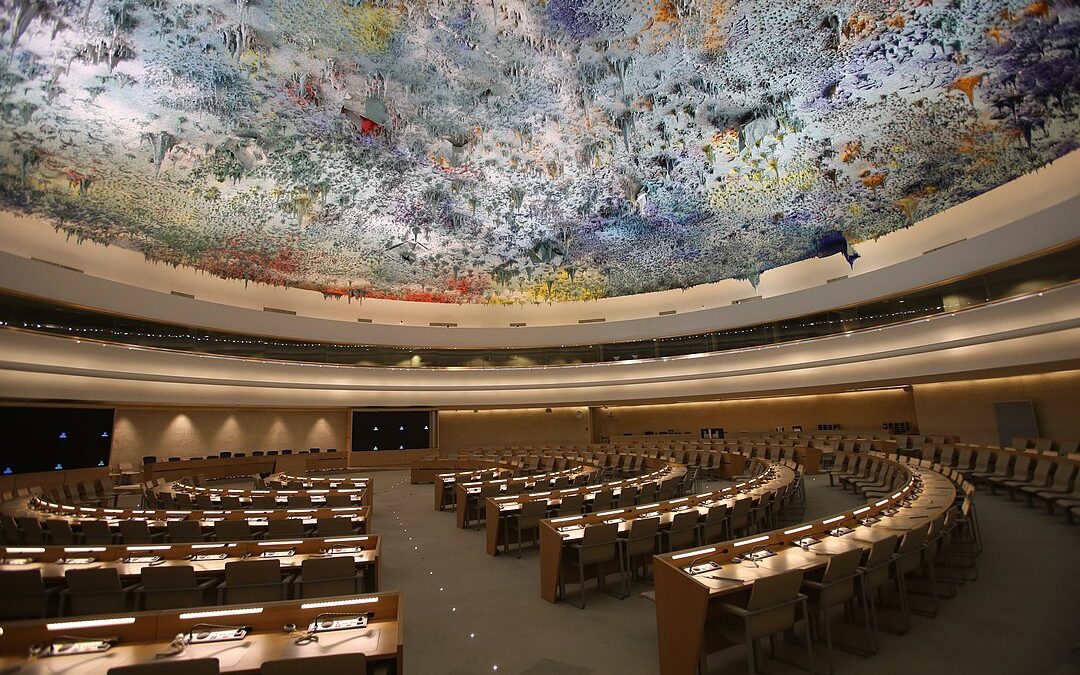
Image: Ludovic Courtès

GEO TV Editor-in-Chief makes urgent appeal to UN over his politically motivated and arbitrary detention

GEO TV Editor-in-Chief makes urgent appeal to UN over his politically motivated and arbitrary detention

GEO TV Editor-in-Chief makes urgent appeal to UN over his politically motivated and arbitrary detention

The arrest and detention of Mir Shakil-ur-Rahman, Group Chief Executive, editor-in-chief, and principal shareholder of Pakistan’s largest media group, Jang Media Group, is politically motivated, arbitrary and unlawful, the United Nations has heard.

Today, an urgent appeal has been lodged on behalf of Mir Shakil-ur-Rahman with the UN Working Group on Arbitrary Detention, and a second complaint has been made to the UN Special Rapporteur on the Promotion and Protection of the Right to Freedom of Opinion and Expression. These urgent appeals call on the United Nations experts to take action to ensure that the Government of Pakistan and the National Accountability Bureau (NAB) complies with their obligations under international law, and that Mir Shakil-ur-Rahman be released immediately.

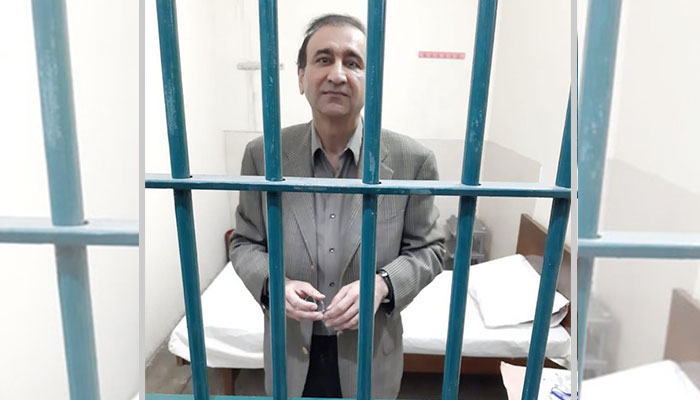
Mir Shakil-ur-Rahman was arrested on 12 March by the NAB in Pakistan in a case concerning a property transaction that dates back 34 years to 1986. He has been imprisoned since, in unsafe and unhygienic conditions and without meaningful and regular access to his lawyers. Jang Media Group owns Geo TV as well as some of Pakistan’s largest newspapers. Mr Shakil-ur-Rahman’s arrest and detention come following many attacks upon and targeting of him, Jang Media Group and its journalists by the Government of Pakistan and the NAB, and a deteriorating climate for media freedom in Pakistan.

Commenting on the arrest, a Jang Group spokesperson said:

“In the past 18 months, the NAB sent our reporters, producers and editors, directly and indirectly, over a dozen notices, threatening shutdown of our channels, due to the Jang/ Geo Group’s reporting and its programmes about the NAB. In its defence, the NAB has in writing said that it is a constitutionally-protected institution that can’t be criticised.”

The international counsel team for Mr Shakil-ur-Rahman, Caoilfhionn Gallagher QC, Tatyana Eatwell and Jennifer Robinson of Doughty Street Chambers, London, said:

“Mr Shakil-ur-Rahman’s arrest and imprisonment – on spurious charges dating from transactions in 1986, over three decades ago – raise grave concerns. This not only violates our client’s rights to freedom from arbitrary detention and a fair trial, but this is part of a wider pattern. This is a targeted and concerted attack upon our client’s freedom of expression rights and freedom of the media in Pakistan, weaponising NAB procedures to shut down critics of the Government. His detention is arbitrary and the authorities in Pakistan must comply with their international law obligations and release him forthwith.”

Simon Spanswick, Chief Executive of the Association for International Broadcasting (AIB), added,

The Association for International Broadcasting and its Members are deeply concerned that Mir Shakil-ur-Rahman, the head of one of Pakistan’s major media groups, has been detained in contravention of both Pakistan and international law. Due process appears not to have been followed in this case and we call on the Pakistan authorities to immediately release him. We are further concerned that the Pakistan government has for the past two years been attempting to restrict access to Geo TV channels across the country, in contravention of the channels’ licences and carriage agreements. This is a blatant attempt to reduce media freedom in Pakistan that this Association deplores.”

BBC sets out plan to inform, educate and entertain during unprecedented times

BBC sets out plan to inform, educate and entertain during unprecedented times

BBC sets out plan to inform, educate and entertain during unprecedented times

The BBC issued this statement on 18 March
Today the BBC is setting out how it will ensure it keeps the nation informed, educated, and entertained in unprecedented times.

Director-General Tony Hall says: “We all know these are challenging times for each and every one of us. As the national broadcaster, the BBC has a special role to play at this time of national need.

“We need to pull together to get through this. That’s why the BBC will be using all of its resources – channels, stations and output – to help keep the nation informed, educated and entertained. We are making a series of changes to our output to achieve that.

“We will continue to deliver all the essential news and information – with special programming and content.

“We also will do everything from using our airwaves for exercise classes for older people, religious services, recipes and advice on food for older people and low-income families, and should schools close, education programming for different age groups. We will also be launching a whole new iPlayer experience for children. And of course there will be entertainment – with the ambition of giving people some escapism and hopefully the odd smile.

“Clearly there will be disruption to our output along the way, but we will do our very best.

“It will take time to emerge from the challenges we all face, but the BBC will be there for the public all the way through this.”

The BBC is announcing a wide-ranging package of measures today.

Our core role is to bring trusted news and information to audiences in the UK and around the world in a fast-moving situation, and counter confusion and misinformation.

In particular:

  • We will do everything we can to maintain Breakfast, the One, Six and Ten and ensure they continue to perform a vital role on BBC One
  • We will broadcast a weekly prime-time Coronavirus special on Wednesdays on BBC One, and move Question Time to 8pm on Thursdays, with call-in audiences and remote guests.
  • We will record a daily edition of the Coronavirus podcast, and film it where possible for News channel use in the UK and abroad.
  • We will bring listeners the most up-to-date information on Coronavirus through 5 Live. 5 Live will be answering listeners’ questions with regular phone-ins.
  • We will focus local radio breakfast and mid-morning output on news, open phone lines and expert advice for local communities between 6am and midday.
  • Under the umbrella Make A Difference, every local radio station will join up with local volunteer groups to help co-ordinate support for the elderly, housebound or at risk, making sure people know what help is available in their area.
  • We will keep Newsround bulletins on air throughout the day on CBBC.
  • We will delay the planned closure of the Red Button text news and information service.

We will help people in the UK deal with the impact of the crisis on their own lives, by providing advice, education and support.

Initiatives include:

  • Using The One Show as a consumer programme show for all aspects of the crisis. This will include health and well-being advice, keeping fit and healthy eating tips, as well as links to other BBC output that can help and support.
  • In BBC One daytime, Health Check UK Live will directly address the concerns of viewers who are in isolation, offering tips on how to keep healthy and happy at home.
  • Making BBC Homepage the BBC’s bulletin board supplying clear information – the answers to all the key questions, with public information, health advice and recipes.
  • Launching a virtual church service on Sunday mornings across local radio in England, led initially by the Archbishop of Canterbury.
  • Subject to outside broadcast capacity and our partners, we will aim to broadcast a weekly Sunday morning church service on BBC One, and explore how to support other religions and denominations, including in the run-up to Ramadan.
  • We will work with partners to get older age group exercise routines and other fitness programming into people’s homes on TV or radio.
  • We will retarget the BBC Food website around collections of recipes and advice on what can be made with essentials, especially for older people, and for low-income families.

In the event that schools are shut down, and subject to further work and discussions with the Department for Education, devolved administrations and schools, we are exploring:

  1. A daily educational programme for different key stages or year groups – with a complementary self-learning programme for students to follow, broadcast on BBC Red Button and made available on demand on BBC iPlayer.
  2. Expanding BBC Bitesize content, with our social media running daily troubleshooting Q&As focusing on a different subject each day.
  3. Increasing our educational programming on BBC iPlayer, bringing together the best from BBC Bitesize, BBC Teach and the wider BBC portfolio where educationally appropriate.
  4. Creating two new daily educational podcasts for BBC Sounds, one for primary and one for secondary.
  5. BBC Four and BBC Red Button devoting a block of programming each weekday evening to show programmes that support the GCSE and A Level curriculum. In Scotland, the Scotland channel will support the Scottish NQs and Highers in daytime.

We will keep people entertained, providing laughter, escapism, companionship, shared experiences and a sense of connection to the outside world.

Initiatives include the following:

  • We will bring back many favourite shows, allowing people of all ages to escape into some top-quality entertainment both on our channels and on BBC iPlayer. New boxsets going up shortly include Spooks, The Missing, Waking The Dead, French And Saunders, Wallander and The Honourable Woman, as well as more from BBC Three.
  • We will be launching an exciting new iPlayer experience for children, offering a wide range of entertaining and educational series. It will be easy to use and easy for them to find what’s relevant to them.
  • Radio 1, Radio 2 and Radio 4 will provide the information, explanation and escape that millions rely on. On Radio 4, we will dig into our rich archive of drama with such well-loved titles as The Complete Smiley, all of the novels by the Bronte Sisters, film noir classics by Raymond Chandler, and reassuring favourites as Rumpole and Wodehouse. We will be sharing popular podcast dramas with a wider radio audience for the first time by broadcasting the award-winning Forest 404 and The Whisperer In Darkness. We will also hope to provide some joy and laughter by running classic editions of I’m Sorry I Haven’t a Clue and Just A Minute.
  • We will do the same in BBC Sounds, looking at bringing back classic sport, comedy and drama, as well as exploring using the BBC’s programme index to allow audiences to search thousands of online archive radio programmes.
  • We will aim to create live fund-raising events, to raise money for coronavirus good causes.
  • At a time when British culture is having to close its doors, the BBC, through iPlayer and Sounds, can give British culture an audience that can’t be there in person. We propose to run an essential arts and culture service – Culture in Quarantine – that will keep the Arts alive in people’s homes, focused most intensely across Radio 3, Radio 4, BBC Two, BBC Four, Sounds, iPlayer and our digital platforms, working closely with organisations like Arts Council England and other national funding and producing bodies. This will include guides to shuttered exhibitions, performances from world-class musicians and comedy clubs, new plays created especially for broadcast featuring exceptional talent, poetry and book readings.
BBC News sets out its coronavirus output arrangements

BBC News sets out its coronavirus output arrangements

BBC News sets out its coronavirus output arrangements

BBC News has outlined its initial plans for how it will continue to offer its audiences trusted and accurate news throughout the Coronavirus crisis.

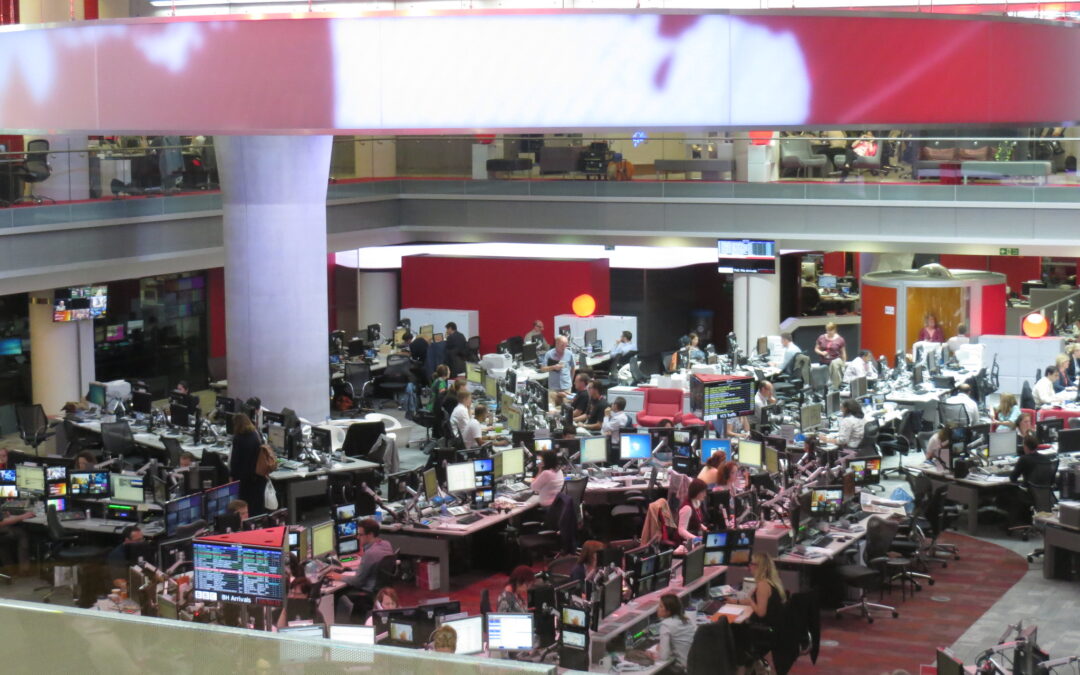
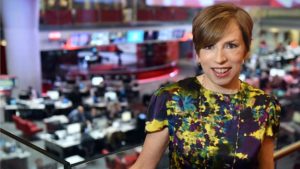
Director of News, Fran Unsworth (pictured), says: “These are unprecedented and difficult days. Trusted, accurate information is vital in a public health emergency and the BBC has a key role to play. We will continue offering our audience a continuous news service on TV, radio and online but this will look a bit different in the weeks ahead.

“Like many organisations we are unable to have all our staff on site due to the Coronavirus outbreak. We are therefore making some changes to what we do to streamline our output to ensure we can work with fewer people and protect the staff who are at work.”

Television

We will be making some visible changes to our output to focus on the latest news, information, live events and audience questions in the coming days. Breakfast, News At One, News At Six and News At Ten will continue to perform a vital role on BBC One, while we make some changes to support our continuous news channels.

We will be making some visible changes to our output to focus on the latest news, information, live events and audience questions in the coming days.

From tomorrow we will be moving to a core news service on the BBC News channel in the UK – with fewer branded programmes. This core service will replace some scheduled programmes on BBC Two including Politics Live and Victoria Derbyshire. We will be talking to these teams about how they can support the core operation, which will also provide live coverage of major news conferences and government briefings to BBC iPlayer, TV and News online.

There will also be a reduction in branded programmes on BBC World News – and more integrated working across live TV output behind the scenes. Some Persian TV programmes will be suspended.

Newsnight and The Andrew Marr Show will remain on air but will be operated by fewer technical staff; while The Andrew Neil Show, Newswatch and The Travel Show will be suspended. HARDtalk will also be suspended from next week.

Question Time will be broadcast at 8pm every Thursday without a studio audience for a period. From next Thursday it will be broadcast from a fixed location each week. Audiences will submit questions and we are particularly keen to hear from those in vulnerable groups.

Radio

We believe we can protect much of our regular, trusted output at this point – though we are keeping the situation under close review and will be making some initial changes.

On World Service English, The World This Week will be suspended from tomorrow, with World Update and Weekend suspended from next week.

In the UK, radio summaries on BBC Radio 2, 3, 4 and 5 live will be brought together into a single output from 1am on Friday, with 6 Music using the same script. There will be shared production and output on Asian Network and Newsbeat from tomorrow. The Week In Westminster on Radio 4 (Saturday mornings) will be suspended after 21 March. We are making some other changes to radio studio usage and working methods to protect our staff.

Digital

Over the last few weeks we have seen unprecedented use of our digital news services in the UK and around the world – with high consumption of our live pages, explanatory journalism and in-depth reporting. We will be making some changes to the way our teams are organised to sustain these vital services – and to ensure we can distribute important information via social media.

As a result of this we will be focusing content on the accounts that reach the widest number of people, drawing in effort from across the BBC to support our social media activity, and suspending posts on some smaller accounts over the coming days.

Podcasts

Newscast will change into a daily edition of The Coronavirus Podcast. Americast, Beyond Today and The Next Episode podcasts will be suspended.