Iran continues to harass BBC News Persian staff; raised at UNHRC event

Iran continues to harass BBC News Persian staff; raised at UNHRC event

Iran continues to harass BBC News Persian staff; raised at UNHRC event

Iran’s escalating harassment of BBC News Persian journalists discussed at BBC and UN Human Rights Council virtual event

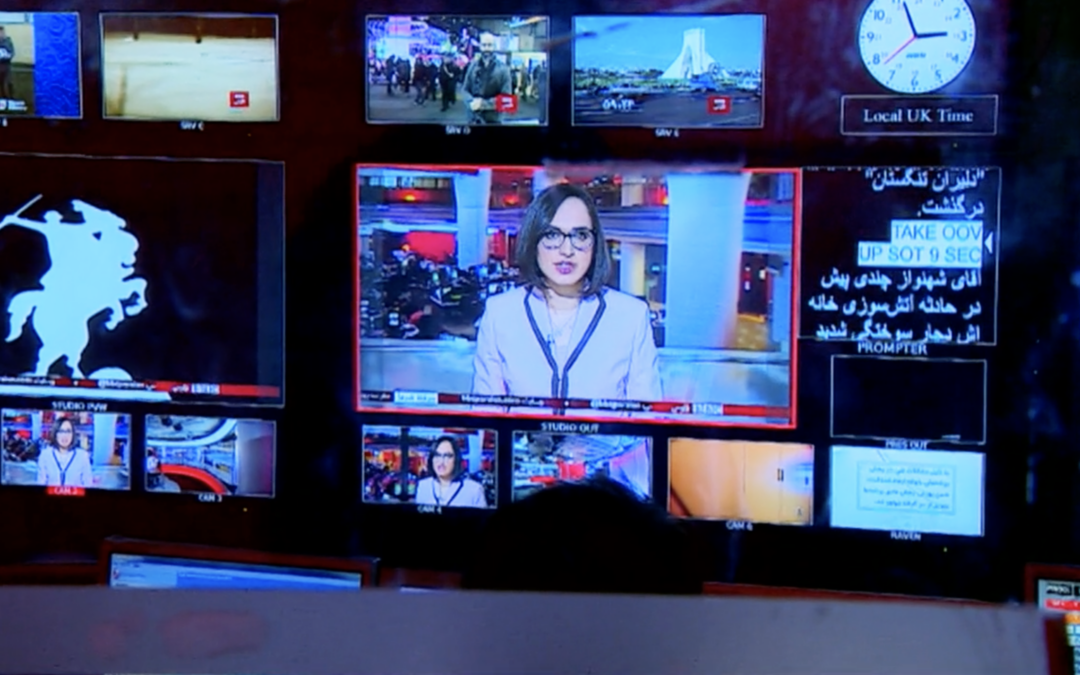
BBC World Service co-hosted a virtual “side-event” to coincide with the 47th session of the United Nations Human Rights Council (UNHRC) on 24 June. It was designed to raise concerns about the escalating cross-border harassment and threats from Iran towards BBC News Persian journalists and other Persian-language media. Alongside the BBC, the event was co-hosted by the International Federation of Journalists, National Union of Journalists and Doughty Street Chambers.

The virtual event was chaired by Deputy General Secretary at International Federation of Journalists, Jeremy Dear.

Speaking at the event, Ambassador Rita French, UK’s Deputy Permanent Representative to the United Nations in Geneva and International Ambassador for Human Rights, said: “It remains our desire to see Iran change tack, cease this abhorrent persecution against journalists and their families, and adhere to its international human-rights obligations. Until they do, the UK will continue to hold them to account, and seek to ensure media freedom is defended everywhere.”

Estonia will chair this year’s conference of the Media Freedom Coalition.  Ambassador Minna-Liina Lind, Estonian Ambassador at Large for Human Rights and Migration, said: “We really want to have some concrete deliverables from the conference hosted in Tallinn in December 2021.”  

Also on the panel was BBC News Persian journalist Kasra Naji who spoke about the campaign of vilification, threats and persecution endured by himself, his colleagues and their families, and BBC’s World Affairs Editor, John Simpson, who warned of the danger, that these policies that already have been in place for four years, will continue and intensify under Iran’s newly elected president Ebrahim Raisi, and called to protect and guard the BBC’s Persian service.

For many years, Iran has conducted a campaign of harassment and intimidation towards BBC News Persian journalists and their families in Iran. This has included death threats towards BBC journalists and their families in London, family members in Iran being brought in for interrogation and threats being made of cross-border operations to put BBC journalists in prison, online harassment and gendered attacks on women journalists, and a judiciary-imposed asset freeze on all assets of BBC News Persian staff in Iran. In some cases, family members were deprived of their liberty and held in degrading conditions, and ordered to tell their relatives to stop working for the BBC.

In response to this, the BBC initiated its first ever UN complaint in 2017 in relation to the protection of BBC journalists and has continued to engage with UN Special Mechanisms since. Concern has been raised about Iran’s treatment of BBC News Persian by the UN Secretary-General and successive UN Special Rapporteurs.

In March 2020, a group of UN experts made a joint statement condemning Iran’s harassment of BBC, raising concern of indications that:

… the Iranian authorities are prepared to use force extra-territorially, in violation of international law. Harassment, surveillance, death threats against journalists, within and outside domestic boundaries violate international human right law, including the right to physical integrity, the right to life and the right to freedom of expression.

The UN experts said that Iran’s acts towards BBC News Persian “violate international law regulating the use of force in times of peace” and “ultimately constitute serious threats to global security and thus demand strong reactions on the part of the Governments”.

In the past year, matters have escalated. Journalists and others perceived to be critics of the Iranian authorities have been abducted from other countries and returned to Iran, to be imprisoned and (in at least one case) to face the death penalty. Iran’s asset freeze has extended beyond BBC News Persian staff to some other international Persian-language outlets. Death threats have been made towards BBC News Persian staff in London, leading to police involvement and protection.

Tim Davie, BBC Director-General, said: “The treatment of the BBC News Persian journalists and their families by the Iranian authorities runs counter to the basic principles of human rights.  Our total support for our journalists doing their job is as strong as our determination to never succumb to these pressures and we demand that they stop.”

Caoilfhionn Gallagher QC and Jennifer Robinson, counsel for BBC World Service, said: “This week, the newly elected President of Iran has claimed he is a ‘defender of human rights’.  But the Iranian authorities’ cruel harassment and intimidation of BBC News Persian staff and their families violates the human rights of journalists and their families. Iran’s cross-border targeting of journalists is aimed at silencing voices Iranians are entitled to hear and also breaches the rights of the wider public. This is a sustained, pernicious attack on human rights by Iran. We urge UN experts to take action on this issue. The international community must condemn this in the strongest terms, and immediately take action to protect the integrity of journalists, their families and their profession.”

Simon Spanswick, chief executive of the Association for International Broadcasting, joined the event. During the session, he said:

I believe that it is essential that we harness not only diplomatic channels but also the media industry itself in calling out the Iranian authorities and their attempts to silence BBC Persian, Iran International and others. We need to encourage other media organisations to use the platforms they have – both on air, and at industry events – to ensure that the issue is kept at the forefront of people’s minds. At the AIB, we’re happy to use our events to tell this important story.”

BBC News Persian is a multimedia news and current-affairs service, with a weekly audience of around 18.3m (2020), delivering accurate and impartial news, information and analysis from a global perspective to Persian-speakers around the world. Available online via the websitebbc.com/persian, on TV and radio, BBC News Persian also connects with audiences on social media: Facebook, Instagram, Telegram and Twitter. BBC News Persian is part of BBC World Service.

Watch the latest video about the harassment of BBC Persian staff:
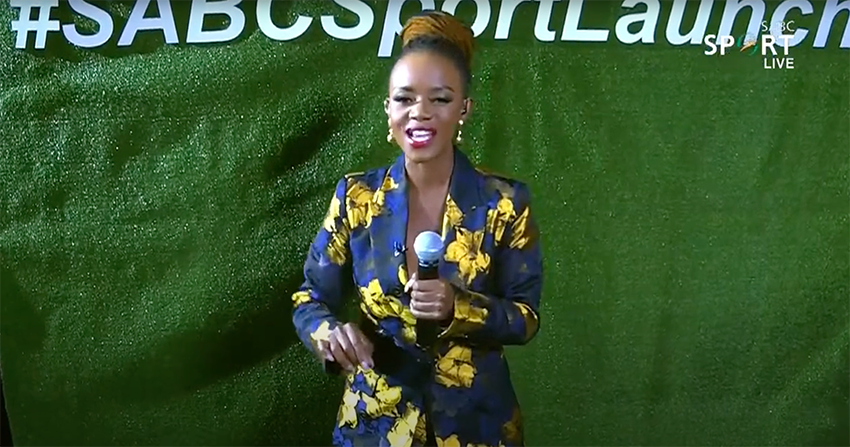
SABC launches 24-hour sport channel

SABC launches 24-hour sport channel

SABC launches 24-hour sport channel

The South African Broadcasting Corporation has launched its new Sports Channel, following the successful soft launch of its 24-hour Sports Channel on the SABC DTT service, the Openview set-top-box and the TelkomONE mobile streaming platform in April 2021. The launch, hosted from the SABC headquarters building in Auckland Park, Johannesburg, also featured Team SAs announcement of the second team squad for the Tokyo 2020 Olympics Games.

Gary Rathbone, General Manager: SABC Sport stated that “SABC Sport has always been the ultimate sporting home to the nation and has brought to South Africa unforgettable sporting events over the years. We are excited that as SABC Sport we will be part of the historic moment of unveiling the athletes who will be proudly representing the nation at the Tokyo 2020 Olympic Games. For the public broadcaster, we are aware of the role we also play in touching the hearts and minds of the public.  Through the events we showcase on the SABC platforms, we want to inspire up-and-coming athletes in the various sporting disciplines to reach for their dreams”.

Rathbone went on to say “Our newly launched Sports channel on the DTT, Openview and TelkomONE platforms, must also be commended. Since the Channel became operational in April this year, its audience figures have been positive, with latest TAMS figure showing a total reach of over 2 million, a 5 % share of the National Television Market. On Openview alone, the channel has established itself amongst the top 10 on the bouquet, with a total reach of over 1.4 million, representing a 24% share of the Openview market. This is really positive start for an exciting new Sport Channel that South Africans will be able to access without needing to pay a subscription”.

The SABC Sport Channel is committed to providing compelling and exciting local and international sporting content for all sports loving South Africans. You can see the launch event at https://www.youtube.com/watch?v=BJuDjce6wus.

Algerian public broadcaster gets new director-general

Algerian public broadcaster gets new director-general

Algerian public broadcaster gets new director-general

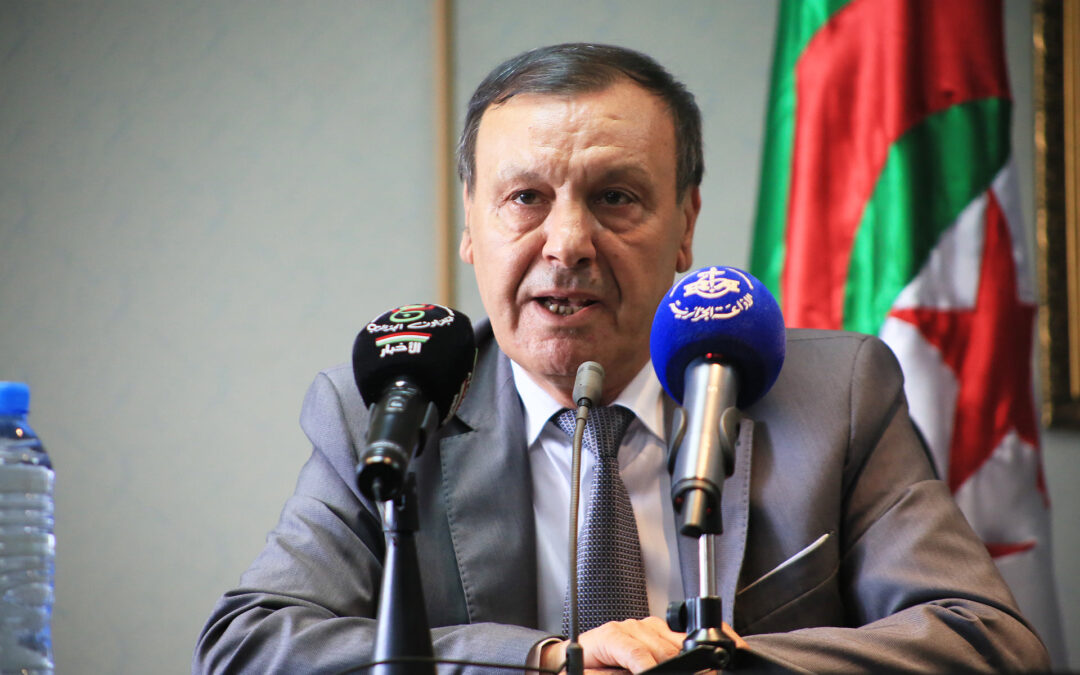
Chabane Lounakel has taken up his role as the new Director General of Algeria’s Public Television Establishment (EPTV).

His inauguration ceremony took place at the EPTV headquarters under the chairmanship of the Minister of Communication Amar Belhimer.

According to press reports, the Minister called for a combination of efforts in order to meet national and international media challenges as well as the aspirations of television viewers in the country. “Our country is going through a decisive period in its political history with the approach of the legislative elections scheduled for June 12,” he said.

Belhimer paid tribute to the incoming D-G saying: “he has a long experience in the information sector and administrative management which qualifies him to assume his new functions with a spirit of responsibility and to work to give the desired impetus to this strategic enterprise. ”

Lounakel has pledged to work to further strengthen public television as a vital and important enterprise for the country. “Algeria is a [country] made to be a pioneer. We must provide it with media establishments, so that it would be an example to follow in terms of progress, freedom of expression and human values ​​”, he said.

Photo: DZbreaking

Second libel suit against Maria Ressa withdrawn

Second libel suit against Maria Ressa withdrawn

Second libel suit against Maria Ressa withdrawn

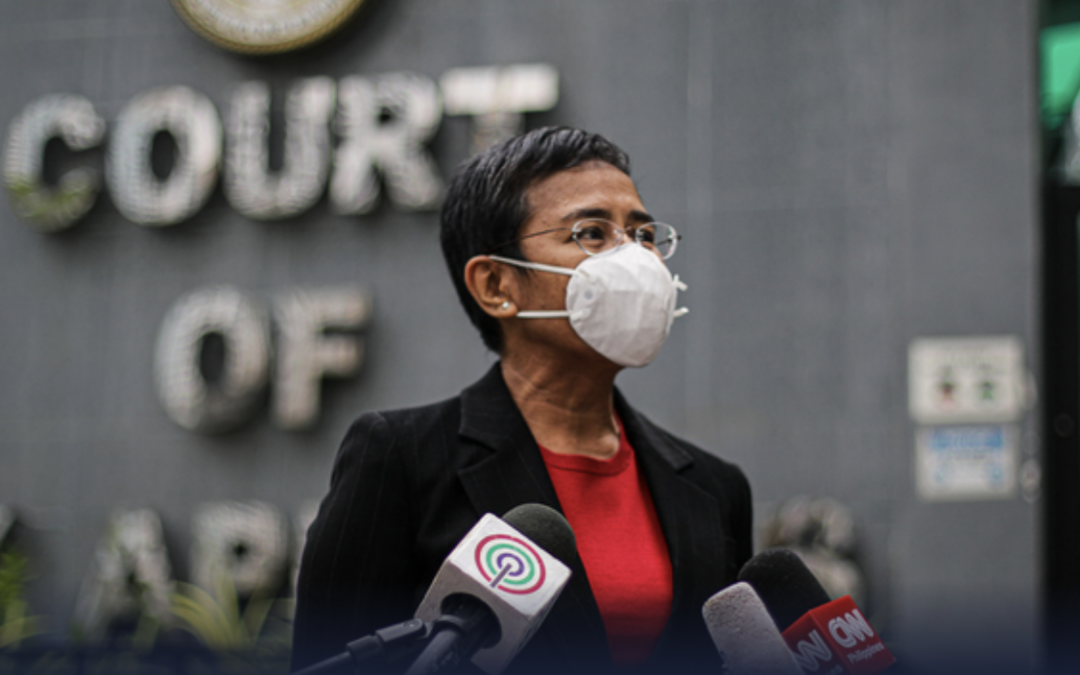
Philippines businessman Wilfredo Keng has withdrawn his second cyber libel case against Rappler CEO Maria Ressa, with Makati judge Andres Soriano formally dismissing the case in open court on Tuesday, June 1.

“This case is hereby dismissed with prejudice. Let the cash bail posted by the accused on November 27, 2020, in the amount of P24,000 be released,” said Makati Regional Trial Court (RTC) Branch 148 Judge Andres Soriano in the written order released before courts closed Tuesday.

According to the order, Keng filed a manifestation on May 25 “praying for the dismissal of the civil aspect of this case and seeking that he and his witnesses be excused from further participating in this case.”

Keng said in the motion that “upon careful reflection, the private complainant has decided to redirect his focus towards helping out with the pandemic, instead of being pre-occupied with the prosecution of this case.”

“He now intends to dedicate time and resources to support ongoing efforts to battle the pandemic and to assist those adversely affected,” Keng said in the motion.

“The motion also urges for the dismissal of the criminal aspect of the case with prejudice,” said the order.


No objections

Ressa’s counsel, Ted Te, did not object.

“The public prosecutor manifested that with the private complainant turning hostile to the cause of the prosecution, the prosecution can no longer prove guilt of the accused beyond reasonable doubt,” said the order.

Te said they were prepared to “face the charge,” but the withdrawal and dismissal “is a welcome development.”

“It was based on the complainant’s voluntary withdrawal. That led the prosecutor to ask for dismissal: without the complainant, the prosecutor cannot prove the case beyond a reasonable doubt,” Te said.

“I’m glad to hear good news. I look forward to seeing the rest of the cases against me and Rappler dropped in the future,” said Ressa.


Background of the case

This case was Keng’s second cyber libel complaint against Ressa, over the same 2012 Rappler story which the journalist had already been convicted for by a Manila court in 2020. The conviction, which carried a sentence of a minimum of six months and one day to a maximum of six years, is on appeal. Ressa and former researcher-writer Reynaldo Santos Jr remain free.

Keng filed the second cyber libel complaint over Ressa’s tweets, which were screenshots of an old Philippine Star article about the businessman. That article was referenced in the contested 2012 Rappler article about the late former chief justice Renato Corona.

Philstar.com has already taken down the article from its website, saying it was because “the camp of Mr Wilfredo Keng raised the possibility of legal action.” Philstar.com said it wanted to be “prudent” because “the scope and bounds of the Cybercrime Prevention Act of 2012 are still unexplored.”

The legality of suing over screenshots of a story that Ressa did not author, but was merely sharing, is a hotly disputed issue because of the nuances of a young Philippine cybercrime law.

Ressa faces eight other charges before the Court of Tax Appeals (CTA), the Pasig City Regional Trial Court, and the Manila Regional Trial Court.

The four CTA cases and two Pasig cases all stemmed from the mother case involving the company’s Philippine Depositary Receipts, which the Court of Appeals has ruled to have been already cured.

The seventh case in Manila is another cyber libel suit over reporter Rambo Talabong’s investigative story about an alleged corruption scheme at the De La Salle-College of Saint Benilde (CSB). The eighth is the cyber libel case still pending with the Court of Appeals.

Source: Rappler.com

Photo: Jire Carreon/Rappler

Media Freedom Coalition statement on arrest of Roman Protasevich

Media Freedom Coalition statement on arrest of Roman Protasevich

Media Freedom Coalition statement on arrest of Roman Protasevich

Global Affairs Canada, representing the Media Freedom Coalition, released this statement on the detention of Roman Protasevich.

The undersigned members of the Media Freedom Coalition condemn in the strongest terms Belarus’ forced diversion and landing of a commercial aircraft and subsequent arrest of journalist Roman Protasevich. 

This unprecedented and shocking action constitutes a full frontal attack on media freedom and has serious implications on the right of freedom of expression and opinion more broadly. This action is all the more troubling when seen in the context of the large-scale campaign to silence independent voices in Belarus, including the May 18 raid on the offices of independent news site tut.by and the subsequent arrest of several staff. Some 400 journalists and workers in the media in Belarus have faced various forms of repression in the course of the August 9 election and its aftermath.

The Media Freedom Coalition demands the immediate and unconditional release of Mr. Protasevich as well as other journalists and media workers who have been detained in Belarus for doing their jobs. Those responsible must be held accountable for attacks on journalists and media workers.

Media freedom is an important part of democratic societies and essential to the protection of human rights and fundamental freedoms.

Australia, Austria, Bulgaria, Canada, Costa Rica, Cyprus, Czech Republic, Denmark, Estonia, Finland, France, Germany, Greece, Iceland, Italy, Japan, Latvia, Lithuania, Luxembourg, Netherlands, New Zealand, North Macedonia, Slovakia, Slovenia, Switzerland, Ukraine, United Kingdom, United States

Council of Europe calls for stronger political will to protect media freedom

Council of Europe calls for stronger political will to protect media freedom

Council of Europe calls for stronger political will to protect media freedom

In a statement issued ahead of World Press Freedom Day on 3 May, Council of Europe Secretary General Marija Pejčinović Burić has urged European governments to show stronger political will to protect journalists and independent journalism in order to put a stop to the deterioration of media freedom in the continent.
 
“Media freedom is an essential pillar of our democracies which is too often taken for granted. Respect for freedom of the media is in decline in many countries. In the last years we have witnessed an increase in the number of cases of violence and intimidation against journalists.
 
“During the Covid-19 pandemic, there was a strong rise in reports of violence against journalists as well as censorship and reprisals for questioning governments policies. At the same time, quality media face serious economic challenges and many journalists have lost their jobs due to the pandemic. These worrying trends are highlighted in my annual report to be published in the next days.
 
“It is time to recall that states have an obligation to ensure that journalists can carry out their work free from violence and intimidation and fulfil their role as public “watchdog”, which includes holding public authorities accountable for their decisions and action.”
 
The annual report of the Platform for the Protection of Journalism and the Safety of Journalists, released by 14 international media freedom organisations, lists 201 serious cases of threats to media freedom in the 47 Council of Europe member states in 2020, a 40% increase compared to 2019. A record number of alerts concerned physical attacks (52 cases) and harassment or intimidation (70 cases).
Image: Council of Europe