12 May 2017
A district court in Baku today ruled in favor of a lawsuit blocking access within Azerbaijan to the website of Radio Free Europe/Radio Liberty’s (RFE/RL) Azerbaijani Service, azadliq.org.
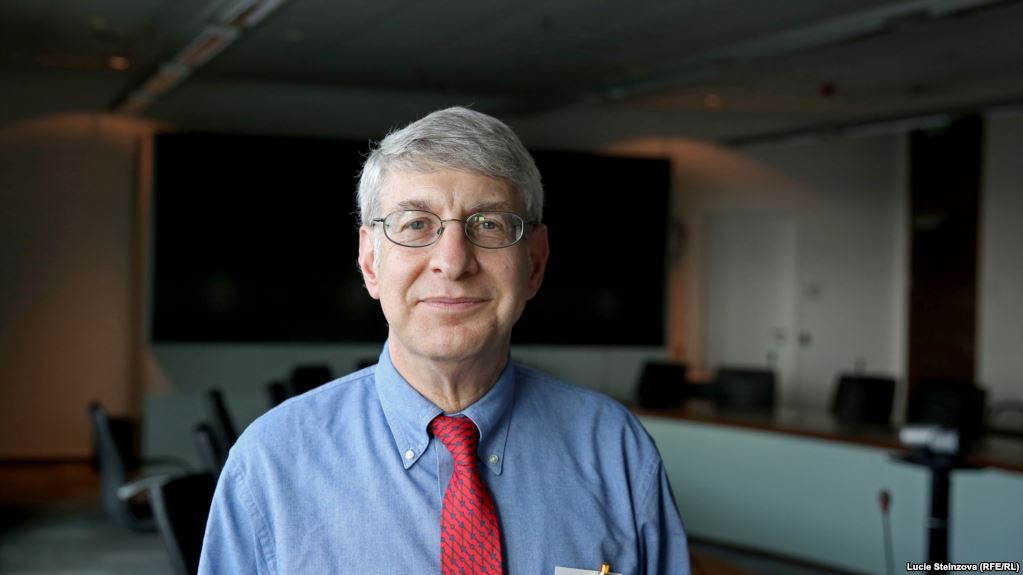
RFE/RL President Thomas Kent said, “Today’s ruling is another blatant attempt by Azerbaijani authorities to try to silence our reporting in Azerbaijan. It misrepresents RFE/RL’s work in Azerbaijan, and violates Azerbaijan’s international commitments to respect media freedom. We will appeal it.”
The Sabail district court in Baku ruled that the Ministry of Transport, Communications, and High Technology’s request to block access to the websites of five news outlets — RFE/RL’s Azerbaijani Service, the nongovernmental Azadliq newspaper (unrelated to azadliq.org), Meydan TV, and the online Turan TV and Azerbaycan Saati TV channels — must be carried out.
Access to the websites has been blocked since March 27 on the instructions of the Prosecutor General’s Office, which claims that the websites “pose a threat” to Azerbaijan’s national security, and accuses them of “posting content deemed to promote violence, hatred, or extremism, violate privacy, or constitute slander.”
The March blockage followed the publication of investigations by the Azerbaijani Service, in cooperation with the Sarajevo-based Organized Crime and Corruption Reporting Project, on financial activities linked to members of the president’s family and inner circle. The Service also recently published reports raising questions about costs associated with a September 2016 referendum that extended the term of presidential office from five to seven years, and created the post of Vice President, to which President Ilham Aliyev appointed his wife earlier this year.
According to Azerbaijani legislation, a guilty judgement by the court against azadliq.org could be used as grounds to prosecute the website’s correspondents. In 2014, authorities imprisoned prominent investigative reporter Khadija Ismayilova on charges of encouraging an attempted suicide and financial crimes in a case that foreign governments and rights advocates condemned as politically motivated.
Ismayilova’s arrest came just weeks before Azerbaijani state agents raided and sealed RFE/RL’s Baku bureau, forcing it to close in May, 2015. In December 2008, RFE/RL was formally banned from FM airwaves by Azerbaijan’s National TV-Radio Council, but continues to engage with its audience via satellite and online social media platforms.
(Source: RFE/RL press release)
10 May 2017
One day ahead of the NexTV CEO event in Mauritius, Ethiopia’s Information Network Security Agency (INSA), in charge of the transformation of the country’s high-tech and security industry, officialised the launch of Ethiosat, its new TV platform. INSA has inked a multi-year contract with Eutelsat Communications (NYSE Euronext Paris: ETL) for capacity at its 7/8° West neighbourhood, the pole position for satellite TV in the Middle East and North Africa. Launching with nine national channels, Ethiosat will progressively ramp-up with additional content.
A single satellite TV platform
Ethiopia’s national satellite TV landscape currently features more than 30 channels that broadcast from multiple satellites. The new platform offers licensed channels the opportunity to broadcast in a single platform, ensuring easy reception for TV homes across the country and accelerating digital take-up. The first channels, including EBC (Ethiopian Broadcasting Corporation) and Oromia TV[1], are available to homes on a Free-to-Air (FTA) basis. Multiple national and regional channels as well as commercial broadcasters are also candidates for inclusion in the flagship platform.
Easier route to digital entertainment
Viewers can access Ethiosat using a single 90cm antenna and set-up box rather than sourcing content through multiple providers at multiple orbital positons. The new platform also taps into the installed base of antennas already equipped for reception from the popular 7/8° West neighbourhood.
A game-changer for Ethiopia’s media landscape
Michel Azibert, Eutelsat’s Chief Commercial and Development Officer, said: “This contract puts EUTELSAT 8 West B firmly on Ethiopia’s broadcasting map and is indicative of a new wave of growth in the country’s digital TV market. The pull of our 7/8° West neighbourhood is driven by a strong channel line-up of over 1,200 channels and the diversity and exclusivity of free-to-air content.”
Gebremeskel Teklemariam, Directorate Director at INSA, added: “Ethiosat will be a game-changer for our media landscape. In drawing on the rich experience and expertise of Eutelsat, INSA can broadcast a diverse line-up of services across Ethiopia, further enriching the 7/8° West satellite neighbourhood with quality and compelling content.”
How to receive Ethiosat on EUTELSAT 8 West B
Frequency: 11 512 MHz
Vertical polarisation
DVB-S2, 8 PSK, FEC 2/3
Symbol rate: 30 MBaud
8PSK
[1] Complete line-up of channels on Ethiosat: EBC, EBC3, Adiss TV, ES TV, Oromia TV, TIGRAI TV, Southern TV, Amhara TV, Walta TV
(Source: Eutelsat press release)
29 March 2017
Euronews, in partnership with several French regional media outlets and with the support of Google News Lab, launches a series of 9 portraits of French people in 360° videos, produced in the weeks before the French presidential election.
Euronews is covering the French presidential campaign with an innovative series of portraits of voters produced using VR360 technology. The ground-breaking project created by Euronews, one of the world’s pioneers in the production of immersive video reports, has received the support of Google News Lab.
It is being produced in collaboration with the newsrooms of French regional media outlets – Ouest-France, Dernières Nouvelles d’Alsace, La Nouvelle République, Radio Caraïbes International, and French news website StreetPress. With-in depth regional knowledge, they will provide crucial insight into the geographic and sociological diversity at the local level, in order to better reflect the French electorate.
Failure to accurately foresee the outcomes of the Brexit referendum or the US election highlighted a gap in the traditional media’s understanding of the issues and concerns of the peoples whose lives they cover. Consequently, as the French election campaign has been rocked by surprises that have attracted the entire world’s attention, Euronews and its partners are turning to the citizens of France.
Immersive journalism provides a fresh perspective on the campaign to better listen to and understand the issues affecting the French electorate, and to let them have their say, expressing their hopes and worries in the run-up to this crucial vote.
Before the first round on April 23, Euronews’ journalist-producer Olivier Péguy and partner journalists set out to meet the people of France, whether they intend to vote or not, throughout mainland France and its overseas territories.
With the eyes of the world watching France, the series of nine 360° episodes is being produced in six languages: English, French, German, Italian, Russian and Spanish.
A tenth episode will gather reactions after the second round. For the first time, Euronews will produce this story in an interactive virtual-reality environment. The episode will be produced with German start-up Vragments.
Euronews hopes that this new coverage model will inspire journalists for future elections, such as those in Germany in September.
| |
Olivier Péguy, journalist-producer, Euronews |
“Our starting-point is that all opinions are worth hearing – but for us to hear them, they must reach our ears. This project, conducted with The News Lab of Google and our media partners, actually lets us go and listen to what people want to tell us, and then to convey it to our audience. Because every opinion matters, Euronews is All Views.“
| |
David Dieudonné, Google News Lab Head in France |
“Google News Lab is particularly happy to support this innovative project, which uses the narrative power of 360° journalism in the news flow, to make new voices heard and connect a wide international audience with a series of local realities.”
France 2017 in 360°
The series is simultaneously broadcast by Euronews and the media partners. For Euronews on euronews.com, its mobile site, its apps, its YouTube channel and its other digital platforms.
(Source: Euronews press release)
23 March 2017
- Kuwait TV now broadcasting nine HD channels exclusively from EUTELSAT 8 West B
- HD acceleration in Middle East and North Africa satellite TV landscape
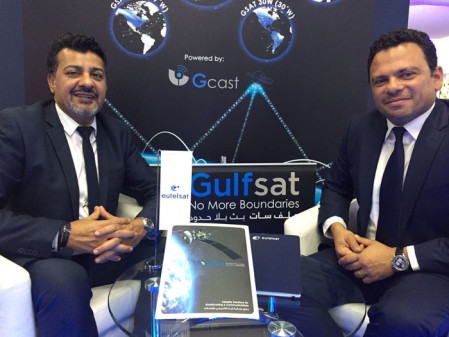
Dubai, Paris, 23 March 2017– Kuwait TV, the official Kuwaiti state broadcaster and part of the Kuwaiti Ministry of Information, announced today at Cabsat Dubai that the new Al-Qurain TV channel has launched in its free-to-air HD platform hosted on the EUTELSAT 8 West B satellite. The capacity used by Kuwait TV is provided by Gulfsat, Eutelsat’s long-term partner.
Launched one month ago, Al-Qurain TV is a heritage-based channel specialising in vintage Kuwaiti series and programmes. Kuwait TV, that amasses over 50 years of experience, broadcasts Kuwaiti-produced programmes in the Middle East and around the world. It completed the switch to HD through Gulfsat in 2015, coinciding with the arrival of EUTELSAT 8 West B. With the launch of this latest channel there are now nine Kuwait TV channels available free-to-air exclusively from EUTELSAT 8 West B in both SD and HD versions.
Ghassan Murat, Vice President of Business Development and Strategy at Eutelsat Dubai, said: “The addition of Al-Qurain TV to Kuwait TV’s platform is indicative of a new wave of growth enabled by our EUTELSAT 8 West B satellite, particularly for HD channels that have increased by 50% over the last year.”
Mohammed AlHaj, Chairman and CEO of Gulfsat, said: “We are delighted to support Kuwait TV’s new venture and to be part of the expansion of Kuwait’s broadcasting landscape.”
Meshal Al-Makled, Under Secretary of the Department of Engineering at the Kuwait Ministry of Information, added: “With the launch in 2015 of Kuwait TV’s all-HD platform via the EUTELSAT 8 West B satellite, our country fully embraced key technological trends to give viewers the full benefits of superior image quality.”
Source: Eutelsat press release
23 March 2017
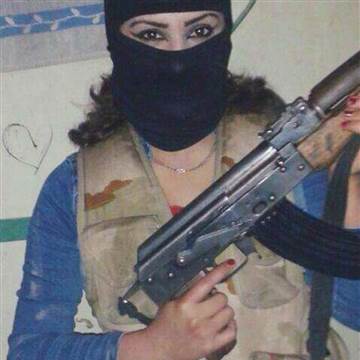
Alhurra Television interviewed ISIS defectors and their families as part of a two-part documentary series debuting March 25th. Alhurra cameras were exclusively allowed into Mitiga prison in Libya to interview two female defectors for Women With ISIS and husband and wife defectors for A Father’s Agony.
“This is an important story that needs to be told. The defectors share first-hand accounts of what it was like living under ISIS and the horrors they witnessed,” stated MBN President Brian Conniff. MBN manages and oversees Alhurra Television. “These documentaries capture the pain felt not only by the defectors, but also by their families.”
The first documentary, Women With ISIS tells the stories of Waheda, an independent Tunisian woman who was preparing to get her Master’s Degree. She followed her husband to Libya and then Turkey, it is only then that she realized he was taking her to join ISIS. After Waheda got to Syria, she realized things where not like she thought and begged her family to come save her. As she sits in a Libyan prison, she says she lost everything in her life: her husband, her son’s health and her freedom. Through Alhurra, she record a video message to her mother begging for forgiveness for ruining her life.
Women With ISIS also profiles Gofran, who went to Syria on her own volition, looking to support ISIS and what she believed they stood for. She was married off to an ISIS militant her first day in the country. As time went on and she learned more about ISIS, she questioned their rhetoric and way of life. She found that “everything was a lie” and that ISIS fighters were killing Muslims. Gofran also talks about her harrowing escape, which ultimately left her husband dead and a life sentence in prison for her. Women With ISIS will air on Saturday, March 25 at 20:00 GMT.
In the second documentary, A Father’s Agony, Akram and his wife Asma, speak out from a Libyan prison about what drew them into ISIS. Once they got to Syria, Asma talks about being shocked at what she saw and soon wanted to leave. She shared the hopelessness that they felt, because they knew if they returned home it would mean prison. The documentary also interviews Akram’s family, who talked about the astonishment they felt when he left to join ISIS. Through Alhurra, Akram is able to talk to his family for the first time since he left for Syria. They share their pain of knowing they may never see him again. A Father’s Agony debuts Saturday, April 1st at 20:00 GMT.
Both programs will also be streamed via Facebook Live when they debut on Alhurra. Women with ISIS and A Father’s Agony was produced by the same team that produced Alhurra’s award-winning documentary series Delusional Paradise.
Alhurra Television is an Arabic-language television network that broadcasts to 22 countries in the Middle East and North Africa via satellite. It is operated by the non-profit corporation “The Middle East Broadcasting Networks, Inc.” (MBN). MBN is financed by the U.S. Government through a grant from the Broadcasting Board of Governors (BBG), an independent federal agency. The BBG serves as a firewall to protect the professional independence and integrity of the broadcasters.
(Source: Alhurra press release)
