
24 May 2017
The Middle East Broadcasting Networks (MBN) launched the Maghreb Voices website to inform and engage with the people of the Maghreb region in North Africa. The website targets nearly 100 million people and focuses on issues that resonate with them, such as countering ISIS, the rights of women, human rights, corruption, human trafficking, slavery, minorities’ rights and illegal immigration.
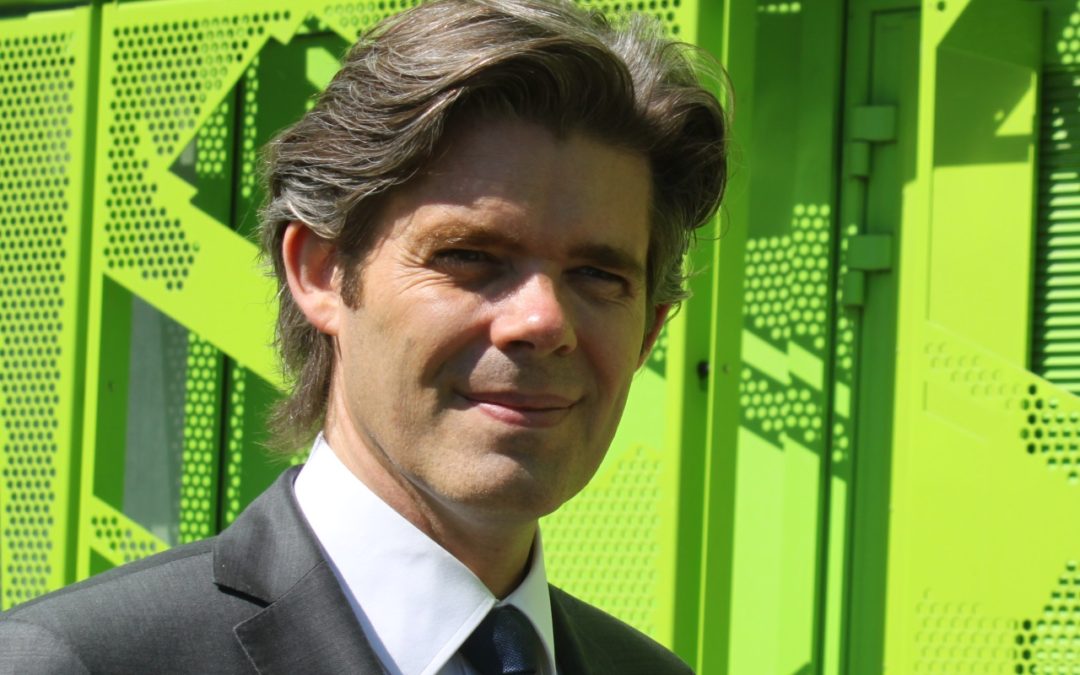
 “Maghreb Voices will provide its audience an unmatched opportunity to participate in important discussions and share their ideas, issues and concerns openly and freely,” stated Brian Conniff, President of MBN (pictured right). MBN manages and oversees Maghreb Voices. “Maghreb Voices will meet the tremendous need for an uncensored interactive platform in this underserved part of the world.”
The launch of Maghreb Voices comes after the success of Raise Your Voice-Iraq, which communicates with Iraqis about the future of their country. Similarly, engagement is Maghreb Voices main feature, using Community Managers to facilitate dialogue and interact with its audience. It goes to the streets of Morocco, Algeria, Tunisia, Libya and Mauritania to interview ordinary citizens and get their views on important topics that matter to them. The website also covers the news of the Maghreb community in the United States, Netherlands, France and Spain.
Maghreb Voices also utilises social media properties to facilitate the two-way conversation. It provides a 24/7 discussion forum for all voices on topics of concern through Facebook, Instagram, Snapchat, Twitter and WhatsApp.
There are several unique sections to Maghreb Voices. One of them is dedicated to defectors’ stories. This section includes interviews and first-hand accounts of people who joined and then left extremist groups such as ISIS after they became disillusioned. Another section of the website invites readers to ask any question they have about the U.S., to be answered by the Maghreb Voices staff, or outside experts. Audiences will also find video content, polls, question of the day, citizen journalist content and articles.
Maghreb Voices incorporates VOA’s Learning English into its website, so that its audience will have access to their videos and English language tools. More information about Maghreb Voices can be found on its website and Facebook page.
Maghreb Voices is operated by the non-profit corporation (MBN). MBN is financed by the U.S. Government through a grant from the Broadcasting Board of Governors (BBG), an independent federal agency. The BBG serves as a firewall to protect the professional independence and integrity of the journalists.
(Source: MBN press release)
23 May 2017
Arabsat announced the launch of Euronews new frequency on its wide coverage satellite BADR-4, to join other tier-1 regional & international news channels run on Arabsat BADR-4 News frequency 11996 MHz. Euronews’ original frequency will remain active till the end of May 2017, while Arabsat viewers are informed about the change via Arabsat’s linear and non-linear media distribution network.
“We are delighted with our long partnership with Euronews, one of the most viewed news channels in Europe and look forward to continue to offer their uniquely rich and varied news streams through Arabsat BADR-4 News frequency 11 996 MHz,” says Khalid Balkheyour, Arabsat President & CEO. “This move supports our content strategy to deliver specialized video frequencies reflecting market demand to Arabsat audiences across the MENA & Europe and ensuring the best Free-To-Air viewing experience at home.”
“Arabsat is a long-standing partner for Euronews and we warmly thank all the team that supported the launch of the Euronews English frequency to cover this key region.” says Michael Peters, Euronews CEO (pictured).
“With Arabsat we are guaranteed to reach a wide audience which is, in common with our consumers across EMEA, composed of curious and open-minded leaders, interested by our unique positioning. In addition to providing an expert coverage on European news, our multicultural team of 30 nationalities is also our strength. Indeed, Euronews’ journalists are the best qualified to share and analyse the diverse opinions on global events, rather than imposing a unilateral perspective as so often happens in the current news landscape. In a world of infobesity and polarized opinion, this is the uniqueness of Euronews that I’m sure will meet the interests of the Arabsat audience.”
About Arabsat Euronews new frequency:
Satellite: Arabsat BADR-4 @ 26° East
Coverage: MENA & Europe
Frequency: 11996 MHz
Polarity: Horizontal
Symbol Rate: 27500
FEC: 3/4
Transmission: DVB-S
Modulation: QPSK
Neighbouring News channels: France 24 Arabic, France 24 English, France 24 French, DW Arabia, BBC Arabic, CNBC Arabia, Sky News Arabia, Africa 24 & RTI.
(Source: Euronews + Arabsat press release)
22 May 2017
Intelsat S.A. (NYSE: I), operator of the world’s first Globalized Network and leader in integrated satellite communications, announced that Globecast signed a multi-year agreement with the company to distribute the English version of TRT World in high definition format to cable outlets in Asia and the Americas via the Intelsat 20 and Intelsat 21 satellites using IntelsatOne® terrestrial fiber and teleport services.
Globecast is expanding its longstanding relationship with Intelsat to distribute TRT World content to Asia and Latin America on Intelsat’s highly penetrated video neighborhoods. Intelsat 20, located at 68.5 East degrees, is the leading distribution and Direct-to-Home distribution platform serving Africa and the Indian Ocean region. Intelsat 21, located at 302 degrees East, is one of four satellites comprising Intelsat’s powerful video neighborhoods serving the Latin America region.
“It is our goal to provide our customers with efficient distribution into new growth markets around the world. Intelsat’s globalized network, and its highly penetrated video neighborhoods, provide maximum viewers for our content owners,” said Philippe Bernard, CEO at Globecast.
Deputy Director General of TRT Ibrahim Eren stated that it is important for TRT World to be available on Intelsat 20 and 21. “Intelsat is renowned for its advanced fleet of satellites and overall expertise in the business. Through their help, coupled with sophisticated technology from Globecast, we’re delighted to expand TRT World to millions of viewers across the Americas and Asia.”
“A valued partner, Globecast’s relationship with Intelsat spans many years and many continents,” said Rhys Morgan, Intelsat’s Managing Director, Europe. “We continue to invest in our media neighborhoods to ensure that we can support the growth of customers, such as Globecast and TRT World, who distribute new high definition programming around the world. We welcome TRT World to the Intelsat network and the nearly 5,000 channels we deliver globally.”
Supporting Resources:
(Source: Intelsat press release)
14 May 2017
Arabsat workshop in cooperation with Algeria Telecom Satellite 15 + 16 May 2017
Arab Satellite Communications Organization – Arabsat – in coordination with Algeria Telecom Satellite (ATS) are holding a workshop in Algiers on 15 + 16 May 2017 where Arabsat will showcase its satellites’ latest capabilities and demonstrate how Arabsat can provide up to date technical solutions for satellite telecommunications & Internet services covering the entire Algerian territory. The workshop will be attended by figures and entities working in the satellite telecommunications sector in Algeria from both the public and the private sector.
Arabsat will showcase, in addition to its new satellite Badr – 7 , the capabilities of its new 6th generation satellites that include at present 4 satellites. Three of those are under manufacture and the 4th is still in the process of research and design. The first satellite is scheduled to be launched by the end of 2017, while the other two satellites will be launched in 2018 on Arabsat various orbital positions.
The Arabsat workshop includes various forums & seminars attended by international experts in the field of satellite telecommunications & Internet. The latest technology in the field of mobile Telecommunications will also be discussed in addition to Ka-band huge capacities coverage that meets the future demand of the market.
(Source: Arabsat press release)
12 May 2017
In the run-up to the elections in Iran, BBC Persian is launching its digital-first TV programme. From Saturday, 13 May, #Shoma invites audiences across platforms to share their opinions and stories.
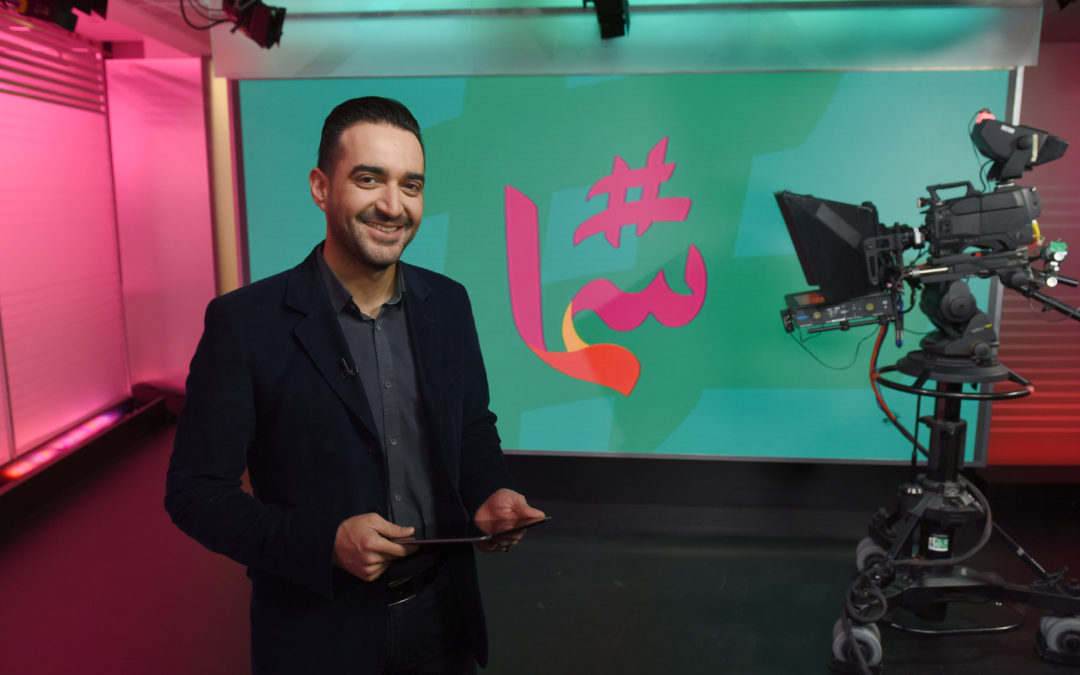
Saturday to Wednesday live interactive programme, #Shoma (“#You”) delivers innovative and creative ways to engage with the audience on TV, the website and via social media, bringing an even greater variety of stories to the BBC Persian output. It will specifically target young digital audiences and women as well as wider TV audiences.
In addition to coverage of the daily news, #Shoma also reflects stories trending in BBC Persian’s target market across its social-media platforms: Facebook, Twitter, Instagram and Telegram messenger service. It will engage audiences in discussions about what matters to Persian-speaking viewers and listeners in Iran and across the globe.
#Shoma will be live on TV (and streamed via BBC Persian website), from Saturday 13 May at 15.00 GMT (19.30 Tehran Time, 20.30 Kabul Time, 11.00 ET), Saturday to Wednesday. It adds to the BBC Persian early evening broadcast mix of news and features.
Presenter of #Shoma, Ehsan Amertousi, sees the new programme as an exciting opportunity to deepen BBC Persian’s engagement with its audience: “In the run-up to the elections in Iran, it’s really important we give our audience the chance to share their opinions on the issues that really matter to them. Regardless of where or who you are, how old you are, #Shoma will be the place to come and tell us what is happening in your life and what you want for the future.”
The programme’s Editor, Leyla Khodabakhshi, says that #Shoma will give the audience the chance to participate and shape part of BBC Persian’s daily news agenda: “Combining the informality of social with the sense of drama often only TV programmes can bring, and delivered and shared on digital platforms, #Shoma is designed to reflect how our audience today wants to interact with us. This is a great opportunity for them to be at the heart of the BBC Persian output, and I’m so pleased we’re launching just before the election, so we can bring voters and commentators together as our audience debates the important issues.”
#Shoma can be reached via:
Tel: +44 2077650078; +44 2077650077 SMS: +44 7860063333 Twitter: @bbcshoma Instagram and Telegram: @bbcpersian, send message via @bbcshoma Facebook: /bbcpersian
BBC Persian is part of the BBC World Service.
