RFE/RL denounces Russia’s escalating efforts to force RFE/RL out of the country

RFE/RL denounces Russia’s escalating efforts to force RFE/RL out of the country

RFE/RL denounces Russia’s escalating efforts to force RFE/RL out of the country

Radio Free Europe/Radio Liberty (RFE/RL) President Jamie Fly today denounced Russia’s escalating efforts to force RFE/RL – including its Russian Service and 24/7 digital network Current Time – out of the country.

Fly stated that “RFE/RL is being targeted by the Russian authorities because we continue to provide a growing audience in Russia with objective news and information at a moment when the Kremlin is trying to limit access to information. We will continue to fight these attacks on our ability to operate in Russia through all possible means. We believe that the Russian people want more choices.”

Fly made his comments as RFE/RL learned that Russia’s media regulator, Roskomnadzor, would be serving RFE/RL with a new round of 130 charges beginning on April 16 – bringing the total number of violations charged by Roskomnadzor to 520, and the anticipated total amount of fines assessed to $2.3 million.

Over the past five years, RFE/RL has nearly doubled its audience in Russia to a current weekly reach of at least 6.5% of Russian adults, or nearly 6.7 million people. Between October 2019 and September 2020, Current Time-produced videos were viewed more than 1.5 billion times on social media platforms, and the number of subscribers to Current Time’s social media pages more than doubled to over 5 million; online audiences for RFE/RL’s Russian Service also grew dramatically, with 250 million video views on all media platforms in 2020.

Roskomnadzor has already served RFE/RL with 390 violation charges in the past three months, resulting in anticipated fines of $1.4 million, for violating invasive self-labeling rules that would require that RFE/RL label every piece of text, video, audio, or social media content with a prominent, lengthy, state-mandated disclaimer. Video content is obligated to carry a 15-second disclaimer at the start of each clip, and disclaimers published with text articles and social media posts must be published in a font size twice that of the text. RFE/RL has not complied with these labeling rules, which it says violate the Russian Constitution and Russia’s media law and would detract audiences looking for alternatives to Russian state media.

Russian regulators have singled out RFE/RL, whose editorial independence is also enshrined in U.S. law, over other foreign news operations in Russia. In 2017, Russian regulators put RFE/RL’s Russian Service onto a list of news media deemed to receive foreign funding for political activity as “foreign agents,” along with RFE/RL’s regional Russian-language news services and Current Time, the network run by RFE/RL in cooperation with Voice of America. The law also puts RFE/RL journalists at risk for criminal prosecution. With nearly 270 freelancers and more than 50 local contractors, RFE/RL has one of the largest networks of independent journalists in Russia and has maintained a bureau in Moscow since 1991, when it was invited into the country by Russian President Boris Yeltsin.

On April 6, U.S. Secretary of State Antony Blinken expressed his “concern over Russia’s efforts to close Radio Free Europe/Radio Liberty and silence this valued source of independent reporting” via Twitter following a meeting with U.S. Agency for Global Media Acting CEO Kelu Chao. State Department spokesman Ned Price had previously said the U.S. is “deeply concerned” about the Russian government’s actions against RFE/RL, which have also been criticized by the European Union, senior members of both the U.S. Senate and House of Representatives, The Washington Post, and media freedom groups including the Committee to Protect Journalists and Reporters without Borders.

About RFE/RL
RFE/RL relies on its networks of local reporters to provide accurate news and information to more than 41 million people in 27 languages and 23 countries where media freedom is restricted, or where a professional press has not fully developed. Its videos were viewed 6.5 billion times on Facebook, YouTube, and Instagram/IGTV  in FY2020. RFE/RL is an editorially independent media company funded by a grant from the U.S. Congress through the U.S. Agency for Global Media.

[Source: RFE/RL press release]

NHK WORLD programme highlights

NHK WORLD programme highlights

NHK WORLD programme highlights

These are some of the programming highlights in NHK WORLD’s schedule for April:

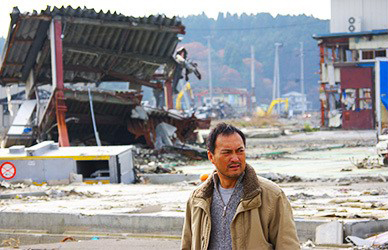
Following the March 2011 accident at TEPCO’s Fukushima Daiichi Nuclear Power Plant, everyone within a 20 km area was ordered to evacuate. Matsumura Naoto alone stayed put. For 10 years, he has taken care of animals abandoned by those who left. Only a few people have since returned, but the reconstruction is in full swing. Matsumura’s homeis changing beyond recognition. In Fukushima Monologue, we hear his story. It gives us a chance to reflect on resilience, and what is truly important.

Nomura Yuki is the scion of a family dedicated to kyogen, a Japanese performance art with a 650-year history. Training rigorously to debut a challenging solo piece, he carries the weight of tradition on his shoulders. Can he live up to the Nomura name?


Journeys in Japan

Tuesdays

0:30 / 5:30 / 10:30 / 15:30 / 21:30

Explore a different side of Japan. Meet the locals and discover traditions and cultures not usually found in guidebooks!


Dining with the Chef

Tuesdays

1:30 / 6:30 / 12:30 / 16:30

Traditional techniques and resourceful recipes! Chefs Saito and Rika, present their unique approaches to cooking delicious Japanese food.

[Source: NHK WORLD press release]

TRT WORLD FORUM Digital Debates on ‘Arab Spring 2.0’

TRT WORLD FORUM Digital Debates on ‘Arab Spring 2.0’

TRT WORLD FORUM Digital Debates on ‘Arab Spring 2.0’

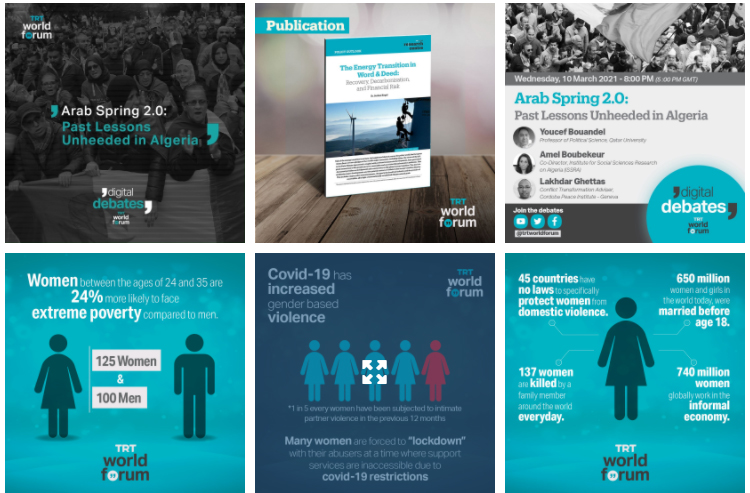
Today, as part of its monthly series ‘A Decade into the Arab Spring: Past Reflections and Future Projections’, TRT World’s  #DigitalDebates is hosting Youcef Bouandel, @AmelBoubekeur, and @LakGhettas to discuss ‘Arab Spring 2.0: Past Lessons Unheeded in #Algeria’.


Wednesday, 10 March 2021

8:00pm (5:00 GMT)


Twitter, Facebook, YouTube: @trtworldforum

NHK WORLD TV programme highlights for March

NHK WORLD TV programme highlights for March

NHK WORLD TV programme highlights for March

Ken Watanabe: The decade since the Great East Japan Earthquake

March 6th

1:10 / 7:10 / 13:10 / 19:10


Actor Ken Watanabe started going to meet victims of the Great East Japan Earthquake two months after its occurrence in 2011. Since then, he has listened to the stories of more than 20,000 people. Watanabe has used his stature to bring international attention to the disaster. He also has drawn on personal funds to open a café in Kesennuma. The program returns to four communities seriously affected by the quake—Katsurao (Fukushima), Kesennuma (Miyagi), Rikuzentakata (Iwate), and Kamaishi (Iwate)—and revisits some of Watanabe’s encounters over the past decade.

Kiyo in Kyoto: from the Maiko House

March 24th

23:30 / 5:30 / 12:30 / 17:30

Teenage Kiyo and her childhood friend Sumire have come to Kyoto far away from their hometown, dreaming to become maiko (professional female entertainers especially skilled in traditional performing arts such as dance and music).However, after an unexpected turn of events, Kiyo starts working as a live-in cook at a place called “Maiko House”, where maiko live together like a family. Sumire, on the other hand, strives toward her promising future as “the one-in-a-century maiko”. Their story unfolds in Kyoto’s traditional entertainment district called Kagai.You will enjoy its gorgeous atmosphere and behind-the-scenes anecdotes as wonderful meals prepared by Kiyo and her kitchen episodes will warm your heart. Stay tuned for this touching story of two childhood friends encouraging each other to grow up together!

The Tale of Granny Mochi: Kuwata Misao

March 14th

1:10 / 7:10 / 13:10 / 19:10

The Tsugaru peninsula lies on the northern part of Japan’s main island, and is home to some of the country’s most untamed landscapes. For more than 30 years, 93-year-old Kuwata Misao has made over 50,000 Sasa-mochi rice cakes every year here, all on her own. She goes into the wilderness to find bamboo leaves, and grows her own azuki beans to ensure the perfect ingredients for her delicious mochi. What is the meaning of work? Of life? Of happiness? Granny Mochi’s quiet, delightful tale warms the heart.

[Source: NHK WORLD TV]

USAGM condemneds Russian court’s decision to fine RFE/RL

USAGM condemneds Russian court’s decision to fine RFE/RL

USAGM condemneds Russian court’s decision to fine RFE/RL

The U.S. Agency for Global Media (USAGM) today condemned a Russian court’s decision to levy steep fines against Radio Free Europe/Radio Liberty (RFE/RL).

“USAGM is very disappointed with the court’s decision, which can only be interpreted as an assault on media freedom and the free flow of information to Russia’s citizens. I have every confidence in RFE/RL as they continue to provide audiences in Russia with access to truthful, impactful reporting,” said USAGM Acting Chief Executive Officer Kelu Chao.

Russia’s revised “foreign agent” law requires designated news organizations in Russia that receive foreign funding to prominently label all content, including social media, as foreign agent-produced. Most of the organizations so designated by the Russian Ministry of Justice are USAGM public service media outlets, predominantly associated with RFE/RL. The law, originally passed in 2012 and amended in 2020 to include individual journalists, also imposes regular financial reporting requirements on these outlets. Given that USAGM’s legislatively mandated firewall prohibits its networks from accepting editorial direction from the U.S. government, RFE/RL has refused to label its content in such a wholly inaccurate manner.

In filing more than 250 violations of “foreign agent” regulations, the Kremlin has specifically targeted nine of RFE/RL’s reporting projects: Radio Liberty, its main service for Russia; the Current Time TV and digital network serving a global Russian-speaking audience; the regional reporting projects North.Realities, Siberia.Realities, Caucasus.Realities, Idel.Realities, and Crimea.Realities; the Tatar-Bashkir Service; and the fact-checking website Factograph.info. Additionally, in late December, the Kremlin named three RFE/RL freelance reporters as individual “foreign agent” journalists.

The Committee to Protect Journalists said Russia should repeal the foreign agent law and “ensure that the country’s regulator is not used to censure journalists and harass and threaten media organizations.” Amnesty International said Russia’s foreign agent law further erodes freedom of expression and association” in that country.

[Source: USAGM press release; Image: P Photo/Pavel Golovkin/Associated Press/Alamy Stock Photo]