Russia labels Deutsche Welle a ‘foreign agent’

Russia labels Deutsche Welle a ‘foreign agent’

Russia labels Deutsche Welle a ‘foreign agent’

Russia’s Justice Ministry on Monday placed Germany’s international broadcaster Deutsche Welle (DW) on a list of “foreign agents.”

“This decision was made based on the documents received from the authorized state authorities,” the ministry said in a statement. The statement didn’t elaborate on the documents or authorities in question.

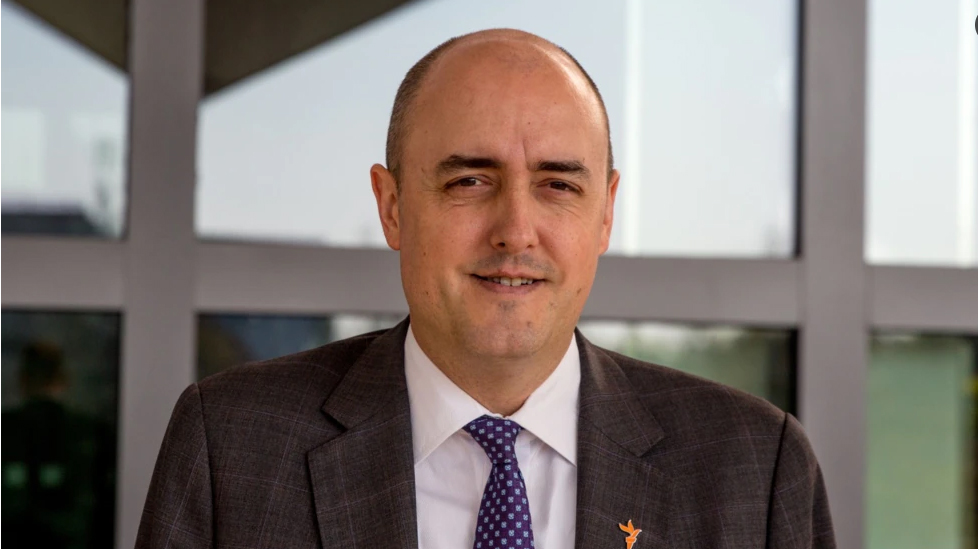
In response, DW Director General Peter Limbourg said: “This latest, arbitrary decision by the Russian authorities was unfortunately to be expected. It is a further attack on press freedom and a fresh attempt to cut the Russian population off from free, independent media. It started with the forced closure of our studio in Moscow at the beginning of February, then our website in all languages was blocked in Russia. There then followed the gradual restriction of social media services and now DW has been labeled a ‘foreign agent.’ This will not stop us from continuing to provide comprehensive and independent coverage of Russia and the region from our new studio in Latvia and from Germany.”

DW in Russia

On February 3, the Russian Foreign Ministry said it would take “retaliatory measures against the German media” working in Russia after German authorities banned the state-run Russian TV channel “RT DE.”

This included “recognizing DW as a foreign media outlet fulfilling the functions of a foreign agent,” the Foreign Ministry said in a statement.

DW was forced to shutter its Moscow office and its journalists in Russia had to relinquish their accreditation, making it impossible to work in Russia.

In early March, DW’s website was  blocked by state communications regulator Roskomnadzor.

Shortly after, DW moved its Moscow office to the Latvian capital Riga.

“The Russian government has seemingly declared an ‘information war’ on DW,” said Christian Trippe, DW Director of Russia, Ukraine and Eastern Europe. “Our journalists will continue with our work and deliver reliable information to our target audience in Russia.”

DW (Deutsche Welle) is Germany’s international public broadcast service. It is tax-funded and produces freely accessible journalism in 32 languages.

The Federal Republic of Germany’s Broadcasting Council — an independent, non-partisan body free of government influence — oversees DW’s compliance with its legal mandate to supply people around the world with independent information. DW employs roughly 4,000 individuals, most of whom work at studios in Bonn and Berlin.

What is the ‘foreign agent’ list?

Since 2012, the list has been used to curtail the operations of international media outlets as well as non-profits that receive foreign funding, particularly those that are active in politics or report on corruption.

It requires that all publications on the list be marked as coming from a “foreign agent,” and submit a report on their activities every 6 months.

Over 100 media outlets and individuals are currently on the list, including US public broadcasters Voice of America and Radio Free Europe/Radio Liberty as well as Amnesty International and Human Rights Watch.

[Source: DW press release]

As war transforms media landscape in Europe, RFE/RL opens offices in Latvia, Lithuania

As war transforms media landscape in Europe, RFE/RL opens offices in Latvia, Lithuania

As war transforms media landscape in Europe, RFE/RL opens offices in Latvia, Lithuania

Following the forced suspension of RFE/RL operations in Russia on March 6, RFE/RL is opening news bureaus in Riga, Latvia and Vilnius, Lithuania. These offices will house teams from RFE/RL’s Russia and Belarus services and the 24/7 Current Time global digital and TV network, and also provide a base for new investigative journalism projects and digital innovation hubs.

Said RFE/RL President Jamie Fly, “These new bureaus will allow RFE/RL to continue to engage with our audiences in Russia and Belarus, despite those government’s best efforts to silence independent journalism. RFE/RL will expand its already-successful efforts to reach Russian and Belarusian audiences with the relevant news they seek, and desperately need. We are grateful to the Latvian and Lithuanian governments for their commitment to press freedom and their support for vulnerable journalists who have had to seek safe haven outside their home countries.”

In Riga, RFE/RL plans to establish a multimedia hub that will host Russian Service and Current Time staff displaced from Russia. The Latvian capital will also house a new, Russian-language investigative journalism unit and a digital innovation hub designed to counter disinformation and develop strategies to circumvent online censorship across delivery platforms. The Vilnius news bureau will primarily host displaced Belarus Service journalists forced to flee after the flawed 2020 elections, as well as a new reporting team being set up by Current Time to serve the needs of the network’s Russian-speaking audiences in Belarus.

RFE/RL’s impact during the first two weeks of Russia’s war on Ukraine demonstrates the appetite within Russia and Belarus for a credible, uncensored alternative to Kremlin media about the full scope of the conflict. Between February 24 and March 16, the number of views of RFE/RL videos on YouTube from Russia tripled to nearly 238 million, while the number of visits, page views, and unique visitors to its websites from Russia rose by 34 percent, 51 percent, and 53 percent respectively. As for Belarus, the number of RFE/RL videos viewed via YouTube from inside the country quadrupled (to 22.4 million), and the number of visits (+158%), page views (+148%), and unique visitors (+110) to RFE/RL websites from Belarus has also increased dramatically.

RFE/RL says it deeply appreciates the support of the governments of Latvia and Lithuania for RFE/RL’s mission and for the establishment of these new bureaus. The people of Latvia and Lithuania have for decades been enthusiastic consumers of RFE/RL programming—both of RFE/RL’s Latvian and Lithuanian services that operated from 1975 to 2004, and more recently of Current Time programming. RFE/RL President Fly visited Vilnius and Riga this past January, in part to attend the Lithuanian premiere of the award-winning, Current Time-commissioned film “Mr. Landsbergis,” about Lithuania’s struggle to restore its independence.

RFE/RL’s Russian Service is a multiplatform alternative to Russian state-controlled media, providing audiences in the Russian Federation with informed and accurate news, analysis, and opinion. The Russian Service’s websites, including its regional reporting units Siberia.Realities and North.Realities, earned a monthly average of 12.7 million visits and 20.6 million page views in 2021, while 297 million Russian Service videos were viewed on YouTube, Facebook, and Instagram.

Current Time is a 24/7 Russian-language digital and TV network led by RFE/RL in cooperation with VOA, that caters to Russian-speakers worldwide. In addition to reporting uncensored news, it is the largest provider of independent, Russian-language films to its audiences. Despite rising pressure on Current Time from the Russian government, Current Time videos were viewed over 1.3 billion times on YouTube, Facebook, and Instagram/IGTV in FY2021.

Labeled an “extremist organization” by the Belarus government, RFE/RL’s Belarus Service provides independent news and analysis to Belarusian audiences in their own language, relying on social media platforms such as Telegram, Instagram, and YouTube, as well as mirror sites and an updated news app to circumvent pervasive Internet blockages and access disruptions.

[Source: RFE/RL press release]

BBC increases access to news on Ukraine and Russia

BBC increases access to news on Ukraine and Russia

BBC increases access to news on Ukraine and Russia

BBC News is increasing access to its independent journalism on the invasion of Ukraine.

From today it will make a daily half hour news bulletin (broadcast at 2000 GMT) available free of charge to other broadcasters who are members of the European Broadcasting Union (EBU).

Audiences will get the chance to watch Outside Source, normally presented by Ros Atkins, from Monday to Thursday, and a BBC News bulletin from Friday to Sunday. Given the current news agenda we expect the news to focus on Ukraine and related stories.

BBC News is also launching Tik Tok accounts exclusively dedicated to videos about the war, in Russian and in English, from today. The handles are @bbcnews and @bbcnewsrussian. Tik Tok has fast become a crucial platform for information (and disinformation) about the war in Ukraine.

Although Tik Tok has suspended new content and livestreaming in Russia, we know that audiences find ways of getting to, and sharing, the content.

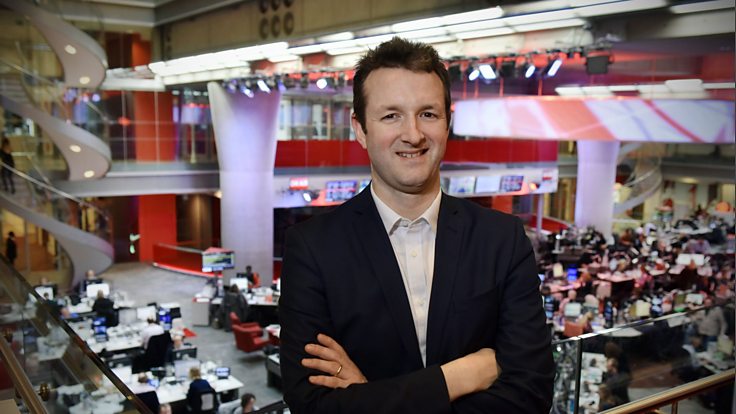
Jamie Angus, Senior Controller, News Output and Commissioning, says: “Access to trusted, impartial and independent news is never more crucial than in times of conflict. We are always looking to find ways to ensure our news is available to those who need it most, on the platforms where they are. We welcome trusted European public broadcasters who want access to this daily bulletin via our partners at the EBU.”

These moves come amid a large increase in audiences for BBC News. Audiences to the BBC News channel were up 57% last week (w/c 28 February, compared to an average week in 2021). 

Updated figures show that in the last week of February, 200 million people turned to the BBC World Service’s digital news in languages other than English. Reach on social media in Russian tripled (with the biggest gains on Facebook) and in Ukrainian more than tripled.

Access to news in Russia is becoming increasingly difficult, so the BBC is continuing to explore ways to make its trusted, impartial news and information available in as many ways as possible.

A guide to accessing BBC sites via circumvention is available here

[Source: BBC press release]

USAGM condemns Kremlin’s increasing censorship and responds to surge in demand for reporting from its networks

USAGM condemns Kremlin’s increasing censorship and responds to surge in demand for reporting from its networks

USAGM condemns Kremlin’s increasing censorship and responds to surge in demand for reporting from its networks

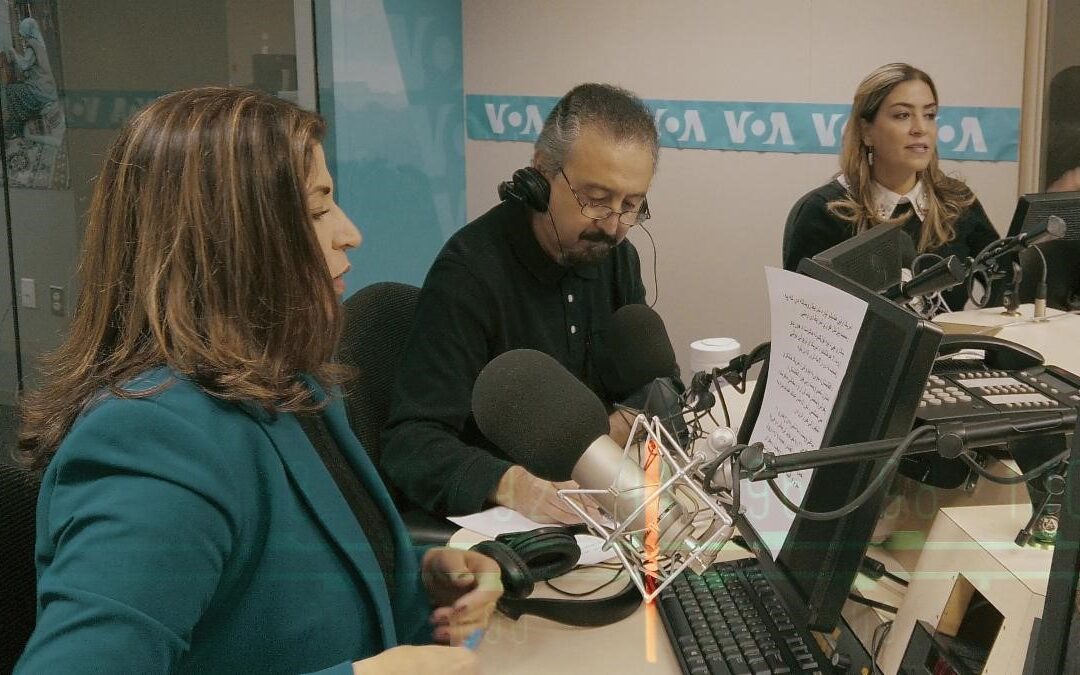
Despite the Russian government’s attempted censorship of Voice of America (VOA) and Radio Free Europe/Radio Liberty (RFE/RL), there has been a surge in demand for their content, including their collaborative 24/7 Russian-language channel Current Time. In response, USAGM is expanding program delivery and access with the addition of more affiliate stations in and around Russia and the help of the Open Technology Fund’s tools and resources to circumvent internet censorship.

“It is clear that by restricting access to RFE/RL and VOA’s fact-based reporting, the Kremlin hopes to keep its own citizens in the dark and to hide the truth,” said Kelu Chao, USAGM’s Acting CEO. “The people of Russia deserve to know the facts about their government’s attacks on Ukraine and how the world is reacting. USAGM will continue to use its resources to bring unbiased information to light at this crucial time.”

RFE/RL President Jamie Fly said, “RFE/RL journalists in Russia have been unfairly slurred as ‘foreign agents,’ detained, and now their accurate reporting about an unpopular war is being blocked. RFE/RL remains committed to delivering objective reporting from inside of Russia for the Russian people despite these outrageous attempts to censor the truth.”

Acting VOA Director Yolanda López said, “The recent threat by the Russian media regulator Roskomnadzor to block VOA and other independent media outlets now is a reality for many in our audience there. Our viewers and listeners in Russia deserve access to our factual news content at this critical time, not only about the ongoing war in Ukraine, but also about all vital global events that impact their lives and actions. VOA will continue to promote and support tools and resources that will allow our audiences to bypass any blocking efforts imposed on our sites in Russia. Our journalists will continue their reporting, an example of free press in action.”

Some radio, digital, and direct-to-home satellite transmissions continue to reach Russian audiences, and demand for VOA and RFE/RL’s coverage is intensifying. For example, between February 24 and March 3, Current Time videos were viewed more than 240 million times across digital platforms. In addition, since Russia’s invasion, demand for Current Time content has increased dramatically among broadcast partners in Russia, Ukraine, Moldova, Latvia, Estonia, and Bulgaria. With the increase over last week, there are 261 affiliates now distributing Current Time content. Between February 26 and March 5, Current Time videos have been viewed on Facebook 76 million times, while VOA’s Russian Service and RFE/RL’s Russian Service videos were each viewed about 8 million times.

From February 23 to March 2, VOA’s Russian Service reported nearly 17 million video views on social platforms, a 159% increase from the week before, while website traffic soared 146%. From February 23 to March 1, audiences viewed RFE/RL videos 436 million times on Facebook, 305 million times on YouTube, and 83 million times on Instagram – reflecting increases of 265%, 406%, and 185%, respectively, over the previous week.

[Source: USAGM press release; Image: AP Photo/Dmitri Lovetsky/Associated Press/Alamy Stock Photo]

NHK WORLD programme highlights March

NHK WORLD programme highlights March

NHK WORLD programme highlights March

NHK WORLD has selected the following highlights from its March programming:

The Michinoku Coastal Trail reveals both the grand nature of Japan’s Tohoku region and the struggles of people to recover from the 2011 earthquake. The 1,000 kilometer path connects four prefectures along the Pacific coast, between Aomori and Fukushima. Join Canadian actor Kyle Card on a trek across the trail as he meets residents and ponders what the future may hold for the region and the country.

Isamu Noguchi is widely regarded as one of the twentieth century’s greatest sculptors. With a Japanese father and an American mother, he felt inspired to create a cenotaph in memory of the atomic bomb victims after World War II. The proposed site was in Hiroshima, but the design was rejected, allegedly because of his American nationality. This year, materials from the cenotaph project are featuring a retrospective of Noguchi’s work across Europe, creating opportunities to ponder the meaning of peace in a time of division and conflict. The program includes newly released audio recordings of Noguchi and perspectives on his struggles to serve as a bridge between the two countries.


Dining with the Chef

Tuesdays 1:30 / 6:30 / 12:30 / 17:30 / 22:30

Traditional techniques and resourceful recipes! Chefs Saito and Rika, present their unique approaches to cooking delicious Japanese food.


Trails to Oishii Tokyo

Wednesdays 14:30 / 20:30 / 3:30 / 9:30

Delicious food from Tokyo’s markets! Learn about the amazing ingredients which are sourced from across Japan and sold at Tokyo’s fresh food markets.