BBC Eye investigates China’s silenced journalist Sophia Huang Xueqin

BBC Eye investigates China’s silenced journalist Sophia Huang Xueqin

BBC Eye investigates China’s silenced journalist Sophia Huang Xueqin

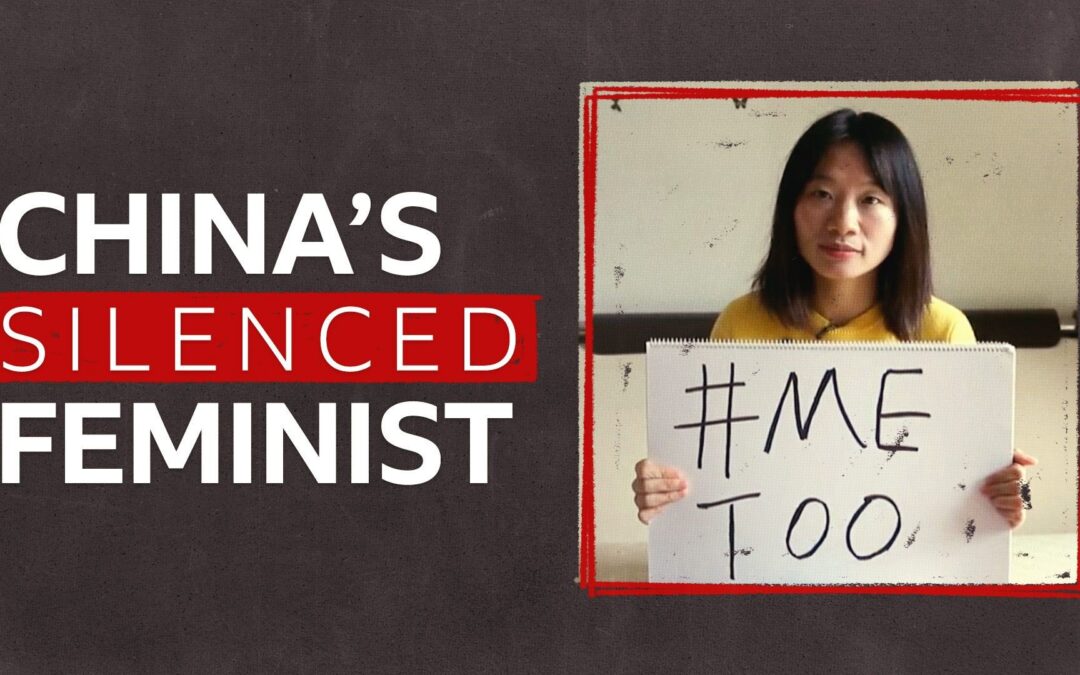
The BBC’s investigation unit, BBC Eye, has examined the disappearance of Sophia Huang Xueqin, one of China’s most high-profile women’s rights journalists and a sexual-assault survivor who kick-started China’s #MeToo movement. 

In June 2021, Sophia Huang Xueqin was awarded a prestigious Chevening scholarship and was meant to be starting her master’s degree on Gender Violence and Conflict at the University of Sussex in September that same year. However, on the way to the airport to catch her flight to the UK, Sophia and fellow labour activist Wang Jianbing “vanished”. 

Seven months after Sophia’s disappearance, in the documentary, China’s silenced feminist, BBC Eye investigates what happened to Sophia, how her story is being erased by Chinese state censors, and how a disinformation campaign is being played out online against her. The BBC also asks why in the UK, where Sophia should be studying on a British government scholarship, there’s been silence.

In China, tens of thousands of individuals are being rounded up and questioned in a wider state crackdown on activists. Feminists who continue to speak out are forced to remain anonymous. Many like Sophia and Jianbing, who are advocating for gender rights and other social causes, have been framed as agents of “hostile western forces” and received attacks online by nationalist trolls. 

The BBC gained exclusive access to other former female detainees who agreed to speak on the condition of anonymity.  “There’s no offline campaigns anymore … the political atmosphere has become very nervous.”

Former Weibo censor, Liu Lipeng, gave the BBC a rare interview where he breaks down the state’s censorship apparatus and reveals Beijing’s disinformation campaign against Sophia. “On the Chinese internet, it’s difficult to differentiate between a state internet commentator and an ordinary user,” Liu said. “It’s a scary phenomenon.” Weibo did not respond to the BBC’s request for comment.

The BBC also talks to Li Maizi, a prominent Chinese feminist, who was detained ahead of International Women’s Day in 2015 for attempting to hand out stickers protesting sexual harassment on public transport: “In the past [sexual harassment and violence] was covered. The #MeToo movement provided a venue for people to speak out.”

When Huang’s disappearance was first reported, the University of Sussex and Chevening released the following statement: “We are concerned about the safety and whereabouts of our student. Our staff are liaising with Chevening to seek further details.” But since then, neither have published further statements. 

In an email leaked to the BBC, following the BBC’s requests for comment, students and staff at the University of Sussex were warned not to discuss Sophia’s situation. The university told the BBC that because this was a sensitive matter, media requests should be dealt with by the press office, citing data protection concerns.  Supporters of Sophia and Jianbing accuse the university and Chevening of not speaking out for fear of antagonising the Chinese government. Students from China make up a fifth of international enrolment at the university, and their tuition fees – along with partnerships with Chinese institutions – provide an important revenue stream.

Responding to the BBC, a spokesperson said the university “remains deeply concerned about the safety and whereabouts of its prospective student” and has been in “regular contact” with Chevening and the Foreign, Commonwealth and Development Office (FCDO). 

The spokesperson added that the university has followed the advice of the FCDO – which told the BBC it was “following the matter closely.” Chevening did not respond to the BBC’s requests for comment.

The BBC reveals that Sophia and Jianbing were detained in secret locations known as “black jails” where they were held in solitary confinement without access to lawyers and outside world. At least 70 of their supporters were questioned and interrogated by the Guangzhou National Police. Now, Sophia and Jianbing are being held on charges of “inciting subversion of state power,” a serious charge which could see them facing years behind bars.  Their cases have been handed over to prosecutors in China, and both are expected to face trial soon.

The documentary, China’s silenced feminist, is now available via BBC platforms: BBC iPlayer (available only in the UK), BBC News YouTube (worldwide, except the UK), the websites bbc.co.uk and bbc.com/news, and on BBC News Chinese. The documentary will air on the BBC’s international news channel, BBC World News, on 28 May.  

Photo credit SCMP

[Source: BBC press release]

NHK World Japan Monthly Focus May

NHK World Japan Monthly Focus May

NHK World Japan Monthly Focus May

The Power of Champuru

Barakan Discovers: OKINAWA

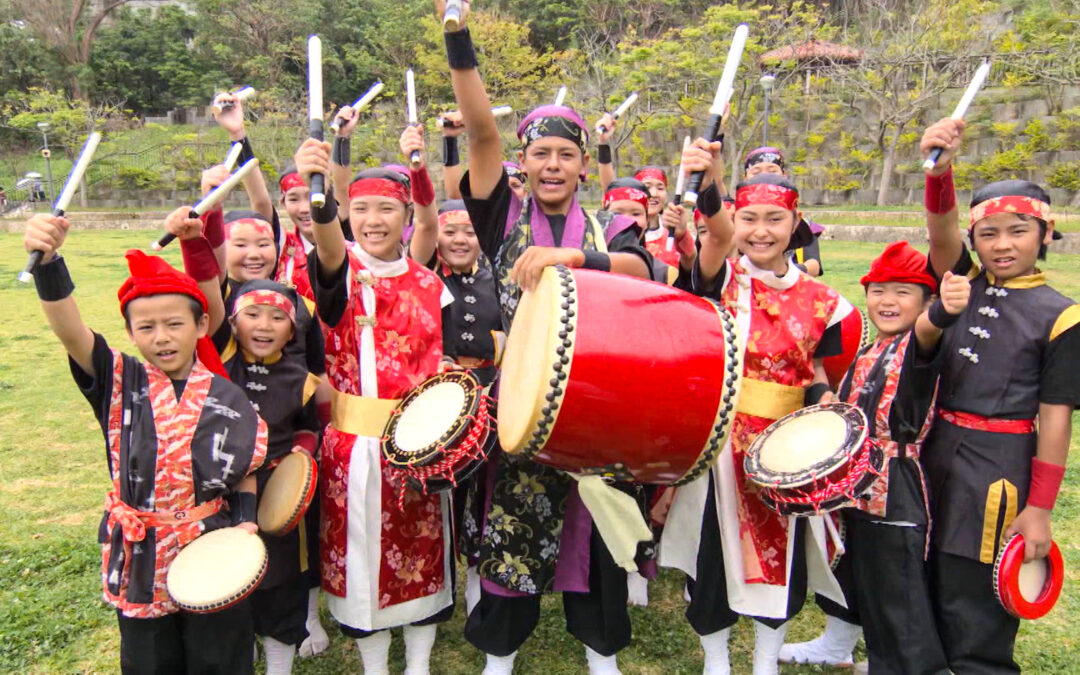
Peter Barakan meets with people in Okinawa, 50 years after its return to Japan from America following the postwar occupation. Residents worked tirelessly to heal the scars of war and reconstruct their heritage. That heritage is grounded in the Ryukyu Kingdom that Okinawa once was, surviving for 450 years as an independent entity between China and Japan. A Champuru ethos allowed the Kingdom to skillfully encounter and incorporate foreign influences, strategies that may be useful even today.

May 28 Sat.  0:10 / 6:10 / 12:10 / 18:10

How to be Likeable in a Crisis (Dubbed ver.)

International viewers can now enjoy one of Japan’s most popular TV dramas with the English-dubbed version of How to be Likeable in a Crisis made available by NHK Drama Showcase on NHK WORLD-JAPAN. The dark comedy revolves around Kanzaki Makoto, who works in public relations for a prestigious university.
The screenplay was written by Watanabe Aya, who has been behind many hit shows. Award-winning actor Matsuzaka Tori depicts Makoto navigating the choppy waters of the workplace and his personal life in the series’ five episodes.

Ep 1~3 Available on VOD!
Ep 4 May 1 Sun.  0:10 / 18:10
Ep 5 May 8 Sun.  0:10 / 18:10

Hometown Stories:

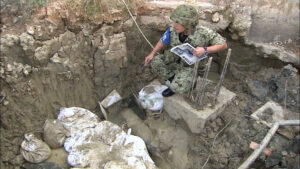
Bomb Disposal Quest in Okinawa

An engineer in southwestern Japan has dedicated his life to removing dud explosives from World War II that still lie buried. It will probably take 70 years to remove them all. We follow his challenge.

May 15 Sun. 1:10 / 7:10 / 13:10 / 19:10

GRAND SUMO Highlights

DAILY DURING TOURNAMENTS

The best of today’s sumo! Enjoy daily highlights of this dynamic sport with background info and play-by-play commentary adding to the excitement!

[Source: NHK World Japan press release]

ENTR: DW’s Pan-European media project celebrates first anniversary

ENTR: DW’s Pan-European media project celebrates first anniversary

ENTR: DW’s Pan-European media project celebrates first anniversary

Since the launch of its multilingual platforms in May 2021, ENTR has garnered more than 40 million page and video views on social media and partners’ websites across all six languages.

With a target group of Europeans aged 18 to 34 years, it is particularly successful on Instagram. In February 2022 alone, ENTR’s videos on its own accounts and partner pages have reached more than 6.3 million page and video views in the six project languages (English, French, German, Romanian, Polish and Portuguese). 

The war in Ukraine is now a dominant topic worldwide. As a platform for young people in Europe, ENTR takes a closer look at the larger context and history of the conflict and lets young people have their say. Videos on the war in Ukraine include a timeline of events, a video diary of a refugee fleeing the country and Ukrainian women and their hopes for the future. In the coming weeks, ENTR will continue to give young people a voice on the topic, with overarching themes like democracy, propaganda and peace in Europe. ENTR reports also cover climate, education, culture, gender equality and more. The content is produced or adapted for each of the project languages.

“Dreams and goals for the future, civic engagement, mental health – one year in, ENTR has more than managed to fulfill its own claim: To be an inclusive European platform for young people to discuss and share their perspectives on what matters most to them,” says DW Director General Peter Limbourg. “Collaborating with media organizations from six countries gives us the unique opportunity to exchange our expertise and to reach our young audience.”

Promoting European youth exchange

ENTR is funded by the European Union and the German Foreign Office. The media initiative aims at promoting European youth exchange and heightening awareness around a common identity while also highlighting the abundance of different perspectives across Europe.

Focusing on a constructive approach, ENTR provides high quality journalistic content. It builds on a longstanding cooperation between Deutsche Welle and France Médias Monde. The project’s international editorial teams can rely on both international groups’ infrastructure and resources as well as on the diversity and skills of its European partners. At DW, the Polish and Romanian editorial teams support the ENTR team with their expertise in the respective countries, in addition to support from many specialist departments at DW.

“We very much value the renewed support of the European Commission and the German Foreign Office for this ambitious project. The new partner Are We Europe and the English TikTok channel we will launch soon brings the project closer to be a comprehensive journalistic social media offer for young Europeans,” says ENTR Project Director Patrick Leusch, Deutsche Welle on the future of ENTR.

[Source: DW press release]

NHK WORLD programme highlights April

NHK WORLD programme highlights April

NHK WORLD programme highlights April

NHK WORLD’s programme line-up for April has the following highlights:

Globe-trotting wildlife photographer and filmmaker, Iwago Mitsuaki, offers the best of a vast collection of cat footage he took in Japan. On this unique trip around the country, discover the lesser-known charms and customs of regions through the eyes of cats! 

Kawate Haruo knew that his father, Masao, a second-generation Japanese American, returned to Japan after World War II. That, however, was about all he knew of it. After Masao’s death, Haruo found a letter to an American attorney, Wayne Collins, seeking restoration of his American citizenship.

Haruo met with Collins’ son and with a Japanese American whose father chose to stay in the U.S. He discovered that Masao had suffered especially harsh treatment during the war, leading him to renounce his American citizenship. Follow along as Haruo pieces together the facts of his father’s life, eighty years after the attack on Pearl Harbor.


Journeys in Japan

Tuesdays 

0:30 / 5:30 / 10:30 / 15:30 / 21:30

Explore a different side of Japan. Meet the locals and discover traditions and cultures not usually found in guidebooks!


Hori Hiroshi: A Puppet Master Rises from the Embers

April 9th

0:10 / 6:10 / 12:10 / 18:10

Celebrated puppet master Hori Hiroshi created ningyo-mai, a performance art fusing dolls and actors. After his wife and artistic partner passes away, Hori turns to his craft to work through his grief.

[Source: NHK WORLD press release]


VOA officially launches Afghan satellite TV channel

VOA officially launches Afghan satellite TV channel

VOA officially launches Afghan satellite TV channel

One day after the ruling Taliban banned Voice of America broadcasts from terrestrial television, the U.S. government-funded independent news agency has officially launched a 24/7 direct-to-home satellite-delivered television channel for Afghanistan. The channel carries uncensored news and information in both the Pashto and Dari languages of the country. VOA’s programs were ordered off affiliated television stations in Afghanistan effective Sunday, March 27, as part of a broad ban on content regarded as undermining Taliban policies, including prohibiting women from anchoring newscasts with men.

VOA’s new TV stream, identified as “VOA Afghanistan,” is on the Yahsat Y-1A satellite (52.2 degrees East), Transponder 12 (downlink frequency 11.938 GHz), Channel 469. The Yahsat satellite is Afghanistan’s most popular platform, ensuring the Afghan audience will have access to VOA’s programming despite the Taliban censorship.

“Afghanistan is now one of the most repressive media markets in the world,” said Acting VOA Director Yolanda López. “Despite the Taliban’s attempt to end press freedom, VOA News stands by its Afghan audience with credible and authoritative news and information.”

The new VOA Afghanistan satellite stream includes its popular “TV Ashna” newscasts, its women’s show “Etesal,” viewer call-in programming, and programming from Radio Free Europe/Radio Liberty’s Azadi radio. Additional programming is planned, including entertainment shows to fill a void in Afghanistan, where local channels cannot air music programs.

The VOA satellite channel has been in development since August, before the fall of Afghanistan’s elected government. The channel is also accessible on YouTube and on VOA’s Pashto and Dari language websites.

[Source: VOA press release]