10 November 2015
Intelsat S.A. (NYSE: I), the world’s leading provider of satellite services, announced today that Intelsat 29e, the first of the Intelsat Epic
NG high throughput satellites, is scheduled to launch on January 27, 2016, aboard an Arianespace Ariane 5 ECA launch vehicle from the Guiana Space Center in Kourou, French Guiana.
Manufactured by Boeing, Intelsat’s EpicNG satellites operate in both C-and Ku-band, and are fully interoperable with the entire Intelsat satellite fleet. The Intelsat EpicNG satellites will operate the most advanced digital payload commercially available, providing commercial and government customers access to high throughput capabilities, which will result in a flexible broadband infrastructure that will scale to meet their needs.
Located at 310° East, Intelsat 29e will replace Intelsat 1R and Intelsat 805. The payload will enable the delivery of enterprise-grade, broadband services to fixed and mobile network operators, aero and maritime mobility service providers, and to government customers operating throughout the Americas. The satellite will also provide spot beams for mobility customers serving the heavily trafficked North Atlantic region. To date, companies such as Harris CapRock, Panasonic, EMC (formerly MTN), Axesat and leading national telecom operators in Latin America will be among the first to deploy services on the platform.
“This is an exciting time for our company, with Intelsat leading the way with new satellite-based solutions that address the needs of our always-connected world,” stated Stephen Spengler, Chief Executive Officer, Intelsat. “With broadband demands only increasing, Intelsat 29e will enable our customers to extend the reach of their networks and provide high quality, fast, reliable connectivity, whether they are serving end users in flight, at sea or increasing the amount of throughput on existing broadband infrastructure. With 2016 fast approaching, Intelsat 29e is completed and awaiting shipment to the launch site. Intelsat continues to work closely with Boeing and Arianespace to ensure that Intelsat 29e is ready for its planned January launch date and to mark the next evolution in Intelsat’s longstanding history of innovation.”
Intelsat 29e marks the first of Intelsat’s next generation EpicNG satellite fleet that combines wide beams and spot beams with frequency reuse technology to meet customers’ growing demand for broadband connectivity worldwide. Intelsat29e will be the 56th Intelsat satellite orbited by Arianespace and the first dedicated launch aboard an Ariane 5 rocket for Intelsat. Intelsat expects to launch the second Intelsat EpicNG satellite, Intelsat 33e, which will serve Europe, Africa, the Middle East, and Asia, in the third quarter of 2016, also aboard an Arianespace launcher.
Supporting Resources
4 November 2015
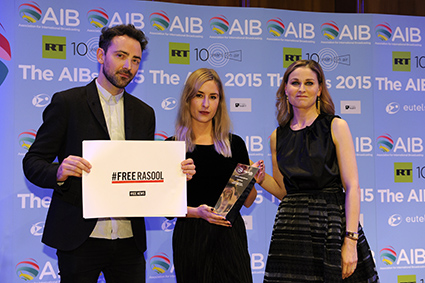
 The winners of the 2015 AIBs were announced on the 4th November at a gala dinner at LSO St Luke’s in London. These annual international broadcasting awards are now in their eleventh year and celebrate the best in radio, TV and online – journalism, programmes and talent. The AIBs are judged by an independent and international panel of distinguished media professionals representing broadcasting across the world and they ensure that the awards are judged independently from commercial influence. The chosen winners demonstrate the best in engaging, powerful, moving and innovative reporting and investigation from entries which are submitted by countries in every continent of the world.
Simon Spanswick, AIB CEO said: ”The entries in 2015 demonstrated the continuing dedication of programme makers and journalists to uncover important and challenging stories, to take risks, both personally and professionally and to work expertly to investigate and explain complex subjects. The entries educate, entertain and engage their audience using the latest technologies at their disposal. We have seen important and sometimes harrowing stories brought to light, the power of the voice to captivate as well as exciting and engrossing coverage of sporting events. Once again the judges have had the hard but rewarding search for the best out of a very strong set of entries.”
This year’s awards were hosted by CNN’s Hala Gorani. Hala is based in London and anchors The World Right Now, with Hala Gorani, which airs every weekday evening. As an accomplished international journalist, Hala frequently goes into the field to report on major breaking news stories. Most recently, she’s been covering the refugee crisis in Europe and the Middle East.
The AIBs 2015 | Winners and highly commended finalists are:
TV Journalism
The winner is CNN for its coverage of the migrant crisis in the Mediterranean.
Highly commended
Al Jazeera English for Nepal in Ruins
Euronews for Fighting Boko Haram
Domestic current affairs
The winner is Channel 4 for My Last Summer, a programme that gathered together five terminally ill patients to share their experiences of coping with the last months of their lives and the effect on their families and friends.
Highly commended
Antena 3 for The Thing with Rom-Mania
Verve Productions for Filming My Father: In Life and Death
International Current Affairs
The winner is Al Jazeera Media Network for Al Jazeera Investigates – Broken Dreams: The Boeing 787. This was a disturbing tale of corporate greed as the world’s major aircraft manufacturer put profit ahead of safety.
Highly commended
Mongoose Pictures/Quicksilver Media for Outbreak: The Truth about Ebola
True Vision Productions for Kids in Camps
Domestic investigative
The winner is VRT for The Price of Cheap Food. This documentary looked at the never ending price war between supermarkets to lure consumers in with the cheapest possible food, asking who pays for this cheap food and whether a Pandora’s box has been opened in which food producers – principally farmers – have become the first victims.
Highly commended
BBC Northern Ireland for Spotlight: A Woman Alone with the IRA
Channel 4 for The Paedophile Hunter
International Investigative
The winner is Flying Cloud Productions for Human Harvest, a programme that investigated claims that first emerged from China in 2006 that state-run hospitals were killing prisoners of conscience to sell their organs.
Highly commended
Al Jazeera Media Network for Al Jazeera Investigates – Inside Kenya’s Death Squads
Sky News Arabia for Death Boats
Children’s Factual
The winner is Strix Television (part of the Nice Group) that produced The Museum for SVT. The Museum is a competition show in which knowledge, excitement, history and the present day are woven together in a children’s programme that is just as much fun for adults.
Highly commended
BBC for Being Me – A Newsround Special
deMENSEN for The Blacklist – Getting Married
Science programme
The winner is Channel 4 for Drugs Live: Cannabis on Trial which was a ground-breaking scientific trial looking at the effects on the brain of two different forms of cannabis – ‘skunk’ and ‘hash’.
Highly commended
Flimmer Film for Death – A Series about Life
True Vision Productions for Curing Cancer
Short news report
The winner is VICE News for Russian Roulette, Dispatch Fifty Seven in which Simon Ostrovsky spoke to residents in Eastern Ukraine which are innocently caught up in the middle of a bloody campaign – and who are dying as a result.
Highly commended
CNN for Ebola Battle through Nurse’s Eyes
TVC News for Customised Coffins in Ghana
Short feature
The winner is Blue Chalk Media for Burned Girl. Ragini is one of millions of children who are suffering from severe burn injuries. Blue Chalk Media travelled to India to document Ragini’s story through video and still photographs.
Highly commended
BBC World Service for Hooked
ITN for On Assignment: Heroin on the East Coast
Specialist programme
The winner is by TBI Media with Snappin’ Turtle Productions for D-Day 70 Years On. The BBC brought the UK together in a tour de force production to mark the 70th anniversary of the D-Day landings – the programme was broadcast on TV and radio, and screened in cinemas across the country.
Highly commended
LOOKS Film & TV Produktionen & ARTE for 14 – Diaries of the Great War
Kansai Telecasting for Bunraku – Soul of the Art
Online factual
The winner is Bayerischer Rundfunk for Do Not Track which explored how information about you is collected and used as you browse the web.
Highly commended
Radio Free Europe/Radio Liberty for My Ukraine
Radio journalism
The winner is BBC World Service for its Ebola Coverage, one of the biggest stories the international broadcaster covered during 2014.
Radio current affairs
The winner is RTE Radio One for Voices which, over 12 episodes, explored issues like suicide, abortion, addiction, and raised questions about who we are and how we live.
Highly commended
ABC for Indigenous Soldiers Who Hid their Identity to Serve – the Untold Story
Radio Free Europe/Radio Liberty for Tradition of the Blade
Radio investigative documentary
The winner is BBC World Service for The Lost Children of the Holocaust. At the end of the Second World War, the BBC began a series of special radio appeals on behalf of a group of children who had survived the Holocaust but were now stranded in post-war Europe. 70 yearson, Alex Last tries to find out what happened to the children named in the recording.
Radio creative feature
The winner is BFBS for Children of Belsen, a compelling anniversary story that deserved to be told and to reach a wider audience.
Highly commended
RTHK for Bipolar Express
Television personality
The winner is Christiane Amanpour, CNN’s chief international correspondent and anchor of the
network’s award-winning, flagship global affairs programme Amanpour.
Radio personality
The winner is Kathryn Ryan of Radio New Zealand, where she anchors the daily Nine to Noon, a
three-hour live news and current affairs programme which runs each weekday.
AIB Founders Award – Mike Wooldridge
The AIB Founders’ Award is in recognition of Mike Wooldridge’s lifetime work as an outstanding correspondent.
AIB Lifetime Achievement Award – Larry King
The inaugural AIB Lifetime Achievement Award is in recognition of Larry King’s remarkable career on radio and television, and his extraordinary impact on the news industry.
3 November 2015
In a unique collaboration – the first of its kind for the BBC outside the UK – a prototype media player, designed and built by digital innovators from Africa, is now live online. BBC Minute CatchUP – can sit within any online page and will let users hear and share the latest edition of BBC Minute. Specially created to work well on smartphones, BBC Minute CatchUP was designed in Cape Town, and comes from one of the development studios (aka ‘hackathons’) held earlier this year by the BBC World Service and BBC digital innovations team, Connected Studio. Teams of African tech experts were invited to think of new ways to reach young Africans through social and digital media and this selected idea can now be tried and rated by the potential audience themselves here.
Dmitry Shishkin, Digital Development Editor for the World Service, says: “African audiences have become ‘mobile-first’ before the term has become mainstream for western media, and World Service has a very impressive record of growing mobile and social segments of our digital reach. While planning these hackathons our task was to find new ways of reaching digital audiences in Africa – to offer them a huge array of great content, relevant to them. It is extremely important for us that we are taking selected pilots from ideas into live products, developed from scratch by the audience – for the audience. It is exciting that the BBC can be at the forefront of these developments in Africa, and we hope the ideas can be used in other regions of the world. The team can now see their idea performing in real life and we hope the audience enjoys trying it out”.
And coming soon – a further pilot from the Connected Studio project in Africa – BBC Drop which was designed in Nairobi and will launch online in the coming weeks.
These pilots continue the BBC’s initiative to invest in digital innovation across Africa. This year has already seen the launch of the Africa edition of the bbc.com website and the Africa live page on the BBC News website. Both of these have provided African internet users on the continent and in diaspora communities with dedicated digital spaces where they can find more African news stories and features. In addition, the BBC continues to focus on Africa’s massive online audience via many social media outlets, creating clickable and shareable content delivered by the BBC’s reporters across Africa.
BBC Minute CatchUP
What is it? A simple media player designed to sit within any online page that will let users hear and share the latest version of BBC Minute. Specially-designed to work well on Android smartphones.
What is BBC Minute? A fresh way of staying up to date with news from all over the world– a one minute bulletin that gets updated every 30 mins, everyday. Made by the BBC and utilising our high-quality journalism to curate the best stories.
What makes BBC Minute CatchUP good for young audiences? It allows anyone to hear short clips of current BBC news audio at the click of a button. Users will access the news headlines their way and on any type of internet enabled device – whenever they want.
Who made it? A social enterprise hub called RLabs from Cape Town in South Africa.
Technical stuff – The pilot will be available for 3 months via BBC Taster (bbc.co.uk/taster) and works well on all screens and devices. Users can add the link – bbc.com/minute to their mobile home screen and the player can be launched by simply tapping on the logo.
What is BBC Taster? Taster is the home of new ideas from the BBC – an experimental area where the latest innovative and collaborative ideas are available for the audience to test and rate.
Coming soon – BBC Drop
What is it? A responsive website that shows users BBC news content specifically tailored to them. BBC Drop asks the user for a few favourite topics, or social media preferences, and then continues to learn what they like and dislike from what they swipe on screen. There is also the option of an even more personal news feed which incorporates the user’s own social feeds.
What makes BBC Drop good for young audiences? A vibrant easy-to-use design, successfully user-tested in several African countries, and the ability to swipe away anything you want to ignore makes it the perfect way to access BBC news for the smart-phone generation.
Who made it? A Kenyan start-up called Ongair who develop products that make it easier for companies to engage their audiences on instant messaging platforms.
Technical stuff – The pilot is coming soon (also to BBC Taster) and will be available for 3 months. It works well on all screens and devices. The site collects news content from across the BBC. The aggregation and tagging is made possible using BBC Juicer, a tool created by BBC News Labs, which takes in news sources from across the globe and automatically tags specific topics.
29 October 2015
EUROVISION AND AFP, VIA ITS SUBSIDIARY AFP-SERVICES, ANNOUNCED TODAY THEY ARE JOINTLY DEVELOPING A BRAND NEW SERVICE, MYWORLDREPORTER. THE NEW OFFERING WILL HELP BROADCASTERS AROUND THE WORLD TO GAIN A COMPETITIVE ADVANTAGE BY BEING ABLE TO INSTANTLY ACCESS A WORLDWIDE NETWORK OF VIDEO JOURNALISTS.
Sourcing high-quality footage from the most remote places will become easier than ever by using a new, simple online booking tool available around the clock on the eurovision.net portal. Each Video Journalist has unified training by AFP-Services to combine the roles of cameraman, editor, reporter and producer. Understanding local culture and languages in remote geographical areas is no longer a hurdle.
“Joining forces with AFP-Services to address one of broadcasters’ most complex needs, obtaining footage from around the world, seemed like an obvious move,” says Stefan Kürten, Director of Sports and Business at EUROVISION.
“With MyWorldReporter we are able to complete the portfolio of broadcast services we already offer to our customers. Today, with AFP-Services, we are delighted to be addressing our customers’ needs together and, with this new service, aim to remain the best source of quality footage worldwide”.
“We’re really happy to further our partnership with EUROVISION”, says Jon Dillon, Managing Director of AFP-Services. “We’re very excited to put our global network of video journalists within easy access to broadcasters worldwide. The MyWorldReporter platform allows any broadcaster to book quickly and easily a video journalist anywhere in the world, within minutes. This new system takes away the difficulties of organizing coverage away from the usual territory of operations.”
