
Encompass Digital Media to transform BBC World Service distribution

Encompass Digital Media to transform BBC World Service distribution

Encompass Digital Media to transform BBC World Service distribution

Encompass Digital Media is leading transformation of the BBC World Service’s global distribution from satellite to IP-based delivery. The initiative, which Encompass is delivering in partnership with Zixi, offers unparalleled flexibility, scalability and cost-effectiveness. The first major milestone was reached at the end of March, and delivered the full transition to IP distribution for BBC World Service partners across Europe. There now follows a rolling programme of transformations across the Americas, Pacific, Africa, and Asia.

Encompass has been awarded the contract to establish a global IP distribution network for BBC World Service using Encompass’ Altitude Connect platform, integrating Zixi’s industry-leading IP delivery technology with Altitude Media Cloud, Encompass’ global broadcast cloud platform.

Encompass’ strategy emphasises the modernisation of broadcast infrastructure, audience resilience, and cost-effective content distribution – a natural fit for the BBC’s own distribution roadmap. By moving to IP-based delivery, Encompass expects the BBC World Service will:

  • Expand accessibility by delivering content more efficiently across a range of digital and broadcast platforms.
  • Enhance flexibility and security, ensuring uninterrupted service in regions where satellite coverage may be unreliable or cost-prohibitive.
  • Support sustainability and cost reduction, moving away from legacy satellite technology to a more scalable and adaptable digital framework.

The shift to IP also enables targeted content delivery, allowing the BBC to respond more effectively to market challenges and changing audience needs.

The project involves:

  • Migrating hundreds of radio and TV partners globally from satellite to IP delivery.
  • Transitioning from bespoke receiver hardware to commodity, software-based solutions.
  • Integrating broadcast schedules, using the SCTE 224 protocol, to deliver precise and seamless channel switching across the global platform.

Nigel Fry, Director Distribution, International Services, BBC News, (and a member of the AIB Executive Committee) said: “Transitioning BBC World Service distribution to IP represents a major milestone in our commitment to modernizing how we serve markets worldwide. This shift provides another level of flexibility for our services while aligning with our long-term strategy to adapt to the evolving media landscape. With the support of Encompass and Zixi, we are ensuring that BBC World Service continues to deliver trusted news and information to audiences, wherever they are, with greater reach and security than ever before.”

Marc Bruce, CEO of Encompass Digital Media, said: “We are proud to partner with the BBC and Zixi to bring a new era of IP-based content distribution to BBC World Service. This project is a significant step forward in modernizing broadcast infrastructure, allowing for greater flexibility, cost efficiency, and enhanced security. By moving away from satellite, we are enabling the BBC to reach its global audience with unmatched flexibility and precision.”

Marc Aldrich, CEO of Zixi, added: “Zixi is thrilled to collaborate with the BBC and Encompass to deliver this groundbreaking transition to IP-based distribution. Our technology ensures the highest level of reliability, security, and scalability, allowing the BBC World Service to expand its reach and maintain its reputation for excellence in global broadcasting. This project is a testament to the future of content delivery, where IP distribution becomes the gold standard for efficiency and innovation.”

The Europe migration marks the first major milestone in this transformation. The Encompass and BBC teams are working in close collaboration to deliver the critical path, while the leadership teams co-ordinate next steps for wider industry engagement. While the BBC and Encompass remain focused on a successful phased rollout, this move to IP delivery is not only a technological upgrade, but a strategic shift that will future-proof BBC World Service distribution for years to come.
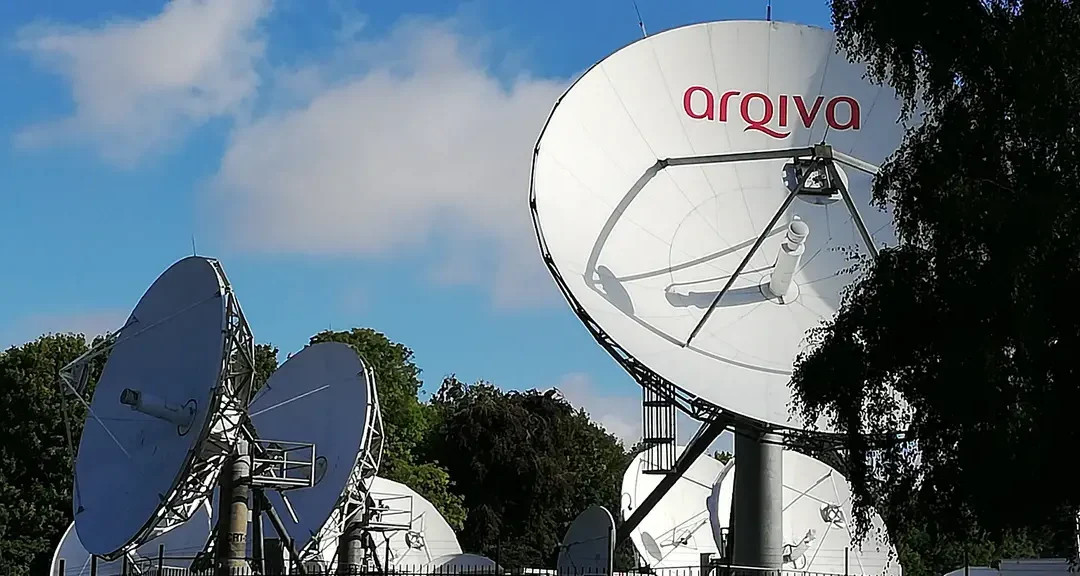
Arqiva tops the Independent Teleport Operator rankings 2021

Arqiva tops the Independent Teleport Operator rankings 2021

Arqiva tops the Independent Teleport Operator rankings 2021

Arqiva ranked as No.1 in the World Teleport Association Independent Top 10 teleport operators

The annual rankings of companies by revenue and revenue growth are compiled by surveying teleport operators around the world as well as referencing the published results of publicly-held companies.

The Independent Top 10 ranks teleport operators based on revenue from all sources. The list focuses on the independent operators at the core of the business, excluding companies whose primary business is ownership and operation of a satellite fleet or terrestrial network.

Arqiva also ranked 6th in the Global Top 20 list. The Global Top 20 ranks companies based on revenues from all customised communications sources and includes operators of teleports and satellite fleets.

https://www.worldteleport.org/news/594359/World-Teleport-Association-Publishes-Top-Operator-Rankings-for-2021.htm

“It’s great news to be listed and ranked as No.1 in the World Teleport Association Independent Top 10 teleport operators,” said Lesley Wilson, Head of Satellite Gateway & Data Services at Arqiva. “The WTA promote excellence in teleport business practice, technology and operations – with our growing LEO gateway capability, we are proud to be amongst the most innovative operators of teleports.”

Greece’s OTE selects Eutelsat for broadband

Greece’s OTE selects Eutelsat for broadband

Eutelsat satelliteGreek telecoms operator OTE S.A has announced it has selected the KA-SAT satellite operated by AIB member Eutelsat Communications to deliver its new satellite broadband service to homes across Greece.

The OTE Satellite Internet Service, delivering download speeds of up to 22Mbps and upload speeds of up to 6Mbps, will offer services across Greece to users who until now have been unable to reap the benefits of a quality broadband experience.

OTE’s new satellite service is available through OTE Group’s retail stores. The service requires a small satellite dish and modem and operates without the need for a fixed telephone line. Installation of user equipment is carried out by OTE qualified installers. Using the same dish, OTE’s satellite-based internet service can be bundled with its satellite TV service to provide more than 80 digital and 25 HD channels.

Jean-Francois Fenech, General Manager at Eutelsat Broadband, commented: “We are delighted to take our relationship with OTE Group to a new level by delivering the very best satellite broadband service in Europe, alongside OTE’s TV platform that broadcasts from the EUTELSAT 9A satellite, sharing the same orbital position as KA-SAT.”

Eutelsat’s KA-SAT capability is based on a payload with 82 Ka-band spotbeams connected to a network of ten ground stations. This configuration enables frequencies to be reused, taking total throughput to beyond 90 Gbps and making it possible to deliver Internet connectivity for more than one million homes, at speeds comparable to ADSL.

Hellenic Telecommunications Organization (OTE S.A.) is the largest telecommunications provider in the Greek market and, together with its subsidiaries, forms one of the leading telecom groups in south eastern Europe.

Learn more about Eutelsat’s KA-SAT here:

Intelsat’s satellite network brings 2014 FIFA World Cup to countries around the globe

Intelsat S.A., leading provider of satellite services, today announced that the world’s leading news and sports programmers are using Intelsat’s global satellite services and IntelsatOneSM terrestrial network to televise the 2014 World Cup being held in Brazil beginning 12 June 2014 through 13 July 2014.

Intelsat’s global satellite fleet will support contribution services within Brazil and distribution of the World Feed to the Americas.  Intelsat will also support the contribution, distribution and fiber back-up demands of sports and news organizations in the Americas, Europe, Asia and Africa on an ad-hoc basis using Intelsat’s occasional use service pool.  The satellite services provided complement existing full-time capacity arrangements used by sports and news organizations for news coverage emanating from the region.

Programmers have also committed to approximately 500 MHz of capacity reserved on seven satellites for full-time services for the duration of the games, which will be used to distribute the World Cup matches throughout the Americas and Europe.  The seven satellites include:  Galaxy 19 located at  97.0° West; Intelsat 1R located at 310° East; Intelsat 11 located at 317° East; Intelsat 805 located at 304.5° East; Intelsat 901 located at 342° East; Intelsat 23 at 307° East and Intelsat 21 at 302° East. These satellites offer optimal coverage and power to meet the diverse requirements of media customers from around the world who are covering this event.

The global media companies, programmers, direct-to-home (DTH) providers and content distribution partners that are relying on Intelsat’s satellite network infrastructure to deliver the World Cup to their viewers include Televisa, TV Azteca, OTI, Univision, DIRECTV Latin America, TV Globo, ESPN Brazil, Fox Brasil, Megavision, Andina de Radiodifusion, Globecast, Overon America, Canal 13, Arsat TVN Chile, FF Work, Softbank for TV Asahi, British Media Communications for the British Broadcasting Company (BBC), and in addition the European Broadcasting Union (EBU) is using Intelsat 805 capacity to distribute the World Feed to the Americas.

“Intelsat excels at bringing the world together to share in some of the most exciting moments in modern history. From the 1968 Olympics in Mexico to the 2014 World Cup in Brazil, the Intelsat network has delivered  many of Latin America’s most exciting sporting events to the rest of the world, “stated Peter Ostapiuk, Intelsat’s Vice President, Media Product Management. “As we mark our fiftieth anniversary in 2014, we are proud once again to support the world’s leading sports and news programmers as we connect billions of people from around the globe with what promises to be some of this summer’s most exciting television.”

In addition to satellite capacity, Intelsat is providing teleport services and fiber connectivity through its IntelsatOne terrestrial network in the United States and in Brazil through its alliance with BT’s GMN fiber network and media PoP in Rio de Janeiro.  The company also worked closely with customers and partners to secure the appropriate regulatory and licensing approval needed to support capacity and broadcast services from Brazil.

In total, Intelsat expects to transmit approximately 50,000 plus hours of live coverage during the duration of the World Cup, making it one of the largest events in history in terms of coverage hours.  For the full-year 2013, Intelsat had 100,000 occasional use bookings for special events, sports and news broadcasts around the world. (Source: Press release)