14 June 2017
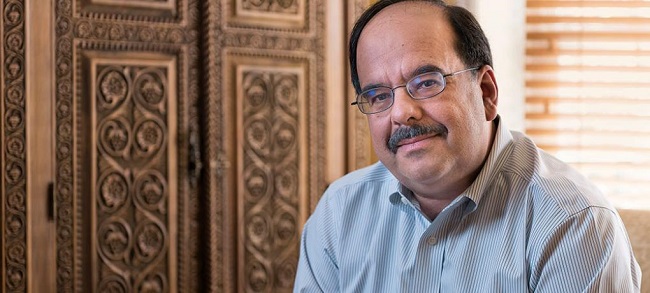
The Broadcasting Board of Governors (BBG) has announced that Ambassador Alberto M. Fernandez will join the Middle East Broadcasting Networks, Inc. (MBN) as its new president on July 17, 2017. In this role, he will oversee MBN’s multimedia operations in the U.S. and across the Middle East, including its digital properties, Alhurra Television networks and Radio Sawa.
MBN is a private, not for profit, multimedia corporation funded by the BBG that provides news and information to the 22 Arabic speaking countries across the Middle East and North Africa. With a weekly audience of more than 27.5 million people, MBN supports democratic values by expanding the spectrum of ideas in the region and producing accurate, professional and independent news and information on all media platforms; and is a trailblazer in audience engagement.
Brian Conniff, BBG veteran and current MBN President, is leaving the company after 11 years. Under his leadership, MBN has grown to be a forward-looking, flexible organisation responding to the region’s evolving media environment and challenges. “It has been a pleasure to work with the professionals of MBN,” said Conniff. “This transition comes at a time of strategic importance as the organisation continues to focus its content and seek new ways to increase its impact. I am confident that Ambassador Fernandez will advance MBN’s important work and continue to increase its impact.”
In response to Conniff’s announcement, John Lansing, CEO and Director of the BBG said, “Brian has played a significant role in BBG’s growth throughout the years, and his expertise and counsel has been invaluable to me. He is an extraordinary leader and has worked very closely with other network leadership to streamline our collective and individual efforts, and to develop creative programming that demonstrates real impact. Ambassador Fernandez is inheriting a first class team with a portfolio of major initiatives.”
best wireless router 2017
Ambassador Fernandez, a fluent Arabic speaker, will join BBG from the Middle East Media Research Institute (MEMRI), where he served as Vice President from 2015 to 2017. During his Foreign Service career, he was widely regarded as one of the most knowledgeable and impactful US Foreign Service voices in the Arabic-language media. Ambassador Fernandez held numerous roles at the U.S. Department of State, including the Department’s Coordinator for the Center for Strategic Counterterrorism Communications, U.S. Ambassador to the Republic of Equatorial Guinea, Chief of Mission in Sudan, Director for Near East Public Diplomacy and Director for Iraq Public Diplomacy. He was a career member of the Senior Foreign Service with the rank of Minister-Counselor and was a recipient of a 2008 Presidential Meritorious Service Award, the 2006 Edward R. Murrow Award for Excellence in Public Diplomacy, and a 2003 Superior Honor Award for his work in Afghanistan, among other awards. He also served as a Foreign Service Officer in Iraq, Kuwait, Nicaragua, the Dominican Republic, and the United Arab Emirates, and as USIA desk officer for Egypt, Yemen, and Sudan.
Ambassador Fernandez is a graduate of the University of Arizona and the Defense Language Institute. Ambassador Fernandez has also lectured and debated on U.S. foreign policy in numerous public venues, and has published in several publications, including Brookings Institution publications, the Foreign Service Journal, Journal of International Security Affairs, Soundings: An Interdisciplinary Journal, Cipher Brief, Providence, the Harvard Review of Latin America, Middle East Quarterly and the Journal of the Assyrian Academic Society (JAAS). He is also a Non-Resident Fellow in Middle East Media and Politics at the TRENDS Foundation in Abu Dhabi, United Arab Emirates.
Kenneth Weinstein, Chairman of the Board for the Middle East Broadcasting Networks, conveyed the Board’s support for the selection, “Ambassador Fernandez shares our values and focus on long-term growth,” he said. “He has the perfect combination of skill, experience, and regional expertise that we need to continue driving forward at MBN. We are pleased that he accepted this challenge and look forward to working with him. The Board and I are also very grateful to Brian Conniff for his passion and leadership, and thank him for his accomplishments over many years of dedicated service to the agency.”
“I am truly honored and humbled to join the Broadcasting Board of Governors as the President of the Middle East Broadcasting Networks,” said Fernandez. “I am delighted to have an opportunity to contribute to the impact the BBG’s networks have on millions of lives around the world. MBN is a media leader in the region, and I look forward to joining with its dedicated and accomplished staff to continue its growth momentum in new and creative ways.”
Source: MBN press release

22 March 2017
Radio Sawa, the Arabic-language radio network that has changed the media landscape in the Middle East and North Africa, is celebrating its 15th anniversary on 22 March 2017.
Since its launch in 2002, the pan-Arab radio network has been known for offering an innovative format combining accurate and objective news with popular Arabic and English music. With more than 12 million listeners each week across the MENA region, Radio Sawa provides breaking news through up-to-the-minute reports on unfolding events in the Middle East as well as in-depth coverage of topics often unaddressed in the Arab media, such as freedom of speech, religious freedom, countering extremism, women’s rights, and political pluralism. The station has attracted the admiration of Arab audience and forged a reputation that has inspired imitators throughout the region.
 “Over its first 15 years, Radio Sawa has successfully broadened the perspective of our audience on issues of importance in the Middle East and around the world,” said Brian Conniff, President of Middle East Broadcasting Networks (MBN), pictured right, which manages and operates Radio Sawa. “Robust access to balanced, unbiased, and accurate journalism makes Radio Sawa an indispensable resource in the Arab media landscape.”
Today, Radio Sawa is expanding its reach by providing news and information to Arab audience through different media platforms, including mobile devices and the Internet. Radio Sawa maintains an active all-news website (www.radiosawa.com) which provides both up to the minute news and information as well as live streaming audio, making the network one of the most trusted sources of news and insights on social and political life in the Middle East and North Africa. The Radio Sawa Android and iOS mobile apps offer a mobile-first experience for engaging with millennial audiences to solicit their voices and opinions. The apps stream eight Arabic channels, feature Sawa Chat interactive conversations, newscasts and the top tech, entertainment and culture news of the day. In addition, Radio Sawa shares compelling stories, audio and photos with millions of social media users on Facebook and Twitter.
Innovative use of technology and high quality journalism earned Radio Sawa several high profile awards, including New York Festivals, AIB Awards, GSMA Global Mobile Awards, and Appy Awards.
Radio Sawa is operated by the non-profit corporation “The Middle East Broadcasting Networks, Inc.” (MBN). MBN is financed by the U.S. Government through a grant from the Broadcasting Board of Governors (BBG), an independent federal agency. The BBG serves as a firewall to protect the professional independence and integrity of the broadcasters.
18 November 2014
The BBG’s networks draw a record-high audience of 215 million people each week, according to a new report released today. This includes noteworthy increases in competitive media markets, on television and online.
Growth in the television audience has been tremendous, with an increase of 14 million from 2013. This is in part due to a successful affiliate strategy, through which BBG partners with more than 2,300 media outlets worldwide. These partnerships bring the BBG more than half of its overall global audience.
“Large audience gains in countries of strategic importance to the United States, combined with our distribution strategy, underscore that we are accomplishing our mission and skillfully utilizing our resources across difficult media environments,” said BBG Chairman Jeff Shell.
Weekly audiences in Russia and Ukraine have doubled as Voice of America and Radio Free Europe/Radio Liberty expanded live coverage and introduced new programming in the region to counter Russian misinformation. Together, they reach one in five adults in Ukraine weekly.
VOA’s overall audience grew by seven million, to 171.6 million, due to large audience gains mainly in Indonesia, Bangladesh, Ukraine, Russia and Cambodia. Expanded television offerings on popular affiliate stations drove much of this increase in measured audiences.
RFE/RL’s overall audience expanded by more than five million, up to 23.3 million, a marked 30% increase from 2013. Notable audiences came from Iran, with the launch of Radio Farda’s popular morning program “Breakfast with News” as a television show.
In addition to weekly audience size, the BBG measures impact using quantitative, qualitative and anecdotal data on a wide range of factors, including program quality and trustworthiness, engagement with the news process, and audience understanding of current events. Examples of impact include:
- Radio/TV Martí launched Reporta Cuba, allowing citizen reporters to use mobile technology and digital media to provide eyewitness accounts of news directly from Cuba.
- Radio Free Asia has been at the forefront of breaking news from inside China’s Xinjiang Uyghur Autonomous Region (XUAR), garnering frequent media pickups from the New York Times, Associated Press, Washington Post, and regional media in Asia.
- Alhurra and Radio Sawa provided the Middle East and North Africa an alternative and reliable news source in contrast to ISIL propaganda.
The BBG’s Internet anti-censorship program also expands audience reach and program impact, through deployment of circumvention tools and by facilitating access to closed markets.
To learn more about the BBG’s performance measures, the 2014 Performance and Accountability Report is available here, along with the BBG’s 2014 audience overview and explanation of research methodology.
30 June 2014
Radio Sawa is giving fans access, anywhere and at any time, to the most popular radio network in the Middle East through the launch of the new Radio Sawa app. Owners of iPhones, iPads and Android phones and tablets will have instant access to Radio Sawa’s streams of breaking news, music, Radio Sawa programs and hourly news updates. Listeners can click here to download the Radio Sawa app.
Content and features available through the Radio Sawa app include:
- Live Broadcasts of Seven Streams – Listeners can tune in to one of Radio Sawa’s seven streams to listen to Western and Arabic music, newscasts and news updates twice an hour, andRadio Sawa’s information programs. The country and regional streams available include Iraq, Egypt, Jordan, Morocco, Gulf, Lebanon and Sudan.
- User Participation Through Sawa Chat – Listeners can now interact with Radio Sawa’s popular interactive feature Sawa Chat on their phones. The feature asks listeners a question about social issues, and phone users can immediately record their audio answers and upload them. In conjunction with the launch of the Radio Sawa app, the first Sawa Chat question will be this: What is the one thing in your country that needs to change and how would you change it?
- Ease of Use and Sharing Content – The app features gesture-based navigation via swiping and using graphics and photos without complicated menus. Original content, such as the “Have You Read This?” social news section can be easily shared with friends and colleagues on Facebook, Twitter and e-mail.
- On Demand Podcasts – Radio Sawa’s news and information programs such as Sawa Magazine and its hourly newscasts will be available for listeners to tune in when it is convenient for them. If they miss an episode, it takes just a click on the app to hear stories such as child labor in Jordan, the Syrian refugee crisis, the Iraqi government’s fight against ISIL and corruption in Lebanon.
- Continuous Audio Playing – Audiences can tune into Radio Sawa while using other apps. This new feature will provide continuous Radio Sawa audio while listeners are multi-tasking and using other apps on their phone.
The Radio Sawa app is produced in partnership with the Broadcasting Board of Governors Office of Digital & Design Innovation (ODDI).
“We are very excited that this app will fundamentally change the way people can listen to Radio Sawa,” stated Brian Conniff President of Middle East Broadcasting Networks (MBN), which manages and operates Radio Sawa. “The new app allows listeners from across the region to have access Radio Sawa’s brand of accurate and objective news in a way that is easy for them. This is especially important in countries where Radio Sawa does not have an FM transmitter.”
“We joined forces with MBN to design and build an app unlike any in the Arab market,” said Will Sullivan, Director of Mobile for the BBG’s Office of Digital & Design Innovation. “We focused on building a gorgeously designed, touch-driven, mobile-only application which played to the huge popularity of streaming radio on smartphone devices.”
Radio Sawa is an Arabic-language radio network that broadcasts music and news 24 hours a day, 7 days a week, with more than 370 newscasts per week. Newscasts range in length from 30-minute in-depth reports (including interviews and analysis) to 90-second headline reports. Radio Sawa’s flexible format permits the station to respond quickly to developing news events and expand both newscasts and live coverage as required. According to international research firms, Radio Sawa has a weekly reach of more than 11 million people.
In addition to Radio Sawa, MBN also operates and manages Alhurra Television. MBN is financed by the U.S. Government through a grant from the Broadcasting Board of Governors (BBG), an independent federal agency. The BBG provides oversight and serves as a firewall to protect the professional independence and integrity of the broadcasters.
The BBG’s Office of Digital & Design Innovation (ODDI) builds the solutions to the biggest digital challenges faced by U.S. international media. ODDI works with technology to improve US international news media by creating new ways for journalists to reach their critical audiences and understand the audience from a technology standpoint. The ODDI Mobile team’s previous apps have been internationally-recognized for their innovation by being selected as finalists for the 2014 GSMA Global Mobile Awards “Best Mobile Publishing Product or Service” and the 2014 Appy Award for “Best Multicultural App.” (Source: Press release)
9 January 2013
The Broadcasting Board of Governors has just launched a transmitter in Misrata, providing Radio Sawa’s latest news and information to citizens in the northwestern Libyan city. The Misrata FM channel marks the third transmitter launched in Libya since the fall of former leader Moammar Gadhafi.
“Getting a clear signal into Libya is critical,” said André Mendes, the BBG’s Chief Information Officer and Chief Technology Officer. “We’re delighted that we’ve been able to complete the installation despite this period of uncertainty in Libya and now can reach a larger audience than ever before in this pivotal country.”
“Radio Sawa is the most popular radio network in the region and we expect that success to continue as the network grows in Libya. Listeners tune into Radio Sawa to hear all sides to the most important news stories of the day,” stated MBN President Brian Conniff. MBN manages and operates Radio Sawa.
The Radio Sawa network can now be heard in the three largest Libyan cities-99.1 FM in Misrata joins 106.6 FM in Tripoli and 88.1 FM in Benghazi.
Radio Sawa’s coverage of the clashes in Libya won a Silver Radio Award in the 2012 New York Festivals Radio Program & Promotion Awards®. The award-winning report covered the violence in Misrata during the fighting that led to the fall of Gadhafi, highlighting the courage and resilience of the city’s inhabitants who continued their fight for democracy in the face of death and destruction.
Recent surveys by international research companies such as ACNielsen show that Radio Sawa has a weekly reach of more than 13 million adults across the Middle East and North Africa. Radio Sawa is operated by the non-profit corporation, the Middle East Broadcasting Networks, Inc. (MBN). MBN is financed by the U.S. government through a grant from the Broadcasting Board of Governors, an independent federal agency. The BBG provides oversight and serves as a firewall to protect the professional independence and integrity of the broadcasters.
