AIB Members elect new Executive Committee

AIB Members elect new Executive Committee

AIB Members elect new Executive Committee

Members of the Association for International Broadcasting have elected a new Executive Committee.

The six-person Executive Committee provides governance and oversight for the Association, working closely with the Secretariat.

Executive Committee members hold office for two years.

The six people elected are:

Eugen Cojocariu

Radio Romania International

Walter Fernandez

Mediacorp

Nigel Fry

BBC World Service

Carlson Huang Chia-shan

RTI

Shawn Powers

USAGM

Serge Schick

France Médias Monde

The first meeting of the new Committee will take place in the coming weeks and quarterly thereafter. 

Another Ukraine transmission tower targeted

Another Ukraine transmission tower targeted

Another Ukraine transmission tower targeted

Television and radio services have gone off the air in the Rivne region of western Ukraine following a reported Russian air attack.

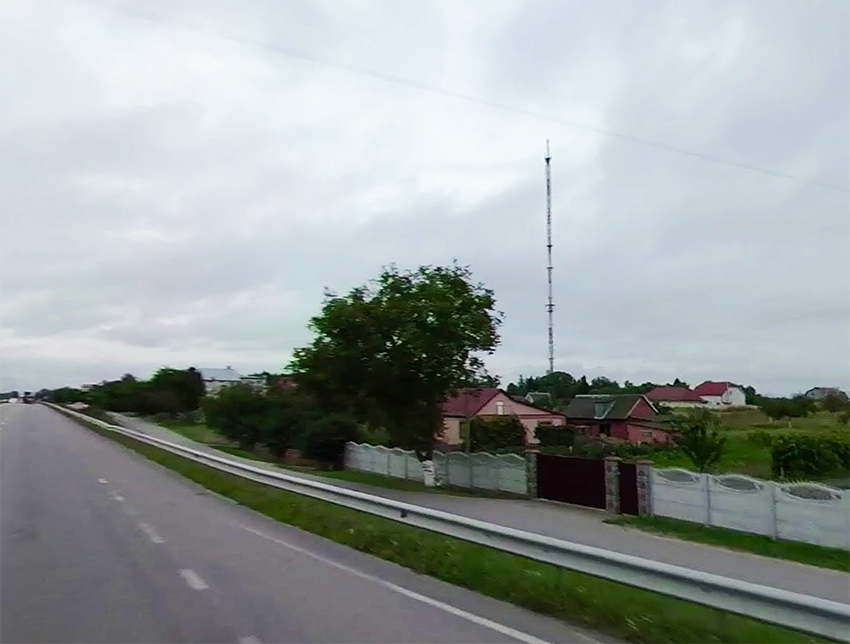
According to regional governor Vitaliy Koval via Telegram, the authorities are working to restore TV and radio services in the region. He told followers that alternative means to access programming is via satellite and cable. The extent of the damage is not currently known. The tower is located in a relatively sparsely populated area that appears to be predominantly agricultural, just south of the E40 highway.

The TV tower is located around 12km east of the city of Rivne, population around 240,000. Rivne is around 200km north east of Lviv, the city to which many western diplomatic missions relocated and from where international TV news channels are based having moved from Kyiv as the situation in the capital city worsened.

The attack on the Rivne tower follows the strikes on the Kyiv and Kharkiv transmission towers (see: https://aib.org.uk/second-ukraine-tv-tower-hit-channels-off-the-air/ and https://aib.org.uk/aib-condemns-attack-on-kyiv-tv-tower/).

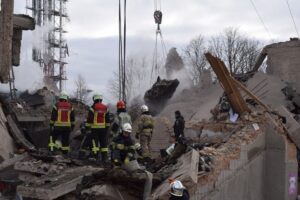
Update at 1800GMT on 14 March 2022: Photos of the bombing site have been shared by the region’s governor. These show the TV tower still standing with a building immediately adjacent – presumably housing transmission equipment – in ruins. It is reported that nine people died in the attack and others are likely buried in the rubble.

Main photo: Google Street View; above: Віталій Коваль

CNN+ will launch at end of March in USA

CNN+ will launch at end of March in USA

CNN+ will launch at end of March in USA

CNN has announced that CNN+ will debut on March 29, 2022 in the United States.

“March 29 will be an important day in the history of CNN and CNN+ will be a critical part of our future,” said Andrew Morse, CNN EVP, Chief Digital Officer and Head of CNN+. “I am so proud of the work our teams have done to ensure our world class journalism and storytelling comes to life on this new platform. We can’t wait for our subscribers to experience it.”

CNN+ was announced in July 2021 as set to debut in Q1 of 2022. The product offers subscribers three types of content: live, on-demand and interactive programming, including what the company describes as “a whole new way to engage with CNN’s world class journalism and storytelling.”

“We’re excited for everyone to experience CNN+ and see what we’ve been working on,” said Alex MacCallum, CNN Worldwide Head of Product and General Manager for CNN+. “We have a really compelling content offering with CNN’s world class journalists and are confident in the product offered at this compelling price.”

CNN will have a single CNN app that will offer access to both CNN+ and TVE experiences, with easy navigation between the two. In the single CNN app, CNN+ customers can explore a range of new live, on-demand and interactive content through editorially-curated and personalised experiences that suit their interests. Pay TV customers can also enjoy the TVE experience that they’ve known for years, including access to CNN’s linear TV feeds of CNN, CNN International and HLN as well as a substantial on-demand offering, which will be available exclusively to pay TV customers.

CNN+ will be available for purchase at US$5.99 a month or $59.99 per year. Early subscribers that sign up within the first four weeks after March 29 directly with CNN+ will have access to the “Deal of a Lifetime,” or 50% off the monthly plan – for life – as long as they remain subscribers.

New Zealand public broadcasters to merge

New Zealand public broadcasters to merge

New Zealand public broadcasters to merge

New Zealand’s Minister for Broadcasting and Media Kris Faafoi has announced that a new public media entity, merging Radio New Zealand and TVNZ, is to be formed in 2023.

“The public media sector is extremely important to New Zealanders in providing them with high quality, independent, timely and relevant media content,” Kris Faafoi said.

“But we know the media landscape is changing and the sector is having to adapt to increased competition, changing audience demands and ways of accessing media, falling revenue, and new and emerging digital platforms. We need public media which is responsive to these changes and can flourish.

“RNZ and TVNZ are each trying to adjust to the challenges, but our current public media system, and the legislation it’s based on, is focused on radio and television.

“This is why the Government will create a new organisation by the middle of next year, built on the best of RNZ and TVNZ, to future-proof public media for New Zealanders for decades to come.

“Whether it be COVID, national emergencies, or Olympic Games, the last few years have shown how important a strong media environment is to reflect New Zealanders’ stories, dreams and aspirations and it is important we support public media to flourish.

“A public media entity which is resilient, sustainable, and has the wherewithal to deliver independent, trusted information is a key to that.

“New Zealanders are among some of the most adaptive audiences when it comes to accessing content in different ways; like their phones rather than television and radio, and from internet-based platforms. We must be sure our public media can adapt to those audience changes, as well as other challenges that media will face in the future.”

Some commentators suggest that the Minister’s announcement is light on detail, particularly around the issue of the different funding models for the two existing, separate public broadcasters. Radio New Zealand is funded by the government through NZ on Air, while TVNZ is commercial. The Minister confirmed that all currently provided non-commercial radio services will be retained after the merger. The separate news operations may be combined.

RNZ Chairman Dr Jim Mather welcomed the Ministerial announcement, saying: “We believe this is a once-in-a-generation opportunity to establish a new public media entity that will have the mandate, scope and resources to provide essential public media services to all the people of Aotearoa New Zealand.”

“The crucial building blocks of the entity give us confidence that the policy is a sound response to the challenges faced by New Zealand public media in a rapidly changing global media environment.”

“At the heart of this new entity will be the unique voice of Aotearoa New Zealand with trusted news and current affairs as a cornerstone. As a public service, not-for-profit media entity, with a Charter and sustainable funding, it will benefit all New Zealanders, ensuring we stay connected, informed, and part of a cohesive democracy.”

Dr Mather said RNZ’s focus in 2022 would be to embrace new opportunities and prepare for the future ensuring a smooth transition for staff and audiences. “Our focus at RNZ is on ensuring that we continue to perform strongly so that our people, services, and public media ethos make a significant contribution to the proposed new entity. “


Ukraine media produce kids cartoon about the Russian invasion

Ukraine media produce kids cartoon about the Russian invasion

Ukraine media produce kids cartoon about the Russian invasion

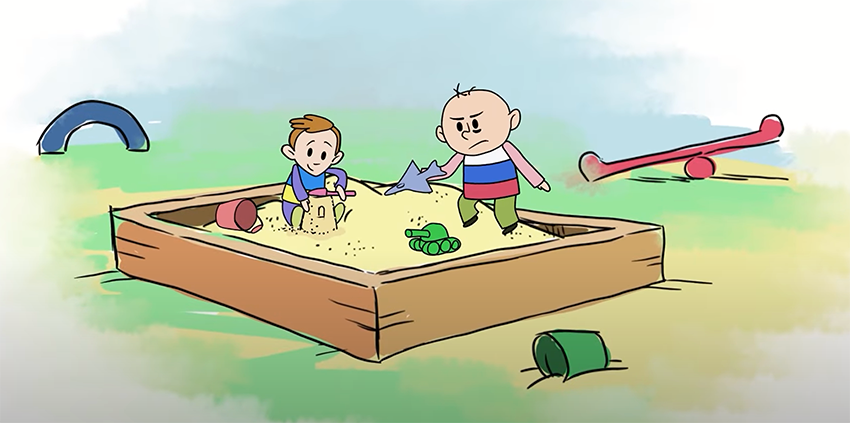
Ukrainian companies 1+1 media, Animagrad and Mamahohotala have created a cartoon “The Good Always Win”, which tells the story of the outbreak of Russia’s war in Ukraine.

The authors of the cartoon say that they could not ignore the manipulation of facts about the events in Ukraine and obvious propaganda, which is aimed at the youngest Russians and is actively used by the authorities, even for such an audience.

“Now is the time when we are not only protecting our borders, our cities, we are also defending our safety and our lives. This is the time when fighting on the information front is of crucial importance, as well as communicating with each audience in a language they can hear and understand. This cartoon is our response to the manipulative misinformation that Russia spreads and forces, especially on children. The cartoon will be understandable to children of the age of 3 and older, and it will help adults find the words to explain what is happening”, the authors say.

The cartoon “The Good Always Win” was created by 1+1 media holding, Animagrad and Mamahohotala studios in 2022.

The project is now available in Ukrainian, Russian and English, and will be translated into other languages as well.

Media Freedom Coalition Statement on Russia’s Invasion of Ukraine and Assault on Media Freedom

Media Freedom Coalition Statement on Russia’s Invasion of Ukraine and Assault on Media Freedom

Media Freedom Coalition Statement on Russia’s Invasion of Ukraine and Assault on Media Freedom

The global Media Freedom Coalition issued the following statement on 10 March 2022.

The undersigned members of the Media Freedom Coalition strongly condemn Russia’s premeditated, unprovoked and unjustifiable war against Ukraine with the participation of Belarus. We reiterate our staunch support for Ukraine’s sovereignty and territorial integrity and for the people of Ukraine. As the situation rapidly deteriorates, we are seriously concerned that the Russian Federation is completely supressing journalists and media workers from reporting on events that are taking place on the ground in order to control the information space, including through Russian disinformation. The same applies to Belarus, which supports Russia’s aggression against Ukraine and continues to further exacerbate the already extremely troubling situation for media freedom in their country.

The Kremlin is throttling or blocking access to many social media platforms. It is also blocking the websites of many of the few remaining Russian independent media outlets. The BBC, TV5 Monde, CBC/Radio-Canada, CNN, CBS, ABC News, Bloomberg, Radio Free Europe, Radio Liberty, and others are moved to suspend their operations in Russia due to new legislation that criminalizes any individual or organization accused of sharing what Russia views as “fake news” about Russia’s war in Ukraine. While media organizations may decide to re-commence their reporting from Russia, they do so in the face of ongoing risk posed by the new law. We strongly condemn Russia for passing this repressive law that unduly restricts journalists and media workers from carrying out their vital, independent, work.

Putin’s campaign of intimidation and repression against journalists and media workers is aimed at preventing the people of Russia from accessing accurate and independent information about the illegal and reprehensible acts being perpetrated in their name against Ukraine. Free access to information is important to the exercise of the right to freedom of opinion and expression.

We also strongly condemn Russia’s longstanding use of coordinated disinformation campaigns against Ukraine, most recently, to create false pretexts to attempt to justify their illegal and immoral acts and to conceal the atrocities they are committing.  The ongoing efforts by the Kremlin to muzzle local journalists and foreign correspondents providing fact-based coverage of the war are a violation of international human rights law. Therefore, the Media Freedom Coalition welcomes the steps already taken by online platforms and calls to take further action to prevent state-sponsored disinformation, including that propagated by Russia Today and Sputnik, and the sanctions adopted by many governments against the individuals in charge of these Russian state-media.

Independent media has a crucial role in all societies. Journalists and media workers must be allowed to safely carry out their work, particularly in times of conflict. We condemn attacks on journalists, including the brutal killing of a Ukrainian TV station LIVE cameraman following a Russian airstrike on a TV broadcast tower in Kyiv, as well as the attacks on journalists of the Sky News, Ekstra Bladet, RSF, Alaraby TV, and other media outlets. We call on Russia to immediately end the brutal crackdown on independent media and to respect the rights of journalists and media workers in accordance with international human rights law and international humanitarian law. We call out all violations of the right to freedom of opinion and expression, including attacks on journalists and media outlets. These cannot be tolerated.

We stand with journalists and media workers who, at great personal risk and sacrifice, work to bring Russia’s human rights violations and abuses to light.  We commend their professionalism and resilience to ensure the free flow of independent information despite the most challenging circumstances.

Signed:

Australia

Austria

Canada

Croatia

the Czech Republic

Denmark

Estonia

Finland

France

Greece

Iceland

Ireland

Italy
Japan

Republic of Korea

Latvia

Lithuania
Luxembourg

the Netherlands

New Zealand

North Macedonia

Norway

Portugal

Sierra Leone

Slovakia

Slovenia

Sweden

Switzerland

Ukraine
the United Kingdom

the United States