NHK WORLD programme highlights April

NHK WORLD programme highlights April

NHK WORLD programme highlights April

NHK WORLD’s programme line-up for April has the following highlights:

Globe-trotting wildlife photographer and filmmaker, Iwago Mitsuaki, offers the best of a vast collection of cat footage he took in Japan. On this unique trip around the country, discover the lesser-known charms and customs of regions through the eyes of cats! 

Kawate Haruo knew that his father, Masao, a second-generation Japanese American, returned to Japan after World War II. That, however, was about all he knew of it. After Masao’s death, Haruo found a letter to an American attorney, Wayne Collins, seeking restoration of his American citizenship.

Haruo met with Collins’ son and with a Japanese American whose father chose to stay in the U.S. He discovered that Masao had suffered especially harsh treatment during the war, leading him to renounce his American citizenship. Follow along as Haruo pieces together the facts of his father’s life, eighty years after the attack on Pearl Harbor.


Journeys in Japan

Tuesdays 

0:30 / 5:30 / 10:30 / 15:30 / 21:30

Explore a different side of Japan. Meet the locals and discover traditions and cultures not usually found in guidebooks!


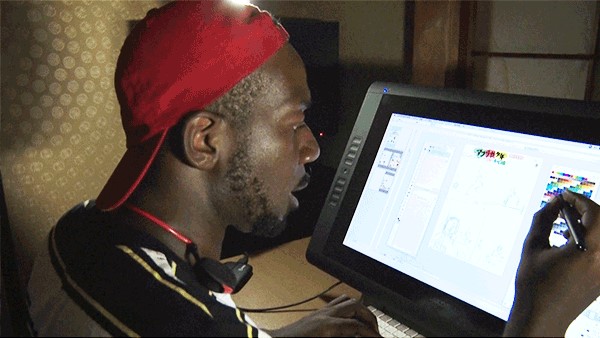
Hori Hiroshi: A Puppet Master Rises from the Embers

April 9th

0:10 / 6:10 / 12:10 / 18:10

Celebrated puppet master Hori Hiroshi created ningyo-mai, a performance art fusing dolls and actors. After his wife and artistic partner passes away, Hori turns to his craft to work through his grief.

[Source: NHK WORLD press release]


AIB and Channelbox bring Ukraine news TV to UK Freeview

AIB and Channelbox bring Ukraine news TV to UK Freeview

AIB and Channelbox bring Ukraine news TV to UK Freeview

24 hour rolling news channel direct from Kyiv available via connected Freeview service across the UK

At the start of Russia’s invasion of Ukraine, seven of the country’s largest broadcasters pooled their resources to deliver a 24-hour-a-day news service. The combined channel is available across Ukraine and, thanks to a growing number of agreements with broadcasters and platforms, in a constantly increasing number of countries across Europe.

Today, 31 March, the Ukrainian channel has gone live on the UK’s digital terrestrial TV service, Freeview, via the multi-channel OTT service Channelbox, and on mobile through Channelbox’s iOS and Android applications.

The news and information channel is produced jointly by the 1+1 International, Rada, Ukraine 24, Inter +, ICTV, UATV, and Suspilne media companies. Its purpose is to provide accurate and impartial news from across Ukraine, and to debunk disinformation and fake news that is being propagated about events in the country. The news service is also a vital link with home for the estimated four million Ukrainian citizens who have fled the country as the war has spread.

“The Association for International Broadcasting has been working since the start of the invasion to bring the Ukrainian news channel to platforms in the UK,” says Simon Spanswick, chief executive of the AIB. “We wanted to make a contribution to support Ukraine and its citizens. Bringing Ukraina 24 to viewers in the UK, whether expatriates or refugees, helps maintain links at the most difficult times of their lives. We are delighted that Channelbox is the first UK platform to make the channel available on a mainstream UK TV platform.”

Tanya Kronfli, Channelbox Head of Content and Business development, said: “We are honoured to be part of this project and to be able to help people of Ukraine to have access to the news from home. This is true lifeline broadcasting and demonstrates the way that modern technologies like connected TVs are able to support people at times of crisis.”


The Ukrainian news channel is available 24 hours-a-day on Freeview channel 271, and on IOS https://apps.apple.com/gb/app/channelbox/id1596904340. Android users can access the service at:  https://play.google.com/store/apps/details?id=com.synapsetv.channelbox

Main photo: Man outside destroyed apartment building in Kharkiv/Andrii Marienko/UNIAN

VOA officially launches Afghan satellite TV channel

VOA officially launches Afghan satellite TV channel

VOA officially launches Afghan satellite TV channel

One day after the ruling Taliban banned Voice of America broadcasts from terrestrial television, the U.S. government-funded independent news agency has officially launched a 24/7 direct-to-home satellite-delivered television channel for Afghanistan. The channel carries uncensored news and information in both the Pashto and Dari languages of the country. VOA’s programs were ordered off affiliated television stations in Afghanistan effective Sunday, March 27, as part of a broad ban on content regarded as undermining Taliban policies, including prohibiting women from anchoring newscasts with men.

VOA’s new TV stream, identified as “VOA Afghanistan,” is on the Yahsat Y-1A satellite (52.2 degrees East), Transponder 12 (downlink frequency 11.938 GHz), Channel 469. The Yahsat satellite is Afghanistan’s most popular platform, ensuring the Afghan audience will have access to VOA’s programming despite the Taliban censorship.

“Afghanistan is now one of the most repressive media markets in the world,” said Acting VOA Director Yolanda López. “Despite the Taliban’s attempt to end press freedom, VOA News stands by its Afghan audience with credible and authoritative news and information.”

The new VOA Afghanistan satellite stream includes its popular “TV Ashna” newscasts, its women’s show “Etesal,” viewer call-in programming, and programming from Radio Free Europe/Radio Liberty’s Azadi radio. Additional programming is planned, including entertainment shows to fill a void in Afghanistan, where local channels cannot air music programs.

The VOA satellite channel has been in development since August, before the fall of Afghanistan’s elected government. The channel is also accessible on YouTube and on VOA’s Pashto and Dari language websites.

[Source: VOA press release]

Russia labels Deutsche Welle a ‘foreign agent’

Russia labels Deutsche Welle a ‘foreign agent’

Russia labels Deutsche Welle a ‘foreign agent’

Russia’s Justice Ministry on Monday placed Germany’s international broadcaster Deutsche Welle (DW) on a list of “foreign agents.”

“This decision was made based on the documents received from the authorized state authorities,” the ministry said in a statement. The statement didn’t elaborate on the documents or authorities in question.

In response, DW Director General Peter Limbourg said: “This latest, arbitrary decision by the Russian authorities was unfortunately to be expected. It is a further attack on press freedom and a fresh attempt to cut the Russian population off from free, independent media. It started with the forced closure of our studio in Moscow at the beginning of February, then our website in all languages was blocked in Russia. There then followed the gradual restriction of social media services and now DW has been labeled a ‘foreign agent.’ This will not stop us from continuing to provide comprehensive and independent coverage of Russia and the region from our new studio in Latvia and from Germany.”

DW in Russia

On February 3, the Russian Foreign Ministry said it would take “retaliatory measures against the German media” working in Russia after German authorities banned the state-run Russian TV channel “RT DE.”

This included “recognizing DW as a foreign media outlet fulfilling the functions of a foreign agent,” the Foreign Ministry said in a statement.

DW was forced to shutter its Moscow office and its journalists in Russia had to relinquish their accreditation, making it impossible to work in Russia.

In early March, DW’s website was  blocked by state communications regulator Roskomnadzor.

Shortly after, DW moved its Moscow office to the Latvian capital Riga.

“The Russian government has seemingly declared an ‘information war’ on DW,” said Christian Trippe, DW Director of Russia, Ukraine and Eastern Europe. “Our journalists will continue with our work and deliver reliable information to our target audience in Russia.”

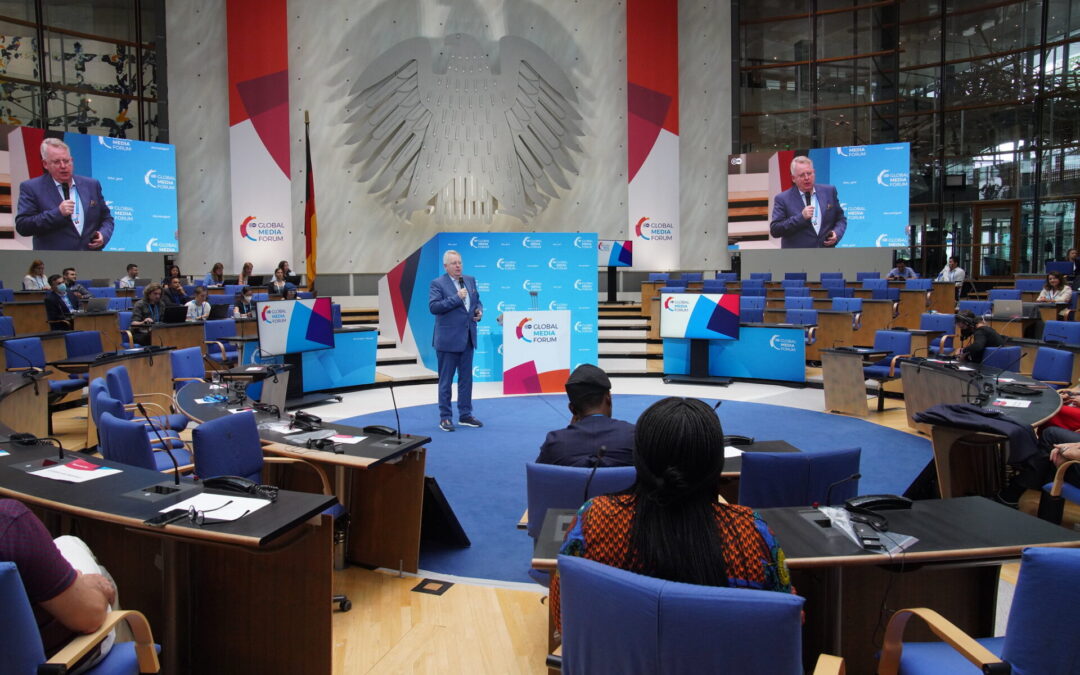
DW (Deutsche Welle) is Germany’s international public broadcast service. It is tax-funded and produces freely accessible journalism in 32 languages.

The Federal Republic of Germany’s Broadcasting Council — an independent, non-partisan body free of government influence — oversees DW’s compliance with its legal mandate to supply people around the world with independent information. DW employs roughly 4,000 individuals, most of whom work at studios in Bonn and Berlin.

What is the ‘foreign agent’ list?

Since 2012, the list has been used to curtail the operations of international media outlets as well as non-profits that receive foreign funding, particularly those that are active in politics or report on corruption.

It requires that all publications on the list be marked as coming from a “foreign agent,” and submit a report on their activities every 6 months.

Over 100 media outlets and individuals are currently on the list, including US public broadcasters Voice of America and Radio Free Europe/Radio Liberty as well as Amnesty International and Human Rights Watch.

[Source: DW press release]

International Charity Concert-Marathon Save Ukraine – #StopWar scheduled

International Charity Concert-Marathon Save Ukraine – #StopWar scheduled

International Charity Concert-Marathon Save Ukraine – #StopWar scheduled

An International Charity Concert-Marathon aimed at supporting Ukraine named Save Ukraine – #StopWar will be hosted in Warsaw by TVP, a Polish TV channel, on Sunday 27 March at 1730 CET (1830 Kyiv time).

Video: https://youtu.be/1ivikOvGp3A.

Musicians, artists, civic activists, thought leaders, actors, athletes, volunteers from around the world will be supporting Ukraine during the 2-hour broadcasting, which will be rebroadcasted by the TV channels from about 20 countries in Europe and the world, as well as by streaming platforms and social networks. At the same time, funds to address humanitarian issues caused by the Russian military invasion of Ukraine will be raised before, during and after the broadcasting.  

In Ukraine, the telethon will be available on all Ukrainian TV channels and platforms that broadcast the United News Marathon such as 1+1, ICTV, STB, 2+2, Ukraine, Inter, Rada, UA: Pershyi, as well as TET, Novy, M1, NTN, K1, and Kyivstar TV, 1+1 Video, YouTV, MEGOGO, Oll.tv, Sweet.tv, Volia online TV platforms.

It will also be possible to watch the broadcasting on the 1+1 YouTube channel and on 1+1 International, ICTV Ukraine, Inter+, Ukraine24 and others for the viewers all over the world.

The hosts of the event include Ukraine’s Timur Miroshnychenko and Masha Efrosinina.

World-famous bands and artists such as Imagine Dragons, Nothing But Thieves, Fatboy Slim, Craig David, the Eurovision winners Salvador Sobral and Netta, and others are also among the invited guests to address a multimillion audience. The Ukrainian artists Dakha Brakha, Ruslana, THE HARDKISS, Jamala, Go_A, MONATIK, Alyona Alyona and others will participate in the telethon too. 

In addition several fan zones will be organised in cities globally where the concert will be screened.

“The entire media community of Ukraine is focused on several crucial tasks – to convey a message that Ukraine is a shield from Russia for the whole civilised world now, and that we require prompt support and closing of the sky. Ukraine is in huge need of help given the impending humanitarian crisis. Thus, we are talking about it out loud, we will keep talking about it in the future. [Talking] with the help of journalism, with the help of music, with the help of hundreds of thousands of people united all over the world,” Yaroslav Pakholchuk, CEO at 1+1 media and co-owner at Atlas Festival says.

The Save Ukraine – #StopWar telethon is conducted by 1+1 media, the Atlas Festival team and with the support of the national mobile operator Kyivstar, the Ministry of Culture and Information Policy, the Ministry of Foreign Affairs and the Ministry of Social Policy. The initiators of the project idea are Atlas Festival and Kyivstar.

“Ukraine is doing everything possible to stop the war and bloodshed, to free the cities from the blockades, to start rebuilding our country. We would like to emphasise once again that there is no “special military operation” taking place in Ukraine while holding this marathon. The brutal groundless war is being waged in Ukraine, which Russia has started in a barbaric way. The civilised world must be proactive in protecting, supporting and helping Ukraine. It is not enough to watch the war of the Russians against the Ukrainians staying abroad. After all, our country is protecting the whole of Europe from Putin. We need a no-fly zone over Ukraine – closing of the sky, as well as weapon. It will save lives of many innocent people. Therefore, the messages #CloseTheSky and #NoFlyZoneUA should be heard by the world,” Oleksandr Tkachenko, the Minister of Culture and Information Policy of Ukraine, comments. 

“Unleashing a brutal war against Ukraine, the enemy did not expect such a reaction from Ukraine and the world. First of all, the strength of Ukrainians while defending their country, and the scale of destructive sanctions imposed by the international community. We have achieved significant results thanks to the systematic work of Ukraine and the unwavering support from our partners – Russia has already suffered great economic losses and found itself in complete isolation. We are not stopping, we are moving forward. This marathon is another signal to the international community: it is Russia’s war against the whole world, and only together we can win,” – Dmytro Kuleba, the Minister of Foreign Affairs of Ukraine, claims.

“The war destroys our cities, but it will never destroy our will and desire to live in a free country. National resistance has united Ukrainians and the entire democratic world in a common goal – to expel all occupiers from our land and protect innocent people. Military, volunteers, doctors, civilians who host migrants in their homes or march with Ukrainian flags in temporarily occupied cities, our technicians who even work in danger to set reconnection – all of us are heroes. We need much stronger support from the Western partners and the entire civilised world to finally win. Kyivstar will call for this in all possible ways – by supporting such fundraising concerts, working with the media and with our partners globally,” –  Tetiana Lukynyuk, B2C Director at Kyivstar says. 

The graphic symbol of the telethon, which serves as a foundation for all its visual communication, is a sunflower created by Daniel Skrypnyk, a Ukrainian artist. The organisers of the event say that such collaboration can reach out to a larger audience as Daniel’s works are admired by people in many countries all over the world.

“Now, a sunflower symbolises the whole of Ukraine. I’ve included personal symbols and emotions into it. The sunflower is an observer of various events happening around. It is a sensor of emotions. It visualises everyone who has encountered side views. The sunflower has been growing in various aspects, and, right now, the sunflower has opened up in this most terrible and emotional situation. It asks to be noticed by the whole world being the one who is looking at Ukraine, feeling every Ukrainian. It asks for the light,” – the artist Daniel Skrypnyk describes.

The organisers emphasise the fact that fundraising is to be implemented with the use of the official accounts of the National Bank of Ukraine and Ministry of Social Policy of Ukraine. The funds will go to meet food needs and to accommodate refugees and citizens who left their homes due to hostilities, to provide them with clothing and footwear, medicines and medical equipment; to provide the population with some basic necessities, one-time financial assistance, to meet other priority human needs, etc.

BBC files UN complaint about online violence towards women journalists of BBC News Persian

BBC files UN complaint about online violence towards women journalists of BBC News Persian

BBC files UN complaint about online violence towards women journalists of BBC News Persian

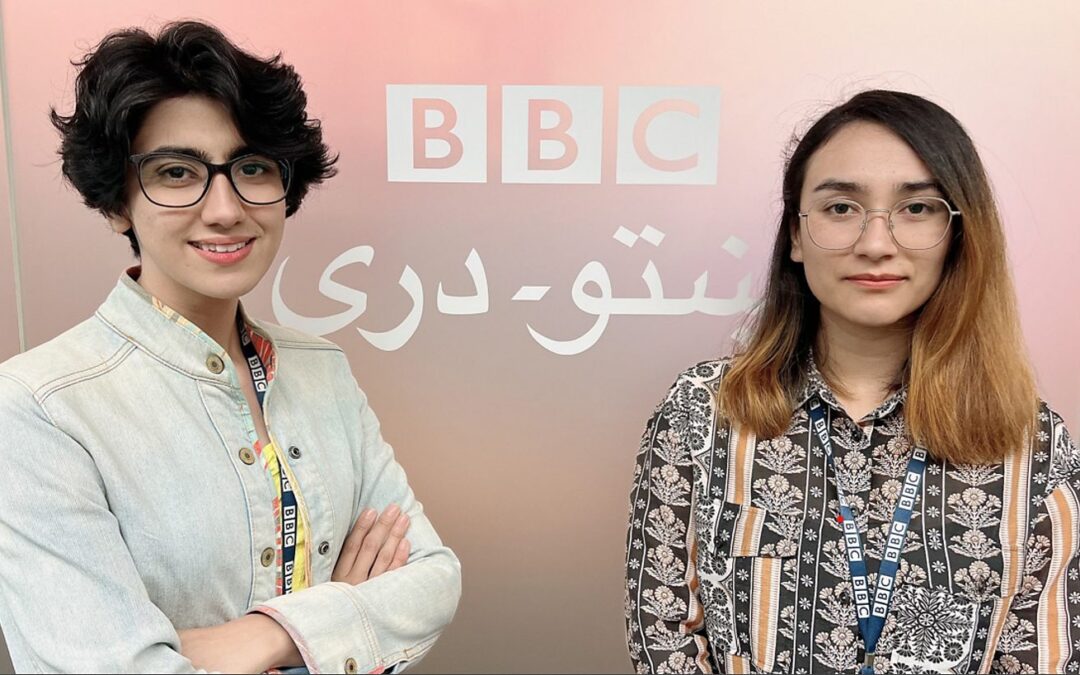
The BBC World Service has  filed a new urgent appeal to the United Nations (UN) against Iran over the online violence faced by women journalists working for BBC News Persian.

The appeal was lodged on 23 March as women journalists at BBC News Persian continue to face daily, relentless online attacks and harassment, including threats of rape and death.

The complaint addresses the current risks to women journalists working for BBC News Persian.

Examples of the online violence and harassment they face include:

  1. Threats of rape and death directed at women journalists and their families in the UK and in Iran
  2. Gendered attacks on their credibility as journalists in both state media and online in Iran, including false and defamatory stories about their personal lives, their relationships with contributors and what they wear, aimed at discrediting the women of BBC News Persian staff among their friends and family – and the broader public – by accusing them of sexual indecencies
  3. Hacking and phishing of personal information, emails and photos, which later appear online with false stories about their personal lives, which are used in the interrogation of their family members in Iran

A report by UNESCO in the last year shows online violence towards women is having a chilling effect on women’s reporting and adverse effects on their mental health. UN Experts highlight the extent of online violence towards women journalists, which is pushing women offline and undermining their ability to do their work as journalists, describing it as “gendered censorship”.

Interviews with BBC News Persian staff show that many women journalists:

  1. Opt out of using social media as a journalistic tool in fear of harassment
  2. Self-censor online, including removing themselves from social media, public spaces and other profile opportunities
  3. Suffer significant and serious mental and physical health issues, including anxiety, anxiety attacks, psychological trauma and depression, requiring therapy and medical intervention

The appeal from the BBC World Service calls on Iran to take action in respect of those responsible for the online violence towards women journalists, by investigating and prosecuting them.

Liliane Landor, Senior Controller of BBC International News and Director of World Service says: “We absolutely deplore the violent, misogynistic and gendered harassment our women journalists have to face every day.

“Trusted and impartial journalism is fundamental to any democracy and it is only by working together that we can ensure the safety of journalists everywhere and ensure women’s voices are included. We have to be able to work unhindered, free from threats and free from abuse.”

International counsel for the BBC World Service, Caoilfhionn Gallagher QC and Jennifer Robinson say: “Women journalists at BBC News Persian face abhorrent online violence every day simply because they are doing their job. This is a paradigm case of what UN experts call “gendered censorship”. Misogynist, sexist online abuse and all threats of physical or sexual violence towards journalists  are intended to force women offline and to silence women journalists. It is unacceptable and it must stop.

“Iran has international obligations of due diligence to take action against those responsible. We call on the UN to condemn the attacks and to ensure Iran meets its international obligations.”

Paul Siegert, the NUJ’s national broadcasting organiser, says: “We fully support this campaign in calling for more to be done to stop the appalling online abuse that many women working for BBC News Persian have experienced.

“Iran must do more to stop and prosecute the people responsible. It’s truly chilling when you hear about some of the threats that women journalists are exposed to on a regularly basis and the NUJ joins with the BBC and calls on the UN to condemn this unacceptable behaviour.”

The appalling examples of the gendered attacks on BBC women journalists include:

  1. Fake stories stating that a BBC News Persian presenter had been raped by a colleague known to Iranian audiences and a fake photo blog showing her with her “illegitimate child”. Later, her father was interrogated by authorities, where officers told him she had hidden it from her family because she was embarrassed about having been raped by a colleague.
  2. A blog was created under the name of a presenter, writing about her purportedly polygamous and lavish sexual life in London and using selected hacked photos from her Facebook page to make the blog look authentic. This story was picked up by a national newspaper in Iran.
  3. A presenter was photoshopped into a pornographic image which was sent to her 14-year old son in London. This was particularly threatening in that it demonstrated they knew where he went to school.