26 September 2007
The BBC Trust today published its provisional conclusions on the BBC Executive’s proposals for a high definition television channel. Having considered a public value assessment (PVA) carried out by the BBC Trust Unit and a market impact assessment (MIA) conducted by Ofcom, the Trust has concluded that the proposals would have high public value and positive impacts on the market, while causing little adverse market impact. The Trust has therefore provisionally approved the proposals for a BBC HD television channel, subject to some limited conditions. The Trust’s provisional conclusions are now subject to a four-week public consultation period and the Trust expects to reach and publish its final decision by Wednesday 21 November.
Diane Coyle, BBC Trustee and Chair of the Public Value Test Steering Group, said: “The BBC Trust has a duty to ensure the public receives value in return for paying the licence fee. Our view is that these proposals would deliver significant public value and create very little adverse market impact. As a result, we have provisionally approved them, subject to conditions to safeguard or enhance the public value and minimise any adverse market impact. Our provisional conclusions are now open to public consultation and we would like to hear from as many members of the public and stakeholders as possible before reaching our final decision. We are particularly interested in the public’s view about the options for an HD channel on Freeview. Would licence fee payers prefer the BBC to launch a four-hour service immediately, before a nine-hour service is possible because of spectrum capacity, even if that means having to buy two set-top boxes within a very short period of time?”
The BBC Executive’s proposals
The BBC Executive’s proposals are for a mixed-genre, high definition channel. The Executive’s intention is to launch the service on digital satellite, digital cable and digital terrestrial television (DTT or Freeview). There are two key variations within the proposals regarding these platforms: Satellite and cable: the proposal is for a nine-hour service broadcasting from 15.00 to midnight, with some flexibility to extend beyond this to allow coverage of significant live sport or other events. DTT: two options are proposed (i) after digital switchover a full nine-hour service as described above or in the meantime (ii) a four-hour schedule broadcasting overnight between 02.00 and 06.00.
Due to spectrum capacity constraints, the Executive would need to take down from DTT BBC Parliament, BBC Four and three BBCi streams between the hours of 02.00 and 06.00 to create capacity for the overnight schedule in option (ii). This action would be intended as an interim measure until spectrum capacity allows for the introduction of a nine-hour service on DTT.
Conditions of approval
In the event of final approval for a BBC high definition TV channel, the Trust is proposing conditions in the following areas:
Cable and satellite
Given that the BBC HD channel is operating in trial form on cable and satellite at present, the channel should be provided on a continuing basis on these platforms when a service licence is granted, and on Freesat from the launch of that service.
Freeview (nine-hour schedule)
The Trust believes that an HD channel should be provided on Freeview as soon as possible and early next year it will review options for delivery on Freeview in the light of what might be technically possible following Ofcom’s proposals for rearranging spectrum.
Freeview (four-hour overnight schedule)
Although the BBC could launch a four-hour overnight service almost immediately on Freeview within its existing spectrum allocation (subject to the schedule changes specified in the management’s application), Ofcom’s possible reorganisation of the DTT platform in the future could mean licence fee payers having to make two equipment upgrades in a short space of time. In short, the set-top box which could deliver the first four-hour service would not work after reallocation of the spectrum and a new set-top box would be necessary in order to receive the full nine-hour channel.
In view of this, the Trust is minded to delay the launch of the four-hour interim service on Freeview until after Ofcom’s proposals for digital spectrum are clear early next year. However, the Trust is particularly interested in the public’s view on this in its consultation: would people prefer the BBC to launch the service as soon as possible, even if that meant people having to buy two set-top boxes in order to receive the service within a very short period of time.
Launch on internet protocol TV (IPTV)
The Trust expects the BBC Executive to maintain contact with internet protocol TV operators both to gauge feasibility and to ensure that the BBC does not over-burden their capacity before they are ready to accommodate HD.
HD content on-demand over the internet
The Trust considers it is appropriate for HD content to be provided on-demand over the internet through bbc.co.uk. The impact of this on the costs of internet service providers might raise concerns. Because of capacity constraints, the BBC is unlikely to be able to offer a significant volume of HD content through this route in the immediate future. The Trust will pay particular attention to this area as it becomes possible to offer more content on-demand in HD.
Simulcasting
The channel should not replicate the BBC One schedule, but should aim to schedule the programmes from across the BBC’s portfolio of channels which would make the best use of the upgrade in quality that HD offers.
Genre mix and events rights
The mixed genre nature of the channel will be specified in the service licence and the channel must not become a head-on competitor for sports and movie HD channels. Spending on events rights should also be monitored to ensure that it is not distorted by the presence of an HD channel.
Picture resolution
The channel would use the recognised HD standards for picture resolution. The Trust would only expect the BBC Executive to consider switching to an emerging higher resolution when the vast majority of HD consumers had already upgraded to it. Otherwise, the Trust would expect a proposal to be put to it for consideration.
BBC Parliament
The Trust will safeguard the provision of BBC Parliament on Freeview. The Trust will ensure the guarantees given by the BBC regarding coverage of the House of Commons and the House of Lords are honoured. On the few occasions when the Commons sits all night, provision of BBC Parliament on Freeview will take precedence over the HD channel if capacity to broadcast both services is not available and this will be reflected in the service licence for the HD channel.
Service review
The Trust will conduct its first review of the service no later than 2013 following the completion of digital switchover.
Next steps
The Trust’s provisional conclusions will now be subject to a 28-day consultation period which opens today and closes on Tuesday 23 October. The Trust will consider the responses it receives and aims to reach and publish its final decision no later than Wednesday 21 November.
25 September 2007
The AIB fax line is suffering problems at the present time, resulting in a highly intermittent level of connectivity.
We apologise for the inconvenience this may cause you – we are working with our telecoms provider to rectify the situation.
We recommend that, if possible, you convert any documents you are sending to PDF format and send them to our main e-mail address: contactaib (@) aib.org.uk.
19 September 2007
Independent medical experts from the United States and Britain, reviewing recent conversations with the detained Al Jazeera cameraman Sami al Haj, reveal that his mental state has deteriorated severely and he is in desperate need of medical attention. Based on recent comments from Sami, noted experts believe that he is suffering from severe depression, and characterize him as “passively suicidal.” According to reports, Sami believes that he has nothing to live for.
Sami has been detained in Guantanamo Bay since January 7, 2002, without any charges, any legal means to defend himself or information on when he will be released. Being held in the legal black hole known as Guantanamo Bay has taken a serious toll on Sami and on Sami’s wife and his young son.
D.L. Creson MD, a mental health professional with extensive experience working with prisoners in the United States, Bosnia, East Timor, Sierra Leone and Afghanistan, stated, “He, in my opinion, fits into a sub-category of severe depression often seen in complex emergencies where an individual has given up all hope; where nothing remains relevant to survival.” While describing Sami’s deteriorating condition, Dr. Creson elaborated, “
the marked change in attitude that was noted and the description of Mr. al Haj’s current behaviour suggests to me that Mr. al Haj no longer has the ability to cope with his relentlessly traumatic environment and is in the process of withdrawing into himself; in effect, he is becoming a case of passive suicide.”
Similarly, Hugh Rickards, MD, a noted consultant in Neuropsychiatry, suggested that Sami may be facing the onset of a mental disorder as a result of his indefinite detention and seemingly never-ending ordeal. In conclusion, Dr. Rickards states, “His (Sami al Haj) state of mind requires assessment and possible treatment from a qualified and experienced psychiatrist, which I understand Mr. Al-Haj is not receiving. Although I have not met or examined Mr. Al-Haj personally, the level of his mental suffering appears so acute that it is my duty as a medical practitioner to put this in writing to ensure appropriate assessment and treatment.” Given the apparent deterioration of Sami’s mental state, and his obvious anguish, the Al Jazeera Network would like to appeal to the U.S. administration and military to conform to international human rights standards and to provide medical attention for Sami.
Wadah Khanfar, the Director General of the Al Jazeera Network stated: “Our colleague Sami has been in detention now for almost six years without any charges and is suffering greatly from this unfair and illegal detention – we demand the U.S. officials to release him immediately. Al Jazeera continues to stand by Sami and this just cause.”
Sami, originally from Sudan, was captured while filming a news story in Afghanistan for Al Jazeera. To protest his indefinite detention without charges, Sami has been on hunger strike for almost one year. Support the campaign to free Sami from Guantanamo Bay.
Visit www.prisoner345.net
15 September 2007
The AIB is pleased to announce that its 2007 Media Excellence Awards are now open for entries from around the world.
The international panel of judges is now assembled, representing programme producers, journalists, editors and presenters, including some of the winners of the 2006 AIB Awards.
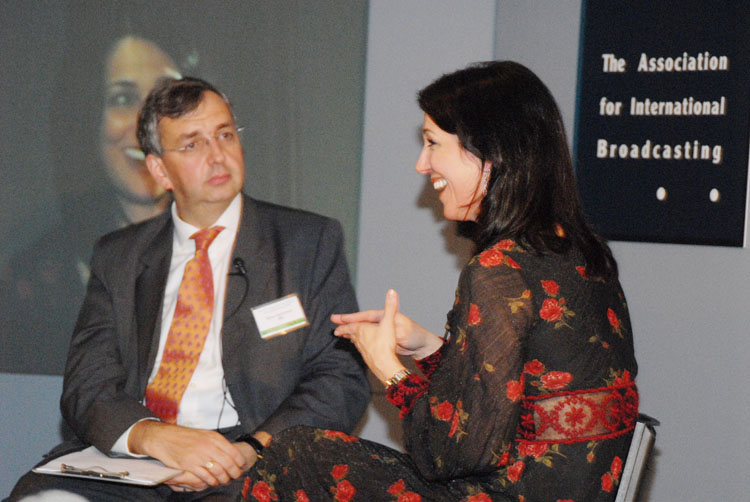 Now is your opportunity to align your brand with this celebration of excellence in international media.
We’re making available a limited number of sponsorships that will enable companies to be associated with the most innovative content on the international airwaves – and, increasingly, on new distribution platforms – and the best presentation, the best channels and the best technological concepts.
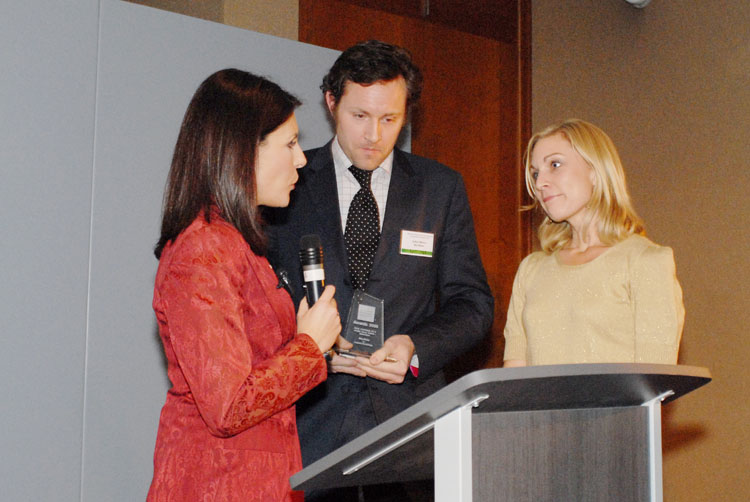 You have the opportunity to sponsor the entire 2007 AIB Media Excellence Awards, or an individual Award category. Alternatively, make a splash at the Awards ceremony and diner pensant in central London in 20 November 2007 through sponsorship of the champagne reception or the entire evening.
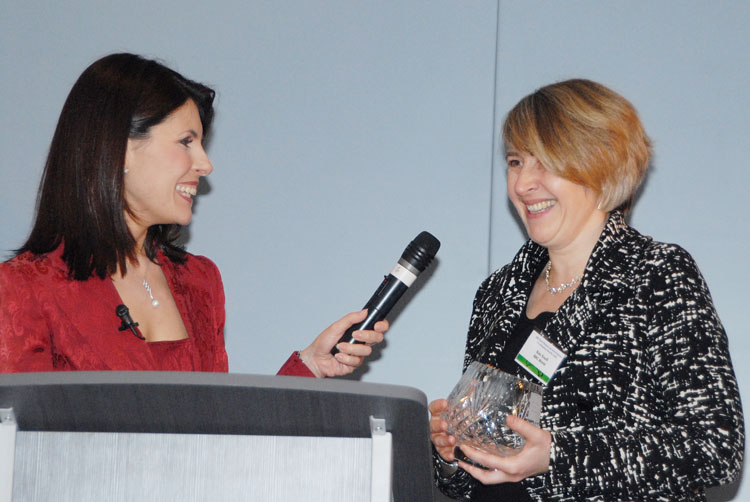 For more information, download the sponsorship brochure using the link below, and contact
Ollie Kirkman to discuss the opportunities the 2007 AIB Media Excellence Awards offers your company. You will find all the contact details
you need in the sponsorship brochure…download it
here.
13 September 2007
 The latest edition of the AIB’s quarterly magazine, The Channel is available exclusively on line.
To view the magazine, click
here (a new browser window will open).
You can read the magazine in your browser, or download it to view later, or
print it.
Future
editions will continue to be available in print, as they have for the last ten
years. We’d like to invite you to subscribe to the magazine today to take
advantage of a special offer: we’ll
send you the next six editions for the price of four – a
50% saving!
Click
here to subscribe to the AIB’s renowned magazine, The Channel.
The subscription price covers the AIB’s post and packing cost.
 You
You
can also place an advance order for the new edition of the AIB Directory
of Global Broadcasting. To be published in August, this latest edition
of the AIB’s annual guide to broadcasting worldwide has more than 50% more
information than the 2006 edition. Key contacts from the chief engineer at
Phoenix Satellite Television in Hong Kong to the Director of Dubai TV are
included. We’ve completely overhauled the Directory to make it more useful, with
new contextual information about key broadcasting markets worldwide.
The new edition of the AIB Directory of Global Broadcasting is
priced at GBP120 – order today. We also include postage in the price! Click
here to order.
30 August 2007
The Voice of America, which first went on the air more than 60 years ago
and is funded by the US government through the Broadcasting Board of
Governors, is banking on humour and entertainment to reach and inform its
worldwide web audience.
The Daily Download, a five-minute video webcast, was launched in June
for streaming on the VOA Web site (www.voanews.com). The Download
contains US and international news, feature material, and other video
clips from around the web. Host Doug Bernard (a past winner of AIB’s
International Radio Presenter of the Year) applies a different “take” on
the day’s news, using humour and a conversational style to relate to
viewers and internet surfers. The Download was accessed nearly 7,000
times in its first month on the VOA Web site and has received fan e-mail
from Turkey, China, Iran and Cameroon among other places. Downloads
increased by 10.7 percent in the second month.
Web-savvy fans seem to love this fresh approach to VOA’s website. One in
Africa wrote that, “I nearly laughed my socks off; ” another from
Beijing said that he “loved the Daily Download,” and yet a third signed
off an e-mail, “…Go DD!” A school teacher reported that he used the
webcast to inform his students about current events.
“Daily Download is another news service for our audience, it has a fresh
approach, and fast-paced format to appeal to our overseas online
audience,” said VOA Director Dan Austin. “The webcast is free and
available through the Internet whenever people want to hear a concise,
informative and entertaining version of the day’s news,” Austin added.
The webcast is produced by VOA’s Worldwide English Division and can be
streamed live or downloaded to media devices such as iPods. Daily
Download will be offered for mobile phone access in the near future.
