BBC staff launch new company to serve audiences with BBC Indian language services

BBC staff launch new company to serve audiences with BBC Indian language services

BBC staff launch new company to serve audiences with BBC Indian language services

Four BBC staff members have announced plans to leave the organisation and form a new entity in India which will provide audiences with a breadth of services across India, as commissioned by the BBC.

The establishment of Collective Newsroom Private Limited ensures the BBC and Collective Newsroom can meet their shared commitment to Indian audiences and cover stories on India that matter to global audiences. It is in compliance with the Indian Foreign Direct Investment law.

Collective Newsroom has been established as an Indian company, wholly owned by Indian citizens, with four existing staff members leaving the BBC to lead Collective Newsroom. These senior leaders have a wealth of editorial and programme-making experience. The BBC will commission Collective Newsroom to produce its six Indian language services as well as Indian digital output and Indian YouTube channel in English for audiences globally.

The BBC has a long-held and deep-rooted place in India’s media landscape, having first launched the Hindi language service in 1940. Since then it has developed a range of BBC output, expanding the number of Indian language services and growing audience figures from decade-to-decade with its agenda-setting and high impact journalism.

Rupa Jha, Senior News Editor, BBC India, and founding shareholder of Collective Newsroom, says: “Audiences in India can be assured that the BBC’s Indian language services and unique range of quality output will inform, educate and entertain audiences across our diverse and highly engaged country under the agreement between the BBC and Collective Newsroom. We launch Collective Newsroom with big ambitions for audiences in India and beyond.”

Jonathan Munro, Deputy CEO, BBC News says: “The BBC’s presence in India is steeped in a rich history that has always put audiences first, so we warmly welcome the formation of Collective Newsroom which continues that progression. The BBC will get first class content from Collective Newsroom that will be rooted in India and in line with the editorial standards audiences expect from the BBC. We look forward to working with them.”

Liliane Landor, Senior Controller, BBC News International Services, says: “Two of the BBC’s critical strengths are its truly global output for audiences and our reputation as a trusted source of news. We are deeply committed to excellence in journalism for and from India, and this agreement ensures the continued production of independent, international and impartial journalism that the BBC News brand is renowned for in India and around the world.”

Activity for BBC Monitoring and the BBC’s English language newsgathering operation for global output will remain with the BBC.

  • The four staff members leaving the BBC to lead Collective Newsroom are; Rupa Jha, Mukesh Sharma, Sanjoy Majumder and Sara Hassan
  • The BBC provides content in six Indian languages (BBC News Hindi, BBC News Marathi, BBC News Gujarati, BBC News Punjabi, BBC News Tamil, BBC News Telugu) as well as in English, to 82 million people around the country on average each week
  • BBC News Hindi is the BBC’s language service with the largest audience and in 2023, across all platforms, its weekly reach figure grew 27% year-on-year
  • The BBC World Service reaches 318 million people on average every week globally and operates 42 different language services

​Earlier in 2023 it looked as if a number of international TV news channels broadcast in India would have to close after the Ministry of Information and Broadcasting announced a significant increase in the “net worth” of Indian companies holding downlink licences on behalf of global channels. After lobbying, this move was rescinded allowing the small-scale local licence holders to continue operating on behalf of international channels. 

CBC/Radio-Canada announces programming and job cuts

CBC/Radio-Canada announces programming and job cuts

CBC/Radio-Canada announces programming and job cuts

CBC/Radio-Canada has announced it will be implementing programme and job cuts over the next year in order to manage approximately $125 million in budget pressures forecast for the 2024–2025 fiscal year.1 These pressures are a result of the same structural factors affecting all media companies in Canada, including rising production costs, declining television advertising revenue and fierce competition from the digital giants. CBC/Radio-Canada is also managing forecast reductions to its parliamentary funding beginning in the next fiscal year, including the end of programme integrity funding of $21 million received annually since 2021.

The Corporation expects to cut about 600 union and non-union positions across the entire organisation. Furthermore, it has identified about 200 currently vacant positions across the Corporation that will be eliminated. CBC and Radio-Canada will each be cutting in the range of 250 jobs, with the balance coming from Technology & Infrastructure and other corporate divisions. Each division will begin phasing-in reductions based on their business plans and operational requirements. Some will begin immediately; most will take effect over the next 12 months.

The Corporation will also be reducing its English and French programming budgets for the next fiscal year, including approximately $40 million in independent production commissions and programme acquisitions. This will result in reduced renewals and acquisitions, fewer new television series and episodes of existing shows, as well as fewer digital original series.

Catherine Tait, President and CEO, CBC/Radio-Canada, said: “CBC/Radio-Canada is not immune to the upheaval facing the Canadian media industry. We’ve successfully managed serious structural declines in our business for many years, but we no longer have the flexibility to do so without reductions.

“We understand how concerning this is to the people affected and to the Canadians who depend on our programs and services. We will have more details in the months ahead, but we are doing everything we can to minimise the impact of these measures.”

Earlier this year, the Corporation began implementing over $25 million in discretionary cost reductions including travel, sponsorships, marketing and postponement of technology initiatives. It also limited filling vacant positions.

These reductions are being done in a way that maximises the Corporation’s flexibility, should its financial situation change next year, and minimises the effects on our employees and the programmes and services it provides to Canadians.

Image: CBC Vancouver/Bumble Dee – stock.adobe.com​

NHK WORLD-JAPAN programme focus: Winter Warmth in Japan’s Northeast

NHK WORLD-JAPAN programme focus: Winter Warmth in Japan’s Northeast

NHK WORLD-JAPAN programme focus: Winter Warmth in Japan’s Northeast

Winter Warmth in Japan’s Northeast

Remote Onsen: Tohoku in Winter

December 16 Sat.
0:10/6:10/12:10/18:10 (UTC)

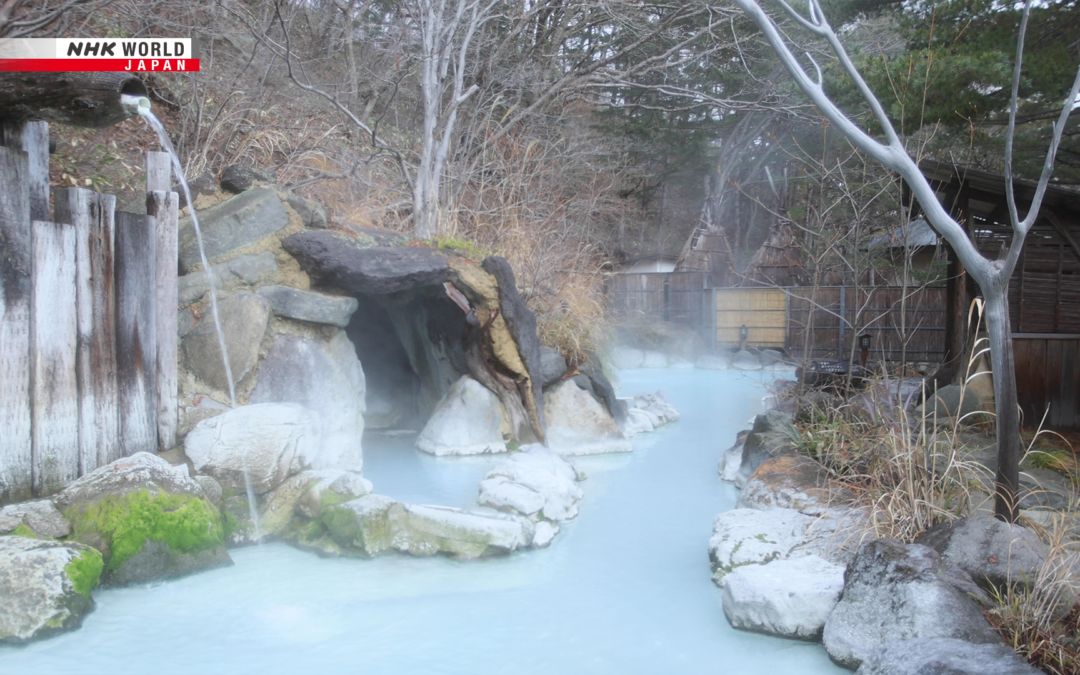
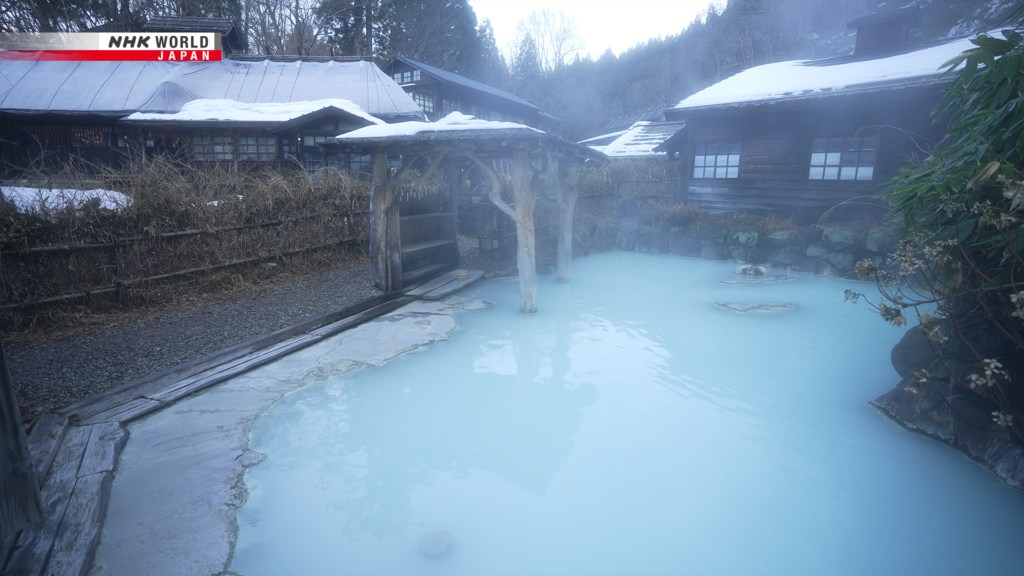
Visit hot springs hidden away in Aomori, Akita, and Fukushima to experience a variety of healing waters, taste the local cuisine, and meet with the locals. 

Broadcasters’ Eye
The Story of a Small-town Hairdresser Yoshida Barbershop

December 2 Sat.
0:10/6:10/12:10/18:10 (UTC)

At 86, the Yoshida Barbershop’s proprietor still wields her scissors with skill. Fifty years ago, the salon was bustling. Nowadays it’s quieter, giving customers time to linger and chat.

CYCLE AROUND JAPAN

Saturdays 
2:10/9:10/17:10/20:10 (UTC)

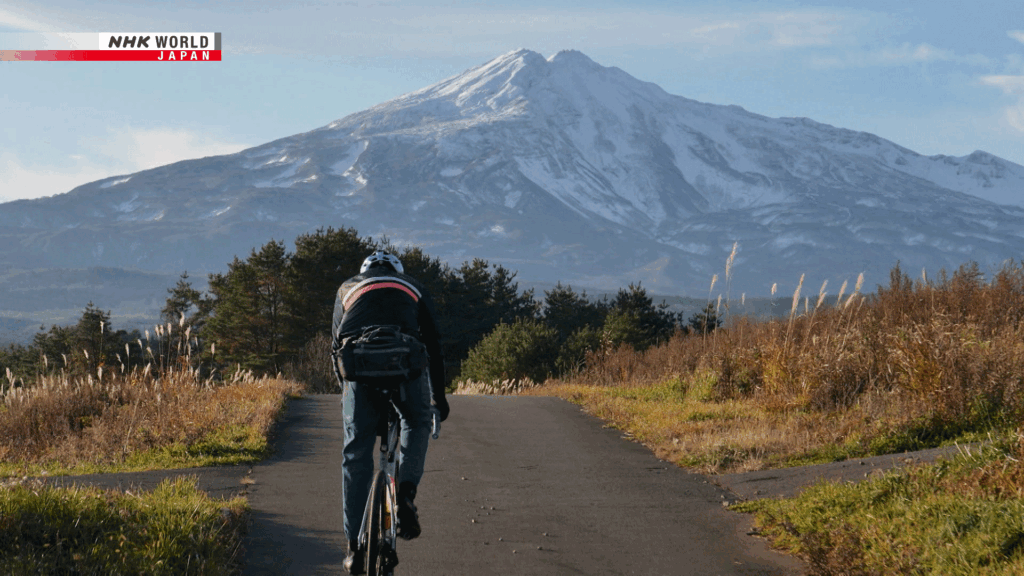
Come ride with us! Bicycle through the scenery of Japan, stay with locals and discover hidden traditions in a Japan you didn’t know existed.

Journeys in Japan

Tuesdays 
0:30/5:30/10:30/15:30/21:30 (UTC)

Explore a different side of Japan. Meet the locals and discover traditions and cultures not usually found in guidebooks!


USAGM CEO condemns Russia’s decision to extend detention of RFE/RL journalist Alsu Kurmasheva

USAGM CEO condemns Russia’s decision to extend detention of RFE/RL journalist Alsu Kurmasheva

USAGM CEO condemns Russia’s decision to extend detention of RFE/RL journalist Alsu Kurmasheva

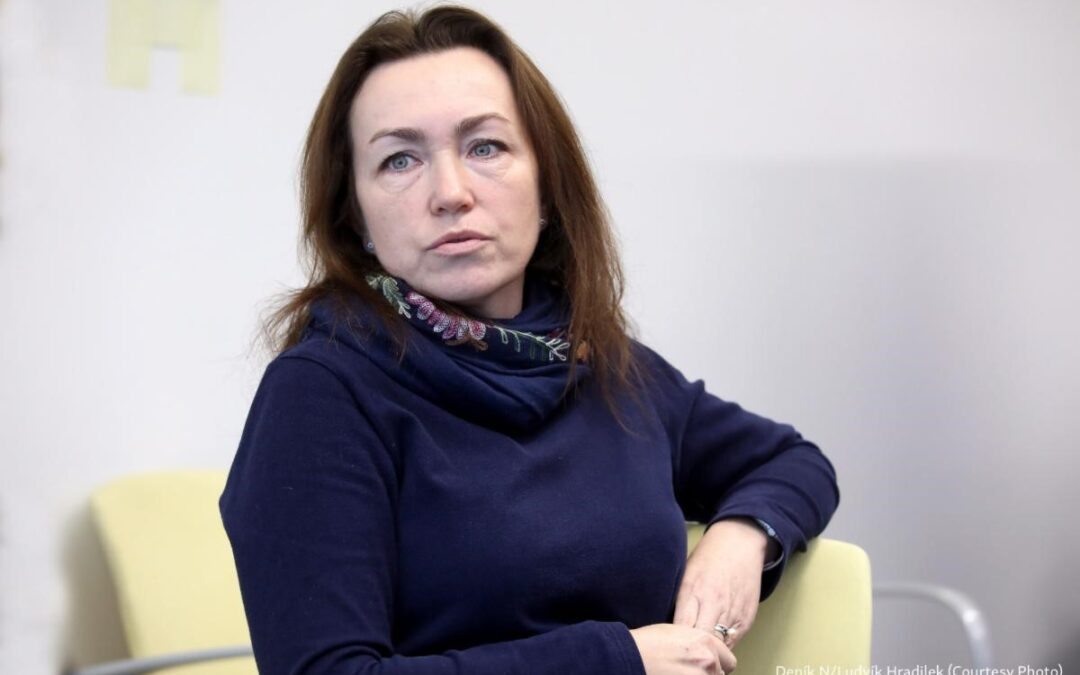
Today, a court in the Russian city of Kazan extended by two months, or until February 5, the detention of Alsu Kurmasheva, a veteran journalist from RFE/RL’s Tatar-Bashkir Service who has been in Russian custody since October 18. Kurmasheva has been unjustly charged with failure to register as a foreign agent. The charge carries a maximum sentence of five years’ imprisonment.

“Every day that Alsu Kurmasheva remains behind bars is a tragedy for her husband and two young children, her community, and journalists everywhere. As an American political prisoner being held in Russia, it is crucial for Alsu to officially be designated as ‘wrongfully detained’ so that her case can receive the time and attention it deserves,” said USAGM CEO Amanda Bennett.

“Alsu has spent 45 days behind bars in Russia and, today, her unjust, politically motivated detention has been extended,” said RFE/RL acting President Jeffrey Gedmin. “We call on Russian authorities to immediately grant Alsu consular access, which is her right as a U.S. citizen. Alsu must be released and reunited with her family.”

Kurmasheva is a dual U.S. and Russian citizen who lives in Prague, Czech Republic, with her husband and children.

[Source: USAGM press release]

BBC News announces savings and digital reinvestment plans

BBC News announces savings and digital reinvestment plans

BBC News announces savings and digital reinvestment plans

BBC News has set out savings and reinvestment plans to boost its digital journalism around the clock; increase its streaming offer on BBC iPlayer and the BBC News app; and bring more in-depth, analytical, and high-impact reporting to its online audiences. A new BBC News Investigations unit will be created, and areas such as BBC Verify will be boosted, with new reporting and production roles.

News consumption habits are changing, with [British] linear TV audiences declining by 11% over the last five years, and the BBC needs to invest in online news to respond to this. With the flat Licence Fee settlement and the impact of inflation, this means the BBC needs to make £500m of savings.

The announcement is the next phase of BBC News’ evolution from broadcast to digital journalism, and forms part of the BBC’s strategy to deliver value to all of its audiences, wherever they live and whichever platforms they use. This draws on research which shows audiences particularly value online breaking news, high-impact investigations, and forensic verification.

BBC News and Current Affairs CEO Deborah Turness says: “Like many businesses, we are in a tough financial climate and as our audiences shift rapidly from TV to online news consumption, we need to make choices about where we allocate our resources. While TV and radio remain crucial to BBC News, we must invest in our digital platforms to ensure they are also the home of our very best journalism, and today’s package of measures will accelerate this transformation.”

The package includes a reformatting of BBC Newsnight – a flagship late evening news programme screened on domestic channel BBC TWO – based on audience feedback which showed what consumers value most from today’s programme – high-quality, consequential, news-making interviews, discussion and debate.

Newsnight will remain as a nightly BBC Two TV programme from Mondays to Fridays, and will become a 30 minute interview, debate and discussion show which draws on the best of the BBC’s talent and news-making interviews to make sense of the day’s news.

As a result the BBC is proposing the closure of a number of roles across Newsnight’s reporting, production and operational functions.

Deborah Turness adds: “Audiences have told us how much they value Newsnight as an iconic BBC debate and discussion programme, and we’ve listened to what they’ve said – we’ve made the decision to keep the programme on air five days a week, despite the financial challenges we face.

“Newsnight has also been a source of great investigative reporting and films but we know that people are consuming the news in different ways, and it can no longer make sense to keep a bespoke reporting team for a single television programme. We will offer more to audiences by investing to ensure the best investigative journalism and reporting is produced – and consumed – across the whole of BBC News.”

As part of this, a new BBC News Investigations Unit will bring together the best investigative talent across BBC News. New roles will be created in financial and political investigations.

There will be a new drive to bring the depth and analytical strength of BBC broadcast journalism to its online audiences, creating a new in-depth digital experience which will be a destination for the best of the BBC’s analysis and thought-provoking journalism online. A dedicated team will commission “premium” analysis from editors, specialists and experts around the world, and curate daily content including the best of the BBC’s written articles, podcasts and radio moments, investigations and documentaries in one place. Followers will be able to take part in digital live events with our experts and receive extra exclusive content.

The plans will also provide more resource to guarantee the speed and quality of 24/7 digital journalism and digital streaming, building on the success of online live pages, so consumers are getting the best of BBC journalism around the clock.

As part of the BBC’s commitment to serving the whole of the UK, an extended hour-long edition of the BBC News at One will relocate to Salford, creating a daytime TV powerhouse in the city. This will be the first time a daily BBC national news bulletin will be broadcast outside London. There will be even more news content broadcast from Salford as BBC Breakfast will be extended for an extra 15 minutes daily.

There will be a restructure of BBC News’ story teams in the UK, with a focus on digital storytelling and live coverage, and a reduction in the amount of television packaging, as the BBC moves to digital-first.

The changes will involve the creation of specialist roles with OSINT (open source intelligence) and policy analysis expertise within and expanded BBC Verify, the specialist team with a range of investigative skills at its fingertips. They also include creating a UK Editor based in Salford; creating a Royal Editor; and adding new correspondent and reporter positions covering Artificial Intelligence, Financial and Political Investigations, Employment and Housing. There will also be a number of post closures within the teams. The changes to reporting positions have been designed to focus on areas which are of particular interest to today’s audiences.

The BBC’s Annual Plan sets out a reduction of 1,000 hours in content commissions. BBC News has undertaken a review of its current affairs programming and made the tough decision to close the Our World strand on the News Channel, and to make nine fewer hours of single documentaries each year for BBC Two. Panorama will continue as the flagship current affairs brand on BBC One, with no change in the number of hours.

​

France 24 offers advertising inventory to ecological transition organisations

France 24 offers advertising inventory to ecological transition organisations

France 24 offers advertising inventory to ecological transition organisations

Following the call for applications for “Green Solidarity Campaigns” which took place last summer, France Médias Monde is offering several associations committed to the ecological transition a campaign of 30 spots on the France 24 channel in French, broadcast globally.

The seven selected associations were selected by an internal committee, on the basis of a reasoned application file and a proposal for a TV spot aimed at presenting a concrete action or an awareness campaign in the fight against climate change or protection of biodiversity.

  • CARE France for its campaign “Climate change is sexist” alerting to the fact that girls and women are the first affected by the impacts of climate change and highlighting climate “heroines”.

  • LE GRET for its project to create a marine protected area in favor of biodiversity, carried out in an inclusive and participatory manner with the various local stakeholders, on Sainte-Marie Island in Madagascar.
  • THE LÉO LAGRANGE FEDERATION for the deployment of “Carbone Scol’ERE”, an environmental education program that is fun, positive and eco-citizen commitment, for students aged 9 to 12.
  • AGRONOMERS & VETERINARIES WITHOUT BORDERS for its awareness campaign on agroecology, the way forward for the most vulnerable farming families. 
  • TEERA AFRICA for its actions to protect, with local stakeholders, biodiversity and particularly mangroves, in Benin. 
  • CLUB ENVIRONNEMENT YOFF for its actions in favor of environmental protection in Senegal.
  • TERRE DE LIENS for its awareness campaign “Make farms grow”  in favor of the preservation of agricultural land and the installation of farmers engaged in organic farming .

Their campaigns will be broadcast on France 24 in the coming weeks.

Calls for applications of the same nature will soon be launched by France Médias Monde for the group’s radio channels, RFI and MCD.