6 December AIB media briefing
 |
||||||||||
|

| |
||||||||||
|

AIB Diner Pensant and
Awards 2007
Clothworkers’ Hall, City of London
Tuesday 20 November 2007
Some
cancelled places available
 Mishal
Husain, anchor on BBC World – last year’s AIB Channel of the Year
– will host the 2007 AIB Media Excellence Awards in the
wonderful surroundings of Clothworkers’ Hall, one of the City of London’s
ancient livery companies, on Tuesday 20 November.
146 guests from all over the world are attending this
glittering, inspiring occasion where everyone will take something away at the
end of the evening. That’s because instead of simply having a conventional
awards ceremony, the AIB is bringing two inspiring speakers to the event who
will be in conversation during the dinner.
 Tomi
Tomi
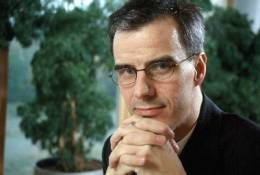
Ahonen is a strategy consultant in the mobile space, with an established
career in digital media and communications. A former senior executive at Nokia
where his remit included the company’s 3G research centre, Ahonen is a
best-selling author on media and the digital environment. His latest book,
Digital Korea,
co-authored with Jim O’Reilly, is a study of the most advanced country in
digital convergence, South Korea. While much of the book sounds like science
fiction, it is in fact a portrait of the reality of life in Korea today.
Ahonen will be sharing some of his research
into digital media around the world with the AIB’s guests at its Diner
Pensant, and will be exploring some of the ways in which media owners and
broadcasters need to position themselves for the all-embracing – and rapidly
approaching – digital world.
 Our
Our
second speaker is Jean-Yves Bonsergent, Chief Operating Officer at
France 24, the international TV channel operating in French, English and
Arabic that launched in December 2006. Bonsergent will be in conversation with
the AIB, talking about the first 12 months of the channel’s operations, how its
strategy is developing and about its future plans for further language services
for different geographic areas.
As the French government moves its review of
the country’s international broadcasting – which includes Radio France
Internationale, TV5 and France 24 – into its final stages, this is an ideal time
to discuss how France sees itself in the international media marketplace.
On 19
November, we have four cancelled places available so to attend, book now.
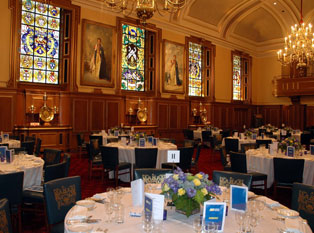 Join us for the glamour, fun and insight that the AIB’s
Diner Pensant and Awards provides.
AIB members £90 plus UK VAT @
17.5%
Non members £155 plus UK VAT @ 17.5%
Reserve your place online
here.
Radio Australia is to join in the celebrations and festivities at the annual Water Festival in Cambodia this month.
Radio Australias Khmer and English services will broadcast live from Phnom Penh on Friday the 23rd November at King Leper Sculpture.
The broadcast commences at 7am with Breakfast Club program host, Phil Kafcaloudes, sharing a traditional noodle cart breakfast with local audiences on the banks of the Mekong River.
Executive Producer of Radio Australias Khmer service and Australian of the year finalist, Seda Douglas, will commence Radio Australias daily one hour Khmer broadcast at midday, joined by local Cambodian pop star Preap Sovath, as they attract local audiences to explore and uncover what it means to be Cambodian.
Later, the Radio Australia team will join forces with the Phnom Penh International University of Cambodia and popular local identity Khat Sokhim to host a reality style quiz focusing on English learning. This compliments Radio Australias bi-lingual English language learning materials available via download from the Radio Australia website.
For three days up to a million Phnom Penh citizens and people from various provinces gather in the capital to celebrate the Water festival on the banks of the Tonle Sap and Mekong rivers.
Participation and attendance at the Water Festival builds on the growing links Radio Australia has established with audiences and partners in Cambodia, and highlights the appeal of Radio Australias Khmer service which is broadcast over 90% of the country through a myriad of partner rebroadcasters, as well as the English language service available locally on 101.5FM in Phnom Penh and Siem Reap.
Starting in 2008 the Deutsche Welle Global Media Forum will take place annually in Bonn. The main agenda items will change but the event will always address ways to cope with challenges and developments whose course is largely influenced by media worldwide. The target group is both international and inter-disciplinary. Media representative from around the world, high-profile experts of inter-governmental and non-governmental organisations, politicians, artists, entrepreneurs and scientists will sit around the same table at the
DEUTSCHE WELLE GLOBAL MEDIA FORUM
2-4 JUNE, 2008, BONN / GERMANY
A simple philosophy drives the initiative: Those working on the future have to think in networks – and in global dimensions.
Today many post-conflict countries are faced with completely new challenges. Steps to establish media mustn’t shake the already rocky peace and have to achieve hasty success, while at the same time laying the foundation for fundamental reforms. Precisely these challenges are the focus of the Deutsche Welle Global Media Forum. Renowned representatives from the fields of media and politics, culture and economics, development work and science are invited to help shape new solutions for peace and conflict prevention and to turn this conference into an unforgettable exchange of ideas and into an exciting platform for networking and future-oriented problem solving.
Main Topics for the panels:
Worldwide deployment What can and must Europe do to prevent conflicts?
Crisis prevention via media intervention
Crouching Tiger, Hidden Dragon – Economic Development, Political Stability and the role of the Media in Asia
How can the Truth Survive? In Africa Journalists are often between the fronts
Reading Between the Lies – Perception and Prejudice in the Middle East
Other subjects include the following:
Improve whats there or build from scratch?
Raison détat versus media freedom
From government-controlled to public broadcasting
Freedom of the media and expression in the socio-cultural context
Journalism training in post-conflict states
This is a conference you cannot afford to miss – so register before 31st of March 2008 to take advantage of the early bird registartion fee.
Peter Jacksons Park Road Post Production, the leading New Zealand post production facility, has purchased a second Quantel Pablo 4K non-linear color correction system as well as Quantels revolutionary Genetic Engineering teamworking infrastructure. The new set-up will enable Park Road to work simultaneously on several projects, dramatically improving workflow, and deliver sparkling results to clients in much shorter timescales.
Double handling big data files is slow work and inefficient – and time equals money, says Adam Scott, Park Roads Head of DI. By installing a second Pablo and Genetic Engineering, we can share jobs between suites – perhaps conforming in one, doing the grade in the theatre then finishing back in the original suite. With Genetic Engineering, all the media is available instantly to every connected suite; its a much more elegant approach. Clients are a lot more techno-savvy nowadays and demand a better, faster and cheaper result. Thats just what were giving them.
Park Road has also purchased the Sam data server as part of the Genetic Engineering set-up, which will allow its Shake, Combustion and After Effects suites open access to all stored media, further improving workflow. We are also looking at scanning direct into the GenePool from our Spirit datacine, Scott continues, and early next year may also hook it all up to the ARRI scanner and recorders at (sister company) Weta Digital via a dark fibre link.
Park Road recently completed its first 4K project on Pablo, grading Peter Jacksons Crossing the Line short film, which was shot on the Red camera. The speed of Pablo impressed everyone. Operationally in the color grade session it could have been 2K – nobody could tell. In fact there were comments about how fast it was at 4K, recalls Scott. There really isnt anything as fast and complete as Pablo. Now with Genetic Engineering, its a no-brainer; its a great addition to our world-class DI infrastructure.
Looking to help video professionals easily capture high-quality digital images from either standard- or high-definition video footage, Thomson has announced a low-cost PCI-Express card for PC workstations. The new Grass Valley Pegasus PCI-Express card offers real-time capture of SD and HD video, as well as VGA screen playback. This is made possible because for the first time the powerful Grass Valley HQ software codec from Thomson is now available as a hardware encoder, enabling HD capture to be performed in real-time.
The Pegasus card is perfect for anyone creating or repurposing high quality video content for corporate presentations, or distribution via the Internet or mobile applications. It comes complete with image capture software and a Software Developers Kit (SDK) for system integrators.
This Pegasus card offers HD quality video capture, but without the prohibitively high storage overhead, said Jeff Rosica, Senior Vice President of Thomsons Broadcast & Professional Solutions business unit. This new capture card will enable a broad range of professionals to produce the quality they need to satisfy their clients demands while allowing them to work with both SD and HD source material.
Capturing HD video is very data-intensive, requiring expensive RAID storage. The Pegasus card uses the HQ codec, with its sophisticated compression algorithms, to provide huge storage savings without sacrificing picture quality. The Pegasus PCI-Express card leverages a specially designed HQ-based hardware encoder chip to capture images natively at up to 1920 x 1080/60i and 1280 x 720/60p resolutions. It can also natively display digital signals on a PC at up to 1280 x 1024/60p without down converting the image, and capture video from HDMI, DVI, S-video, and component sources.
In addition, because Pegasus can capture the PC screen display in HD quality, the Grass Valley Pegasus card is the perfect tool for creating training videos and instructional DVDs. The input quality is so clean that subsequent conversions to other distribution formats for example, to mobile phones or the web are cleaner too; and created much more efficiently.
 Hosted