Trailblazing surgeon Professor Kelvin Kong delivers 2026 Wang Gungwu Lecture

Trailblazing surgeon Professor Kelvin Kong delivers 2026 Wang Gungwu Lecture

Trailblazing surgeon Professor Kelvin Kong delivers 2026 Wang Gungwu Lecture

Surgical pioneer Professor Kelvin Kong AM presents the 2026 Wang Gungwu Lecture, premiering on Friday 20 February at 8:00pm AEDT on ABC Australia and ABC iview.

In its fifth year, the annual Wang Gungwu Lecture celebrates the contributions of inspiring Chinese Australians to business, science, politics, education, sport and culture.

Professor Kong is a proud Worimi man of Chinese Malaysian heritage and recognised as Australia’s first Indigenous surgeon. He has dedicated his life to improving the health of others through his work in paediatric and adult otolaryngology, head and neck surgery and his distinguished career spans medicine and policy development with a focus on improving health outcomes for Indigenous communities.

In an uplifting address delivered at Parliament House’s Great Hall in Canberra, Kong honours the sacrifices of his Chinese ancestors who endured war and poverty and his Aboriginal family members who faced structural barriers and policies of exclusion.

Kong also addresses the ongoing challenges faced by Chinese and First Nations peoples who experience racism, microaggressions and assumptions around identity, and reflects on his own experiences navigating his identity and a sense of belonging.

“I’m so humbled by this,” Professor Kong said upon finding out he had been offered to deliver this year’s lecture. “There are so many amazing Chinese Australians in this country that I put on a pedestal and I’m probably sitting on the bottom of that list, so to think that I’m worthy of a conversation makes me extremely honoured.”

Minister for International Development, Minister for Small Business and Minister for Multicultural Affairs, the Hon. Dr. Anne Aly said, Chinese-Australians are the largest multicultural community in the country. Spanning many generations, languages and origins, contributing to every aspect of Australian society.

“Our national story weaves ancient songlines and migrant journeys, with inspiring Australians such as Professor Kelvin Kong AM bringing that story to life. As a Worimi man of Malaysian Chinese heritage, he embodies the intersection of histories that have shaped this country and demonstrates how diversity strengthens our institutions and our shared sense of purpose.”

ABC International Head Claire M. Gorman said, “We are delighted to be bringing Professor Kong’s story to audiences in Australia and to the Asia Pacific across our ABC TV, digital and social platforms, celebrating a unique First Nations and Chinese migrant experience. This is our fifth year of working with the National Foundation of Australia China Relations in producing the Wang Gungwu lecture. It’s a productive partnership which provides a vehicle for us to tell the story of modern Australia to audiences across our region.”

Chair of the National Foundation for Australia-China Relations and the lecture’s host Marina Go AM, said “Professor Kong is an inspiration. He brings to his lecture his skill as a surgeon, a sense of awe at the gift of hearing, and authenticity as a storyteller. As he highlights in his own life the extraordinary contributions of both Chinese-Australians and the Traditional Owners, he brings us together as a nation”.

About the Wang Gungwu Lecture

The annual Wang Gungwu Lecture, named after eminent Chinese historian Professor Wang Gungwu AO, CBE, celebrates the substantial and longstanding contributions of Chinese Australians to Australia’s national story.

The Lecture is a partnership between ABC International and the National Foundation for Australia-China Relations, an initiative of the Department of Foreign Affairs and Trade.

Previous speakers have included Olympic diving champion Melissa Wu OLY, business leader Ming Long AM, Australian Children’s Laureate and author/illustrator Gabrielle Wang, and former Australian of the Year and paediatrician Dr John Yu AC.

Where to watch:

  • The 2026 Wang Gungwu Lecture will premiere on ABC Australia and ABC iview at 8:00pm AEDT on Friday 20 February.
  • It will also be available on demand via ABC Asia from 9:00am AEDT on Saturday 21 February.
Australia mandates AI disclosure for radio

Australia mandates AI disclosure for radio

Australia mandates AI disclosure for radio

​The Australian Communications and Media Authority (ACMA) has registered updated rules for commercial radio broadcasters that include new requirements for content broadcast around school drop-off and pick-up times, and also for disclosing artificial intelligence use.

Under the Commercial Radio Code of Practice 2026, radio stations will be required to let their audience know when a synthetic voice is being used to host a regularly scheduled program or news broadcast. This is the first time AI has been addressed in a broadcasting code of practice.

Broadcasters will also have to give special care when airing content between 8-9am and 3-4pm on school days, when children are more likely to be listening.

ACMA Chair Nerida O’Loughlin said the new rules would allow audiences to make more informed decisions about their listening habits: “Broadcasting rules must keep pace with technology and with community expectations. AI is a powerful tool that offers a lot of innovation for broadcasters. 

“However, listeners want greater transparency about when AI is being used. We welcome the commitments by the radio industry to address listener concerns.

“Listeners are also worried about inappropriate content at peak travel times when families listen together.

“These new rules set clear time windows where broadcasters must consider whether their content is suitable for children, giving parents and carers greater confidence when tuning in.”

The revised code, which was developed by industry group Commercial Radio & Audio (CRA), also includes strengthened provisions around corrections for errors in news coverage and greater transparency in complaints reporting.

A significant number of submissions to the review called for strengthened rules around the broadcasting of Australian music. The new code includes changes to the station categories that determine how much Australian music must be played to better reflect contemporary broadcasting practices and music genres.

The ACMA will be working closely with CRA and the commercial radio industry over the coming 12 months to ensure stations are applying the new categories correctly and meet their longstanding Australian music obligations, including in relation to new Australian music.

As with all the provisions in the code, the ACMA expects that licensees with comply with their obligations to broadcast Australian music.

“Commercial radio is an integral part of Australia’s media landscape and these rules will help strengthen trust between broadcasters and their audiences.

“We would also like to see broadcasters voluntarily extend the code safeguards to content available on their on-demand streaming services. If they do not, we expect that new regulations may need to be put in place so that listeners know what to expect no matter how they tune in,” Ms O’Loughlin said.

The Commercial Radio Code of Practice 2026 will come into effect from 1 July 2026.

Global Media Security: Tim Davie and Fiona Crack speak about the BBC World Service

Global Media Security: Tim Davie and Fiona Crack speak about the BBC World Service

Global Media Security: Tim Davie and Fiona Crack speak about the BBC World Service

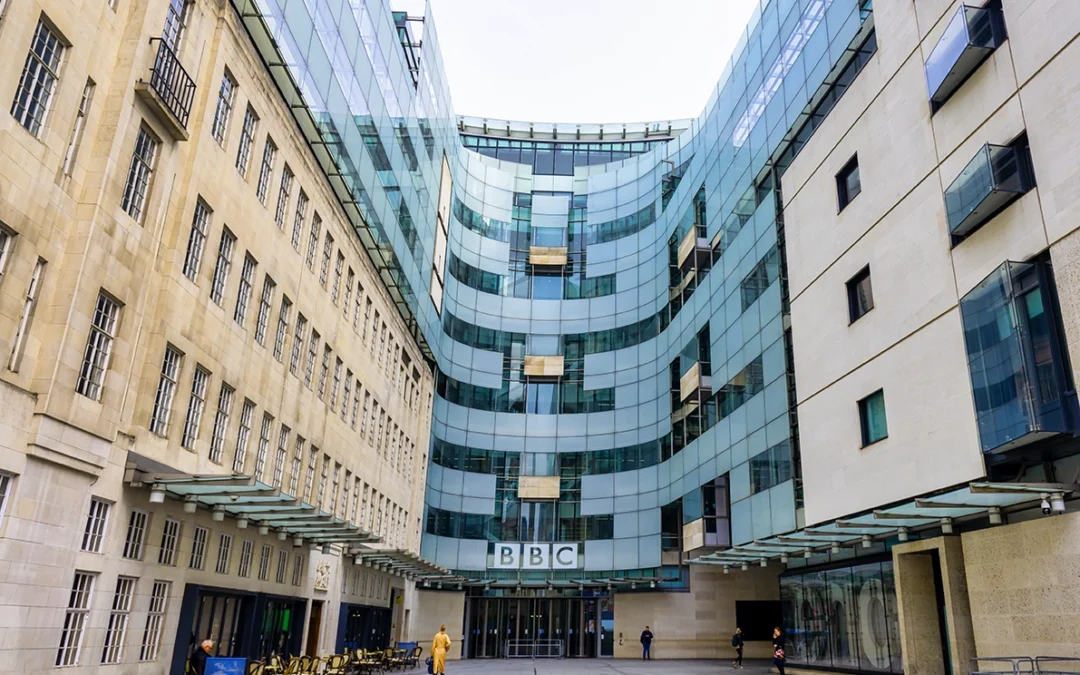
Speaking at Global Media Security and Innovation 2026 event organised by the BBC World Service, BBC Director-General Tim Davie emphasised the World Service’s growing importance in times of insecurity and instability and urged the UK government to back the World Service.

BBC News Global Director Fiona Crack pressed the case for innovation, investment, and urgent intervention in the distribution space.

Both speeches can be read here: Tim-Davie&Fiona-Crack-GlobalMediaSecuritySpeeches.

Greeting the participants at the event, which focused on overcoming barriers to open and free media and discussed new ways of providing reliable content to global audiences, Tim Davie said:

“Media security means two things: the ability to produce journalism and the means to deliver it. For BBC journalism to thrive, and to be useful for people around the world, they need to have access to it. There is little point in producing world class journalism if people cannot read, see and hear it.

“This conversation comes at a critical time for the BBC. We’re in the middle of a discussion about the BBC’s future as part of the process of reviewing our Royal Charter. The BBC World Service is front and centre of that debate. Today it remains the most trusted international news provider around the world. Across 43 languages, it’s thanks to the World Service that BBC News reaches 418 million people on average every week.

“I have often talked about the growing importance of the BBC World Service in times of insecurity and instability. People in all corners of the globe depend increasingly on our ability to reach them with independent, impartial, accurate journalism they can trust. So as part of Charter review, we’re making the case for a strong BBC World Service that’s fit for the future.

“In the meantime, the current funding arrangement with the Foreign Office runs out at the end of March. Seven weeks today. We’re waiting to hear the outcome of the settlement. But while we do, other Western news organisations are cutting their international reporting teams, disinformation is flooding the digital sphere at an incredible speed, and state-backed media firms are using AI to promote propaganda.

“We have no time to lose. As a country, we face big decisions about our role in the international arena.

“I urge the government to back the World Service, to act decisively and confidently about what we can achieve in this space, and to act soon… So that amid all the global uncertainty, audiences can continue to rely on our journalism – the very best the UK has to offer.”

Fiona Crack, Global Director, BBC News said:

“If trusted news is the frontline in a war against disinformation, we are face to face with the enemy. And to be fit for this fight, we need to innovate and invest in our technological armour. Distribution and media security is an area that has always been a strength for the UK; we are building on a history of integrity and trust. But the world order is rapidly changing.”

She added: “How we reach our audiences is under considerable strain. Instances of hostile interference are climbing. The BBC is blocked, jammed, throttled or subject to shutdowns in an escalating number of countries. Only last month, when confronted with civil unrest, the Iranian regime enforced a total internet blackout. This is a problem on the rise.”

She concluded by saying: It is our greatest duty to serve those in greatest need. As the largest and most trusted international news provider, the BBC World Service can play a unique role in helping to bring media security to countries and populations globally – but we can only do so with an industry-wide response and the right long-term investment in circumvention. Let me be clear, creating enhanced routes to audiences is no longer a desirable outcome. It is business critical. The risks of not doing so are far too great.”

NHK WORLD-JAPAN’s focus in February is Hokkaido

NHK WORLD-JAPAN’s focus in February is Hokkaido

NHK WORLD-JAPAN’s focus in February is Hokkaido

Focus on Hokkaido

Trouble in Paradise: Okhotsk Encounters Climate Change

February 28 Sat.
1:10/7:10/13:10/19:10 (UTC)

Disruptions to Shiretoko Peninsula’s ecosystem are altering its balance. Sea ice is diminishing, as are trout and salmon. Ultra-high-resolution video reveals the changes.

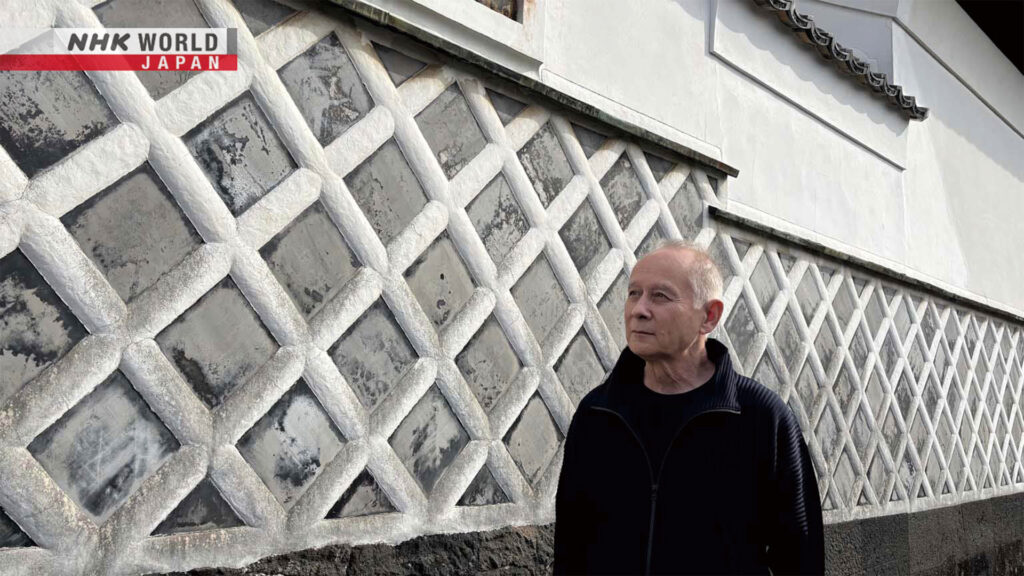
The Imperial Palace

February 21 Sat.
1:10/7:10/13:10/19:10 (UTC)

The Imperial Palace of Japan showcases peerless artworks, craftsmanship, and a tradition of thoughtful hospitality. Join us on a journey into a world of supreme aesthetic elegance.

Asia Insight

Fridays
0:30/5:30/10:30/15:30/21:30(UTC)

Dynamic Asia. Stories behind the world’s largest continent as it faces political, economic, cultural and technological change.


BBC launches emergency lifeline radio programme for Iran

BBC launches emergency lifeline radio programme for Iran

BBC launches emergency lifeline radio programme for Iran

BBC World Service has launched a temporary emergency lifeline radio programme for Iran in response to the ongoing turmoil in the country, and the unprecedented crackdown on protests.  

To complement the existing BBC News Persian video and digital services, the radio programme will be available on mediumwave and shortwave across Iran to increase the population’s access to news and information. To broaden its offer and availability of programming, the BBC World Service has also made some of its TV content available on mediumwave radio. 

Since 8 January, the Iranian people have been subject to an internet blackout. Prior to this, BBC News Persian’s digital services saw their biggest reach in a year with their platforms reaching more than 33 million people. 

The short-term programme will cover the latest news and developments in Iran and will place events inside the country within their wider regional and international context. It will feature voices from inside Iran alongside clear, informed analysis of the most recent political, social, and economic developments shaping the situation in the country.

The programme will air daily for 30 minutes across medium and shortwave frequencies from 16:30 GMT / 20:00 Iran Standard Time. The temporary programme has been granted resource from existing funds until the end of March 2026. 

Fiona Crack, Interim Global Director, BBC News, says: “A key role of the BBC World Service is to step up in times of crisis to provide news and information for our audiences in greatest need. BBC News Persian reaches one in four adults in Iran, which is an astonishing feat considering their reporting is banned in the country. 

“The team have been essential in telling the urgent story of the Iranian people to audiences around the world, and our new radio programme will give the Iranian people more ways to access independent and impartial news.”

Tarik Kafala, Interim Regional Director, Middle East and North Africa, says: “BBC News Persian have worked tirelessly to deliver journalism throughout this period of unrest as the demand for trusted news has soared in Iran. The teams have supplied extended TV hours in Iran and an increased offer on digital platforms for the Iranian people. They have reported for UK audiences across bulletins, live pages and on forensic journalism with BBC Verify.” 

The BBC World Service has a history of launching emergency services in times of crisis. In April 2025, BBC News Burmese started providing audio and video content on a satellite channel in the aftermath of Myanmar earthquake. 

In April 2024, following the fall of the Assad regime, the BBC World Service set up an enhanced audio channel on FM and mediumwave for the people of Syria. This follows the emergency radio service for Gaza in November 2024 and for Sudan in May 2023 amid conflict.  

 In February 2022, the BBC News Ukraine service extended TV bulletins following the invasion of the country.

Where to find the programme – 

The live programme will be available at 16:30 GMT (20:00 Iran Time) on 702kHz medium wave and 9465kHz short wave

The programme will be repeated at 18:00 GMT (21:30 Iran time) on 702kHz mediumwave and 5395kHz shortwave

A visualised version of the programme will be broadcast on BBC Persian TV at 18:00 GMT (21:30 Iran time)


BritAsia TV launches on Freeview UK via Channelbox

BritAsia TV launches on Freeview UK via Channelbox

BritAsia TV launches on Freeview UK via Channelbox

BritAsia TV, the home of British Asian culture, has launched on the streaming TV service Channelbox, available on Freeview channel 271.

BritAsia TV is a prominent British media network dedicated to promoting British Asian culture, music, entertainment, lifestyle and community programming. The channel provides a leading platform for British Asian artists, musicians, actors and content creators to showcase their talents to a wide audience. Since its inception, BritAsia TV has become known for its diverse lineup of music videos, talk shows, documentaries, news, live events and cultural programming. 

Channelbox is a free-to-air, multi-channel OTT platform available on connected Freeview channel 271 and through Channelbox-enabled television sets connected to both an aerial and the internet. The platform offers a unique interface that delivers each channel as the equivalent of a dedicated Freeview service and supports FAST channel monetisation across more than 70 channels, bringing a broad range of content to UK audiences.

BritAsia TV’s programming spans the latest South Asian and UK music trends, exclusive interviews with rising talent and established stars, news, cultural events, and community features. The channel’s digital presence includes strong engagement through its website and social media, where it maintains a large and active audience. 

Tanya Kronfli, Head of Business Development at Channelbox, commented:
“Channelbox is committed to celebrating diversity in genre, culture and language. We are delighted to welcome BritAsia TV, the home of British Asian culture, to our platform. Their vibrant mix of music, entertainment and community programming enhances our Freeview offering and strengthens our connection with multicultural audiences across the UK.”

BritAsia TV on Channelbox via Freeview UK is now available for viewers across the country to enjoy.