Radio-Canada and RTS partner up to share podcast content

Radio-Canada and RTS partner up to share podcast content

Radio-Canada and RTS partner up to share podcast content

Radio-Canada and RTS (Radio Télévision Suisse) are teaming up to offer listeners the best in French-language podcasts as they broaden their audiences on both sides of the Atlantic. RTS becomes the latest broadcaster to join Radio-Canada’s circle of European partners alongside Radio France and RTBF, all members of Médias Francophones Publics (MFP). Radio-Canada OHdio, a leading player in the Canadian digital audio market for the past five years, is now French-speaking Canada’s second most popular podcast platform. For its part, RTS has been offering its audio content on demand for over two decades, and expanded into native podcasts six years ago. As of today, Radio-Canada OHdio will begin streaming three RTS productions: Faces NordVoyage au Gouinistan and Nuit blanche. In parallel, the Radio-Canada OHdio podcasts RésistanceAnna Caritas and L’incroyable histoire will be promoted on RTS. The two public broadcasters are also collaborating on an ambitious RTS-led podcast series about the Order of the Solar Temple, a cult that used to be active in Switzerland and Canada. This exclusive content will premiere on Radio-Canada OHdio and RTS in the fall.

“This partnership with RTS allows us to enrich our content offering while giving us the opportunity to showcase our top audio creators and productions in the European market. It reflects our commitment to bringing a wide range of high-quality content to our audiences and taking Canada to the world. It also marks the continuation of a decades-long collaboration between public broadcasters for the benefit of French speakers around the globe,” said Caroline Jamet, Radio-Canada’s Executive Director of Radio, Audio and Greater Montreal.

“Podcasts are windows into new worlds, often inner ones, made up of lived experiences and emotions. Perhaps that’s what travels best. We’re therefore excited to share with overseas listeners these unique yet universal stories that resonate well beyond our borders. That’s also what the Francophonie is all about — connecting with each other through our common language,” said Véronique Marti, head of RTS’s factual audio unit.

FOR STREAMING ON RADIO-CANADA OHDIO

Faces Nord

Set off on an extraordinary mountain adventure with Maya Chollet, who wants to try and climb the north faces of the Eiger, Matterhorn and Grandes Jorasses: three legendary north faces, formerly known as “the last three problems of the Alps.”

Producer: Didier Rossat
An RTS production

Voyage au Gouinistan

Join reporters Aurélie Cuttat and Christine Gonzalez on their travels through “Lesboland,” a journey filled with engaging conversations that provide insights into lesbian culture.

Producer: Marc Frochaux
An RTS production

Nuit blanche

This podcast looks at some of humanity’s strangest and most mysterious stories. From cursed places and unexplained disappearances, to unsolved murders, enigmatic characters and offbeat news stories, Nuit blanche invites listeners to take a deep dive into the heart of disturbing yet fascinating tales weaving together archive material, personal accounts and investigative reporting. Serving as your guides and storytellers behind the mic are hosts Anne Flament and Mickael Marquet. A selection of eight episodes will be available on Radio-Canada OHdio.

Producer: Franck Pourprix
An RTS production 


CATCH THEM ON RTS 

Résistance

Hip-hop artist Webster and his father, Cheikh Ndiaye, a former poli-sci professor, share a passion for the history of slavery. Together, they trace the journey of Shadrach Minkins, a man born into slavery in Norfolk, Virginia, who ran away to find his way to freedom. His path eventually led him to Montreal in 1851. As we follow in his footsteps, we experience not only the resistance of a hunted man but also the tumultuous history of slavery in the United States. The father/son duo have made it their mission to pass on this story that’s not just about America, but also Quebec and Canada.

Producer: Marie-France Abastado
A Radio-Canada production 

Anna Caritas : Le sacrilège

Marianne Roberts, a troubled teen with a mysterious past, returns to Anna Caritas College, triggering a series of bizarre events in the small town of Saint-Hector. One night, William Walker and his pals decide to hold a Ouija seance for kicks. After the gang inadvertently awakens a malevolent force, they have no choice but to seek help from the one person everyone tries to avoid at all costs — Marianne.

Producer: Sébastien Heppell
A Radio-Canada production

L’incroyable histoire

“What was life like in the old days?” Energetic historian Evelyne Ferron has the answer to this question that has fired the imagination of children down through the ages. Nothing in the history of our vast and fascinating world escapes her attention, including mummies, Vikings, the Atlantic crossing, Jacques Cartier’s arrival in North America and more.

Producers: Stéphanie Mignacca, Mathieu Beauchamp 
A Radio-Canada production 


Check out these and other popular podcasts on Radio-Canada OHdio and RTS.

USAGM budget request rises to meet growing global challenges

USAGM budget request rises to meet growing global challenges

USAGM budget request rises to meet growing global challenges

The President today released his Fiscal Year 2025 Budget Request, outlining $950.0 million for the U.S. Agency for Global Media (USAGM) to advance its mission to inform, engage, and connect people around the world in support of freedom and democracy – in an increasingly challenging global media landscape.

This budget request marks a 7.4 percent increase over FY 2023, and outlines new investments and initiatives to support two federal networks: Voice of America (VOA) and the Office of Cuba Broadcasting (OCB); five non-federal entities: Radio Free Europe/Radio Liberty (RFE/RL), Radio Free Asia (RFA), the Middle East Broadcasting Networks (MBN), Open Technology Fund (OTF); and a newly created non-federal entity which will incubate, test, and propagate new operating strategies to improve the agency’s service delivery, including a forthcoming Global News Service to launch in Mandarin, English and eventually more languages.

The FY 2025 budget request comes on the heels of growing attention to USAGM’s mission. Over the past decade, the total measured audience of USAGM’s five networks has more than doubled, with the Agency currently reaching 420 million people weekly in 63 languages and over 100 countries – often in some of the world’s most restrictive media environments. Amid rising global pressures, the USAGM networks’ combined measured audience is the largest of any publicly-funded international news organization in the world, and its networks’ credibility with audiences remains significantly higher than that of state-sponsored media competitors.

“Communities around the world are being inundated with lies, half-truths, and conspiracy theories, leading to misunderstanding, conflict, and even war. America’s adversaries spend billions of dollars to control the flow of information in critical markets each year, and their strategies – which largely blame the United States, the West, and democratic institutions for all global ills – are gaining traction,” said USAGM CEO Amanda Bennett (pictured). “There has not been such an urgent need to provide accurate news and information to a world awash in propaganda since WWII. Fortunately, the President’s FY 2025 budget request puts us in a strong position to counter these challenges by investing in the most impactful aspects of our operation.”

USAGM’s FY 2025 Congressional Budget Justification provides greater detail about the initiatives USAGM will undertake in the next fiscal year, including priority efforts to increase network reach, counter malign influence of the People’s Republic of China (PRC), Russia, Iran, and others, bolster journalist safety and achieve cost efficiencies – all while positioning the agency for the challenges ahead.

USAGM also released an updated version of its 2022-2026 Strategic Plan today. Developed with performance data and feedback from key stakeholders – including the newly confirmed International Broadcasting Advisory Board – the updated strategic plan commits the Agency to continue to reach new audiences, earning credibility with impactful and compelling content, and modernizing its production and broadcasting capabilities to compete in a rapidly evolving media environment.

[Source: USAGM press release]

UN Fact-Finding Mission on Iran reports on the threats faced by BBC News Persian journalists and their family members

UN Fact-Finding Mission on Iran reports on the threats faced by BBC News Persian journalists and their family members

UN Fact-Finding Mission on Iran reports on the threats faced by BBC News Persian journalists and their family members

The report published today by the UN Human Rights Council’s Independent International Fact-Finding Mission on the Islamic Republic of Iran raises concern that the Iranian authorities “harassed, threatened and intimidated journalists and other media employees working outside the country”, including those working at BBC News Persian, and for including BBC News Persian on a list of sanctioned organisations.

The Fact-Finding Mission was set up by the UN Human Rights Council on 24 November 2022, to investigate “the deteriorating situation of human rights in Iran, especially with respect to women and children” and human-rights violations in Iran related to the protests that began on 16 September 2022. The BBC World Service filed a submission highlighting Iran’s harassment of BBC News Persian journalists and their families in Iran and has been engaging with the UN Fact-Finding Mission in relation to its mandate. 

Focusing on Iran’s treatment of journalists working for Persian-language media outside Iran, the report says: 

“The mission has further established that the State authorities harassed, threatened and intimidated journalists and other media employees working outside the country, including those working at the BBC Persian service, Iran International television, Voice of America, IranWire and Deutsche Welle. The Iranian authorities summoned, threatened and in some cases arrested, detained and charged the family members of those journalists and media workers in an apparent effort to exert pressure on them and prevent them from reporting on the country. On 19 October 2022, the Ministry of Foreign Affairs sanctioned the BBC Persian service and Iran International television, and imposed asset freezes on their staff. Journalists also received serious threats, including to their lives and personal safety, leading to the involvement of the police in some countries. Journalists, in particular women journalists, faced heightened online vilification, harassment and attacks.” 

Recently the BBC became aware, through the publication of leaked documents, that a number of current and former BBC News Persian journalists have reportedly been secretly convicted in absentia in Iran of the crime of “propaganda against the Islamic Republic”.  

This has obvious, significant implications for these individuals, and earlier today, BBC Director-General, Tim Davie, said: 

“These developments add a new, even more sinister dimension to the threats and harassment our BBC Persian journalists have been exposed to for decades as punishment for doing their job. Instead of taking heed of the repeated calls from the UN and other international organisations to stop the horrendous multi-faceted harassment of Persian-language journalists, the Iranian authorities have been devising even more means of persecution using the Iranian judiciary. The Iranian authorities must stop harassing our journalists and their families.”

Since 2017, the BBC World Service has filed a number of UN complaints over the treatment of BBC News Persian staff and their families, represented by Caoilfhionn Gallagher KC and Jennifer Robinson at Doughty Street Chambers, and supported by the National Union of Journalists (NUJ) and the International Federation of Journalists (IFJ).

Michelle Stanistreet, NUJ General Secretary, said: 

“Iran’s all-out war on Iranian journalists abroad is a cowardly attempt to hide the truth by silencing its conveyors. For more than a decade, NUJ members and their families have been subjected to increasingly more harassment and threats, be it by Iranian authorities abusing legal system of the country or even by hiring criminals to directly target journalists on UK soil. This must be stopped now.  Every country and international organisation that believes in democracy or the rule of law needs to call Iran out. Failure to confront the Islamic Republic of Iran would be a green light to other authoritarian regimes to follow suit.”

Counsel for the BBC News Persian service, Caoilfhionn Gallagher KC and Jennifer Robinson, said:

“Iran has long attempted to silence journalists within its borders, but as the UN Fact-Finding Mission on Iran makes clear, Iran is now resorting to ever more extreme measures to try to silence journalists reporting on Iran, wherever in the world they may be. These drastic and dangerous tactics come at a time when independent reporting about Iran is needed more than ever – and particularly after the protests following the death of Mahsa Amini. The UN Fact-Finding Mission has today acknowledged and highlighted the harassment that BBC News Persian journalists face simply for doing their jobs. Journalism is not a crime, and Iran must be held to account for treating it as one.”

In a recent survey conducted internally among the BBC News Persian staff, half of the respondents said they had received online threats or been harassed online for working for the BBC. The work of the BBC journalists continues to cause harassment of their families or friends, with over 60% of the respondents having been harassed, threatened or questioned in Iran.  Nearly 70% said that they hadn’t been able to say goodbye to one or both their parents before they passed away in Iran. 

AIB and many major news organisations express solidarity with Gaza journalists

AIB and many major news organisations express solidarity with Gaza journalists

AIB and many major news organisations express solidarity with Gaza journalists

Dozens of news organisation leaders from across the world, including the Association for International Broadcasting, Associated Press, Agence France-Presse, and Reuters, have joined an open letter (full text below) affirming their solidarity with journalists reporting in Gaza.

The letter, coordinated by the Committee to Protect Journalists (CPJ) with the support of the World Association of News Publishers (WAN-IFRA), demonstrates strong and unified support for colleagues reporting from Gaza in the deadliest conflict for journalists ever documented by CPJ.

“For nearly five months, journalists and media workers in Gaza – overwhelmingly, the sole source of on-the-ground reporting from within the Palestinian territory – have been working in unprecedented conditions,” the letter reads. “…These journalists – on whom the international news media and the international community rely for information about the situation inside Gaza – continue to report despite grave personal risk.”

The letter goes on to remind the international community that journalists are civilians and authorities must protect journalists as noncombatants according to international law.

A total of at least 94 journalists have been killed in the Israel-Gaza war; the majority of them (89) were Palestinians killed by the Israeli military.

The signatories include outlets from Estonia, France, Germany, Ireland, Israel, India, Japan, Jordan, Kenya, Lebanon, Mexico, Pakistan, the Philippines, Qatar, South Africa, the United Kingdom, and the United States.

Additional signatories are welcome. Please contact letter@cpj.org to add your news organisation, including name of signatory, title, and name of organisation.

Open letter on journalists in Gaza

We, the undersigned, stand united with Palestinian journalists in their call for safety, protection, and the freedom to report.

For nearly five months, journalists and media workers in Gaza – overwhelmingly, the sole source of on-the-ground reporting from within the Palestinian territory – have been working in unprecedented conditions: at least 89 have been killed in the war, according to the Committee to Protect Journalists, more journalists than have ever been killed in a single country over an entire year.

These journalists – on whom the international news media and the international community rely  for information about the situation inside Gaza – continue to report despite grave personal risk. They continue despite the loss of family, friends, and colleagues, the destruction of homes and offices, constant displacement, communications blackouts, and shortages of food and fuel.

Journalists are civilians and Israeli authorities must protect journalists as noncombatants according to international law. Those responsible for any violations of that longstanding protection should be held accountable. Attacks on journalists are also attacks on truth. We commit to championing the safety of journalists in Gaza, which is fundamental for the protection of press freedom everywhere.

Signatories 

  1. Kim Godwin, President, ABC NEWS
  2. Phil Chetwynd, Global News Director, Agence France-Presse
  3. Hossam Kanafani, Editor in Chief, Al-Araby Al-Jadeed
  4. Nora Younis, Founder and Editor-in-Chief, Al-Manassa, Egypt
  5. Alaa al Ghatrevy, Editor in Chief, Al Masry Al Youm, Egypt
  6. Ghassan Hajjar, Managing Editor, An-Nahar, Lebanon
  7. Rawan Damen, Director General, ARIJ (Arab Reporters for Investigative Journalism)
  8. Shiro Nakamura, President, The Asahi Shimbun, Japan
  9. Nicole Dungca, President, Asian American Journalists Association, United States
  10. Julie Pace, Executive Editor, Associated Press
  11. Simon Spanswick, Chief Executive, Association for International Broadcasters
  12. Deborah Turness, CEO, BBC News
  13. Hikmet Adal, Editor, Bianet, Turkey
  14.  Ingrid Ciprián-Matthews, President, CBS News
  15. Mark Thompson, Chairman and CEO, CNN Worldwide
  16. Daoud Kuttab, Director General, Community Media Network, Jordan
  17. Branko Brkic, Editor in Chief, Daily Maverick, South Africa
  18. Alia Ibrahim, Co-founder and CEO, Daraj, Lebanon
  19. Dirk Kurbjuweit, Editor in Chief, Der Spiegel, Germany
  20. Barbara Junge, Editor in Chief, Die Tageszeitung, Germany
  21. Ulrike Winkelmann, Editor in Chief, Die Tageszeitung, Germany
  22. Khaled Elbalshy, President, Egyptian Journalists Syndicate
  23. Mohamed Saad Abdel Hafiz, Egyptian Journalists Syndicate / Managing Editor, Al-Shorouk, Egypt
  24. Patrick Mayoyo, Director Editorial Innovations, Eyewitness Africa, Kenya
  25. Roula Khalaf, Editor, Financial Times, UK
  26. Giuseppe Di Maula, Editor in Chief, FotosIntensi, Italy
  27. Laurie Hays, Editor in Chief/CEO, The Fuller Project
  28. Katharine Viner, Editor in Chief, The Guardian
  29. Aluf Benn, Editor in Chief, Haaretz
  30. Geordie Grieg, Editor in Chief, The Independent
  31. Sandy Prieto-Romualdez, Chairperson, Inquirer Group of Companies, Philippines
  32. Deirdre Veldon, Managing Director, former Deputy Editor, The Irish Times, Ireland
  33. Rachel Corp, Chief Executive, ITN, UK
  34. Andrew Dagnell, Editor, ITV News, UK
  35. Amir Rotem, Editor in Chief, Local Call
  36. Terry Tang, Interim Executive Editor, Los Angeles Times
  37. Mohammed Al-Fazari, CEO and Editor in Chief, Muwatin Media Network
  38. Rameeza Nizami, Managing Director, Nawaiwaqt Group, Pakistan
  39. Pamella Sittoni, Group Managing Editor, Nation Media Group, Kenya
  40. Yvette Cabrera, President, National Association of Hispanic Journalists, United States
  41. Rebecca Blumenstein, President, Editorial, NBC News
  42. David Remnick, Editor, The New Yorker
  43. AG Sulzberger, Publisher, The New York Times
  44. Edith Chapin, SVP & Editor in Chief, NPR, United States
  45. Martha Ramos, President, World Editors Forum / Chief Editorial Officer, Organización Editorial Mexicana, Mexico
  46. Amalie Kestler, Managing Editor in Chief, Politiken, Denmark
  47. Hans Väre, Editor in Chief, Postimees Grupp, Estonia
  48. Alan Rusbridger, Editor, Prospect magazine, UK
  49. Lara Bitar, Editor in Chief, The Public Source, Lebanon
  50. Ritu Kapur, CEO, The Quint, India
  51. Maria Ressa, CEO and Co-Founder, Rappler, Philippines
  52. Alessandra Galloni, Editor in Chief, Reuters, UK
  53. Ayman Mhanna, Executive Director, Samir Kassir Foundation, Lebanon
  54. Kamal Siriwardana, Editor in Chief, SMN24Media, Sri Lanka
  55. Nwabisa Makunga, Editor in Chief, The Sowetan, South Africa
  56. Esther Ng, Chief Content Officer, Star Media Group Berhad, Malaysia
  57. Wolfgang Krach, Editor in Chief, Süddeutsche Zeitung, Germany
  58. Wafaa Haidar, Director, Tele Liban, Lebanon
  59. Anne Marie Owens, Editor in Chief, Toronto Star, Canada
  60. Lyas Hallas, Co-founder/CEO, Twala, Algeria
  61. Fernando Belzunce, Editorial Director, Vocento, Spain
  62. Assaad Maroun, Chairman / General Manager, Voice of Lebanon
  63. Sally Buzbee, Executive Editor, The Washington Post
  64. Vincent Peyrègne, CEO, World Association of News Publishers (WAN-IFRA)
  65. Ghousoon Bisharat, Editor in Chief, +972 Magazine
  66. Nancy Prager-Kamel, Chairperson, Association of Foreign Press Correspondents, United States
  67. Julia Montfort, Editor in Chief, Guiti News, France
  68. Elena Cosentino, Director, International News Safety Institute, UK
  69. Ebele Okobi, CEO, The New Humanitarian
  70. Laurent Richard, Founder and Executive Founder, Forbidden Stories, France
  71. Marc Saikali, Chairman, Ici Beyrouth and This is Beirut, Lebanon
  72. Maha Al Bahnasawi, Managing Director, ONA Media Services, Egypt
NHK WORLD-JAPAN’s Monthly Focus: Post-disaster Transition

NHK WORLD-JAPAN’s Monthly Focus: Post-disaster Transition

NHK WORLD-JAPAN’s Monthly Focus: Post-disaster Transition

Tales of Post-disaster Transition

Seasons of Change: The Abukuma Romantic Highway after Disaster

March 24 Sun. 
0:10/6:10/12:10/18:10 (UTC)

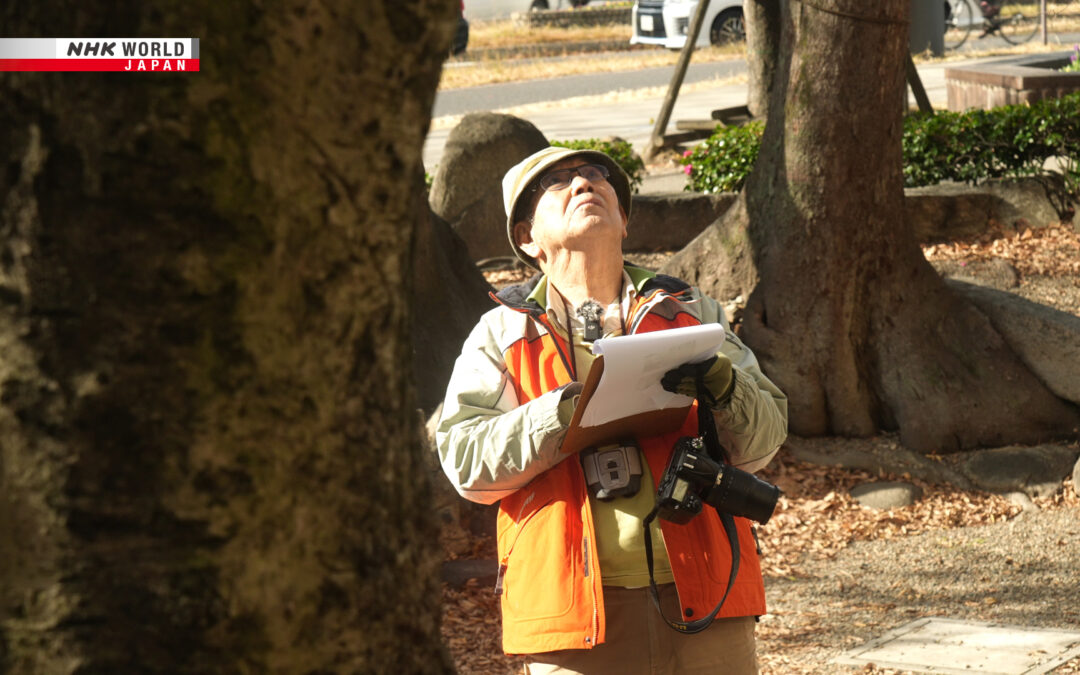
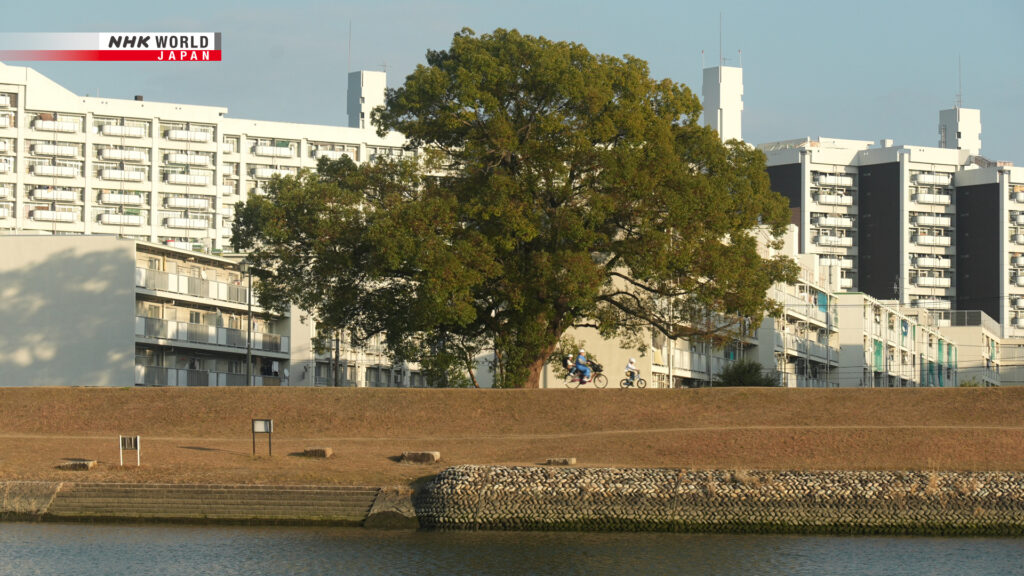
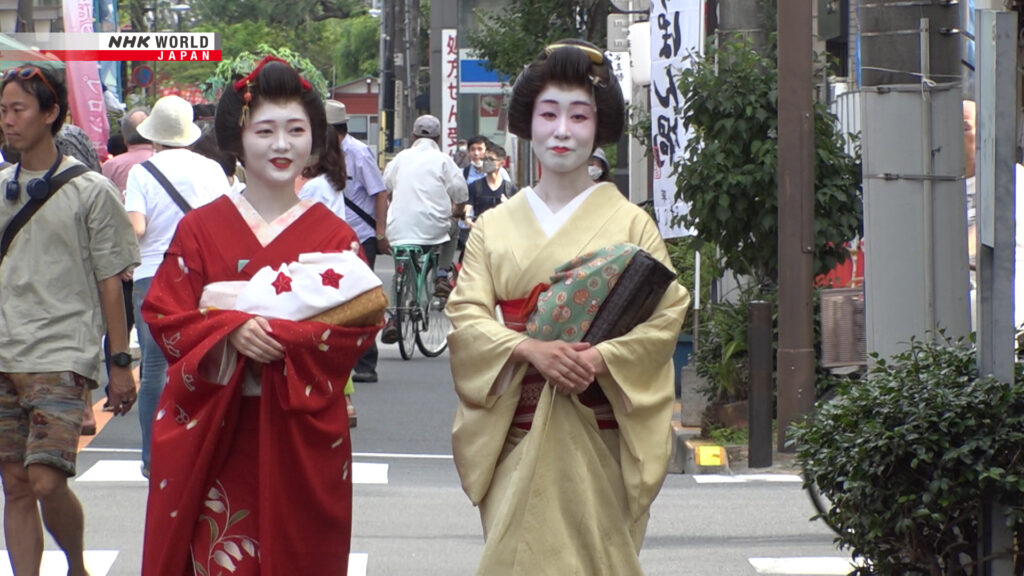
National Route 399 winds past fields and forests. A few dozen km away, though, is the site of the 2011 nuclear accident. Video and photos reflect the reality of the Romantic Highway, now and then. 

Aso Jinja: A Shinto Shrine Rises from the Rubble 

March 31 Sun.
0:10/6:10/12:10/18:10 (UTC)

This shrine in Kumamoto Pref. was razed in the 2016 earthquake. The seven-year restoration fused traditional craftsmanship with the latest technology.

Journeys in Japan

Tuesdays 
0:30/5:30/10:30/15:30/21:30 (UTC)

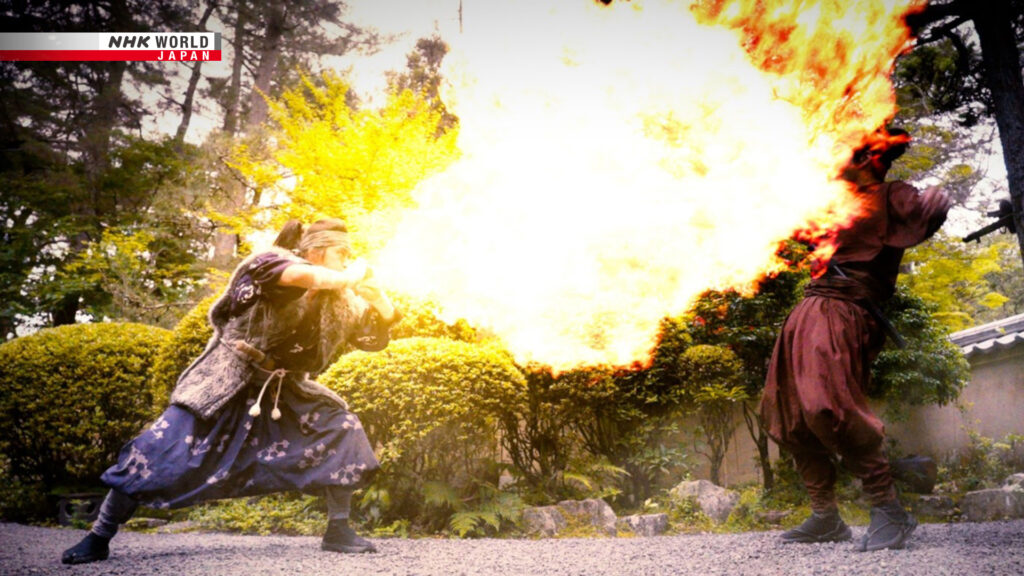
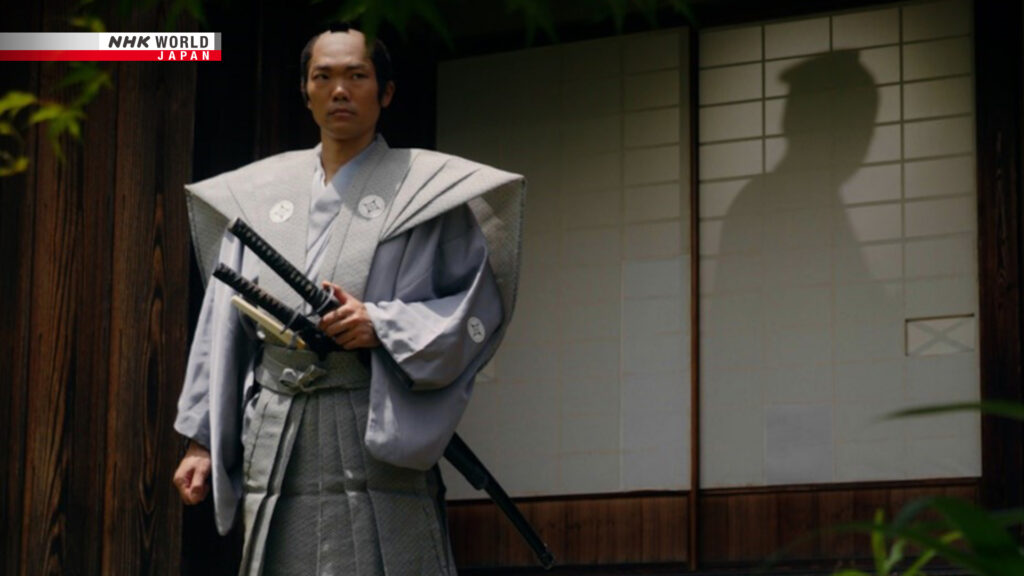
Explore a different side of Japan. Meet the locals and discover traditions and cultures not usually found in guidebooks!


MBC GROUP’s Shahid named “Best Digital Platform in Media” by Saudi Media Forum 3

MBC GROUP’s Shahid named “Best Digital Platform in Media” by Saudi Media Forum 3

MBC GROUP’s Shahid named “Best Digital Platform in Media” by Saudi Media Forum 3

Shahid, the world’s leading Arabic streaming platform by MBC GROUP, has been named 2024’s “Best Digital Platform in Media” at the third edition of the Saudi Media Forum.

Part of the forum’s Digital Media category, the Best Digital Platform in Media award is open to both websites and mobile applications that excel in delivering content across a diverse spectrum of media.

Shahid is the premier destination for top-tier original productions from the Arab world, offering an expansive library of exclusive movies, premieres, live TV channels, sports, children’s content, and international offerings. Shahid streams a rich mix of free content through its Video on Demand (VoD) service and an enhanced viewing experience with exclusive content available via Subscription Video on Demand (SVoD).

The platform’s diverse programming includes Shahid Originals, Shahid Premieres, and the latest Arabic movies fresh off the box office. It also offers access to MBC GROUP’s live TV channels in true HD quality alongside more than 30 Free Ad-Supported Streaming TV (FAST) channels.

MBC GROUP is the leading and largest media organisation in the Middle East and North Africa (MENA).

Under the patronage of the Minister of Media, Salman bin Yousef Al-Dosari, the third Saudi Media Forum took place last week: “Media in a World Taking Shape.” Organised by the Saudi Broadcasting Authority (SBA) in collaboration with the Saudi Journalists Association, the Forum took place in Riyadh over three days, engaging more than 2,000 prominent media professionals, academics, experts, and specialists, both locally and internationally, as well as 80 media entities, according to the Saudi Press Agency.

[Source: MBC press release]