BBC publishes Net Zero Transition Plan

BBC publishes Net Zero Transition Plan

BBC publishes Net Zero Transition Plan

The BBC has published its first Climate Transition Plan, detailing how it intends to be Net Zero by 2050. This forms part of the Corporation’s commitment to building a sustainable BBC and wider media industry.

The BBC has been making significant progress towards its science-based targets, aligning a commitment to world-renowned natural history programming with ambitious and tangible actions off-screen.

From reducing emissions on acclaimed drama Blue Lights by replacing diesel fuel with HVO in generators and production trucks, to replacing refrigeration chillers and gas-fired boilers with heat pumps in its offices, the BBC is committed to driving decarbonisation across the BBC Group.

Its first Transition Plan, developed in line with the Transition Plan Taskforce (TPT) Disclosure Framework, sets out the BBC’s Ambition, Action and Accountability in reaching Net Zero, including:

  • Reducing, optimising and innovating its energy to low-carbon solutions;
  • Developing the skills and competencies across the business to drive action within operations, editorial and content production teams, and;
  • Playing an important role in contributing to the industry and economy-wide transition.

The BBC recognises that climate change and bio-diversity loss are real, serious and urgent, and this plan details the strategy it is putting in place to reduce its environmental impact.

Earlier this year, the globally-respected Science-Based Targets initiative (SBTi) approved the BBC’s Long-Term Targets to reduce all emissions by at least 90% by 2050, building on its existing Near-Term Targets to halve emissions by 2030.

This Transition Plan explains how the BBC will reach this target, and how Net Zero is one of the three pillars of the BBC’s Sustainability strategy, along with Nature Positive and People Positive.

These pillars underpin and shape the BBC’s climate ambitions for the future, aligned with the its mission to inform, educate and entertain all audiences, and the broadcaster’s Value for All strategy.

The BBC expects to update its Transition Plan and will continue to review its approach to ensure that it always meets the highest standards in sustainability practice, reporting and disclosures.

Danielle Mulder, Director of Sustainability, says: “This Transition Plan will support the BBC’s journey to Net Zero and is a hugely important milestone as we commit to a low-carbon future.

“Given the importance of climate change and biodiversity loss, we know our commitment to Net Zero matters to our staff, our suppliers and our audiences. We invite everyone we work with to get involved as we reduce our environmental impact.”

The BBC, as a member of the Association for International Broadcasting, takes part in the AIB Sustainability working group that brings together AIB member organisations across the world to share intelligence and experience on sustainability issues across their whole businesses.

NHK WORLD-JAPAN programme focus in February

NHK WORLD-JAPAN programme focus in February

NHK WORLD-JAPAN programme focus in February

Sharpening Up Japan’s Global Image

The Subculture Chronicles
Episode 1 Japonism

Feb 22 Sat.
1:10/7:10/13:10/19:10 (UTC)

In what ways has the notion of “Japan” come to be recognized in the West, evolve through various interpretations, and leave a lasting impact? This episode traces the history behind the spread of Japan’s image through films, manga,?subcultures, and societal trends. From Yasujiro Ozu, Kenji Mizoguchi, and Shohei Imamura to Super Mario and kawaii fashion, we delve into the essence that lies between understanding and misunderstanding. 

KABUKI SPECIAL
Japanese Swords in Kabuki

Feb 23 Sun.
1:10/7:10/13:10/19:10 (UTC)

Swords in Kabuki plays reveal the fear and reverence the blades inspire in Japanese people. The program shows the spiritual and cultural impact of these weapons and their stories. 

Documentary 360
Blind Spots Threaten Climate Change Action

Feb 16 Sun.
0:10/6:10/12:10/18:10 (UTC)

Investigations suggest climate change may be worse than estimated, and the beneficial effect of responses may be overstated. This report probes what action plans have overlooked. 

CYCLE AROUND JAPAN

Saturdays
2:10/9:10/17:10/20:10 (UTC)

Come ride with us! Bicycle through the scenery of Japan, stay with locals and discover hidden traditions in a Japan you didn’t know existed.


BBC protests “foreign agent” designation of two of its journalists

BBC protests “foreign agent” designation of two of its journalists

BBC protests “foreign agent” designation of two of its journalists

The BBC has said that it strongly rejects the decision by the Russian authorities to designate Ilya Abishev and Elizaveta Fokht as “foreign agents”. BBC News Russian journalists have been singled out, following earlier designations of Ilya Barabanov, Anastasia Lotareva, Andrey Kozenko, and Olga Ivshina.

BBC News Global Director and BBC Deputy CEO, Jonathan Munro, says: “It has now become a routine exercise for the Russian authorities to add BBC News Russian journalists to their list of ‘foreign agents’. The BBC wholly condemns this ongoing attempt to intimidate and silence our journalists. Aimed at having a disruptive and damaging effect, these arbitrary designations can’t stop our journalists doing their jobs. Journalism is not a crime, and our reporters will continue serving our Russian-speaking audiences just as they have done for almost 80 years: independently, fairly, and fearlessly. We are proud of all our journalists. We will challenge these actions by the Russian authorities in the courts. These journalists have our total support.”

Part of BBC World Service, BBC News Russian is a key provider of impartial and independent news to the Russian-speaking world, reaching its audiences across a range of digital platforms.

BBC World Service sets out savings plan for the year ahead

BBC World Service sets out savings plan for the year ahead

BBC World Service sets out savings plan for the year ahead

BBC World Service makes operational changes in order to meet £6m worth of savings requirements with around 130 roles closing

The BBC World Service has announced that it will be making a series of changes in order to meet savings requirements for the year ahead.

Despite the government providing a what the BBC says is a welcome uplift in the grant-in-aid funding for the World Service, previous freezes on the licence fee, global inflation, and the need for ongoing digital and technological upkeep have meant savings are necessary.

The BBC World Service is also operating in a highly competitive global media environment with international news providers investing billions in state-backed media that sees increased competition for staff, platforms and frequencies, and audiences.

In total, the savings needed for the next financial year are around £6m and will largely be met by the closure of posts with a net reduction of around 130 roles.

The BBC World Service’s commitment to providing journalism of the highest quality across its 42 language services is undiminished. It says that it will continue to counter disinformation, provide emergency services in times of crisis and report from all corners of the globe.

The operational changes will be in line with the BBC’s broader digital first strategy, ensuring our services are fit for the future and reflecting changing audience behaviour.

Jonathan Munro, Global Director and Deputy CEO, BBC News, says:

“While the result of the latest grant-in-aid funding settlement means we are able to maintain all of our existing language services, we were clear it would not stave off difficult decisions in order to remain globally competitive and meet our savings requirements. These changes will ensure we operate effectively with the resource we have, creating the most impact for audiences internationally.”

Key changes will include; closing posts across the BBC World Service in the UK and internationally, closing roles in BBC Monitoring whilst also reinvesting in strategically important skills, making changes to the commissioning mix on World Service English, and reshaping some of our World Service Language teams to enhance the focus on digital output

​

USAGM networks reached record global audience in FY 2024

USAGM networks reached record global audience in FY 2024

USAGM networks reached record global audience in FY 2024

The U.S. Agency for Global Media’s networks reached a record 427 million weekly measured global audience in Fiscal Year 2024, as documented in the Agency Performance Report released today. The agency’s audience nearly doubled in the last decade, according to nationally representative surveys measuring the reach and impact of the five journalistic entities USAGM oversees: Voice of America (VOA), Radio Free Europe/Radio Liberty (RFE/RL), the Office of Cuba Broadcasting (Radio and Television Martí), Radio Free Asia (RFA), and the Middle East Broadcasting Networks (MBN).

This year’s findings underscore the success of USAGM’s networks in informing, engaging, and connecting audiences, even in the most challenging environments. Despite a recent military coup in Niger, VOA reaches more than 45% of adults in the country each week, in multiple languages. In a difficult year of conflict in the Middle East, MBN continues to provide a high-quality Arabic-language alternative to polarized local media, registering strong growth in Algeria and Jordan. In Latin America, VOA reaches 100 million people across the region in Spanish, by working in partnership with some of the most important local and regional media outlets.

RFE/RL and VOA together reach more than 34% of Ukrainian adults each week, almost 45% of Armenians, and a quarter of Serbians; countering Russian malign influence across Eastern Europe and Eurasia with truthful reporting.

Research with Russian- and Mandarin-speaking global diasporas, and on Martí audiences outside Cuba, found new international audiences for RFE/RL, RFA, VOA, and OCB outside the networks’ traditional target markets. This strategy for reaching audiences is important as China joins a growing list of restrictive markets, including North Korea and Eritrea, where USAGM is unable to measure audiences.

The new report emphasizes USAGM networks’ value to their audiences. USAGM research shows that well over 80% of each network’s audience reports finding their content trustworthy, and more than 65% say the networks’ reporting informs their opinions on important issues.

USAGM’s broadcast entities operate across a range of media platforms, innovating to reach audiences in the ways they prefer to consume news. The Open Technology Fund (OTF), a USAGM grantee, is a key driver of these efforts, providing circumvention technology to tens of millions of users in countries where the internet is censored, like Iran, Russia, China, Burma and more. Despite the challenges of censorship and the constantly shifting social media landscape, USAGM networks recorded 334 million video views each week for digital content in FY 2024.

“This remarkable audience growth shows just how impactful truthful, independent journalism is to so many people around the world,” said USAGM CEO Amanda Bennett. “Amid mounting global challenges to press freedom, our networks’ growing reach — and audiences’ increased trust in the content they provide — proves an enduring demand for the independent, objective reporting from our entities, and the tireless dedication of our journalists that goes into it.”

The USAGM FY 2024 Agency Performance Report, as well as the USAGM Audience and Impact Overview, which summarizes the agency’s key performance highlights for FY 2024, can be found here on usagm.gov.

[Source: USAGM press release]

Inauguration of Donald Trump – special programming on France 24

Inauguration of Donald Trump – special programming on France 24

Inauguration of Donald Trump – special programming on France 24

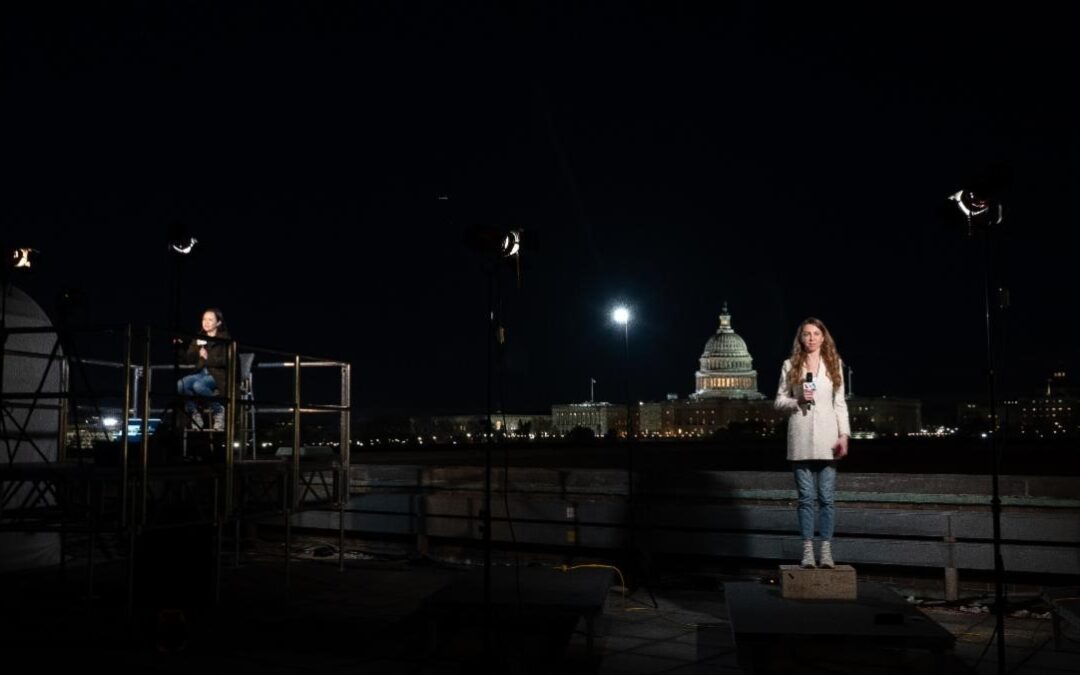
On January 20, on the occasion of Donald Trump’s inauguration as the 47th President of the United States, France 24’s four channels, in French, English, Arabic, and Spanish, will offer global coverage of the event for viewers and internet users worldwide, on air and digital platforms.

With the special envoys and correspondents, France 24 will deliver the ceremony’s highlights and give voice to the public, while reviewing with specialists the major issues that will mark the next four years of Donald Trump’s presidency.

France 24’s special envoys and correspondents, in all its languages, will deliver live reporting at the heart of Washington D.C.: Matthieu Mabin (FR), Elisabeth Allain (FR), Karim Yahiaoui (FR), Fraser Jackson (EN), Doug Herbert (EN), Catherine Norris Trent (EN), Ali Barada (AR), Wassim Alahmar (AR), Amar Al Hameedawi (AR) and Natalia Cabrera (ES).

Special editions on France 24 in English:

From 5pm* to 8pm*, presented by François Picard

From 8pm* to 11:30pm*, presented by Mark Owen

On the digital platforms

> France 24’s digital newsroom will offer exclusive content that highlights the voices of the African and Hispanic communities in Philadelphia and Pennsylvania. These reports explore their perspectives on Donald Trump’s return to the White House and can be followed on France 24’s digital platforms.

> France 24 proposes a special episode of Revisited ‘Four years after US Capitol riot, nation remains divided by opposing narratives’, produced by Fanny Allard. The investigation that delves into the violent assault on the Capitol on January 6, 2021, can be watched on France 24’s website.

> All the reports, interviews, and decryptions with international commentators will also be accessible via france24.com

 Paris time*

[Source: France 24 press release]