2 September 2014
Starting on September 3rd, RT will be found on Freeview Channel 135, following the scheduled changes that will affect six news channels in total, including BBC News and Sky News. RT, a global television news channel, has been broadcasting in the United Kingdom since 2006 and on Freeview, Britain’s largest digital terrestrial television with a reach of more than 55 million viewers, since 2010.
With more than half a million weekly viewers RT leads other international news channels, including Euronews and Fox News, in UK’s BABR ratings. RT, which has just received its third International Emmy nomination for news, appeals to UK viewers with a “different take on news from mainstream media”, “informative news coverage”, and the range of stories that are of interest to the audience, according to a survey by Kantar Media.
RT is a global international news network that broadcasts 24/7 in English, Arabic and Spanish from its studios in Moscow and Washington, DC, and is available to 700 million viewers worldwide. RT is the first TV news channel in history to cross the billion views mark on YouTube. RT is the winner of the Monte Carlo TV Festival Awards for best 24-hr broadcast, and the only Russian TV channel to garner three nominations for the prestigious International Emmy Award for News. (Source: Press release)
1 September 2014
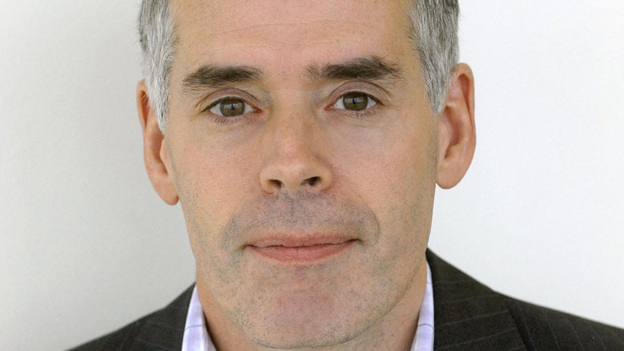
Peter Horrocks has been Director of the World Service since 2009 and has worked at the BBC for 33 years.
Under Peter’s leadership weekly audiences for the BBC’s global news services – BBC World Service, BBC World News and BBC.com – have reached a record 265m.
Peter has led the World Service through some of its most challenging times, responding to funding cuts by modernising the World Service for the digital age.
He successfully oversaw one of the biggest changes in the history of the World Service as it moved from Foreign and Commonwealth Office (FCO) funding into the licence fee, leaving its historic headquarters of Bush House for the BBC’s New Broadcasting House.
BBC World News has undergone a creative renewal that is being appreciated by audiences around the world and bbc.com/news now regularly achieves one billion page views a month. BBC News is the most retweeted news source in the world.
Peter Horrocks said: “It has been a privilege to be Director of the BBC World Service, which is loved and trusted by hundreds of millions of people around the world.
“I am hugely proud of the dedication, the creativity and the reinvention shown by my team. The World Service now has its largest ever audience, an expanding number of languages, and is modernised and transformed for a digital age.
“Having overseen this recovery and taken the World Service into the new era of licence fee funding, it is time for me to move on to my next challenge. I will miss the BBC but am confident that the BBC’s global news services are in strong shape for the future.”
Director-General of the BBC, Tony Hall, said: “Peter’s remarkable career at the BBC has spanned more than three decades. Starting as a News trainee, he established himself as the youthful editor of Public Eye before going on to lead teams that produced some of the BBC’s most important news programmes, including Newsnight and Panorama. He also edited general election programmes before running several News departments, latterly the World Service Group.
“Those who have worked with him know of his energy, drive, his passion for journalism and his innovation but they have also come to appreciate his editorial integrity and his deeply rooted sense of BBC values. He leaves us as one of our most respected leaders. He is a force of nature and we will miss him.”
Director of BBC News and Current Affairs, James Harding, said: “Peter Horrocks has been a defining figure in the modern history of the BBC World Service and global news. He has demanded the highest standards of its journalism, he has driven innovation in the ways we tell stories and deliver the news, he has opened the BBC to new voices and fresh ideas and he has presided over the extraordinary growth of the BBC’s worldwide audience.
“His sharp intellect, open-mindedness and good judgment have shaped BBC News and Current Affairs for three decades. He has recruited and inspired hundreds of people here in the UK and around the world. And, like few others, he has set his stamp on both the programmes and the personality of the BBC.
“Since I joined the BBC last year, Peter has been a constant source of good advice, organisational wisdom and personal support. Of course, I respect Peter’s decision to move on, but, both personally and as an organisation, we will miss him.”
The BBC will advertise for Peter’s successor as Director, World Service Group.
29 August 2014
Eurosport enhances its status as of the n°1 women’s sports broadcaster in Europe with the launch of the first ever show entirely dedicated to women’s football in France.
The show, called “Femmes 2 Foot”, will air every Monday evening at 22h50 from September 22 on the pan-European broadcaster’s French local channel. The one-hour show will focus on the French Women’s Premier League (D1 Féminine), for which Eurosport France is the rights holder, with a mix of information, results and interviews. “Femmes 2 Foot” will also feature news about the Champions League, the French Cup and the French National team.
Each week a special guest from the world of women’s football will be present in the studio together with the three hosts Candice Prévost, Cécile Locatelli and Romain Balland. (Source: Eurosport press release)
29 August 2014
Starting on September 1, 2014, DW will be represented in West and Central Africa. Jan-Philipp Scholz (32) and Adrian Kriesch (27) will be reporting for Germany’s international broadcaster from Lagos, Nigeria.
German public service broadcasters ARD and ZDF have no correspondents in the region, so DW will be filling a gap with reporting by Scholz and Kriesch from and on West Africa.
Nigeria was chosen as a location for multiple reasons. On the one hand, it is the most populous country in Africa and located geographically in the middle of the continent. On the other hand, Nigeria reflects the ambivalent development of the entire continent – aside from the significant economic growth, Nigeria also struggles with a number of conflicts, such as with Boko Haram. ARD and ZDF have studios in Africa in Cairo, Rabat, Nairobi and Johannesburg.
Scholz and Kriesch have reported regularly from Africa for DW – especially on the situation in Nigeria. They work closely with a network of local correspondents from DW’s Africa department. One example of such cooperation was an interview conducted by Scholz and a correspondent from DW’s Hausa department with a schoolgirl who had been able to escape her kidnappers from the Islamist terror organization Boko Haram.
DW Africa
(Source: DW press release)

28 August 2014
Jailed Al Jazeera journalist Baher Mohamed will become a father again today. His unjust imprisonment has however meant that he could not be at his wife Gehan’s side when she gave birth to a baby boy.
From his jail cell, Baher released a letter to the new arrival, to be named Haroun. The letter is a mix of sadness and hope for the child’s future, as well as some valuable wisdom for his two other children four year old Hazem, and three year old Fairouz.
Baher begins with sharing his hopes that there are better days ahead for Egypt:
“Sorry because you were born where free people are behind bars, including your father. Sorry too because you have come to a society where its freedom’s restricted. But I promise you I will always fight for liberty. I don’t want you to give up on this society…because I am sure that soon everything will change for the better”
He goes on to share his life lessons to his children:
My dear children; there are things I learnt and I want to share with you. I was always fighting for the truth in my career, and that was not easy. Whatever it takes; keep looking for the truth and never be afraid of it. I want you all to maintain your dignity. It is one of your most precious values. Always be patient because you will face lots of obstacles in your path. Always be good to all, even to those who treat you badly. Feel the pain of the others and keep trying to help them. If you feel you can help and make someone happy never hesitate. If you can draw a smile on someone’s face…then take the action to draw this smile.
My dear children…keep smiling because behind the clouds the sun always shines.”
Finally, Baher tells of the close bond between the families of the three imprisoned journalists, who will be there to support each his wife and child at the hospital:
“Finally Haroun, I want you to ask your Mama to forgive me because I couldn’t be with her the moment you arrived. I want you also to take it easy on her. And by the way…the moment you will arrive you will meet two great Australians; the parents of Peter Greste, who is in prison (with) me, as well as The great Egyptian family of Mohamed Fahmy my colleague. Together we are sharing this struggle; and together we will celebrate your birth. They are your family and their sons’ are your father’s brothers.
So don’t be shy of them.
Love you Haroun..your father: Baher Mohamed”
Baher’s wife Gehan was admitted to hospital today, to deliver her son. Without his father, the parents of Peter Greste and Mohamed Fahmy’s family gathered to support her at this time.
Follow #FREEAJSTAFF for more shots of the family gathered for the birth of Haroun.
26 August 2014
Leading regional broadcaster, Channel NewsAsia, brings together top industry and government leaders in a forum to discuss “Sustaining Growth and Development in Malaysia” in Kuala Lumpur on 4 September. Held at the JW Marriott Hotel, Senator Dato’ Sri Abdul Wahid Omar, Minister in the Prime Minister’s Department, will give the keynote address at the Malaysia Business Insights 2014.
This forum, which is by-invitation only, is an invaluable platform for senior executives and government officials to discuss long-term sustainable development in the country. The Malaysian economy is expecting positive growth over the next two years, and the government is strengthening the business fronts and promoting investment. Some measures include announcing the lifting of barriers on new foreign unit trust management companies, the removal of mandatory credit ratings, the liberalisation of equity shareholding for credit-rating agencies and permission for full foreign ownership of international credit-rating agencies. This agenda aims to build a stable and inclusive financial system and encourage innovation. “The rapid change, complexity and competitiveness of the global market, coupled with new government initiatives, have changed the way Malaysia does business with the world. Malaysia Business Insights brings together leaders and change makers to examine how we can achieve long-term, sustainable economic growth in Malaysia, and leverage its position in the region to ignite economic and social progress in ASEAN,” said Melissa Goh, Channel NewsAsia’s Malaysia Bureau Chief, who will moderate the panel discussions at the forum.
The panel includes speakers from key industry and government organisations:
• Datuk Dr Rebecca Fatima Sta. Maria, Secretary General, Ministry of International Trade
and Industry
• Dato’ Abdul Rauf Rashid, Country Managing Partner, Ernst & Young Malaysia
• Mr. Teh Kee Sin, National President, SMI Association of Malaysia
• Dr Mohd Emir Mavani Abdullah, Group President/CEO, Felda Global Ventures Holdings
Berhad
One of the strategic areas of discussion will be about how small and medium enterprises (SMEs) can leverage technology and focus on talent management and succession planning to expand and reach global consumers. SMEs are the backbone of the Malaysian economy, accounting for 90% of all business in the manufacturing, services and agricultural sectors, as well as providing 65% of total employment.
Ms Goh added, “The experts will give valuable insights about the most important trends and unique business culture, and share ways to benefit from the ongoing structural reforms. These discussions will help executives better come to grips with the business dynamics of this country.”
“Sustaining Growth and Development in Malaysia” is the latest in the successful leadership series of Business Insights forums which Channel NewsAsia has been hosting across Asia.
The events held over the past year in Jakarta, Bangkok, Yangon, Singapore and Ho Chi Minh City, aim to establish links across Asia and to promote deeper understanding of the business climate and practices in the host countries.

