8 December 2014
Eurosport has acquired the live TV and digital rights of the FIFA Women’s World Cup Canada 2015™ as part of a package of nine FIFA competitions held over 2015 and 2016.
The deal signed with FIFA also includes full rights to the Men’s and Women’s FIFA U-17 and U-20 World Cups, as well as, the FIFA Beach Soccer World Cup, FIFA Futsal World Cup and Blue Stars/FIFA Youth Cup. Every tournament will be broadcast across all Eurosport’s European territories*.
The deal confirms Eurosport is the leading channel in Europe for women’s football, youth football and futsal. The FIFA competitions enhance Eurosport’s offer, which already features the best competitons at European level with the annual UEFA European U-17 and U-19 Championships (men and women), 2016 UEFA European Futsal Championships and 2017 UEFA Women’s EURO.
Under the FIFA deal, Eurosport will cover:
2015
– FIFA Women’s World Cup* in Canada from 6 June – 5 July
– FIFA U-20 World Cup in New Zealand from 30 May – 20 June
– FIFA U-17 World Cup in Chile from 17 October – 8 November
– FIFA Beach Soccer World Cup in Portugal
– Blue Stars / FIFA Youth Cup in Switzerland
2016
– FIFA U-20 Women’s World Cup in South Africa
– FIFA U-17 Women’s World Cup in Jordan
– FIFA Futsal World Cup in Colombia
– Blue Stars / FIFA Youth Cup in Switzerland
*ex Sweden, Denmark, Norway and Finland for the FIFA Women’s World Cup Canada 2015™
The FIFA Women’s World Cup Canada 2015™ draw, broadcast live on Eurosport 2 on Saturday 6 December, decided the six groups the 24 teams will compete in, next June. The qualified teams include former World Champions Germany (2007 & 2003), USA (1999 and 1991), Norway (1995), current title holders Japan, as well as, France, Sweden, England, Brazil and China.
The most highly-anticipated clash of the first round is likely to be in Group D, between the USA and Sweden, third at the 2011 World Cup. France, serious challengers for the title, will face England in Group F.
Group A: Canada, China PR, New Zealand, Netherlands
Group B: Germany, Côte d’Ivoire, Norway, Thailand
Group C: Japan, Switzerland, Cameroon, Ecuador
Group D: Unites States, Australia, Sweden, Nigeria
Group E: Brazil, Korea Republic, Spain, Costa Rica
Group F: France, England, Colombia, Mexico
Eurosport has broadcast every FIFA Women’s World Cup since 2003 with record audiences in 2011 when the tournament attracted over 57m different European viewers on Eurosport and Eurosport 2. (Source: Eurosport press release)
5 December 2014
 Khadija Ismayilova, a prominent investigative journalist who contributes to RFE/RL’s Azerbaijani Service, has been sentenced by a court in Baku to two months of pretrial detention, on charges of causing a man to attempt suicide.
RFE/RL Chief Editor Nenad Pejic ridiculed the new set of charges, which come one day after Azeri Presidential Chief of Staff Ramiz Mehdiyev, Chief of Staff to Azeri President Ilham Aliyev, issued a 60-page statement accusing Ismayilova of “defiance” and displaying a “destructive attitude toward well-known members of the Azerbaijani community” which “pleases [her] patrons abroad.” The statement adds that RFE/RL’s Azerbaijani service is on a “disgusting path,” and its employees work “for a foreign secret service.”
“The arrest and detention of Khadija Ismayilova is the latest attempt in a two-year campaign to silence a journalist who has investigated government corruption and human rights abuses in Azerbaijan. The charges brought against her today are outrageous. Khadija is being punished for her journalism,” Pejic said.
Pejic added that Mekhdiyev’s statements were dangerous and reckless, and could be perceived as a threat against other RFE/RL Azerbaijan I Service employees.
The OSCE’s representative on freedom of the media, Dunja Mijatovic, condemned Ismayilova’s arrest, saying, “The arrest of Ismailova is nothing but orchestrated intimidation, which is a part of the ongoing campaign aimed at silencing her free and critical voice.”
Ismayilova has been under a travel ban imposed by Azeri authorities in connection with opaque charges of defamation that prevented her from testifying at the U.S. Congress in November at a hearing on corruption.
Ismayilova, who also works with the Organized Crime and Corruption Reporting Project, has reported extensively on the financial activities of family members of Azeri President Ilham Aliyev. Ismayilova has been targeted by the ruling party’s press and threatened with physical harm and arrest since 2012. In February, official media accused her of spying for the United States after she met with U.S. Senate staffers in Baku.
About RFE/RL
RFE/RL is a private, independent international news organization whose programs — radio, Internet, television, and mobile — reach influential audiences in 21 countries, including Russia, Iran, Iraq, Afghanistan, Pakistan, the republics of Central Asia and the Caucasus. It is funded by the U.S. Congress through the Broadcasting Board of Governors (BBG). (Source: RFE/RL press release)
4 December 2014
 Nearly 100% of subscription & revenue growth by 2023 from non-mature markets
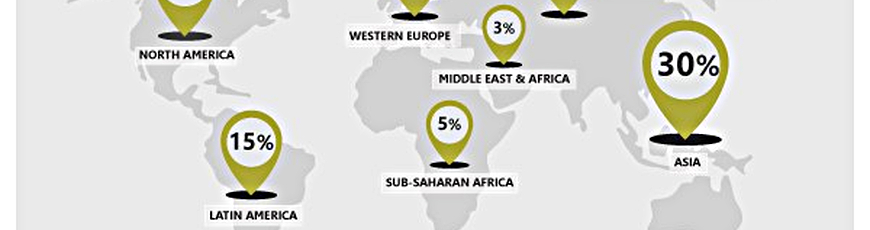
According to Euroconsult’s newly released report, Satellite Pay-TV: Key Economics & Prospects, the global satellite pay-TV industry has observed strong growth in the past five years despite an increasingly competitive TV landscape where IPTV, DTT and connected entertainment services have rapidly expanded their reach. Subscriptions to satellite pay-TV reached 196 million homes in 2013 and revenues topped $97 billion. While key performance indicators of the sector continued to grow, a slight slowdown was observed, largely attributable to the lack of dynamism in mature markets. Emerging markets now account for 60% of global subscribers, as well as nearly 100% of subscription growth.
In the past five years, emerging markets have been the most active in rolling out new platforms, increasing subscriber bases, growing revenues and adding TV channels. They have also reduced the technical gap with mature markets’ platforms in terms of value-added services rolled out. “Emerging markets are home to over 80% of the nearly 160 active platforms,” said Dimitri Buchs, Consultant at Euroconsult and editor of the report. “Over 95% of platforms launched in the past three years operate in these markets.” The share of revenues coming from emerging markets is lower due to the large availability of low-cost services in these countries, but it has also increased in recent years, from 15% in 2008 to 26% in 2013.
Apart from new platform launches, a growing trend in emerging markets has been the expansion into new markets for existing players; this has been particularly true in Sub-Saharan Africa and Latin America. The launch of 60 platforms in the past five years has led to an oversupply in certain emerging markets including Indonesia which had the highest number of active players in November 2014. Several large, fast-growing satellite pay-TV markets – Russia & Brazil – began to consolidate in 2014 following a slowdown in growth over the last several years. Despite this recent M&A acceleration, new projects should continue to rollout in the short term, mainly in the fastest-growing markets. Future projects should also target new markets, with Bangladesh expected to be one of the next satellite pay-TV countries.
Given the progressive change in video offers and the rapidly evolving pay-TV landscape, the recently observed trend should continue, with several of the largest mature markets including the U.S., France and Japan expected to see a contraction in satellite subscribers, revenues and number of TV channels broadcast. In mature and advanced emerging markets, the competitive environment will increasingly lead to an adaptation of business models and service offerings. Satellite pay-TV platforms will increasingly expand their ecosystems to become cross-media platforms by rolling out TV Everywhere and OTT services in parallel to their linear TV offerings, enabling them to maintain a strong foothold in their national/regional markets. Decreasing satellite KPIs will push a growing number of platforms to find new sources of revenue and expand their reach outside their satellite subscriber base. This has already begun with several satellite pay-TV platforms rolling out standalone OTT services available to households not subscribing to their linear packages.
Emerging markets should account for nearly 100% of growth in subscriptions, revenues and number of TV channels by 2023. Global subscriptions should reach 340 million in 2023; emerging markets should account for nearly 80% of the total, with Asia and Sub-Saharan Africa expected to be the fastest-growing regions. Subscriptions will be largely supported by the greater availability of low-cost offerings. Nearly 30,000 channels should be distributed in 2023, with growth favored by the take-off of HD in emerging markets and rollout of the 1st UHD channels. (Source: Euroconsult press release)
3 December 2014
Vizrt Ltd. announced today a deal worth USD 960,000 for the implementation of the Viz Mosart control room automation systems with a broadcaster in Latin America. This is the first broadcaster in Latin America to adopt Viz Mosart for control room automation. The customer chose Viz Mosart after a thorough evaluation process and seeing the successful implementations at other Viz Mosart customer sites around the world.
The broadcaster has been a Vizrt customer for many years with a full range of broadcast graphics and media asset management systems. The inclusion of the Viz Mosart installation creates a complete Vizrt infrastructure used by the broadcaster for their daily production workflow.
Viz Mosart is a control room automation system that works with all major broadcast systems in the control room and studio. The customer purchased Viz Mosart to manage multiple control rooms, essentially allowing Viz Mosart to produce all their live shows. The system gives the broadcaster greater flexibility, speed of response, and cost-effectiveness in live broadcasts.
“Having championed live broadcast production in Europe, we are very pleased to be expanding Viz Mosart into Latin America,” said Martin Burkhalter, Vizrt CEO. “The fact that this broadcaster has chosen Viz Mosart as the primary automation system for all of their control rooms proves that Viz Mosart is a very powerful and versatile solution and it is a tribute to the reliability of the product in our installed base. We are looking forward to further growth in the Latin American market with this powerful tool.” (Source: Vizrt press release)
3 December 2014
AIB has published its latest media industry briefing that is circulated to more than 26,000 media leaders, regulators, platform operators and journalists in over 150 countries.
You can read the briefing online here – it offers the latest appointments in media companies around the world, programming news, distribution deals and – in this issue – advance information on the AIB Global Media Summit, #iamabroadcaster, taking place in London on 18 and 19 February 2015.
See more about #iamabroadcaster here.
2 December 2014
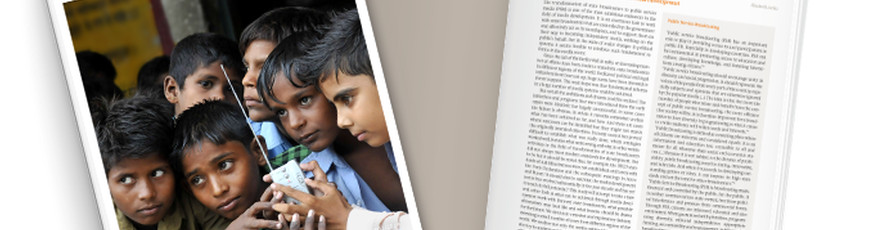
 In the Service of the Public, a new study released by DW Akademie, examines the transformation of state broadcasters into independent media in various countries, including those in Moldova, Mongolia and Myanmar.
Determining whether the transformation of a government broadcaster into an independent media organization has been successful or not can be a challenge. It’s also often unclear whether public service media are the only ones capable of carrying out their public responsibility, or whether private and community media can also take on this role.
The series Edition DW Akademie has just published In the Service of the Public – Functions and Transformation of Media in Developing Countries, a study offering recommendations for future projects involved in transforming state media. The authors take a closer look at broadcasters in twelve countries: Afghanistan, Bolivia, Ecuador, Colombia, Kyrgyzstan, Mongolia, Moldova, Myanmar, Namibia, Nepal, Nigeria and Serbia.
DW Akademie is the Deutsche Welle’s internationial centre for media development, media consulting and journalism and has been accompanying the transformation of state broadcasters in developing countries for many years. “Supporting reforms like these is not always easy,” says Director of DW Akademie Christian Gramsch, pointing out that “transformation processes can come to a halt. As a media development organisation we often have to look at alternative approaches to take.” The new comparative study is an important orientation guide for DW Akademie’s worldwide activities, says Gramsch.
The publication takes a critical look at the stakeholders involved in each transformation process and the extent to which they have contributed to its success or failure. There’s a special focus on analysing approaches taken by media development organizations.
“One of the study’s major findings is that transformations are possible under certain conditions,” says Petra Berner, head of DW Akademie’s Strategy and Consulting Division, and co-editor of the publication. However, she points out that transformations require a long-term strategy supported by all stakeholders involved in the process: political elites, management and employees of media outlets, civil society groups and the general public.
The authors stress that greater efforts are needed to create the political and legal frameworks conducive to effectively developing public service media, and that improvements are required for implementing the reforms in the media outlets themselves. “Media development organisations have often failed to recognise the role of organisational development, and that restructuring broadcasters is a long term-process,” says Berner.
Edition DW Akademie is a new publication series focusing on the areas of media development, media policy and journalism. In the Service of the Public
was edited by Jan Lublinski, Merjam Wakili, Petra Berner.
Read the report in full as a digital publication (ISSUU) or PDF.


