Radio Liberty journalist released from Belarus detention

Radio Liberty journalist released from Belarus detention

Radio Liberty journalist released from Belarus detention

Trump Administration Secures Release of Radio Liberty Journalist Andrey Kuznechyk from Detention in Belarus  

RFE/RL welcomes news of Andrey’s release and is grateful to the American and Lithuanian governments for their support.

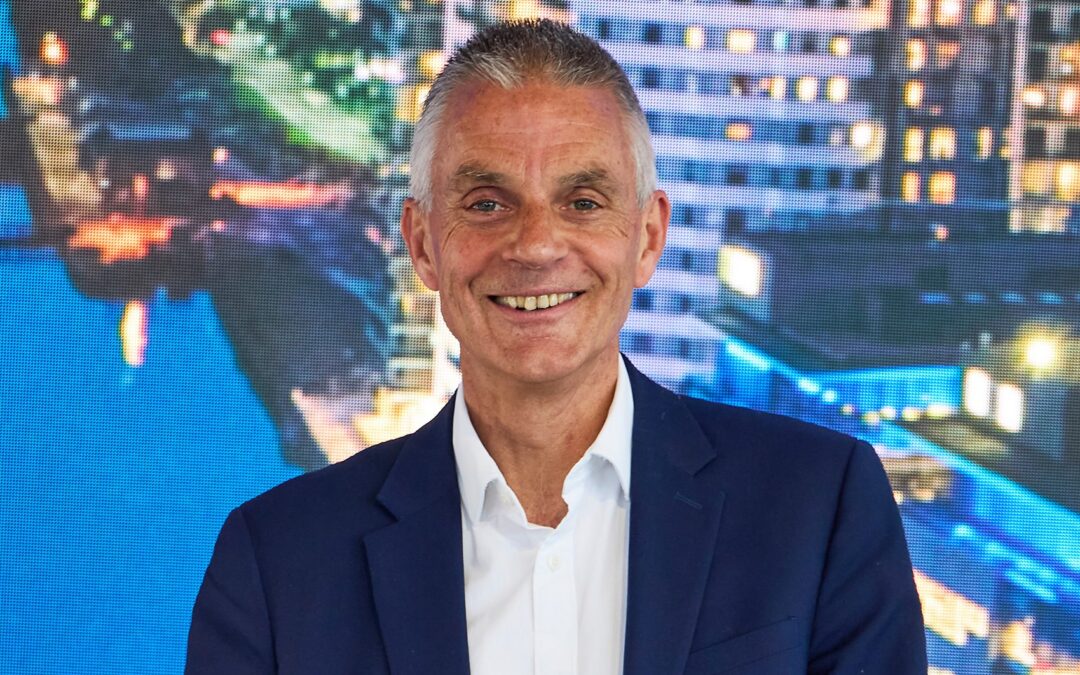
After more than three years of imprisonment in Belarus, Radio Liberty journalist Andrey Kuznechyk (pictured) has been freed.

Radio Free Europe/Radio Liberty President Stephen Capus said“This is a joyous day for Andrey, his wife, and their two young children. After more than three years apart, this family is together again thanks to President Trump. We are also grateful to Secretary Rubio and his team, and to the Lithuanian government for their support.

We remain hopeful that our journalist Ihar Losik will also be released and look to the Trump administration for its continued leadership and guidance.”

Andrey Kuznechyk is a veteran journalist with Radio Liberty, known in Belarus as Radio Svaboda. 

Image: RFE/RL

ABC Radio Australia on-air in Kiribati

ABC Radio Australia on-air in Kiribati

ABC Radio Australia on-air in Kiribati

The Australian Broadcasting Corporation’s international radio service, ABC Radio Australia is now available on 92.3FM for residents across the Tarawa atoll in the central Pacific island nation.

The launch in Tarawa, Kiribati marks the return of the service after a decade off air and is the latest milestone for ABC Radio Australia in reaching new audiences across the Pacific. The full radio service offers listeners an extensive schedule of bespoke programming covering the latest in news, music, sports, culture, health, science and faith.

ABC International Head Claire M. Gorman said: “We are delighted to be starting the year with the launch of our tenth new ABC Radio Australia service in collaboration with BPA. This latest development signifies not only the network’s incredible growth in both its transmission expansion across the Pacific region but is also reflected in the growing suite of Pacific-focused content that is now accessible to audiences across Tarawa.”

ABC Radio Australia’s FM transmission service is available across Nauru, Palau, Pohnpei (Federated States of Micronesia), Kokopo and Lorengau (Papua New Guinea), Gizo and Auki (Solomon Islands), Rarotonga (the Cook Islands), with plans for FM services to be made available in 2025 in the Marshall Islands and Buka in the Autonomous Region of Bougainville in Papua New Guinea.

WAYS TO LISTEN: 

If you’re in Tarawa, Kiribati, tune into to ABC Radio Australia on 92.3FM. 

Across the Pacific region, there are multiple ways to listen to ABC Radio Australia – live via internet streaming or in your area through 24-hour FM stations, or catch up with full episodes on ABC Pacific online. 

BBC World Service launches Arabic edition of award-winning educational programme ‘Dars’ in the Middle East and North Africa

BBC World Service launches Arabic edition of award-winning educational programme ‘Dars’ in the Middle East and North Africa

BBC World Service launches Arabic edition of award-winning educational programme ‘Dars’ in the Middle East and North Africa

Dars, described by the UN as a “learning lifeline” for children barred from school in Afghanistan, supports learning for children who cannot access education

In line with its commitment to providing vital services to audiences in crisis, the BBC World Service is bringing its educational programme, Dars or ‘lesson’– which was described by the United Nations as a “learning lifeline” for children in Afghanistan – to the Middle East and North Africa through Dars Arabic, a new programme by BBC News Arabic.

At least 30 million children are out of school in the Middle East and North Africa[1], many have been displaced by conflict and crises in Sudan, Yemen and Gaza, which have severely affected access to education. Dars Arabic aims to connect these children facing immense barriers to an education with learning.

Dars Arabic utilises the content and expertise of BBC Education to offer children aged 11-16 lessons in Maths, English, Science and Geography at varying skillsets. Each week, the programme also shares inspirational stories about young people overcoming obstacles, positive news stories on climate, tech, health and more, and bespoke mental health lessons.

These mental health lessons are short, animated films, produced in consultation with expert conflict psychologists to provide young people with the tools needed to understand their emotions and improve their wellbeing. Topics covered include coping with bereavement, adjusting to displacement and change, managing stress, and finding hope during challenging times.

The animated films are available across Dars Arabic broadcasts on BBC News Arabic TV and digital platforms, as well as internationally through broadcasts across the BBC World Service’s 41 language services and in English on the World Service YouTube channel.

Dars first launched in 2023 on BBC News Pashto and Dari, it brings learning to Afghan children who are not able to go to school. Girls aged 11-16 have been restricted from accessing education in Afghanistan since 2021. Dars is hosted by female BBC journalists, many of whom were evacuated from Kabul in 2021 after the Taliban’s return to power.

Dars Arabic provides an offering specific to children across the Arabic-speaking world. The 30 minute episodes launch on BBC News Arabic TV, digital platforms and lifeline radio services in Gaza and Syria from Sunday 9 February.

The programme is broadcast from the BBC Bureau in Cairo by a team of young presenters from across the region and its English lessons are presented by BBC News Arabic correspondents Hanan Razek and Yasmine Abukhadra.

Fiona Crack, Deputy Global Director BBC News, says: “Hearing from our Dari and Pashto speaking audiences about the difference Dars has made to their lives has been very humbling over the last two years. In line with the BBC World Service’s commitment to inform and educate audiences across the globe, we’re thrilled to launch a similar educational opportunity with Dars in Arabic. While it can’t replace going to school, we hope it will help spark curiosity and a love of learning for our youngest audience members and their families.’

BBC News Arabic TV airs new episodes of Dars Arabic weekly on Sundays at 05:30 GMT (07:30 EET) and is repeated at 10:05 GMT (12:05 EET) and throughout the week. Dars Arabic is also available on BBC News Arabic’s digital platforms, including BBC News Arabic YouTube, and through BBC News Arabic’s lifeline radio services in Gaza and Syria, available on medium wave and FM. 

[Source: BBC World Service press release]

BBC publishes Net Zero Transition Plan

BBC publishes Net Zero Transition Plan

BBC publishes Net Zero Transition Plan

The BBC has published its first Climate Transition Plan, detailing how it intends to be Net Zero by 2050. This forms part of the Corporation’s commitment to building a sustainable BBC and wider media industry.

The BBC has been making significant progress towards its science-based targets, aligning a commitment to world-renowned natural history programming with ambitious and tangible actions off-screen.

From reducing emissions on acclaimed drama Blue Lights by replacing diesel fuel with HVO in generators and production trucks, to replacing refrigeration chillers and gas-fired boilers with heat pumps in its offices, the BBC is committed to driving decarbonisation across the BBC Group.

Its first Transition Plan, developed in line with the Transition Plan Taskforce (TPT) Disclosure Framework, sets out the BBC’s Ambition, Action and Accountability in reaching Net Zero, including:

  • Reducing, optimising and innovating its energy to low-carbon solutions;
  • Developing the skills and competencies across the business to drive action within operations, editorial and content production teams, and;
  • Playing an important role in contributing to the industry and economy-wide transition.

The BBC recognises that climate change and bio-diversity loss are real, serious and urgent, and this plan details the strategy it is putting in place to reduce its environmental impact.

Earlier this year, the globally-respected Science-Based Targets initiative (SBTi) approved the BBC’s Long-Term Targets to reduce all emissions by at least 90% by 2050, building on its existing Near-Term Targets to halve emissions by 2030.

This Transition Plan explains how the BBC will reach this target, and how Net Zero is one of the three pillars of the BBC’s Sustainability strategy, along with Nature Positive and People Positive.

These pillars underpin and shape the BBC’s climate ambitions for the future, aligned with the its mission to inform, educate and entertain all audiences, and the broadcaster’s Value for All strategy.

The BBC expects to update its Transition Plan and will continue to review its approach to ensure that it always meets the highest standards in sustainability practice, reporting and disclosures.

Danielle Mulder, Director of Sustainability, says: “This Transition Plan will support the BBC’s journey to Net Zero and is a hugely important milestone as we commit to a low-carbon future.

“Given the importance of climate change and biodiversity loss, we know our commitment to Net Zero matters to our staff, our suppliers and our audiences. We invite everyone we work with to get involved as we reduce our environmental impact.”

The BBC, as a member of the Association for International Broadcasting, takes part in the AIB Sustainability working group that brings together AIB member organisations across the world to share intelligence and experience on sustainability issues across their whole businesses.

NHK WORLD-JAPAN programme focus in February

NHK WORLD-JAPAN programme focus in February

NHK WORLD-JAPAN programme focus in February

Sharpening Up Japan’s Global Image

The Subculture Chronicles
Episode 1 Japonism

Feb 22 Sat.
1:10/7:10/13:10/19:10 (UTC)

In what ways has the notion of “Japan” come to be recognized in the West, evolve through various interpretations, and leave a lasting impact? This episode traces the history behind the spread of Japan’s image through films, manga,?subcultures, and societal trends. From Yasujiro Ozu, Kenji Mizoguchi, and Shohei Imamura to Super Mario and kawaii fashion, we delve into the essence that lies between understanding and misunderstanding. 

KABUKI SPECIAL
Japanese Swords in Kabuki

Feb 23 Sun.
1:10/7:10/13:10/19:10 (UTC)

Swords in Kabuki plays reveal the fear and reverence the blades inspire in Japanese people. The program shows the spiritual and cultural impact of these weapons and their stories. 

Documentary 360
Blind Spots Threaten Climate Change Action

Feb 16 Sun.
0:10/6:10/12:10/18:10 (UTC)

Investigations suggest climate change may be worse than estimated, and the beneficial effect of responses may be overstated. This report probes what action plans have overlooked. 

CYCLE AROUND JAPAN

Saturdays
2:10/9:10/17:10/20:10 (UTC)

Come ride with us! Bicycle through the scenery of Japan, stay with locals and discover hidden traditions in a Japan you didn’t know existed.


BBC protests “foreign agent” designation of two of its journalists

BBC protests “foreign agent” designation of two of its journalists

BBC protests “foreign agent” designation of two of its journalists

The BBC has said that it strongly rejects the decision by the Russian authorities to designate Ilya Abishev and Elizaveta Fokht as “foreign agents”. BBC News Russian journalists have been singled out, following earlier designations of Ilya Barabanov, Anastasia Lotareva, Andrey Kozenko, and Olga Ivshina.

BBC News Global Director and BBC Deputy CEO, Jonathan Munro, says: “It has now become a routine exercise for the Russian authorities to add BBC News Russian journalists to their list of ‘foreign agents’. The BBC wholly condemns this ongoing attempt to intimidate and silence our journalists. Aimed at having a disruptive and damaging effect, these arbitrary designations can’t stop our journalists doing their jobs. Journalism is not a crime, and our reporters will continue serving our Russian-speaking audiences just as they have done for almost 80 years: independently, fairly, and fearlessly. We are proud of all our journalists. We will challenge these actions by the Russian authorities in the courts. These journalists have our total support.”

Part of BBC World Service, BBC News Russian is a key provider of impartial and independent news to the Russian-speaking world, reaching its audiences across a range of digital platforms.