ABC signs MoU with KBS during ABU Admin Council meeting

ABC signs MoU with KBS during ABU Admin Council meeting

ABC signs MoU with KBS during ABU Admin Council meeting

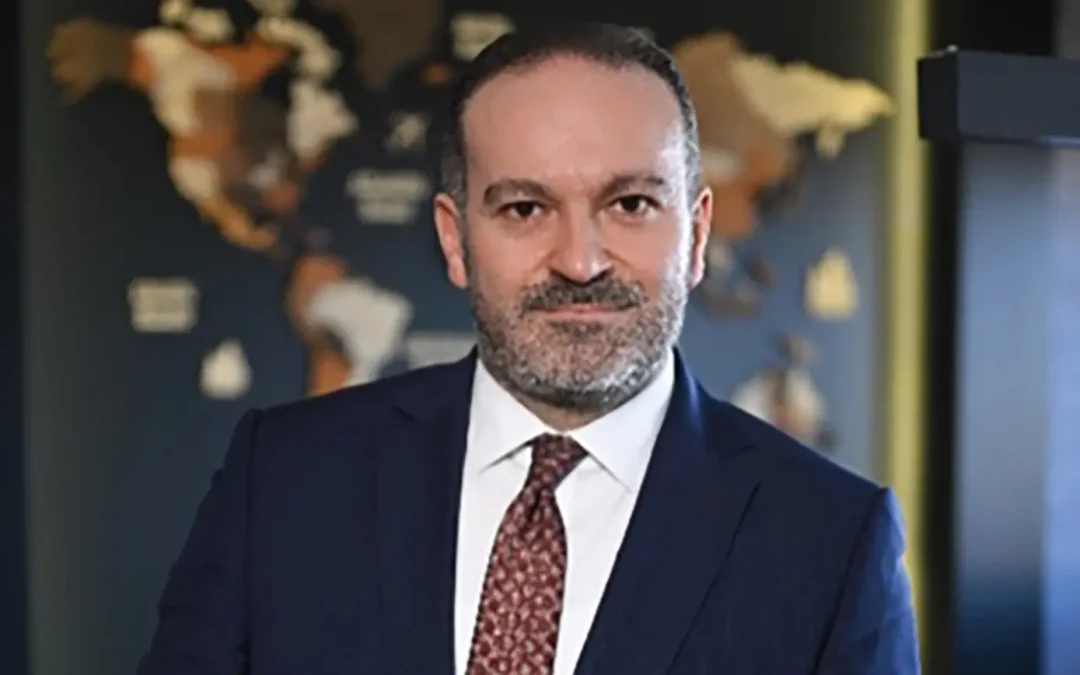
ABC Managing Director Hugh Marks has signed a Memorandum of Understanding (MoU) with the Korean Broadcasting System (KBS), endorsing the commitment of the two public broadcasters to collaborate and partner across future endeavours. 

Hugh Marks said: “South Korea is a cultural powerhouse and its public broadcaster KBS is a leading provider of high-quality content across its varied platforms. It is important for the ABC to work closely with our regional partners, in particular public service media organisations, and to look for ongoing opportunities to exchange content and information to improve our respective services and audience offerings.  

“The ABC also congratulates KBS for the Korean parliament’s recent legislating of an integrated licence fee which will ensure KBS’ ongoing financial stability and the provision of its essential services.”

The MoU was signed during the ABU Administrative Council meeting that the ABC hosted in Sydney. ABC International welcomed media leaders for the meeting, held on 8 and 9 May in Sydney. 

Alongside ABU Secretary General Ahmed Nadeem, ABC International leadership hosted leaders from Korean Broadcasting System (KBS), Nippon Hoso Kyokai, Japan (NHK), MTV Channel (Pvt) Limited, Sri Lanka, Vanuatu Broadcasting and Television Corporation (VBTC), Prasar Bharati, India (PB),  Radio Republik Indonesia (RRI), Radio Television Malaysia (RTM), Radio Television Hong Kong (RTHK), Teledifusao de Macau, S.A. (TDM), Television Broadcasts Limited, Hong Kong, China (TVB), Radio and Television of the People’s Republic of China (RTPRC), Turkish Radio and Television Corporation (TRT) and The Voice of Vietnam (VOV) for high-level discussions about the ABU’s finances, administration and policies.  

ABC International Head Claire M. Gorman said: “It is a great honour and responsibility to be part of the Administrative Council and to host this year’s meeting. We thank the ABU and its members for this opportunity to meet and discuss how we can strengthen regional co-operation and work collaboratively as media and broadcasters in our countries and internationally.” 

RNZ continues to build trust in its 100th year

RNZ continues to build trust in its 100th year

RNZ continues to build trust in its 100th year

RNZ has improved its trust result by 7 points in only six months.

The growth in trust was captured in RNZ’s latest audience survey by Verian Research, which featured a larger sample of 2000 New Zealanders. In the survey 56% agree RNZ is an organisation you can trust – up from 49% on the previous result.

RNZ Chief Executive and Editor-in-Chief Paul Thompson said RNZ had a strategic focus on lifting trust levels, so it was a great to see the improvement. It is further supported by the recent AUT research report which identified RNZ is New Zealand’s most trusted news brand.*

Other results from the survey show 78% believe it’s important to have a public broadcaster (up two points and the highest results RNZ has achieved) and 64% believe RNZ provides a valuable service (up three points and again the highest result RNZ has achieved to date).**

Thompson said public recognition of the value of RNZ in its 100th year was pleasing and the organisation remained focused on how it could deliver more outstanding public media content.

Overall, 79% of all New Zealanders consume RNZ content each month through its channels and via its content sharing strategy with other media outlets. RNZ has had strong growth across its digital platforms with its website visits for April 2025 up 400,000 from a year ago and time spent increasing from 24 minutes to 42 minutes. However, it has experienced a decline in some of its live radio ratings.

Results in live radio, measured through the GfK Commercial Radio Survey show RNZ’s combined share (RNZ National and RNZ Concert) for Survey 1 2025 at 10.6% compared to 11.6% from the last survey,
RNZ National’s audience 10+ is 467,700 in a typical week (489,600 in the last survey), 
RNZ Concert’s audience 10+ is 162,300 in a typical week (156,000 in the last survey).    

Thompson said RNZ has a large and loyal audience and live radio remains important part of RNZ’s stable. 

“Over recent months we have worked hard to introduce improvements to RNZ National, and we will continue to do so, starting with Nights in June. We want to make sure we deliver highly quality, compelling, and informative content to our audiences.”

Thompson said while RNZ had a responsibility to provide regional, national and international news and current affairs under its Charter, the organisation is looking more at how it delivers this on live radio while growing connection with its audience.

“We are making some changes to our nightly schedule from next month that allow for more time in the early evening for live radio, for host interaction and discussion. Our research has shown that listening to live radio at nights is all about connection and we have a lot of talent to draw on to foster that sense of connection and community which is at the heart of live radio.”

BBC World Service to launch new offer in Polish

BBC World Service to launch new offer in Polish

BBC World Service to launch new offer in Polish

BBC World Service is expanding its trusted news offer with the launch of a pilot Polish-language news website, BBC News Polska bbc.com/polska, and its content on social channels.  

Going live from Tuesday 24 June 2025, the website bbc.com/polska will deliver independent and impartial news in text and video for Polish-speaking audiences.  

The new language offer will help counter a wave of disinformation in the region and provide news and analysis on areas audiences are seeking information on, including the ongoing wars and conflicts, health, climate change, and the cost of living. BBC News Polska content will be available via its social-media channels on Facebook and Instagram. 

The pilot language initiative will come from existing budgets and will be reviewed throughout its first year of operation. The BBC World Service’s ability to respond to changing audience demands, launch further pilots and adapt to global challenges relies on the need for a long-term sustainable funding model.  

BBC News Polska will be the first new language offer from the BBC World Service produced with the help of AI translation technology. 

BBC News Polska will work innovatively to harness existing translation and transcription tools to bring the best of the BBC’s journalism to new audiences. The translation of BBC reporting will always have human editorial oversight and, where used, will be clearly labelled.  

The curated content will complement regional angles and analysis produced by the team of Polish-speaking journalists. The platforms will also host content from BBC presenters Kasia Madera and Tomasz Schafernaker.  

The launch of BBC News Polska sees the BBC World Service working in a new way with a small, efficient team delivering both the AI-assisted translation of curated BBC reporting and original journalism.  

BBC News Polska will operate as a pilot. The BBC World Service has bold plans to pilot more non-English-language content where there is a demand for independent, impartial news as press freedom reduces globally and disinformation is rife.  

Global Director and Deputy CEO, BBC News, Jonathan Munro, says:  

“Today, as we face a storm of disinformation and ever-growing attacks on media freedom, democracy and regional security, BBC News Polska is a major step towards serving more audiences around the world with content they can trust.  This is part of a strategy that would see the BBC’s global reach grow and advance the case for democratic values. But to do this, the BBC World Service would need a long-term sustainable funding arrangement to build on these foundations and to secure our global public service journalism for the future.” 

Deputy Global Director, BBC News, Fiona Crack, adds:  

“Launching BBC News Polska, we are bringing together the most effective practices of working responsibly and innovatively with AI to reach Polish-speakers with the best of the BBC’s global and regional journalism. Following successful trials and advances in translation services, we are able to launch a new offer alongside original stories and fresh angles from our excellent Polish-speaking team. We look forward to building an audience for whom this content will serve as a welcome and required source of trusted news and information.” 

The BBC is the most recognised international news brand in Poland (source: BBC Impact and Influence 2025 study), reaching around 5.1m people every week in the country – around a fifth of the country’s adult population – with the BBC News TV channel, the BBC Studios global digital news platform BBC.com, as well as BBC World Service’s content in English and other languages.  

BBC News Polska is the BBC’s first new language offer from the BBC since BBC News Serbian was announced in March 2017. 

[Source: BBC]

The AIBs 2025 Masterclass

The AIBs 2025 Masterclass

The AIBs 2025 Masterclass

The AIBs, our annual competition for journalism and factual productions, is not just about the trophies. It’s about sharing knowledge, ideas and experiences among the media industry: video, audio and digital.

As part of our work to make sure that we help to share best practice and concepts, and to facilitate learning among the media industry, we hold Masterclasses that bring together finalists from the AIBs.

When we launched the AIBs 2025 in April, we held a Masterclass at the Rose Shure Experience Centre at the kind invitation of Shure Inc. We had a wide range of guests in the room, including journalists, producers and editors, along with students studying journalism. Online, there was a similar range of attendees, representing more than 15 countries.

There were three sessions:


Session 1: Investigative Journalism – Breaking Barriers and Exposing Truth

• Focus: A behind-the-scenes look at award-nominated investigative reports.

• Panellists: Journalists and producers from shortlisted investigative stories.

• Key Topics:

◦ Challenges of investigative reporting in different regions.

◦ Ethical considerations and journalist safety.

◦ The role of new technology (OSINT, AI) in uncovering stories.

• Interactive Element: Case study discussion—breaking down a real investigative piece.

Peter Smith, ITV News

• Paul Myles, On Our Radar

Session 2: Storytelling in Factual Productions – Engaging Global Audiences

• Focus: How to craft compelling factual content for international impact.

• Panellists: Creators of shortlisted factual documentaries and series.

• Key Topics:

◦ Blending narrative with factual integrity.

◦ Using visual storytelling techniques for audience engagement.

◦ Challenges of covering sensitive topics while maintaining authenticity.

• Amanda Burrell, Freelance

• Mouhssine Ennaimi, TRT WORLD

• Greg Moyer, Blue Chalk Media

Session 3: Journalism in the Digital Age – Adapting to New Platforms

• Focus: The evolving landscape of news reporting in the era of social media and AI, as well as the way other players – such as the print media – are embracing video and audio.

• Panellists: Journalists and producers using innovative digital storytelling methods.

• Key Topics:

◦ The impact of AI and automation in newsrooms.

◦ Social media’s influence on news production and distribution.

◦ Fighting misinformation and maintaining credibility.

• Dan Wright, Times Radio

• Veronica Kan-Dapaah, FT

Moderated by Henry Peirse, co-founder, Paydesk

BBC D-G says it’s a “catalyst for building trust”; IP switchover by 2030s

BBC D-G says it’s a “catalyst for building trust”; IP switchover by 2030s

BBC D-G says it’s a “catalyst for building trust”; IP switchover by 2030s

In his speech titled “The BBC – A Catalyst for Building Trust,” delivered on May 14, 2025, at the Lowry Theatre in Salford, BBC Director-General Tim Davie outlined the broadcaster’s pivotal role in addressing the UK’s growing “crisis of trust” and detailed plans for transitioning from traditional broadcasting to internet-based delivery

The BBC as a Catalyst for Building Trust

Davie emphasised that trust is foundational to a cohesive and democratic society. He highlighted the BBC’s commitment to being an impartial and reliable source of information amid increasing disinformation and societal polarisation. To reinforce this role, the BBC plans to expand its fact-checking service, BBC Verify, and enhance media literacy by providing children with lessons about disinformation. Additionally, the BBC aims to increase scrutiny of local politicians to ensure accountability.

Transitioning to Internet-Based Broadcasting

Looking ahead, Davie proposed a national plan for transitioning from traditional terrestrial and satellite broadcasting to internet-based (IP) delivery in the 2030s. As part of this initiative, the BBC is collaborating with other public service broadcasters—ITV, Channel 4, and Channel 5—to develop an internet-connected streaming device. This device is intended to provide free access to live broadcasts and on-demand content, ensuring that audiences, particularly those less familiar with digital technology, can navigate the shift to online services.

Davie acknowledged concerns regarding the affordability and accessibility of this transition, especially for older viewers. He stressed the importance of making the shift inclusive and accessible to all segments of the population.

Read the full speech here.

Legal win for RFE/RL over April Funding

Legal win for RFE/RL over April Funding

Legal win for RFE/RL over April Funding

In Legal Win, RFE/RL Receives April Funding; Lawsuit Continues for Remainder of FY 2025 Funds

On 13 May, Radio Free Europe/Radio Liberty (RFE/RL) received its overdue congressionally appropriated funds for the month of April. During the six-week delay, RFE/RL was forced to reduce vital programming and staff, depriving audiences in closed societies of news and information about the world.

The U.S. Agency for Global Media (USAGM) released $12 million after the full U.S. Court of Appeals for the D.C. Circuit administratively stayed an earlier decision by a divided three-judge panel of that court that had allowed USAGM to avoid complying with a district judge’s temporary restraining order requiring USAGM to pay RFE/RL its April funds. The move gives the full appeals court time to reconsider the three-judge panel’s reasoning.

In his April 29 order, Judge Royce Lamberth of the U.S. District Court for the District of Columbia emphasized that Congress enacted, and President Trump signed, a law funding RFE/RL this fiscal year. He wrote: “It is, after all, Congress that makes the laws in this country. In this case, for example, it was Congress who ordained that the monies at issue should be allocated to RFE/RL.”

Although this is a welcome step, RFE/RL will continue its lawsuit to secure all the funds that Congress appropriated for its operations this fiscal year.

RFE/RL President and CEO Stephen Capus said: “When we go dark, dictators and autocrats have the world’s front pages to themselves. Our audiences depend on RFE/RL for critical news about the Russian war in Ukraine, Iran’s nuclear ambitions, China’s growing influence, and toxic corruption in repressive regimes. When autocrats are strengthened, America is weakened.

“To carry out its congressionally mandated mission, RFE/RL needs its funds for the rest of this fiscal year.”

Other law suits have been brought in connection with the effective closure, or attempted closure of other US international broadcasters including Voice of America. It had been thought that staff might be able to start to return to work earlier in May. However, this has not happened and VoA remains off the air and its English-language website has not been updated since March. It is difficult to see how this situation will be resolved. If it is, the task of rebuilding audiences and their trust around the world will be immense.