NHK WORLD-JAPAN Radio begins shortwave for Iran

NHK WORLD-JAPAN Radio begins shortwave for Iran
NHK WORLD-JAPAN Radio begins shortwave for Iran

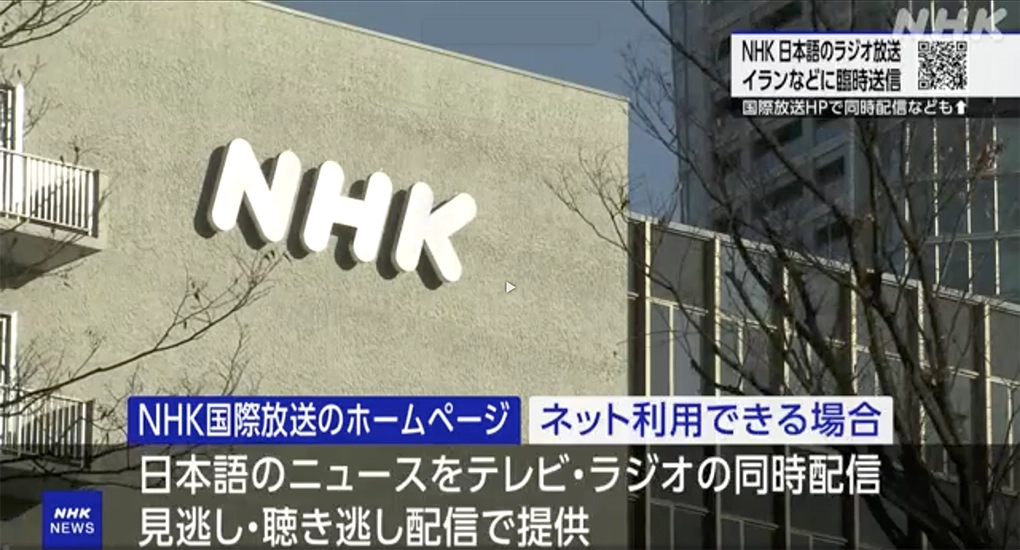
In light of recent developments in the situation in Iran, NHK has begun temporary shortwave transmissions of its Japanese language international radio service, NHK WORLD-JAPAN Radio. NHK’s mission as an international public service media has led to this initiative to provide essential information to Japanese nationals residing in or travelling in the region.

Following the attacks on Iran by the United States and Israel, Internet connectivity and international telephone services in the region have become unstable resulting in limited access to information in Japanese. In response NHK has begun temporary shortwave transmissions of its Japanese language international radio service to provide essential information to Japanese nationals in the area the broadcast started at 11:30 AM Japan time (0230 GMT) on 1 March.

NHK normally broadcast six hours of shortwave programming every day to the Middle East. However, in view of the current situation the broadcast schedule has been expanded to provide a continuous 24-hour service. In addition to content from NHK Radio 1, the broadcasts will include safety and security information for those in the region.

For those in neighbouring countries or other areas where Internet access remains available NHK also provides Japanese language news on the NHK world Japan website, along with simultaneous and on demand streaming of its television and radio programmes.

The transmission schedule is:

Transmissions from the Yamata Transmitting Station (Japan)

The transmission schedule is:

Transmissions from the Yamata Transmitting Station (Japan)

Time (JST) Frequency

01:00–02:00

11915 kHz

02:00–04:00

11670 kHz

04:00–06:00

9665 kHz

06:00–08:00

11675 kHz

08:00–10:00

11660 kHz

10:00–14:00

17560 kHz

14:00–18:00

9700 kHz

18:00–22:00

9740 kHz

22:00–23:00

11685 kHz

23:00–01:00

9450 kHz


Transmissions from the France Relay Station (Issoudun)

Time (JST) Frequency

02:00–04:00

11800 kHz

12:00–14:00

6150 kHz

Japan Standard Time is nine hours ahead of GMT/UTC.
Budget cut weakens Germany’s international broadcaster DW

Budget cut weakens Germany’s international broadcaster DW

Budget cut weakens Germany’s international broadcaster DW

Following the reduction in the federal subsidy for Deutsche Welle (DW) for 2026, the Broadcasting Council, the Administrative Board and the DW management team convened a special joint session to discuss a comprehensive package of measures to achieve the required savings of 21 million euros. Under the plan, the Greek service will be discontinued and the journalistic portfolio in other languages scaled back. The German-language journalistic offering will be merged with the German language courses. Numerous positions across the organization will be eliminated, and investment funds significantly reduced. In purely numerical terms, around 160 full-time positions are affected, although the final number may vary. There will be no layoffs.


Dr. Karl Jüsten, Broadcasting Council Chair: “DW must remain a strong voice for freedom, especially in restricted media markets such as Russia and Iran. To do that, it needs reliable, long-term funding. Due to the cuts, the broadcaster will have to expect significant losses in reach. This is particularly troubling, as Russia and China are investing heavily in their state-run propaganda outlets while the US withdrawal from international broadcasting is creating further gaps. By reducing funding to DW, both the German and European perspectives will be weakened internationally – and that at a time when Europe urgently needs new partners and allies. We especially regret the closing of the Greek service. For over 60 years, it strengthened German-Greek relations and made the German perspective visible in Greece. We did not take this decision lightly and it was not approved without dissenting voices. Unfortunately, the forced savings made this step unavoidable.”


Dr. Achim Dercks, Administrative Board Chair: “The current budget cuts at DW come just two years after they implemented a savings package of 20 million euros. This is in direct contradiction to the pledge made by the government in its coalition agreement to strengthen DW. Without restoring its funding in the 2027 Federal Budget, rising costs across nearly all areas threaten to lead to long-term damage to journalistic quality, technical infrastructure and reach. It is only with adequate funding that Deutsche Welle will be able to successfully make its contribution to free reporting and against disinformation.”


DW Director General Barbara Massing: “The savings made necessary by the cuts and the lack of compensation for collective wage increases are extremely painful. They weaken our competitiveness at a time when a strong German and European presence is becoming ever more important geopolitically. At the same time, we will continue to advance DW’s quality initiative and digital transformation, launched several years ago – albeit at a slower pace. DW is widely regarded as a trusted and independent source of information, both in censored markets and in countries where Germany is building strategic partnerships. Sustainable funding for the future is crucial if we are to fulfill our journalistic mandate in a highly competitive global information space. Now is the time for the government and parliament to set the necessary course together. I am sincerely grateful to the members of the Broadcasting Council and the Administrative Board for their support, which was clearly evident during the meeting.”


In the 2026 federal budget, the German government reduced its subsidy to DW by 10 million euros to 415 million euros. At the same time, the failure to offset moderate pay increases from the existing collective bargaining agreement will generate an additional 11 million euros in costs. As a result, DW is required to reduce spending by a total of 21 million euros. The savings will be implemented in a socially responsible manner and in accordance with DW’s strategic priorities. Multiple areas of the organization will be affected.


DW language services


DW’s Greek-language service will be discontinued. This service provided independent information to audiences in Greece, including during the military dictatorship. It served as an important channel of dialogue during the euro crisis, conveying German perspectives to the Greek public. Greece has long been a member of the European Union and is a stable democracy with a diverse media landscape, which is why DW must make cuts in this area.


DW’s German-language offering will be restructured: The journalistic offering DW German and DW Learn German will be merged, with the budget nearly halved. Independent journalism and integrated language-learning elements will be combined into a clearly defined overall product focused primarily on learners at higher language levels (from B1/B2). The new format is aimed at audiences outside the DACH region – Germany, Austria and Switzerland – including learners in pre-integration programs abroad who are seeking reliable information about living and working in Germany and Europe. The service is designed to combine journalistic relevance with practical guidance while strengthening language skills. People  who speak German well enough to follow current affairs coverage in the language can access established German-language media brands and publishers online.


Changes to the journalistic portfolio


The budget for the language services ´Portuguese for Africa` and Dari/Pashto for Afghanistan will be reduced. The number of editions of the Spanish-language TV news will be reduced, while prime-time broadcasts will remain unchanged. Several programs will be discontinued: the Russian-language satire magazine Zapovednik (an external production), the arts and culture magazine Arts Unveiled, and the debate format Auf den Punkt in all language editions. Also ending are the science magazine Tomorrow Today in Portuguese (target country: Brazil), the environmental magazine Eco Africa in Portuguese, and the Europe-focused magazine Europeo in all seven language editions.


Infrastructure and Administration


More than one-third of the total savings will come from infrastructure and administrative areas, as well as from cost reductions achieved through the use of AI. Professional training programs and events are among the areas affected. Funding will also be cut for technical equipment, the further development of DW apps and building renovations. The expansion of new international correspondents’ offices will be slowed. Costs in production and distribution will also be further reduced.
[Source: DW press release]
United Kingdom becomes co-chair of the Media Freedom Coalition

United Kingdom becomes co-chair of the Media Freedom Coalition

United Kingdom becomes co-chair of the Media Freedom Coalition

The United Kingdom has been announced as the new co-chair of the Media Freedom Coalition (MFC), a global partnership of 51 countries working together to promote press freedom at home and abroad. 

The United Kingdom will officially take over the co-chair role on 1st March 2026 and will serve as co-chair for a two-year term alongside Finland, which became co-chair in July 2025.  The UK succeeds Germany, which has been MFC co-chair since January 2024.  

The UK, alongside Canada, co-founded the Coalition in 2019 and then served as inaugural co-chair until late 2021. Over four years later, the UK returns as co-chair with the Coalition having expanded its membership, range of activities, and impact. Through the Media Freedom Coalition, member countries work together in partnership with civil society and legal experts to support MFC members and other countries to strengthen media freedom globally and in their jurisdictions, including through reforming laws to better protect journalists and media workers. 

The UK would like to place on record its thanks to Germany as joint co-chairs in helping the coalition step up its response to the multiple issues threatening global public interest media today. While co-chair, the UK will work alongside Finland to guide an MFC that partners with members and interested countries, to strengthen approaches to media freedom. 

To do so, it will utilise the coalition’s collective expertise to help nations find ways to support a viable public interest media, navigate the opportunities and risks that stem from new technology, and tackle the specific challenges facing women journalists. 

The UK will also seek to raise the coalition’s profile, expand and strengthen its work by including new voices, strengthen the sharing of expertise, and support timely, effective advocacy. 

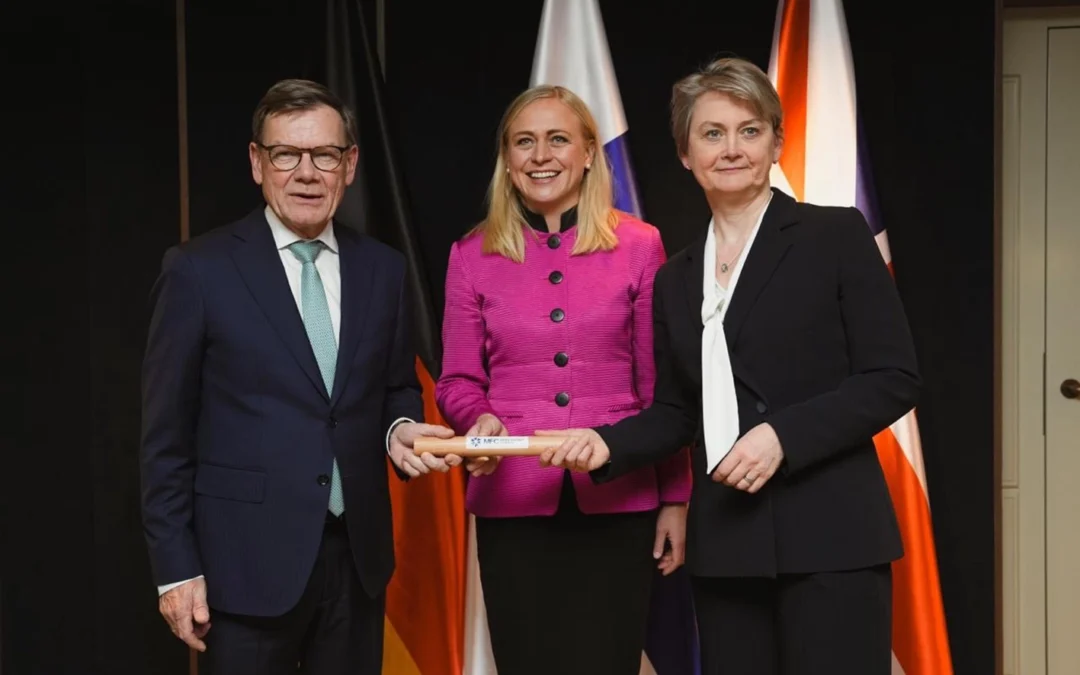
The British Foreign Secretary, Yvette Cooper, formally accepted the co-chairship from her German counterpart Johann Wadephul, Federal Minister for Foreign Affairs, at the Munich Security Conference.   

The Minister for Foreign Affairs of Finland, Elina Valtonen was also present for the handover.  

The Coalition’s 2024 annual report highlighted that the MFC has acted on 22 cases of journalists at risk during 2024, while embassies of MFC members had spoken out on a further 15 cases. The report also highlighted 123 actions by MFC member embassies around the world, such as visiting imprisoned journalists, providing funding, and organising events.  

To deliver its mission , the Coalition works closely with a group of the world’s leading press freedom and media support organisations (the Consultative Network – of which the AIB is a member), a group of leading lawyers and judges from around the world (the High Level Panel of Legal Experts on Media Freedom), and international organisations including UNESCO. The Coalition is supported by a dedicated staff team (the MFC Secretariat).  

Image: Johann Wadephul, Federal Minister for Foreign Affairs of Germany (left), Elina Valtonen, Minister for Foreign Affairs of Finland (centre), and Yvette Cooper British Foreign Secretary (right); credit: Ben Dance / UK Foreign, Commonwealth & Development Office

World Radio Day 2026: Radio’s Enduring Power in a Changing World

World Radio Day 2026: Radio’s Enduring Power in a Changing World

World Radio Day 2026: Radio’s Enduring Power in a Changing World

13 February marks World Radio Day 2026 – a moment to celebrate the world’s oldest electronic mass medium and its extraordinary resilience.

As the AIB noted in its special publication marking World Radio Day a decade ago, radio is both a cultural force and a global industry – a medium that touches billions every day and generating tens of billions of dollars in revenue worldwide. That fundamental strength has not diminished. If anything, radio’s importance has grown.

Across continents, radio remains:

  • The most accessible medium – free-to-air, affordable, and available on devices from battery-powered receivers to smartphones
  • A lifeline in emergencies – from earthquakes and cyclones to conflict zones, where mobile networks fail but radio continues
  • A trusted source of news – particularly in fragile or restricted media environments
  • A driver of social cohesion – creating shared national conversations and community connection

Today, radio is delivered across AM, FM, DAB/DAB+, satellite and IP platforms, with streaming and on-demand audio expanding reach to new generations. Yet the core strength remains unchanged: intimacy, immediacy and human connection.

The numbers tell the story

  • The BBC World Service reports a weekly global audience of over 200 million across platforms, with radio continuing to account for a substantial share of its reach.
  • Radio France Internationale (RFI) reaches tens of millions of listeners worldwide each week, particularly across Africa where FM partnerships and digital streaming extend its footprint.
  • In many countries, weekly radio reach remains above 80–90% of the adult population, demonstrating sustained mass appeal.
  • Industry data consistently shows radio as one of the most trusted news sources globally.

AIB members: Innovating while preserving reach

AIB members continue to demonstrate radio’s adaptability:

  • Expanding FM networks across Africa and Asia to strengthen local access.
  • Deploying portable transmission systems and “radio-in-a-box” solutions in crisis environments.
  • Integrating IP streaming, mobile apps and social media interaction to complement terrestrial broadcasting.
  • Delivering educational programming, youth engagement initiatives and multilingual services for international audiences.

From global broadcasters to regional and community stations, AIB members ensure that radio remains both technologically modern and socially essential.

Radio’s second century

As we move further into radio’s second century, its hybrid future is clear: terrestrial broadcasting and IP distribution will coexist, reinforcing resilience, reach and relevance.

On World Radio Day 2026, the AIB salutes presenters, producers, engineers, editors, correspondents, technologists, regulators and listeners everywhere.

Radio remains innovative. Radio remains trusted. Radio remains indispensable.

Trailblazing surgeon Professor Kelvin Kong delivers 2026 Wang Gungwu Lecture

Trailblazing surgeon Professor Kelvin Kong delivers 2026 Wang Gungwu Lecture

Trailblazing surgeon Professor Kelvin Kong delivers 2026 Wang Gungwu Lecture

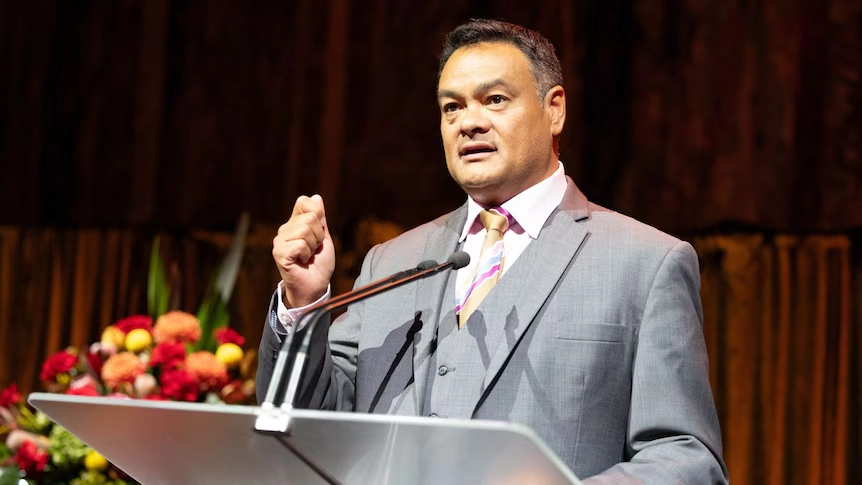
Surgical pioneer Professor Kelvin Kong AM presents the 2026 Wang Gungwu Lecture, premiering on Friday 20 February at 8:00pm AEDT on ABC Australia and ABC iview.

In its fifth year, the annual Wang Gungwu Lecture celebrates the contributions of inspiring Chinese Australians to business, science, politics, education, sport and culture.

Professor Kong is a proud Worimi man of Chinese Malaysian heritage and recognised as Australia’s first Indigenous surgeon. He has dedicated his life to improving the health of others through his work in paediatric and adult otolaryngology, head and neck surgery and his distinguished career spans medicine and policy development with a focus on improving health outcomes for Indigenous communities.

In an uplifting address delivered at Parliament House’s Great Hall in Canberra, Kong honours the sacrifices of his Chinese ancestors who endured war and poverty and his Aboriginal family members who faced structural barriers and policies of exclusion.

Kong also addresses the ongoing challenges faced by Chinese and First Nations peoples who experience racism, microaggressions and assumptions around identity, and reflects on his own experiences navigating his identity and a sense of belonging.

“I’m so humbled by this,” Professor Kong said upon finding out he had been offered to deliver this year’s lecture. “There are so many amazing Chinese Australians in this country that I put on a pedestal and I’m probably sitting on the bottom of that list, so to think that I’m worthy of a conversation makes me extremely honoured.”

Minister for International Development, Minister for Small Business and Minister for Multicultural Affairs, the Hon. Dr. Anne Aly said, Chinese-Australians are the largest multicultural community in the country. Spanning many generations, languages and origins, contributing to every aspect of Australian society.

“Our national story weaves ancient songlines and migrant journeys, with inspiring Australians such as Professor Kelvin Kong AM bringing that story to life. As a Worimi man of Malaysian Chinese heritage, he embodies the intersection of histories that have shaped this country and demonstrates how diversity strengthens our institutions and our shared sense of purpose.”

ABC International Head Claire M. Gorman said, “We are delighted to be bringing Professor Kong’s story to audiences in Australia and to the Asia Pacific across our ABC TV, digital and social platforms, celebrating a unique First Nations and Chinese migrant experience. This is our fifth year of working with the National Foundation of Australia China Relations in producing the Wang Gungwu lecture. It’s a productive partnership which provides a vehicle for us to tell the story of modern Australia to audiences across our region.”

Chair of the National Foundation for Australia-China Relations and the lecture’s host Marina Go AM, said “Professor Kong is an inspiration. He brings to his lecture his skill as a surgeon, a sense of awe at the gift of hearing, and authenticity as a storyteller. As he highlights in his own life the extraordinary contributions of both Chinese-Australians and the Traditional Owners, he brings us together as a nation”.

About the Wang Gungwu Lecture

The annual Wang Gungwu Lecture, named after eminent Chinese historian Professor Wang Gungwu AO, CBE, celebrates the substantial and longstanding contributions of Chinese Australians to Australia’s national story.

The Lecture is a partnership between ABC International and the National Foundation for Australia-China Relations, an initiative of the Department of Foreign Affairs and Trade.

Previous speakers have included Olympic diving champion Melissa Wu OLY, business leader Ming Long AM, Australian Children’s Laureate and author/illustrator Gabrielle Wang, and former Australian of the Year and paediatrician Dr John Yu AC.

Where to watch:

  • The 2026 Wang Gungwu Lecture will premiere on ABC Australia and ABC iview at 8:00pm AEDT on Friday 20 February.
  • It will also be available on demand via ABC Asia from 9:00am AEDT on Saturday 21 February.
Australia mandates AI disclosure for radio

Australia mandates AI disclosure for radio

Australia mandates AI disclosure for radio

​The Australian Communications and Media Authority (ACMA) has registered updated rules for commercial radio broadcasters that include new requirements for content broadcast around school drop-off and pick-up times, and also for disclosing artificial intelligence use.

Under the Commercial Radio Code of Practice 2026, radio stations will be required to let their audience know when a synthetic voice is being used to host a regularly scheduled program or news broadcast. This is the first time AI has been addressed in a broadcasting code of practice.

Broadcasters will also have to give special care when airing content between 8-9am and 3-4pm on school days, when children are more likely to be listening.

ACMA Chair Nerida O’Loughlin said the new rules would allow audiences to make more informed decisions about their listening habits: “Broadcasting rules must keep pace with technology and with community expectations. AI is a powerful tool that offers a lot of innovation for broadcasters. 

“However, listeners want greater transparency about when AI is being used. We welcome the commitments by the radio industry to address listener concerns.

“Listeners are also worried about inappropriate content at peak travel times when families listen together.

“These new rules set clear time windows where broadcasters must consider whether their content is suitable for children, giving parents and carers greater confidence when tuning in.”

The revised code, which was developed by industry group Commercial Radio & Audio (CRA), also includes strengthened provisions around corrections for errors in news coverage and greater transparency in complaints reporting.

A significant number of submissions to the review called for strengthened rules around the broadcasting of Australian music. The new code includes changes to the station categories that determine how much Australian music must be played to better reflect contemporary broadcasting practices and music genres.

The ACMA will be working closely with CRA and the commercial radio industry over the coming 12 months to ensure stations are applying the new categories correctly and meet their longstanding Australian music obligations, including in relation to new Australian music.

As with all the provisions in the code, the ACMA expects that licensees with comply with their obligations to broadcast Australian music.

“Commercial radio is an integral part of Australia’s media landscape and these rules will help strengthen trust between broadcasters and their audiences.

“We would also like to see broadcasters voluntarily extend the code safeguards to content available on their on-demand streaming services. If they do not, we expect that new regulations may need to be put in place so that listeners know what to expect no matter how they tune in,” Ms O’Loughlin said.

The Commercial Radio Code of Practice 2026 will come into effect from 1 July 2026.