In September, the programme of NHK WORLD TV comprises the following hightlights:
Orda Cave
A 300-million-year mystery of creation
Sep 9 Sat 15:10/ 21:10/ Sun 3:10/ 9:10 (UTC) <49 min.>
Nestled at the foot of Russia’s Ural Mountains, Orda Cave is said to be the site of the world’s most beautiful view. For the first time in history, the view has been recorded with a 4K camera, providing entrée to an underground world. The cave’s transparent water and white gypsum minerals lie beneath a field of snow. A specialist explains the mystery behind the cave’s origin, a tale of land and climate change that reaches back 300 million years.
Zhangjiajie’s Miracle Stone Forest
Bird’s-eye view of a Chinese World Heritage Site
Sep 16 Sat 23:10/ Sun 5:10/ 10:10/ 17:10 (UTC) <49 min.>
Thousands of 200-meter-high rock pillars jut out from Zhangjiajie’s Stone Forest. The UNESCO World Heritage Site is known as the inspiration for the world of the movie Avatar. Much of the area is not open to the public, but NHK obtained permission to document its unparalleled beauty using a 4K drone camera. Close-up images of the pillars, along with a perspective on the lives of the inhabitants, reveal the magic of this secluded treasure.
A Tale of Love and Honor
Life in Gion
Sep 23 Sat 15:10/ 21:10/ Sun 3:10/ 9:10 (UTC) <49 min.>
The doors to the 200-year-old Tomiyo tea house open to our cameras to provide a glimpse of the lives of geisha, or geiko as they are known in Kyoto. 77-year-old Kimi is Tomiyo’s eighth generation okami proprietress. She faces the difficult decision of when to pass on her responsibilities to her 45-year-old daughter, who also has outside interests. Tradition and modernity converge in this candid portrait of a rarefied world.
CYCLE AROUND JAPAN
A Summer Journey in Southern Hokkaido
Sep 30 Sat 0:10/ 6:10/ 12:10/ 18:10 (UTC) <49 min. 30 sec.>
This is a 500-kilometer bike ride through the grand scenery of Japan’s northernmost prefecture. The city of Hakodate offers a mix of cultural influences from East and West. Down the road, a port city keeps busy in summertime with kombu kelp drying. The trip includes stops at a dairy farm and a watermelon patch, evidence of the close connection between the people and the land.
Euronews, in partnership with German regional media outlets and with the support of the Google News Lab, launches a series of 9 portraits of German people in 360° videos, produced in the weeks before the German federal election.
Following its innovative coverage of the French presidential election earlier this year, Euronews launches its immersive coverage of the German campaign with a series of portraits of voters produced using VR360 technology.
The unique project created by Euronews, one of the world’s pioneers in the production of immersive video reports, is backed again by the Google News Lab.
Germany has consistently made headlines over the past year, whether for its role in Greek debt crisis, controversy over its immigrant policy or its targeting by terrorists. Chancellor Angela Merkel, in a post-Brexit post-Trump world, has at times seemed embattled, under fire from both the left and the right wing. She remains popular, but social-democrats hope to dethrone “the most powerful woman in the world” after almost 12 years in office.
To report on this fascinating situation, immersive journalism provides a fresh perspective on election cycle and a way to better listen to and understand the issues affecting the German electorate. This storytelling format also empowers German voters to have a say, express their hopes and worries in the run-up to this election.
Before the election day on September 24, Euronews’ journalists Carolin Küter and Lena Roche and partner journalists set out to meet the people of Germany, whether they intend to vote or not.
The series of nine 360° episodes is being produced in six languages: German, English, French, Turkish, Arabic and Russian.
After the vote, a tenth episode will gather the voters’ reactions in an interactive virtual-reality environment produced in partnership with German start-up Vragments.
Thomas Seymat, VR & immersive journalism editor, Euronews
“We are very excited to be using immersive journalism to our international audience on the ground in Germany ahead of this very important vote for the country, and for the European Union. With our extensive 360° video experience, and with the hard work of our German colleagues, we are looking forward to bring local German voices to the global stage.”
Isabelle Sonnenfeld, Head of Google News Lab (DACH region)
“During the French presidential election we already observed the positive impact these 360° stories had. Each episode gave voice to a voter and his or her personal perspectives. 360° video on YouTube in combination with cardboard offers a unique experience as it creates empathy with the person, the personal story and the environment. We are proud to support this second immersive storytelling project produced by Euronews in the run up to the German election. It combines collaboration with experimentation which lies at the heart of what the Google News Lab thrives for.”
Joachim Dreykluft, Head of Digital, Schleswig-Holsteinischer Zeitungsverlag
“Elections are a celebration of democracy. And as with all great celebrations, we need things that bring us together, in substance and emotion. 360° videos are a wonderful way for us to combine both at shz.de. They convey relevant content. And they create a proximity and immediacy to people and their environment as no other form of representation.”
Germany 2017 in 360°
The series is simultaneously broadcast by Euronews and the media partners. Starting on August 28, they will be available on euronews.com in the respective languages, Euronews’ YouTube channels and its apps. If you have a Cardboard or VR headset at hand you will get a fully immersive experience.
The statement reads: “Today the Cambodian government has launched what appears to be a campaign against key FM radio stations that carry Radio Free Asia (RFA) and Voice of America (VOA) broadcasts. These FM stations are a critical means for the Cambodian people to access accurate and independent news about Cambodia and the world. Reports indicate that at least one station has been intimidated into indefinitely ceasing broadcast of any RFA and VOA content, and another station has been completely shut down.”
“As networks supported by the Broadcasting Board of Governors, RFA and VOA work tirelessly to provide top-notch investigative journalism and reporting to audiences in Cambodia. This disturbing development is part of a pattern of intimidation and harassment of independent news sources that coincides with the run up to the 2018 elections. We call on the Cambodian government to reverse this decision to muzzle objective sources of news and to allow all impacted stations to resume normal operations immediately.”
The BBC World Service launched its first new language service in its biggest expansion since the 1940s on 21 August.
A digital Pidgin service for West Africa has launched and will be followed by new online services in Amharic, Afaan Oromo and Tigrinya, aimed at Ethiopia, Eritrea and diaspora audiences around the world. Further services, including Korean, are set to launch from this autumn. This expansion means BBC News will operate in more than 40 languages.
The BBC World Service expansion comes following a funding boost of £289m from the UK Government.
Director-General of the BBC Tony Hall (pictured left) says: “Today marks the start of a new chapter for the BBC.
“The BBC World Service is one of the UK’s most important cultural exports. In a world of anxieties about ‘fake news’, where media freedom is being curtailed rather than expanded, the role of an independent, impartial news provider is more important than ever. The new services we’re launching will reach some of the most under-served audiences in the world.”
World Service Director Francesca Unsworth (right) says: “For more than 80 years the BBC World Service has brought trusted news to people across the globe. I’m delighted that millions in West and then East Africa will be able to access the BBC in the languages they speak.
“The BBC World Service expansion will also bring benefits to audiences in the UK. Having more journalists on the ground will enrich our international reporting, bringing news from areas which are often under-reported.”
Pidgin is spoken by an estimated 75m people in Nigeria alone, with additional speakers in Cameroon, Ghana, and Equatorial Guinea.
The Pidgin service is fully digital featuring six daily editions of BBC Minute – a 60-second audio news update – followed by two daily news video bulletins in November. Two further services for West Africa – Yoruba and Igbo – will launch at the beginning of next year.
The Amharic, Afaan Oromo and Tigrinya services will launch online and on dedicated Facebook pages next month. This will be followed later in the year with shortwave radio services in each language, consisting of a 15-minute news and current affairs programme, followed by a 5-minute Learning English programme, from Monday-Friday.
BBC World Service has called on the Iranian authorities to reverse a new order which appears effectively to freeze the assets of BBC staff in Iran, preventing them from selling or buying property, cars and other goods.
BBC World Service Director Francesca Unsworth said: “We deplore what appears to be a targeted attack on BBC Persian staff, former staff, and some contributors. It is appalling that anyone should suffer legal or financial consequences because of their association with the BBC.
“We call upon the Iranian authorities to reverse this order urgently and allow BBC staff and former staff to enjoy the same financial rights as their fellow citizens.”
The BBC’s Persian Service is banned in Iran and BBC Persian staff and their families routinely face harassment and questioning from the authorities.
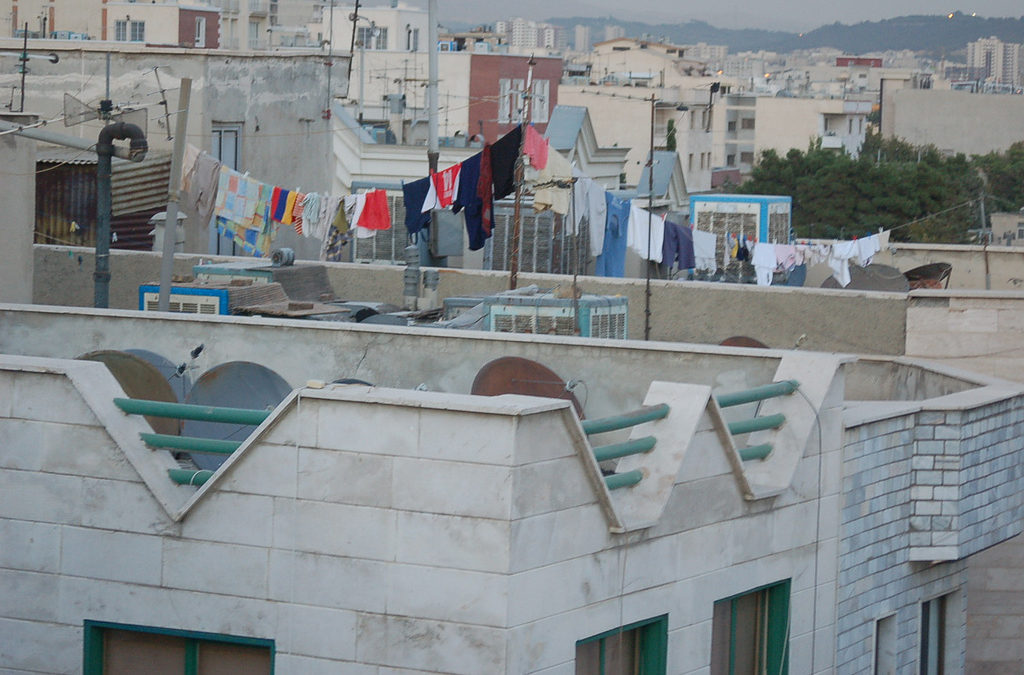
Reception of foreign TV and radio via privately-owned satellite dishes is banned in Iran, although there is widespread flouting of this rule. Dishes are often hidden on balconies and below rooftop parapets, as the image above from BBC Persian shows.
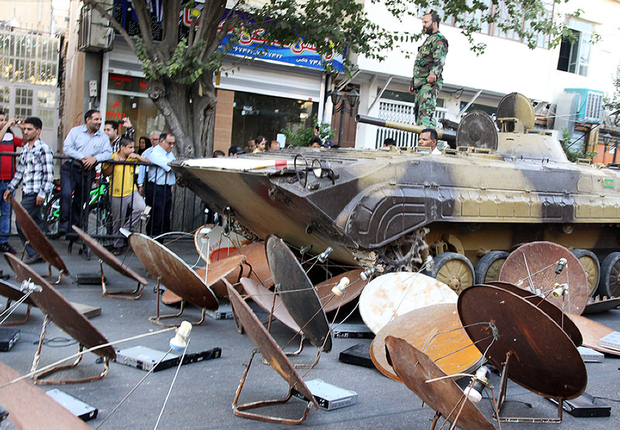
In July 2016, authorities seized and destroyed a reported 100,000 satellite dishes and receivers. According to media reports from Iran, General Mohammad Reza Naghdi, the head of Iran’s Basij militia, oversaw a destruction ceremony in Tehran after the equipment was confiscated and warned of the impact that satellite television was having in the country.
“The truth is that most satellite channels… deviate the society’s morality and culture,” AFP news agency reported him as saying. “What these televisions really achieve is increased divorce, addiction and insecurity in society.”
Naghdi claimed that a total of one million Iranians had already voluntarily handed over their satellite dishes to authorities. Iranian conservatives regularly denounce the channels as an attempt to corrupt Iranian culture and Islamic values and the police regularly raid neighbourhoods and confiscate dishes from rooftops. Under Iranian law those who distribute, use, or repair them can be fined up to $2,800.
Despite the ban on the BBC, the latest figures show the BBC World Service has an audience of 13m in Iran, making it BBC News’ seventh biggest market worldwide.
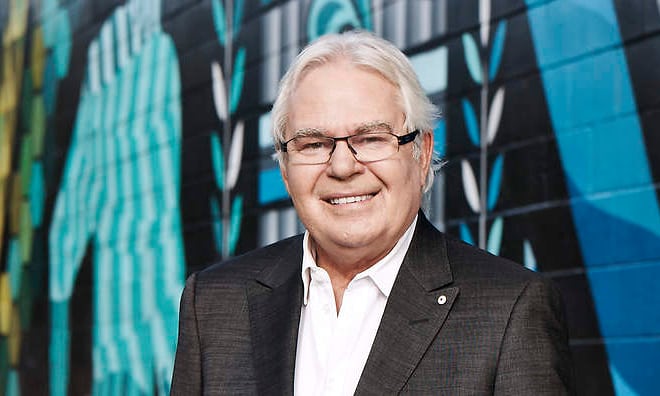
The AIB is saddened to learn that Les Murray, the former football broadcaster and known to football fans across Australia as “Mr Football”, has died aged 71.
Regarded by many as the voice of Australian football, Murray had been battling a long-term illness, according to his long-term employer SBS. He had retired from his role on the The World Game in July 2014, having played a major role in the game’s development in Australia since the 1980s.
In a statement, SBS said: “Les will be remembered not just for his 35-year contribution to football in Australia, but for being a much-loved colleague, mentor and friend who has left a unique legacy. To say he will be sorely missed is an understatement.
Murray pioneered football broadcasting in Australia following the launch of the National Soccer League in 1977, initially on Channel 10, and went on to become the voice of World Cup coverage on SBS for several decades. He hosted eight World Cups in total, his debut coming at Mexico 1986.
He also worked across the Asia-Pacific region as Chair of the ABU Sports Group for more than 10 years, and had been an advisor to the Association for International Broadcasting. Murray was also a member of the FIFA Ethics Committee.
Murray came to Australia from his native Hungary at the age of 11 after the 1956 uprising, without any knowledge of the English-language. Murray began his career at SBS in 1980 as a Hungarian subtitle writer, but it was his passion for football that rapidly brought him into the network’s sports team. By 1986, he was hosting SBS’s World Cup coverage. As an SBS football commentator and presenter, he covered eight World Cups before retiring in 2014.
Tributes have flown from all circles, with Australian Prime Minister Malcolm Turnbull, the football community and fans sharing their accolades of the lauded sports commentator.
Over his career, he championed the cause of immigrants in Australia, devoting much time to breaking down the many barriers that newcomers to the country had to face and helping to develop the country as a model of tolerance to all races. It was fitting that he worked for SBS, Australia’s multicultural network.
Les Murray will be greatly missed by his colleagues at SBS, the AIB, ABU and across the world of football and sports broadcasting.



 Director-General of the BBC Tony Hall (pictured left) says: “Today marks the start of a new chapter for the BBC.
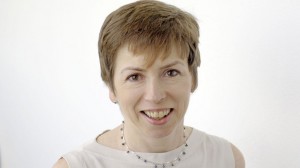 World Service Director Francesca Unsworth (right) says: “For more than 80 years the BBC World Service has brought trusted news to people across the globe. I’m delighted that millions in West and then East Africa will be able to access the BBC in the languages they speak.