13 October 2017
Eutelsat Communications (NYSE Euronext Paris: ETL) has acquired NOORSAT, one of the leading satellite service providers in the Middle East, from Bahrain’s Orbit Holding Group.
Established in 2004, NOORSAT is the premier distributor of Eutelsat capacity in the Middle East, serving blue-chip customers and providing services for over 300 TV channels almost exclusively from Eutelsat’s market-leading Middle East and North Africa neighbourhoods at 7/8° West and 25.5° East.
The acquisition of NOORSAT fits with Eutelsat’s broader strategy of streamlining distribution within selected core video neighbourhoods where it can create value. It will allow Eutelsat to strengthen the long term commercial development of its market-leading video positions in the Arabic world and increase its direct access to end-customers, facilitating stimulation of High Definition TV take-up and the upselling of incremental video services.
Michel Azibert, Eutelsat Chief Commercial and Development Officer, said: “NOORSAT’s capabilities and market knowledge will further consolidate our longstanding position in the dynamic Middle East video market. By integrating NOORSAT’s service platform and teams we are underlining our commitment to serving customers in one of the key markets within in our global footprint.”
Eutelsat has acquired 100% of NOORSAT for a consideration of US$75 million, debt free and cash free. The acquisition will add upwards of US$15 million to Eutelsat’s consolidated revenues on an annualised basis after the elimination of the capacity leased by Eutelsat from NOORSAT. Its slightly dilutive impact on Eutelsat’s EBITDA margin will be absorbed within the current margin objectives.
(Source: Eutelsat press release)
12 October 2017
The Association for International Broadcasting has worked in the global media business for almost a quarter of a century. As the organisation moves towards its 25th anniversary in 2018, we’re making more of our archive of conversations, magazines and video footage available.
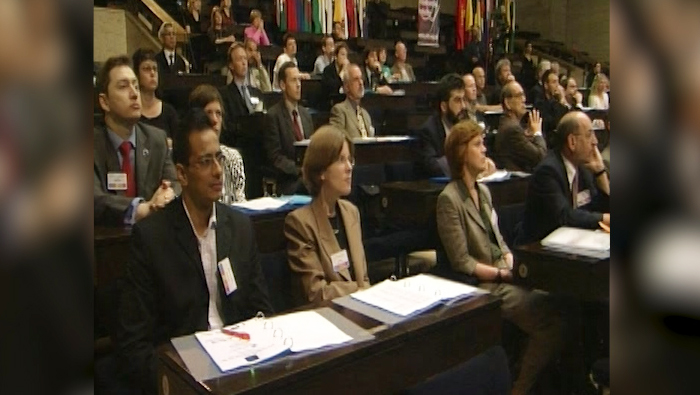
 The latest video we have included in our conference archive includes highlights of the 2004 AIB Global Media Business conference in Prague. This was hosted at the then headquarters of Radio Free Europe/Radio Liberty which, before the fall of the Soviet Union, was the Czechoslovak parliament building. Guests attended from across the world, and the subjects under discussion ranged from “fake news” (before that name was coined), to the need for technology companies to adopt the mindset of broadcasters, through to media in the Arab World.
Looking back at this conference, it’s clear that the AIB brings together experts on subjects that are at the cutting edge of the global media industry. Have a look and see what you think – and you can read about the event in the conference report that we published in The Channel, our global media magazine.
10 October 2017
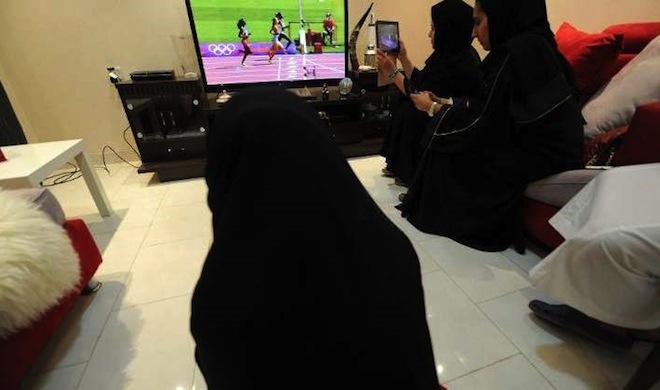
With an 86% reach of satellite TV households in the Kingdom of Saudi Arabia (KSA), Arabsat is now gearing up to offer the next generation video and connectivity experience to viewers.
A recent analysis by Frost & Sullivan, global research and consulting company finds that Arabsat, one of the world’s leading satellite operators, reaches 86% of satellite TV households in the Kingdom of Saudi Arabia (KSA) and nearly 78% in GCC, including Bahrain, Kuwait, KSA, Oman, Qatar, and UAE.
Arabsat, carries over 500 TV channels, 200 radio stations, pay TV networks and a wide variety of HD channels reaching nearly 4 million households in GCC. Operating six satellites at 3 orbital positions, the operator offers the youngest regional fleet with widespread coverage over the region.
“Satellite services continue to be an essential way of providing entertainment and communications across the entire MENA region where network connectivity is not uniform,” says Y.S.Shashidhar, Managing Director, Frost & Sullivan MENA. “Arabsat with its constant emphasis on innovativeness and partnerships is firmly poised to help its broadcaster customers connect to a wide user base in the region.”
Frost & Sullivan’s Research Director, Vidya S Nath adds, “Arabsat’s exclusive and strategic partnerships with leading international and regional broadcasting networks have enabled it to establish a significant footprint over GCC, especially KSA.”
Frost & Sullivan finds growing demand among end users for high quality of transmission resulting from the rapid increase in the penetration of 4K and HDR TV sets, receivers, Internet streaming boxes as well as cellular hand-held devices. Broadcasters and service providers eyeing viewership retention for boosting their revenue need partners that can offer optimal quality of transmission as well as the widest reach.
“Innovativeness to ensure the highest quality of experience for the viewer stands as our core undertaking and motto,” says Khalid Balkheyour, President and CEO, Arabsat. “Such keenness on innovativeness has both motivated and helped us build an exclusive portfolio of leading regional networks in the region, including the foremost MBC Pro Sports along with exclusive rights to broadcast the Saudi Football League, MBC full HD bouquet, and Rotana full HD bouquet,” he said. “Alongside, to establish our footprint in the Maghreb region, we have launched several strategic initiatives. We want to offer the viewers in Maghreb unparalleled content offering and hence we have on board exclusive access to the complete Mauritanian bouquet, the complete FTA MBC bouquet, the My-Maghreb package as well several other attractive channels across different genres.”
ARABSAT’s ability to ensure localisation combined with international diversity of content makes it a platform of choice for both broadcasters as well as viewers in the MENA region. It has a strong portfolio of exclusive first-class channels for the region such as France 24 Arabic and English HD, TV5 Monde Style HD, among several others.
2 October 2017
BBC News today began a major expansion in India, launching news services in four Indian languages – Gujarati, Marathi, Punjabi and Telugu – and relaunching a nightly TV news bulletin in Hindi, BBC Duniya, to be broadcast on India News.
The new services are available online and on social media, with a Telugu TV bulletin, BBC Prapancham, also starting tonight. This will be broadcast on Eenadu TV Andhra Pradesh and Eenadu TV Telangana.
This forms part of a significant BBC investment in India, including an expanded news bureau in Delhi with 2 new TV studios. The Delhi bureau is now the BBC’s largest outside the UK. It will become a video, TV and digital content production hub for the whole of South Asia.
This follows a huge talent drive in India, with the BBC recruiting more than 150 new journalistic staff from across the country.
Director General of the BBC, Lord Hall of Birkenhead, is in India for the launch of the services. Speaking from Delhi, where he was officially opening the BBC Bureau, he said:
“I’m delighted to be in India to mark such a significant milestone for the BBC. For decades, audiences in India have trusted the BBC to bring them impartial, independent news, and today millions more have the chance to access the BBC in their own languages.
“We know the BBC is already held in great regard and affection across India, and we want to bring BBC News to new audiences, particularly the next generation of news consumers. We’ve recruited amazingly talented new journalists from across India, and it’s been an honour to meet many of them today.
“I’m also pleased the BBC is working with new TV partners in India News and Eenadu TV.”
K.Bapineedu, CEO of Eenadu TV Network, said:
“The BBC has established its brand name as a credible news channel across the globe. The initiative from the BBC to produce international stories with a global perspective, in the Telugu language and to be broadcast on the ETV Network , will add value to our existing endeavour of reaching the Telugu audience with the highest reach and authenticity.”
Kartikeya Sharma, Founder and Promoter of iTV Network, the owner and operator of India News, said:
“The BBC is known for its well-researched and unbiased content, which will now reach our viewers in a language and format they can easily comprehend. India News is acknowledged as a channel that captures the pulse of the nation and promotes a brand of direct and responsible news coverage. With the coming together of the two, our viewers can look forward to getting a global perspective on stories of international significance from networks they can trust.”
BBC News already broadcasts to 28m people in Bengali, Hindi, Tamil and Urdu, as well as English.
The investment in India comes as part of the BBC World Service’s biggest expansion since the 1940s, made possible by £291m investment from the UK Government. The BBC has already launched news in Pidgin, Afaan Oromo, Amharic, Tigrinya and Korean, with services in Yoruba, Igbo and Serbian to follow.
BBC Duniya is broadcast Monday-Friday at 1800 IST on India News. BBC Prapancham is broadcast Monday-Friday at 2230 IST on Eenadu TV Andhra Pradesh and Eenadu TV Telangana. Both bulletins will be fast-paced programmes giving audiences original journalism and a global perspective on the international and national stories of the day.
TV news bulletins in Marathi will be broadcast later this year, with Gujarati following next year.
Downloadable English language learning modules will also be available via our sites.
News in the four languages is also available on Facebook, Instagram, Twitter and YouTube.
The new websites are available as follows:
https://www.bbc.com/marathi
https://www.bbc.com/telugu
https://www.bbc.com/punjabi
https://www.bbc.com/gujarati
(Source: BBC press release)
1 October 2017
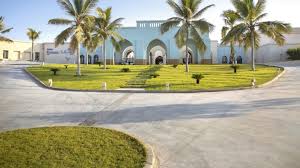
Arab Satellite Communications Organization – Arabsat – holds its 9th annual Satellite TV Broadcast Forum on the 3rd and 4th October 2017 in Rotana Resort, Salalah, Sultanate of Oman, under the patronage of His Excellency the Omani Minister of Information.
The Forum is attended by Arab and international media figures as well as owners and officials in the satellite television broadcasting industry and distinguished delegates from the Arab League and the Omani government.
Arabsat organises this forum annually to establish close contact with its customers, updating them on the latest trends and identifying their needs. During the Forum there will be a number of sessions focusing on TV HD satellite Broadcasting Technologies and related subjects.
Khalid bin Ahmed Balkheyour, President & CEO of Arabsat, thanked the Government of His Majesty Sultan Qaboos bin Said of Oman represented by the Ministry of Information for the kind patronage and support received by Arabsat from the Omani Ministry of Transport and Telecommunications.
Balkhyour added that Arabsat will also showcase the latest satellite TV broadcasting technologies offered by the 6th generation satellites to its customers.
(Source: Arabsat press release)

29 September 2017
Alhurra Television is debuting an original documentary, Laughter in the Time of Terrorism, which tells the story of Arab satirists who are using humor to fight one of the most dangerous organizations in the world, ISIS. The two-part documentary highlights comedic Arab hosts who view ISIS’s ideology and barbarism through the lens of sarcasm and jest to expose the lies of the brutal organization.
The documentary centers on how these satirists challenge the barbarism of the Islamic State and highlight its hypocrisy. It examines how freedom of speech is constantly under threat from those espousing radical ideologies who seek to silence others with threat of retaliation. It also emphasizes the bravery of the satirists who effectively diminish the influence of terror groups like ISIS by artfully exposing the contradictions between their ideology and methods. These comedians are committed to their mission, which they persist in pursuing despite the inherent dangers of provoking ISIS, an organization that has massacred entire communities because they hold different beliefs.
Through interviews with the hosts of some of the most incisive satirical news programs across the Middle East and North Africa, Laughter in the Time of Terrorism documents the satirists’ experiences with intimidation efforts. Although they constantly receive death threats from the terror group ISIS and other radical militias, none of the comedians have any reservations about continuing their work. Lebanese, Palestinian, Libyan, Tunisian, and Moroccan humorists explain how they believe that making people laugh at ISIS will help to cast their fears away and is worth the known risks.
“In the recent years, several important programs have been using satire to challenge the influence of ISIS, diminish the prevalence of sectarianism, and condemn political corruption in the MENA region. We wanted to document the resilience of these satirists and examine the challenges they faced as a result of lampooning the extremist ideology of ISIS with biting humor,” stated MBN President Alberto Fernandez. MBN manages and oversees Alhurra Television. “Laughter in the Time of Terrorism exhibits how important freedom of expression is in fighting the extremist ideology of ISIS. This is a theme that Alhurra is committed to exploring, expanding the knowledge and perspective of our viewers.”
Laughter in the Time of Terrorism will air on Alhurra Television on September 30th at 20:00 (GMT).
(Source: Alhurra press release)
