
18 October 2018
From 13 to 15 November 2018 SatADSL is now living in the 21stAfricaCom. This is one of the major events on the African calendar in the areas of the digital economy, telecommunications and IT. Of course, like every year, SatADSL awaits you!
Since last year, the supply of SatADSL services has continued to grow: expand our satellite coverage, integration of iDirect solution alongside that of Newtec new beneficial commercial formulas … not to mention the upgrade continuing our Cloud service delivery platform (C-SDP), to facilitate the lives of our partners in terms of capacity management network and customer tracking. The AfricaCom show is a great opportunity to present all this in person and offer you tailored solutions for your specific needs.
Like every year, AfricaCom will take place at the Cape Town International Convention Center, South Africa, where more than 13,000 visitors are expected. On the sidelines of the fair, which brings together 450 exhibitors, stand 16 animated lectures by 400 speakers. This year, the topics are, among others, the acceleration of the digital revolution in Africa, the development of an ecosystem for startups, the opportunities of the Internet of Things (IoT – Internet of Things), building a digital society with the deployment of mobile finance and trade, and a large section dedicated to connectivity, including in the field of broadcasting.
The mere enumeration of these themes, SatADSL had to be present at the show. Our experience and the testimony of satellite ISPs operators attest: our satellite IP connectivity solutions, our business solutions and specific business-oriented solutions are tailored to meet the challenges of many industries in Africa in a market increasingly competitive.
The stand of SatADSL is “C65”. To accommodate in the best conditions, we invite you already to make an appointment with us via info@satadsl.net or +32 2 351 33 74.
More information AfricaCom: https://tmt.knect365.com/africacom
16 October 2018
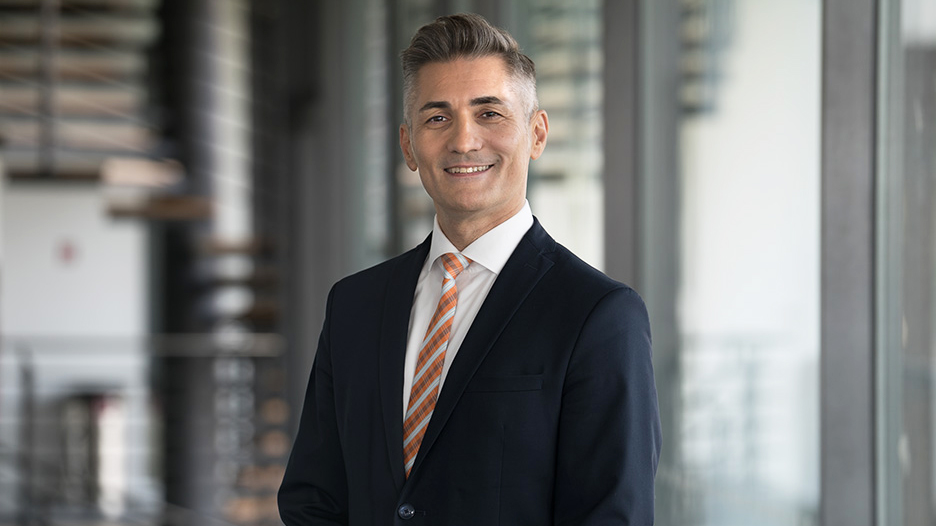
On November 1, 2018, Erkan Arikan will take over as head of Deutsche Welle’s Turkish language service. One of Arikan’s new responsibilities will be the development of a Turkish-language TV service which will initially go on the air as a Youtube channel.
The 49-year-old Arikan is leaving his position at WDR to move to Germany’s international broadcaster. He currently oversees the Turkish-language offerings of the international and intercultural radio program Cosmo, formerly Funkhaus Europa. Arikan also held this position from 2003 to 2008 before moving to a position as senior editor and moderator at ARD-aktuell in Hamburg. He worked as a reporter for NDR aktuell and for WDR Lokalzeit in Düsseldorf starting in 2013 before returning to manage the Turkish editorial team at Cosmo in 2016.
Gerda Meuer, DW’s Director of Programming: “Erkan Arikan is a seasoned journalist, a passionate reporter and a longtime chief editor. He is a proven expert in Turkish issues and is a doer with an innovative mind. He is the right man at the right time for DW. Much of his focus will be on the development of our new Turkish channel.”
Erkan Arikan: “During a period of rapid political change in Turkey, I am looking forward to taking up this journalistically engaging and challenging position at DW. Taking into account the currently strained relationship between Germany and Turkey, it will be a <noteworthy endeavor> to launch a Turkish-language video channel with the goal of building bridges between the two countries.”
Arikan came to Berlin as the son of Turkish guest workers, where he studied law and journalism at the Free University. Arikan interned at the TV news channel n-tv where he later worked as an editor and moderator until 2003. Arikan has both German and Turkish citizenship. He is married and is the father of two daughters.
DW currently offers comprehensive online news and information in Turkish with an editorial portfolio that includes an extensive social media presence. Individual articles are also distributed through partner portals. Fearing reactive measures by Turkish authorities, potential new partners are increasingly rejecting cooperation with independent Western news providers. This makes DW’s in-house efforts to strengthen its own platforms – along with the further expansion of social media channels – increasingly important.
(Source: DW press release)
6 October 2018
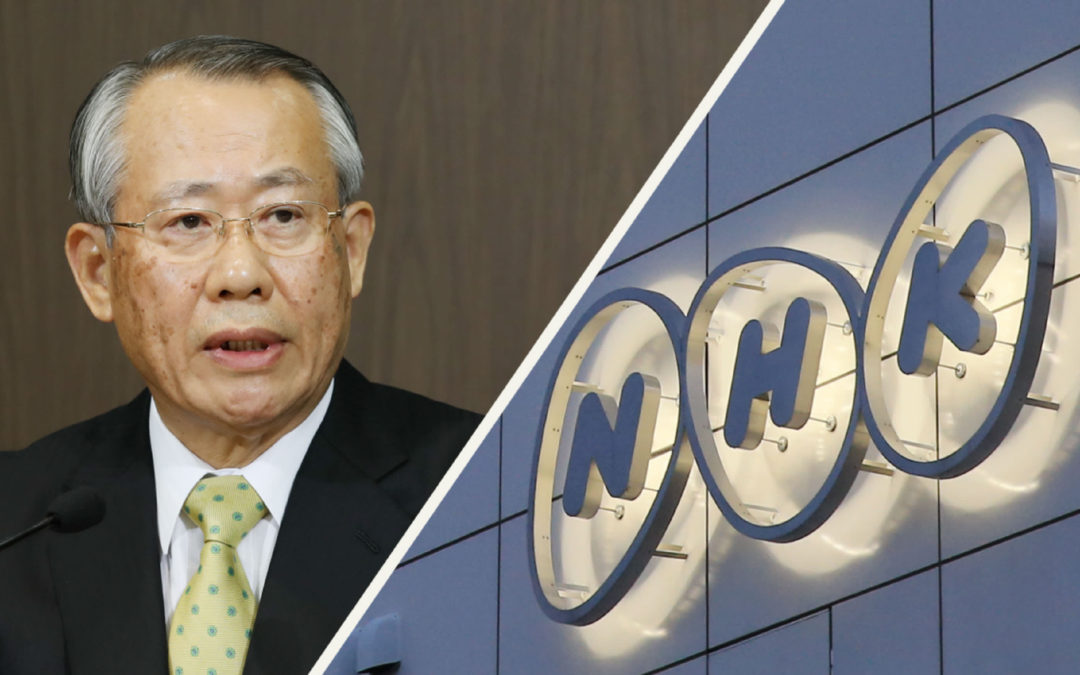
At the ABU General Assembly convened in the Turkmen capital of Ashgabat, Mr Ueda was elected to a term until the end of 2021. He is the ABU’s sixth President from NHK. He will continue to lead the ABU for the next three years from January 2019.
On his election he stated: “Our industry is now facing a historic transformation. We are seeing the emergence of new media brought about by the digitalization of broadcasting and widespread use of the internet. We in the broadcast media will not be able to survive unless we adapt to this change in the environment and evolve.”
Mr Ebrahimi Eren of TRT Turkey is the newly elected Co-Vice President who will work alongside Mrs Supriya Sahu, Director General of Doordrashan India, and Mr Sun Yusheng, Vice President CCTV & Executive VP CGTN, China who will both continue to serve the ABU as Vice Presidents.
(Source: ABU press release)

5 October 2018
Brussels, Belgium, October 4, 2018 Commercial Ka-band broadband services in Sub-Saharan Africa have been launched bySatADSL, bringing cost-effective coverage to communities and businesses.
Utilizing Avanti’s High Throughput Satellite (HTS) HYLAS 4, the new offering will provide consumer and corporate business connectivity which Internet Service Providers (ISPs) will be able to easily offer to consumers via SatADSL’s Platform-as-a-Service (PaaS) solution, the Cloud-based Service Delivery Platform (C-SDP). This includes VNO Flex and voucher-based services which are not currently available via other Ka-band offerings in the region.
“Providing fast, reliable and affordable connectivity is at the heart of what we do, and our latest solution empowers ISPs in Africa to cost-effectively provide satellite broadband to entire communities,” said Caroline De Vos, Chief Operations Officer and co-Founder of SatADSL. “This is made possible by our innovative C-SDP which mitigates the high investment costs traditionally associated with deploying satellite services.”
Through the Ka-Band offering, SatADSL intends to significantly improve the penetration of high capacity Internet in the region, offering connectivity in regions barely covered by mobile operators and where fiber access remains unavailable. The new services are expected to be fully up and running by the end of this year.
SatADSL’s C-SDP provides a complete OSS/BSS, carrier-grade, fully redundant platform to deliver satellite services via the cloud, eliminating the expense of deploying physical infrastructure. It lets satellite and teleport operators easily offer any service, including pre-paid, post-paid, volume-based, customer VNOs, contention-based, multicasting, and more, independently of the communications technology used.
Kyle Whitehill, CEO of Avanti, said: “We’re delighted to extend our partnership with SatADSL and support the delivery of affordable broadband across Africa. Our new satellite HYLAS 4 completes our coverage of Sub-Saharan Africa and with our reliable high-speed connectivity, we look forward to building on this partnership to help liberate the potential of people and businesses, wherever they are on the continent.”
The new services leverage the Newtec Dialog® multiservice platform and Newtec’s MDM2210 IP Satellite Modems, which feature an embedded Wi-Fi-router. This modem delivers throughputs of more than 100 Mbit/s and enables end-users to easily add numerous devices to the same satellite subscription.
For more information about the new offering, visit:www.avantiplc.com/hylas4.
1 October 2018
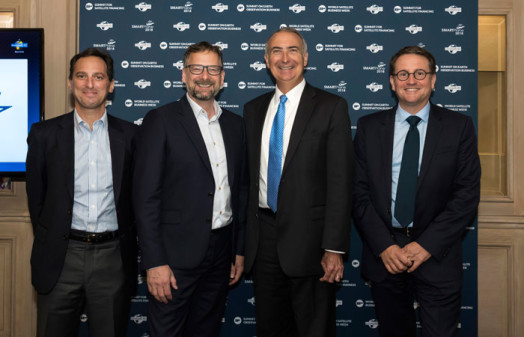
Leading global satellite operators – Intelsat (NYSE: I), SES (Euronext Paris: SESG), Eutelsat (Euronext Paris: ETL) and Telesat announced today the creation of a consortium called the C-Band Alliance, or CBA, in a move that could accelerate making mid ‐ band spectrum available for 5G services.
The CBA is designed to act as a facilitator as described in a recent U.S. Federal Communications Commission (FCC) proceeding featuring the companies’ market-based proposal to clear a portion of C-band spectrum in the United States. The formation of the CBA is a significant achievement and demonstrates the industry alignment necessary to make this mid-band spectrum available quickly, thus supporting the U.S. objective of winning the race to introduce terrestrial 5G services.
The market-based proposal was developed in response to a proceeding initiated by the FCC in August 2017, which led to the Notice of Proposed Rulemaking (NPRM) that was formally approved by the FCC on July 12, 2018 and published in the Federal Register of August 30, 2018. The proposal reflects the unique U.S. telecommunications environment and aims to protect the quality and reliability of the extensive services provided by satellite operators in the C-band spectrum to U.S. broadcasters, media, and data companies. The proposal establishes a commercial and technical framework that would enable terrestrial mobile operators to quickly access spectrum in a portion of the 3,700 to 4,200 MHz frequency band in the U.S., speeding the deployment of next-generation 5G services.
The proposal specifies the use of a consortium, now known as the CBA, to undertake the technical and commercial implementation of the spectrum clearing process. This process is necessary to repurpose the C-band spectrum for use in a 5G environment. The CBA will be led, effective immediately, by Bill Tolpegin, currently CEO of OTA Broadcasting, who will serve as Chief Executive Officer of CBA. Media sector veteran Preston Padden will serve as Head of Advocacy and Government Relations
A significant milestone in the progression of the proposal, the establishment of the CBA signifies that the satellite operators delivering the vast majority of satellite C-band services in the U.S. have agreed upon the key technical and commercial steps necessary to enable commercial implementation of the spectrum clearing process. The CBA also ensures that customer services are protected from potential interference as new wireless services are introduced into the cleared portion of the spectrum.
(Source: Eutelsat press release)
1 October 2018
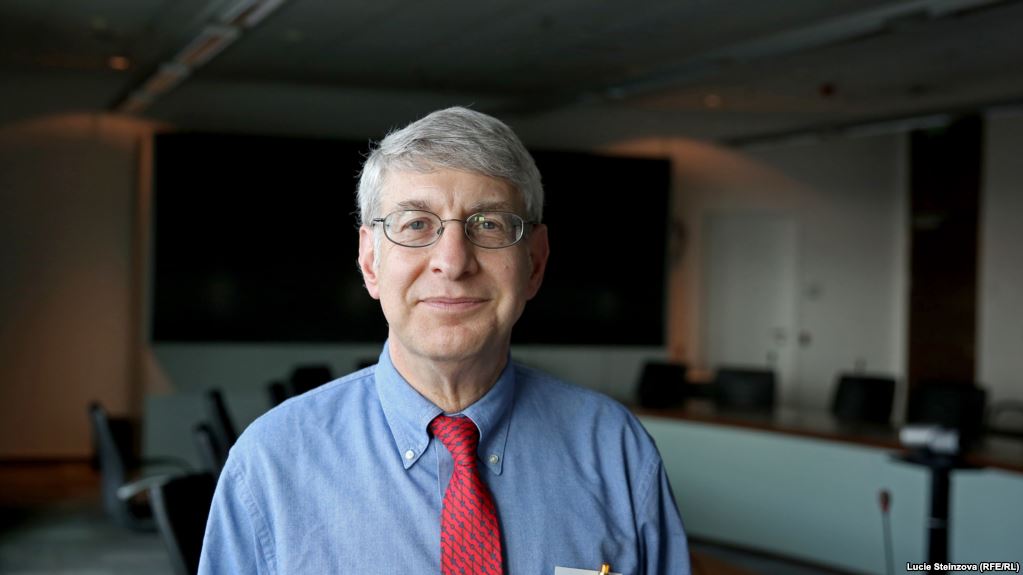
Radio Free Europe/Radio Liberty (RFE/RL) President Thomas Kent has announced he is leaving the organization effective October 1, 2018, after a two-year stint during which the company dramatically expanded efforts to combat disinformation and extremist propaganda in its coverage region.
In farewell remarks, Kent said, “It’s been an honor to lead RFE/RL, an essential source of professional, unbiased journalism for the countries we serve. I leave with gratitude to the entire RFE/RL staff for their commitment to our mission, and especially to our courageous correspondents working in some of the world’s most challenging environments.”
During Kent’s tenure, Current Time TV, a fresh alternative to Kremlin-controlled media, increased its brand recognition as a 24/7 Russian-language digital and TV network, with 84 affiliates in 19 countries and upwards of 540 million video views — at least half from inside Russia — for the 12-month period ending in July 2018. RFE/RL also launched targeted websites providing independent news to Russia’s North Caucasus, Middle Volga, and Siberian regions; laid the groundwork to resume local news coverage in Romania and Bulgaria; and developed high-impact programs providing the only sustained journalistic response to extremism in Central Asia and the Balkans. Under Kent’s leadership, RFE/RL’s measured weekly audience grew by 15.6 percent, from 26.9 million in FY2016 to an estimated 31.1 million in FY2018.
Kent was appointed RFE/RL president in June 2016, after completing a 44-year career as a journalist and editor with the Associated Press.
A successor has not yet been named. In the interim, RFE/RL Vice President and Editor-in-Chief Nenad Pejic is serving as Acting President.
About RFE/RL
RFE/RL relies on its networks of local reporters to provide accurate news and information in 25 languages and 20 countries where media freedom is restricted, or where a professional press has not fully developed. Its videos were viewed over 1.5 billion times on Facebook and YouTube in 2017. RFE/RL is an editorially independent media company funded by a grant from the U.S. Congress through the U.S. Agency for Global Media (USAGM).
(Source: RFE/RL press release)
