18 January 2019
Following a ruling by UK media regulator Ofcom about programming on the English-language international broadcaster RT, the Moscow-based channel is to seek a judicial review. A statement by the broadcaster said: “Ofcom investigated ten RT programmes, and decided that seven were in breach; we firmly believe that none were [sic] in breach. RT is left with no choice other than to seek judicial review of the matter.”
Ofcom published the findings of its investigations on 20 December 2018, covering programmes broadcast in the aftermath of the attack on Sergei Skripal and his daughter in early 2018. Ofcom’s report said:
This document sets out Ofcom’s Decisions in relation to the above ten programmes, which were broadcast on RT over a period of approximately seven weeks between 17 March 2018 and 4 May 2018, in the wake of the poisoning of Sergei Skripal and his daughter Yulia in Salisbury on 4 March 2018.
The licence for the RT service is held by Autonomous Non-profit Organisation TV-Novosti (“TV Novosti” or “the Licensee”). Ofcom was alerted to these programmes by a combination of complaints from viewers and Ofcom’s own monitoring.
Ofcom considered that the programmes raised issues warranting investigation under the due impartiality rules set out in Section Five of the Ofcom Broadcasting Code (“the Code”). As required under our published procedures, we wrote to the Licensee on 18 April 2018 and 14 May 2018, requesting its comments under the relevant rules of the Code.
TV Novosti provided its written representations on 6 and 20 June 2018. Ofcom prepared Preliminary Views in relation to each of the ten programmes, which we sent to the Licensee on 13 September 2018. The Licensee provided its written representations on 22 November 2018 and its oral representations on 5 December 2018.
In accordance with our published procedures, having watched all the programmes and taken careful account of all the relevant information, including the individual facts of each case and the various representations made by TV Novosti, Ofcom has decided that the following programmes are in breach of the Code for the reasons set out in full in each corresponding decision:
• Sputnik, RT, 17 March 2018, 19:30;
• Sputnik, RT, 7 April 2018, 19:30;
• Crosstalk, RT, 13 April 2018, 20:30;
• Crosstalk, RT, 16 April 2018, 20:30;
• Crosstalk, RT, 20 April 2018, 08:30;
• News, RT, 18 March 2018, 08:00; and
• News, RT, 26 April 2018, 08:00.
In addition, and for the reasons set out in full in each case, we have decided that the following three programmes are not in breach of the Code:
• Worlds Apart, RT, 1 April 2018, 23:30;
• News, RT, 30 March 2018, 18:00; and
• News, RT, 4 May 2018, 08:00.
At the Preliminary View stage, Ofcom considered that one (News, 30 March 2018) of the ten programmes was not in breach of Section Five of the Code. However, following careful consideration of the Licensee’s written and oral representations, we decided that a further two programmes (Worlds Apart, 1 April 2018 and News, 4 May 2018) were also not in breach of Section Five of the Code.
RT’s statement continues:
“Ofcom required that RT devote yet more of its time to presenting the same mainstream viewpoints of other broadcasters, instead of delivering the alternative perspectives our viewers have come to rely on. These alternative viewpoints are essential to a well-informed public debate.
“In doing so, the regulator breached a key right of broadcasters, and more importantly of audiences. We are now placing the matter in the hands of the courts.”
18 January 2019
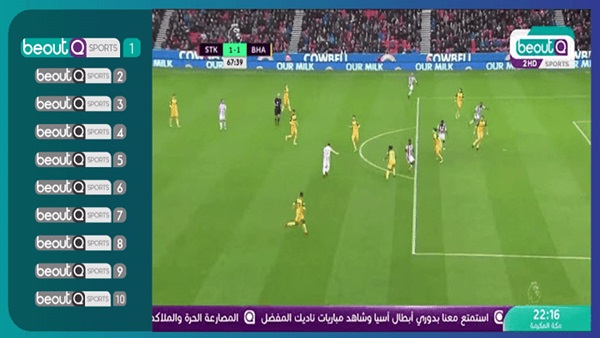
As the AIB has reported over the past year, the satellite network BeoutQ is broadcasting sport and entertainment programmes from across the world in what can only be described as industrial-scale piracy. Now Qatar’s beIN Media – the broadcaster most affected by the piracy operation – is ramping up its international efforts to hold the pirates to account.
It is widely believed that Saudi Arabia is behind the piracy operation, borne out by the fact that an operation on the scale that beoutQ operates requires immense resources of the type that only a nation state or a huge, long-established commercial organisation would have.
Now beIN has launched a website giving details of what it says is the evidence it has gathered about the beoutQ operation. It provides a time-line from before the launch of beoutQ through to the present, including beIN’s US$1bn compensation claim against Saudi Arabia.
17 January 2019
A grandiose festival kicked off in Berlin’s Academy of Arts on Wednesday, celebrating 100th birthday of Bauhaus. After an opening speech by the president of Germany Frank-Walter Steinmeier, prominent composer Michael Wollny took the stage with a unique concert, offering a musical perspective inspired by the work of the world-famous design institution. 
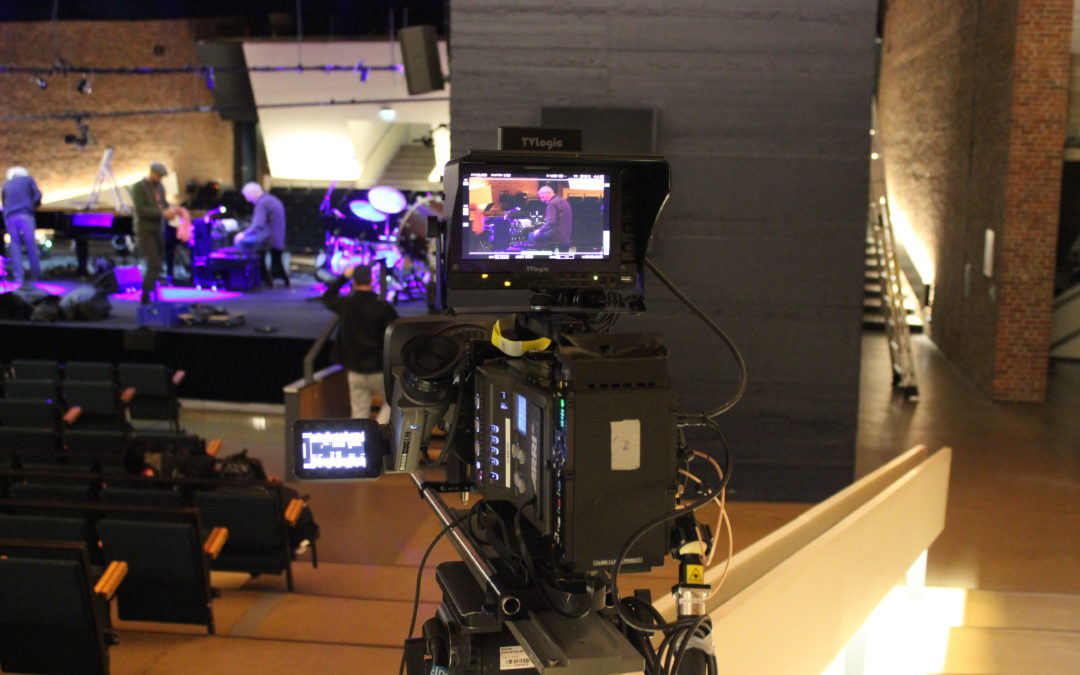
On behalf of ZDF the event was streamed live by ARTE Concert, production company ifbbw (Institut für Bildbewegung) while director Thomas Janze contracted Ruptly’s Outside Broadcast Van to bring the concert to the screen.
A multi-camera live production, featuring Ruptly’s ARRI AMIRA ultra high-definition cameras in addition to two ALEXA Mini cameras was mounted on Blackcam systems.
The concert will be showcased at the Kino International cinema in Berlin on Sunday.
Ruptly first introduced ARRI AMIRA cameras as part of its newest lightweight Outside Broadcasting Van in June 2018 with an original live coverage of FIFA legends football match. The OB Van, equipped with Riedel’s Mediornet video router and Bolero wireless intercom, was showcased at the IBC in September 2018.
Global Multimedia Agency Ruptly is an award-winning producer of video, live events and broadcast services for international TV and online publishers worldwide. The agency covers current events in news, entertainment, sports, tech and science.
https://www.arte.tv/de/videos/086298-001-A/100-jahre-bauhaus-das-eroeffnungskonzert/
16 January 2019
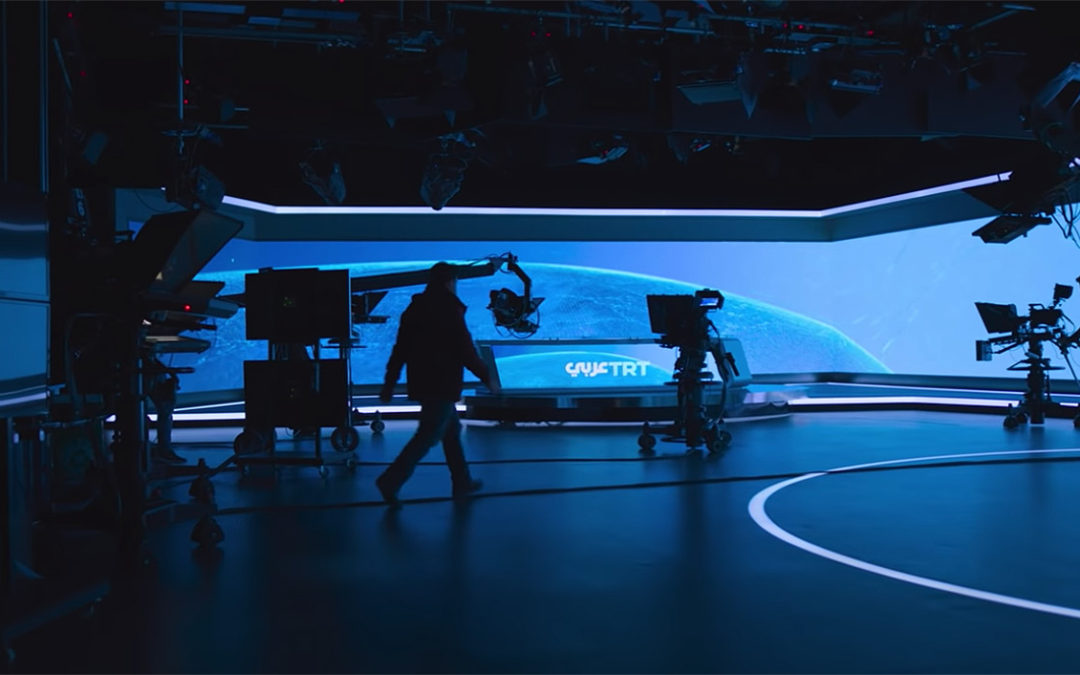
TRT, Turkey’s public broadcaster, has relaunched its Arabic-language TV channel. TRT Arabi takes many cues from TRT WORLD, the English-language TV channel that went on air in 2015. Indeed, its director of news and programmes is Resul Serdar Atas, formerly director of TRT WORLD. On launch day [7 January], Atas tweeted: “This is a big day for TRT family by launching TRT Arabi to cover the world’s news and current affairs, especially the Arab world. Today’s launch of TRT Arabi is the result of days of hard work from our dedicated journalists and experts, to be with you.”
Watch the channel promotion:
The launch of TRT Arabi appears to be part of a modernisation strategy across TRT networks, with the new TRT international logo – first seen on TRT WORLD – being used on Arabi, Haber [News], Turk, Kurdi, Spor, and Avaz, and TRT’s main national channel, TRT1.
The revamped Arabic service (previously known as TRT Arabic) has a similar look and feel both on air and in its online presence to TRT WORLD. It has bureaux in Baghdad, Jerusalem, Tehran, Cairo, London, Moscow, Washington, Beirut and Oman.
7 January 2019
French international radio broadcaster Radio France Internationale (RFI) had a difficult start to 2019 in two African countries, with its FM broadcasts cut off in the Democratic Republic of Congo (DRC) and its correspondent saw her accreditation withdrawn. In Madagascar, an RFI journalist was singled out as liar by a supporter of defeated presidential candidate Marc Ravalomanana.
Democratic Republic of Congo
DRC government spokesman Lambert Mende announced on 2 January that the accreditation of RFI correspondent Florence Morice had been withdrawn.
He also said that RFI FM broadcasts were blocked in all DRC cities.
Mende accused Morice of violating electoral law and “the code of good conduct for foreign journalists covering the elections”.
He also alleged that RFI was stirring controversy and said: “we are not going to let a radio station throw petrol on the flames at a time when we are waiting for the compilation of the provisional results.”
RFI, which has been closely covering elections in the DRC, issued a statement saying its coverage had been impartial and expressing full support for Morice.
She had been “merely working as a professional journalist,” the statement said, RFI urged the authorities to reverse their decision to withdraw her accreditation. RFI announced that Morice had left for France on 3 January.
Madagascar RFI journalist branded a liar by presidential challenger supporter
In Madagascar a supporter of defeated presidential candidate Marc Ravalomanana attacked an RFI journalist, showing her face on a giant screen and wrongly accusing her of lying.
Speaking to RFI French service, the chair of the International Press Correspondents Association Lova Rabary said that these methods by political parties were unacceptable and dangerous.
“They need to think about what they say and what they publish, because they cannot control the reaction of their supporters. The danger is obviously, people know the face of the journalist who is presented as a liar, the fact that her photo was shown is to make the journalist, who according to them, was not doing her job well, open to public scrutiny,” Rabary said. “Each time a protest occurs in Madagascar, local media often take a position in favour of the parties present and during a crisis, the people and even the media do not accept that a journalist can be neutral and not take a position in a crisis,” Rabary added.