When Water Burns: BBC Eye investigation into Georgia protests

When Water Burns: BBC Eye investigation into Georgia protests

When Water Burns: BBC Eye investigation into Georgia protests

When Water Burns: BBC Eye investigates potential use of World War One chemical against anti-government demonstrators in Georgia

An investigation by the BBC World Service’s award-winning BBC Eye Investigations team has uncovered evidence suggesting that during protests in Tbilisi last year, the Georgian government used water cannons laced with a chemical weapon against its own citizens. In the documentary When Water Burns – The Fight for Georgia, the BBC Eye finds that anti-government demonstrators are likely to have been targeted with “camite”, a chemical agent first used during World War One.

Talking to BBC Eye, the protesters describe the effect of the water cannons used against them as a burning sensation. One protester, who says he suffered from skin irritation on his face for “at least a month”, shared a photograph showing his skin peeling. He said the water “didn’t only get you wet, it also burned your skin”.

The documentary reveals the results of a medical study shared exclusively with the BBC. Having interviewed nearly 350 protesters exposed to riot-control agents and water cannons, the study by Dr Konstantine Chakhunashvili – a doctor and anti-government protester who was among those sprayed by the cannons – showed that nearly half suffered longer-term effects (beyond 30 days) such as a cough, shortness of breath, and skin irritation. In some cases, changes were observed in the lungs and heart.

BBC Eye speaks with high-level whistleblowers from inside the Georgian riot police, who helped determine the likely identity of the chemical agents used in water cannons – information which the Georgian government has so far refused to reveal. A key part of the evidence is a classified inventory from the Special Tasks Department – the main riot-police force in Georgia – that lists two chemicals and gives instructions on how to mix them. The chemicals are not regular tear gas.

A former Head of Weaponry at the riot police tells the BBC he was asked to test a mixture of two chemicals in the water cannons whilst in post. Describing the gas as 10 times stronger than regular tear gas, he says it made it difficult to breathe and caused some of his colleagues to vomit.

After reviewing the BBC’s evidence – the medical study, witness statements, whistleblower interviews and human-rights reports – world-leading expert in toxicology and chemical weapons, Professor Christopher Holstege, at the University of Virginia, believes the gas could be camite. First used as a chemical weapon by French forces at the end of World War One, camite is an obsolete riot-control agent that was dropped due to the persistence of its impact. The UN Special Rapporteur on Torture, Dr Alice Jill Edwards, says that, based on the BBC’s evidence, this could be classed an “experimental weapon”, and its use would be in violation of human-rights law.

Georgia’s ruling party, the Georgian Dream, described the allegation that unknown chemicals had been added to the water cannons as “deeply frivolous” and “absurd”. The party said that the country’s law enforcement had acted “within the bounds of the law and constitution” when responding to the “illegal actions of brutal criminals”.

When Water Burns – The Fight for Georgia is available in the UK on BBC iPlayer. It will also be part of the 1 December edition of the BBC Two current-affairs programme, Global Eye, which presents forensic journalism from BBC Eye and features reports from the BBC World Service’s global teams.  

International audiences can watch the documentary on the BBC World Service YouTube channel.

Read the story on the BBC News website – via bbc.co.uk in the UK; and internationally – on BBC.com, BBC Studios global digital news platform.
 

NHK WORLD-JAPAN programme focus in December: Our Daily Bread, Japan Style

NHK WORLD-JAPAN programme focus in December: Our Daily Bread, Japan Style

NHK WORLD-JAPAN programme focus in December: Our Daily Bread, Japan Style

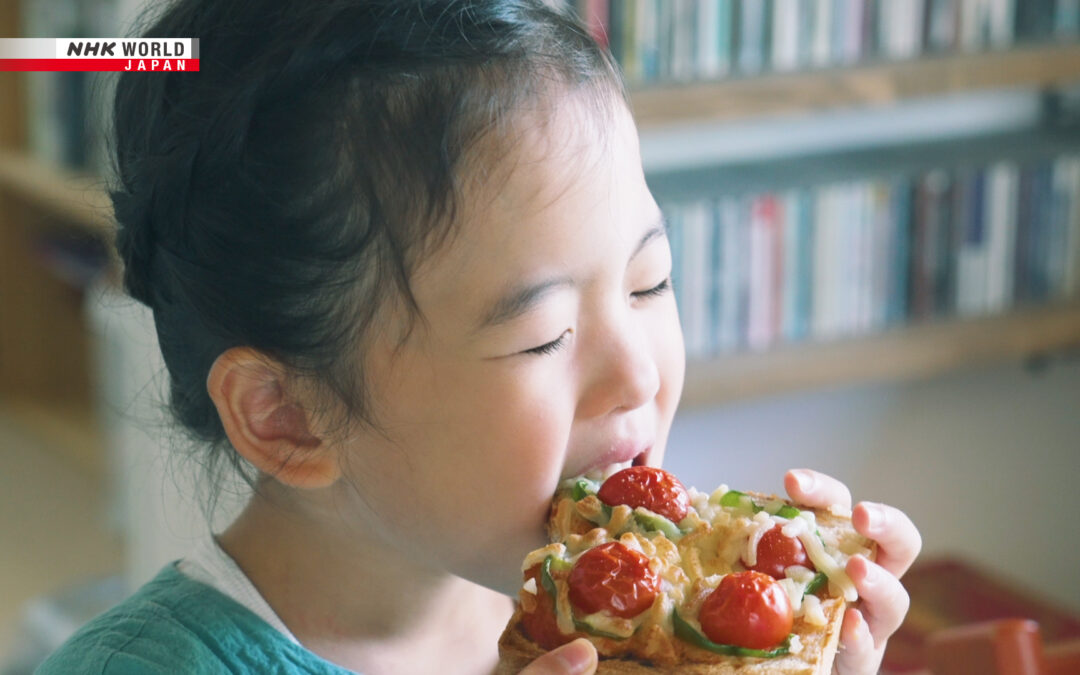
Our Daily Bread, Japan Style

JAPAN DELISH

Bread

December 6 Sat.
5:10/11:10/17:10/22:10 (UTC)

Ever heard of an-pan?! From fruit sandwiches to curry-filled delights, Japanese bread is full of delicious surprises!

DOCUMENTARY 360

Scars of Agent Orange:
50 Years After the Vietnam War 

December 20 Sat.
0:10/6:10/12:10/18:10 (UTC)

The use of Agent Orange in the Vietnam War still scars the environment and people’s health. Filmmaker Sakata Masako has spent years documenting the victims of this toxic legacy.

Dining with the Chef

Tuesdays
1:30/6:30/12:30/17:30/22:30 (UTC)

Traditional techniques and resourceful recipes! Chefs Saito and Rika present their unique approaches to cooking delicious Japanese food.


RFA goes under the hammer

RFA goes under the hammer

RFA goes under the hammer

It seems that Radio Free Asia is unlikely ever to return to an operational state. It ceased operations on 31 October 2025 and the studios and offices in Washington DC are being cleared, with an auction of all equipment taking place. The sale is being handled by Rasmus, and the auction description reads: “A Washington, DC, international television and radio broadcast network is making a significant reduction in its operations and will liquidate all excess television, radio, studio production, field production, switching, broadcast, control room, editing, and equipment. 1000s of items of late model and new in box, high-end video, radio, dataroom, M&E, office, and technology equipment. 4 floors, multi-day phased removal. Assets will be professionally de-installed and available to the ground floor for easy removal.” 

Rasmus handled the liquidation of RT America’s Washington DC operation in the summer of 2024.

The RFA offices appear in an auctioneer’s video. The catalogue is online at https://rasmus.com/auctions/galIdtyncHUDPy2PyoGz/a/Radio-Station-Washington–DC. 

The auctioning of the entire RFA Washington DC facility has happened remarkably rapidly, given the relatively recent ending of operations. It is unclear whether this has been initiated by RFA itself – as an entity that is not a “wholly-owned” USAGM operation, or by USAGM pulling the plug on the broadcaster and taking the revenue generated by the sale.  

Whichever the case, it seems highly unlikely that the organisation will ever be heard and seen again as to restart operations will require the setting up of an entirely new broadcast centre. The tens of millions of US tax dollars that have been invested in RFA over its almost 30 years existence have arguably been squandered with RFA’s closure and dismantling. The auction will generate only a fraction of the amounts spent on equipping the station over recent years. 

Separately, it has been reported that the USAGM transmitting station in the Philippines is to be reactivated and will be carrying Radio Filipinas World Service from 1 December. The transmitting station was used for VoA and RFA broadcasts including Korean, Cambodian, Lao, Burmese, Khmer and Tibetan language services, as well as for Radio Filipinas, until it was switched off earlier this year. 

Countdown begins for TRT International Children’s Media Summit 2025

Countdown begins for TRT International Children’s Media Summit 2025

Countdown begins for TRT International Children’s Media Summit 2025

Since its inception, the TRT International Children’s Media Summit has brought together leading experts, academics, policymakers, and media professionals from around the world to address the evolving landscape of children’s media.

The 2025 edition of the summit, held under the theme “Children’s Media in the Digital Era: Empowering Families, Building Values”, will once again convene distinguished international figures to explore the most pressing issues shaping the future of children in today’s digital world.

Participants will examine key topics such as:
• the risks and opportunities children face in the digital ecosystem,
• ensuring safe, high-quality and value-driven content,
• strengthening family roles in media literacy,
• supporting cultural identity in an age of global digital influence, and
• building collaborative policies for the next generation.

The  First Lady of Republic of Türkiye, Mrs. Emine Erdoğan is expected to grace the summit with her presence, highlighting Türkiye’s commitment to creating a safe and nurturing media environment for children.

Join global experts, policymakers, academics, and sector leaders as they discuss how to build a responsible, inclusive, and value-centred digital future for children.

For more information and registration, please visit: www.trtchildrensmedia.com

[Source: TRT press release]

ABC International puts sport front and centre in 2026

ABC International puts sport front and centre in 2026

ABC International puts sport front and centre in 2026

ABC International has announced an exciting slate of sports-focused programming for 2026, placing sport at the heart of its audience growth strategy for Asia and the Pacific.

At a livestreamed event in Sydney titled The Power of Sport, ABC International’s Head Claire M. Gorman outlined ambitious plans, including ongoing investment in high quality sports content for the ABC’s international screen, audio and digital platforms.

WATCH EVENT LIVESTREAM HERE

According to Gorman: “Today is an opportunity to celebrate and reflect on the power of sport to build audiences and promote inclusion and equality. ABC International will continue to place sport at the heart of what we do, with exciting new content and programs coming in 2026.”

In addition to premium content, Gorman reaffirmed ABC International’s commitment to developing sports media programs in the Indo-Pacific region via its media development unit, ABC International Development (ABCID), which runs the successful programs Women in News and Sport (WINS) and Commentary and Mobile Journalism Program (CAMP).

Gorman said: “WINS turns ten in 2026 and over the decade, it has backed hundreds of women across Asia and the Pacific to succeed in sports media through targeted mentoring, training and networking. CAMP also creates digital storytelling opportunities on our platforms for women, First Nations Broadcasters and other under-represented voices across the Indo-Pacific.”

ABC INTERNATIONAL’S 2026 SLATE SPORTING HIGHLIGHTS

In 2026, ABC Australia will be the international home to leading Australian sports, including the AFLand AFLW (men and women’s Australian Football Leagues), the Melbourne Cup and the Sydney to Hobart Yacht Race.

Also returning is weekly fan favourite That Pacific Sports Show with Tiana Penitani-Gray and Sam Wykes and Paul Kennedy’s popular series Play On.

Premiering on ABC Australia in 2026 is inspiring new AFL documentary Playing on a Prayer, which accompanies two young Muslim players as they try to get drafted into the AFL league.

ABC Radio Australia takes NRL to the Pacific and Timor-Leste in 2026 while weekly sports talk programs Fresh Off The Field and Nesian Footy will also return, featuring popular presenters Sam Wykes and Tinirau Arona.

BBC World Service announces more journalism to come from Africa as part of global changes

BBC World Service announces more journalism to come from Africa as part of global changes

BBC World Service announces more journalism to come from Africa as part of global changes

BBC World Service has announced a series of programme changes as part of a commitment to move more programmes and services closer to the audiences and communities they serve.

BBC World Service’s global news programme Newsday will establish a team in Kenya, co-presenting from London and Nairobi, while its leading Africa-focused news podcast Focus on Africa will relocate from London to join the TV production team in Nairobi.

Newsday is the BBC World Service’s flagship news programme, bringing audiences the latest news, analysis and reporting from across the globe. Airing every weekday, Newsday covers major global stories as they unfold, with live interviews, features, and reporting from correspondents in the field.

Anne Soy will co-present Newsday from Nairobi, alongside established presenters Rob Young and James Copnall, based in London.

Newsday will launch its new co-presentation format on Monday 1 December.

Anne Soy, Newsday presenter, says:

“I am absolutely delighted to be joining the BBC Newsday team. It is a privilege to contribute to a programme with such a strong reputation for trusted, high-quality journalism that connects audiences across Africa and around the world. As Newsday strengthens its presence in the region, I look forward to helping tell the stories that matter most to our audiences.”

With over 20 years of on-air experience, Anne Soy has reported extensively across the continent, covering major stories including conflicts, health crises, and political transitions. Joining the BBC in 2013, Anne has worked as a bi-lingual reporter for Focus on Africa and has experience of working in a number of roles at the BBC, most recently Senior Africa Correspondent and Deputy Africa Editor.

Audiences can listen to Newsday on BBC World Service radio, BBC Sounds in the UK, and outside the UK on BBC.com, the BBC app, and wherever they get their BBC podcasts.

The relaunch of the Focus on Africa podcast and the transfer of operations to Nairobi, forms part of the BBC’s commitment to the independent, impartial and trustworthy journalism it offers millions across Africa. 

Focus on Africa is the BBC’s leading African news podcast and brings listeners the biggest stories from across the continent.

​​The Focus on Africa podcast will release episodes daily, with a special visualised episode released every Friday. Lead presenter Nkechi Ogbonna will host an in-depth conversation, delving into a new topic each week, which will be visualised for the BBC News Africa YouTube channel.

The flagship Focus on Africa TV programme, presented by Waihiga Mwaura, will retain its core identity but will undergo a clear editorial refresh in formats and digital-first content, alongside a full production move to Nairobi. It will continue to provide trusted news coverage to audiences across the continent and beyond.

The team bringing this vision to life comprises a diverse mix of experienced, multiskilled, and award-winning journalists from across the continent, with Nairobi and Lagos serving as key production hubs for both the TV programme and the podcast.

The new format will launch on Tuesday 2 December. Audiences can listen to the Focus on Africa podcast on BBC World Service radio, BBC News Africa YouTube channel, BBC Sounds, BBC.com, the BBC app, and wherever  they get their BBC podcasts.

Juliet Njeri, BBC’s Regional Director for Africa, says: “These changes are pivotal to our trusted news offer for audiences across the African continent and around the world. We are investing in regional storytelling and putting African voices at the heart of our output.

“The BBC reaches around 120 million people every week across Africa. As we seek to bring more of the BBC’s independent news to more people, we want to be closer to our listeners and viewers to deliver relevant and impactful programming.”

Nkechi Ogbonna, Focus on Africa presenter, says: “Focus on Africa has been a trusted source of news for listeners across Africa, including underdeveloped and rural communities, giving global audiences fresh perspectives on the people, politics, and culture shaping Africa. As we move our operations to Nairobi, we will strive to be ever more connected to our audiences in the region and beyond, while strengthening our editorial reach and trust in the BBC.”

These moves complement changes announced earlier this year as BBC News’ international operations are restructured, enhancing opportunities for audience growth and strengthening how the BBC operates outside the UK. Outside the UK, six regional directors will make the most of regional expertise and have a regional headquarters. The regions are: Africa, the Americas, Asia Pacific, Central and South Asia, Europe, and the Middle East and North Africa.