BBC study on its international role and influence published

BBC study on its international role and influence published

BBC study on its international role and influence published

The BBC has published new research exploring the impact and influence of its work internationally.

The Impact and Influence research demonstrates that, predominantly through the BBC World Service, the BBC is unmatched in driving favourable impressions of the UK.

The BBC is the country’s most recognised cultural export internationally with 76% of influential audiences around the world having heard of BBC News – higher than any other British cultural export including British sports, films and universities.

The research, which was conducted by independent research company Tapestry, also found the BBC to be the most trusted international news provider amongst all audiences and indicates that BBC users around the world are more likely to invest in the UK than non-users. In fact, 73% of BBC users intend to invest in the UK in the future compared with 51% of non-users.

The Impact and Influence research sought the views of audiences around the world on varying international news providers as well as the BBC. It suggests that those audiences consuming the Chinese state broadcaster, CGTN, and Russian state broadcaster RT, have a direct influence on their country’s respective favourability.

The research indicates that 71% of CGTN consumers view China favourably while 58% of RT consumers view Russia favourably, and that over the past three years, China has shown a considerable increase in favourability. The growth in favourability appears across all countries included in the study with the biggest increases in African countries Nigeria and Kenya. Trust in their services has also increased.

As press freedom has been in retreat globally since 2021, over the same period we have seen a rise in the demand for free media with Kenya, Indonesia, India and Mexico seeing the largest increases.

Tim Davie, Director-General, BBC says: “Our international output is unmatched when it comes to delivering impact and influence around the world for democratic values and UK plc. Of course, these results are the byproducts, not the aim, of BBC World Service journalism, but they are remarkable nonetheless, supporting UK security, trade and influence. We stand ready to do more, to make the most of this opportunity, meet an increasing demand and grow our global audience, leveraging the crucial role we play in the UK’s global standing.”

Jonathan Munro, Global Director, BBC News says: “It’s clear from this research that amidst increasing polarisation, huge surges in disinformation and the drastic reduction in press freedom, audiences value the BBC World Service and our trusted news offer. The BBC World Service has a vital role in delivering for audiences globally, particularly in light of the outcomes from China and Russia’s heavy media investment, but we cannot take our position for granted which is why we’re ambitious for what more we can do in this uncertain, unstable global landscape.”

Further findings from the research include:

  • While a preference for democracy has fallen across multiple countries, the fall is most evident in Asia and the Middle East
  • BBC users are significantly more likely to believe in democratic values than non-users and are more likely to participate in democratic processes such as voting in an election or contacting an elected official
  • BBC users associate the UK with values such as free speech and freedom of the press significantly more than non-users
  • BBC users are more likely to agree that the media in their country should be free to report on anything they want to without restrictions
  • Accuracy, independence and impartiality are the most important qualities for news users globally but are the least associated with local news providers
RFE/RL – the funding saga continues with latest court ruling

RFE/RL – the funding saga continues with latest court ruling

RFE/RL – the funding saga continues with latest court ruling

The six week long saga around the funding and operation of US international broadcasting networks – Voice of America, Radio Free Asia, Office of Cuba Broadcasting, and RFE/RL – continues. On 15 March, Voice of America went off the air, save for 5’ news bulletins that were compiled for some days. Funds from the US Agency for Global Media, USAGM, to the rest of the broadcasting entities were frozen (with the possible exception of the Office of Cuba Broadcasting).

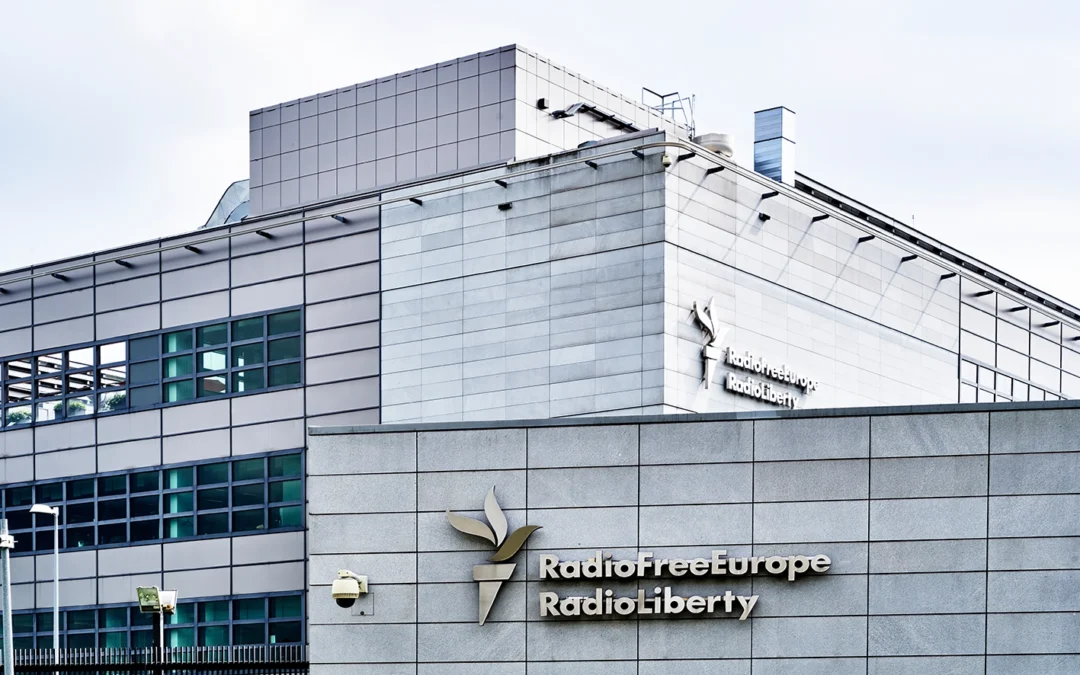
Legal proceedings were initiated by some Voice of America to have staff reinstated and its operations restarted. RFE/RL started proceedings to have its funding, granted by the US Congress, released (USAGM had stopped releasing funds to the Prague-headquartered media company).

On 39 April, Judge Royce Lamberth of the U.S. District Court for the District of Columbia granted Radio Free Europe/Radio Liberty (RFE/RL)’s latest request for a temporary restraining order in its lawsuit against the U.S. Agency for Global Media (USAGM).

In his ruling, the judge ordered USAGM to immediately disburse RFE/RL’s congressionally appropriated funds for the month of April – over US$12m. The court concluded that USAGM’s refusal to disburse the funds on the same terms on which it disbursed the previous month’s funds was arbitrary and capricious. The court rejected USAGM’s argument that it could withhold the funds until RFE/RL signs a grant agreement placing unlawful and unworkable conditions on RFE/RL’s operations. Judge Lamberth found that USAGM’s actions “threaten the very existence” of RFE/RL.

RFE/RL President and CEO Stephen Capus said: “Today’s ruling ordering USAGM to release one month’s worth of the annual funds Congress appropriated to RFE/RL means that our journalists can continue doing their jobs holding dictators and despots accountable.

“We hope to receive April’s late payment quickly because RFE/RL was forced to furlough staff this month and cut back programming to regions crucial to American national security. Every day that USAGM withholds money further endangers our journalists, including four who are currently in prison.

“We will remain in court and look forward to working with USAGM to ensure that we’ll be paid for the rest of the fiscal year.”  

Judge Lamberth’s order emphasised that Congress enacted, and President Trump signed, a law funding RFE/RL this fiscal year. He wrote: “It is, after all, Congress that makes the laws in this country. In this case, for example, it was Congress who ordained that the monies at issue should be allocated to RFE/RL.”

BBC News Burmese launches post-quake direct-to-home video channel

BBC News Burmese launches post-quake direct-to-home video channel

BBC News Burmese launches post-quake direct-to-home video channel

‘Aimed for an audience in need’: BBC News Burmese launches on direct-to-home video channel in the aftermath of Myanmar earthquake 

To ensure audiences can access crucial information in the aftermath of the Myanmar earthquake, the BBC World Service has added a direct-to-home satellite video channel to the platforms delivering BBC News Burmese content.

In the coming four months, the Thaicom 6 satellite, which covers Myanmar, Thailand, and the wider region, will deliver BBC News Burmese TV and audio programming. The channel will also provide access, via a QR code, to the service’s website, bbc.com/burmese.

BBC News Global Director and Deputy CEO, Jonathan Munro, says: “In Myanmar, where press freedom is severely restricted and where a vicious conflict continues, we now have an audience also beset by a natural disaster. During the week of the disastrous earthquake, BBC News Burmese total digital reach quadrupled as people came to the BBC for trusted information. With the launch of this new satellite-based video service, featuring our TV, radio and online output in Burmese, we’ll be offering a critical information stream for an audience struggling to recover from the calamity which took so many lives. Aimed for an audience in need, this is yet another timely and much-needed initiative born from the commitment and expertise of the BBC teams.”

In the aftermath of the disaster that struck Myanmar on 28 March 2025, millions in the country, as well as Burmese-speakers in Thailand, came to the service’s platforms for accurate updates and analysis. BBC News Burmese journalists were deployed to the earthquake epicentre and were reporting from Mandalay, Yangon, and Bangkok, as well as from London. BBC News Burmese extended its daily live radio bulletin from 15min to 30min to include additional reporting and lifeline information. Audiences can also watch the Monday to Friday 15-minute TV bulletin which goes on air at 20.45 local time.

BBC News Burmese channel on Thaicom 6 satellite will run all this programming, with evening repeats of radio and TV bulletins from May 2025. The channel will also visualise the QR code for the website bbc.com/burmese, so the viewers can access the latest news and information online.

Over the next few months, the direct-to-home satellite video channel – formerly used by VOA (currently off the air following the effective closure of Voice of America ordered by President Trump, but subject to court cases) – will add to BBC News Burmese availability via the service’s website as well as its YouTube channel and its Facebook page which has a following of 25m people. BBC News Burmese also connects with audiences via Instagram, Telegram and X.  Digital free-to-air TV channel, Mizzima TV, rebroadcasts BBC News Burmese TV programmes.

BBC News Burmese is part of the BBC World Service.

USAGM Rescinds RFE/RL Grant termination

USAGM Rescinds RFE/RL Grant termination

USAGM Rescinds RFE/RL Grant termination

WASHINGTON, D.C. — On March 26, Radio Free Europe/Radio Liberty (RFE/RL) was informed by the U.S. Agency for Global Media (USAGM) that the Agency is rescinding its letter terminating RFE/RL’s grant agreement for fiscal year 2025, and that the agreement is therefore back in effect.

The notification from USAGM follows a Tuesday ruling by Judge Royce Lamberth of the U.S. District Court for the District of Columbia granting RFE/RL’s request for a temporary restraining order against USAGM over its unlawful termination of RFE/RL’s congressionally appropriated funding. RFE/RL’s lawsuit seeks to ensure that the nonprofit media company receives the approximately $77 million that Congress appropriated to it.

RFE/RL President and CEO Stephen Capus said:

“This is an encouraging sign that RFE/RL’s operations will be able to continue, as Congress intended. We await official confirmation from USAGM that grant funding will promptly resume based on the intention expressed in last night’s letter. We are eager to speak directly with USAGM leadership about the extraordinary and cost-effective work that RFE/RL performs for the American people.

This is not the time for RFE/RL to go silent. Millions of people rely on us for factual information in places where censorship is widespread. We must not cede ground to our adversaries at a time when threats to America are on the rise.”

About RFE/RL

Radio Free Europe/Radio Liberty (RFE/RL) is a private, independent international news organization whose programs — radio, Internet, television, and mobile — reach a weekly audience of nearly 50 million people in 23 countries, including Russia, Ukraine, Iran, Afghanistan, Pakistan, the republics of Central Asia and the Caucasus. It is funded by the U.S. Congress through USAGM. 

BBC statement on detention and deportation of Mark Lowen

BBC statement on detention and deportation of Mark Lowen

BBC statement on detention and deportation of Mark Lowen

This morning (27 March) the Turkish authorities deported BBC News correspondent Mark Lowen from Istanbul, having taken him from his hotel the previous day and detained him for 17 hours. Mark Lowen was in Turkey to report on the recent protests. He has been told he was deported for ‘being a threat to public order’.

BBC News CEO Deborah Turness said: “This is an extremely troubling incident and we will be making representations to the Turkish authorities. Mark is a very experienced correspondent with a deep knowledge of Turkey and no journalist should face this kind of treatment simply for doing their job. We will continue to report impartially and fairly on events in Turkey.”

On arrival to London this morning (27 March), Mark Lowen said: “To be detained and deported from the country where I previously lived for five years and for which I have such affection has been extremely distressing. Press freedom and impartial reporting are fundamental to any democracy.”

RFE/RL Sues USAGM to Block Termination of Federal Grant

RFE/RL Sues USAGM to Block Termination of Federal Grant

RFE/RL Sues USAGM to Block Termination of Federal Grant

Radio Free Europe/Radio Liberty (RFE/RL) today (18 March) sued the United States Agency for Global Media (USAGM), as well as USAGM officials Kari Lake and Victor Morales, to block their attempted termination of RFE/RL’s federal grant.

The complaint makes the case that denying RFE/RL the funds that Congress appropriated for it violates federal laws—including the U.S. Constitution, which vests Congress with exclusive power over federal spending. The case will be heard in the United States District Court for the District of Columbia.

RFE/RL President and CEO Stephen Capus said: “This is not the time to cede terrain to the propaganda and censorship of America’s adversaries. We believe the law is on our side and that the celebration of our demise by despots around the world is premature.”