Vizrt’s Viz One MAM now available on AWS at NAB 2018

Vizrt’s Viz One MAM now available on AWS at NAB 2018

Vizrt’s Media Asset Management (MAM) product Viz One can now leverage AWS services to improve video production workflows and IT return on investment.

Vizrt announced today that the Viz One MAM product suite will be available on Amazon Web Services (AWS), providing more flexibility and choice for organizations who can utilize the scalability and accessibility of cloud-based solutions.  The availability of Viz One on the cloud allows organizations to improve video workflows by offering more cost-effective scaling and enhancing the speed of video production by allowing access from any connected device, even in remote locations.  Media companies can now access their content from virtually anywhere with Vizrt’s Viz One either entirely on AWS, or as part of hybrid architectures. Hybrid architectures place resources both on the cloud and on-premises, allowing pre-existing infrastructures to be augmented with the most attractive cloud services. Users are also able to securely access content on Viz One from any location using the improved two-factor authentication both on the cloud or on-premises.

“The cloud loosens key technology restraints enabling customers to adopt new technology more rapidly than ever.  Making Viz One available on AWS has been driven by customer demand for their own service innovation and their growing adoption of the cloud” said Petter Ole Jakobsen, Chief Technology Officer at Vizrt.

Viz One utilizes compute, storage and database services including Amazon Elastic Compute Cloud (Amazon EC2), Amazon Simple Storage Service (Amazon S3), Amazon Glacier, Amazon Relational Database Service (Amazon RDS)/PostgreSQL, Amazon Elastic File System (Amazon EFS), and Amazon Elastic Block Store (Amazon EBS).

Visit us at NAB 2018, stand SL2416 to see how Viz One and cloud services from AWS can improve video production workflows and provide greater IT return on investment.

About Vizrt:
Vizrt is a worldwide market leader in the areas of real-time 3D graphics, studio automation, sports analysis and asset management tools for the media and entertainment industry. This includes interactive and virtual solutions, animations, maps, weather, social media, video editing, compositing, and multiplatform VOD and live playout tools. Vizrt has customers in more than 100 countries worldwide including CNN, CBS, Fox, BBC, BSkyB, Sky Sports, CBS Sports, Fox Sports, Al Jazeera, NDR, ITN, ZDF, VICE, The Washington Post, TF1, CCTV, NHK and the list keeps growing. Vizrt has nearly 600 employees and operates in 40 offices worldwide. Vizrt is a privately owned company by Nordic Capital Fund VIII. For further information please refer to www.vizrt.com


Vizrt brings immersive football analysis to the studio with the new Viz Libero AR

Vizrt brings immersive football analysis to the studio with the new Viz Libero AR

The augmented reality-based sports analysis system will be demonstrated for the first time at NAB 2018, stand SL2416.

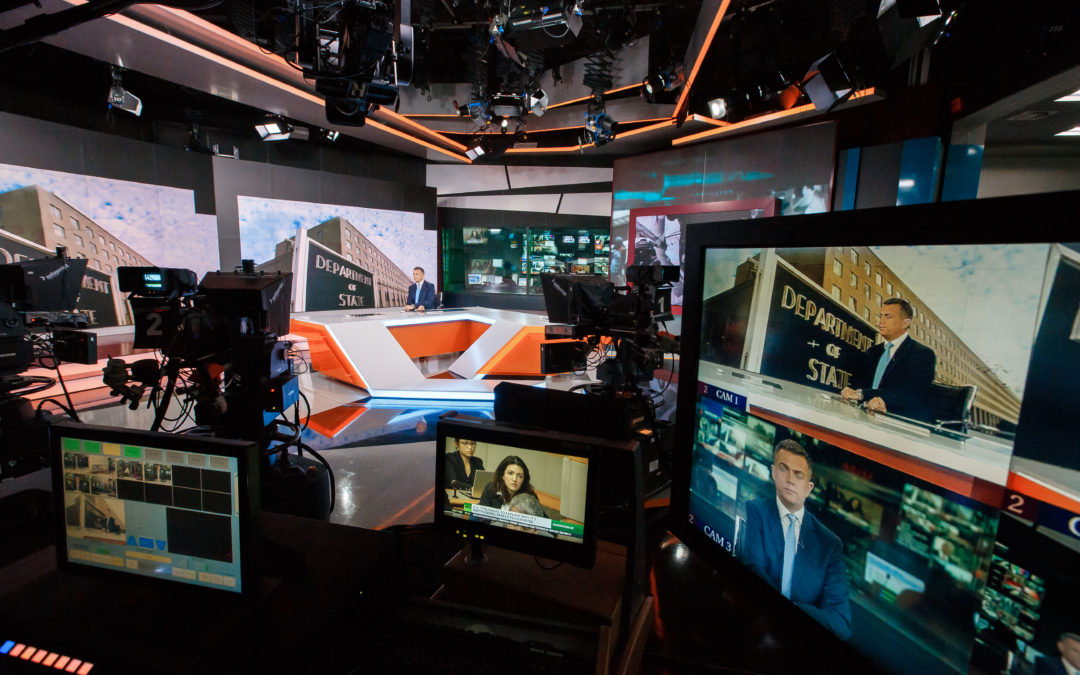
Vizrt, the leader in sports analysis visual storytelling, brings a new tool to the broadcast studio with Viz Libero AR. Just in time for the World Cup, Viz Libero AR combines the analysis power of Viz Libero with augmented reality (AR) graphics, creating a new way for sports presenters to tell the story of the action on the field and engage sports fans.

“Viz Libero AR brings the pitch into the studio, giving the fans the experience of analyzing the most important plays with the experts,” says Remo Ziegler, Vizrt’s VP Product Management Sports. “The seamless transition between Viz Libero AR and Viz Libero analysis clips lets the viewers sit in the first row at all times, be it in the studio or on the pitch.”

Viz Libero combines realistic 3D replays and virtual graphics from any sport to provide deeper, multi-angle analysis of key plays and moments within the game. A photorealistic 3D view based on the original game footage enriched with analysis graphics are placed as AR elements in front of the sports presenter in the studio. Studio cameras control the angle of the field tying together the studio and the analysis. The sports presenter can interactively control the action using an iPad or touchscreen.

Remo Ziegler added, “Vizrt’s focus is to expand broadcasters’ sports storytelling capabilities with tools that inform and engage audiences. Viz Libero AR adds a new “wow” effect that viewers will remember from the Football World Cup or any other sports event beyond.”

At NAB 2018, Vizrt will also showcase other sports innovations for the World Cup. This includes visualizing player tracking, interactive graphics and augmented reality tools for the studio. Teams and coaching staff will be able to see the latest version of Viz Libero designed to help them break down key plays of the game. For American Football, Viz Arena’s Down and Distance package has been enhanced with new features for the 2018 season. Vizrt will also show the world’s most advanced optical ad replacement system, Viz Eclipse.

Viz Libero AR can be seen for the first time during the Big AR Show on Vizrt’s NAB 2018 stand, SL2416.

About Vizrt:
Vizrt is a worldwide market leader in the areas of real-time 3D graphics, studio automation, sports analysis and asset management tools for the media and entertainment industry. This includes interactive and virtual solutions, animations, maps, weather, social media, video editing, compositing, and multiplatform VOD and live playout tools. Vizrt has customers in more than 100 countries worldwide including CNN, CBS, Fox, BBC, BSkyB, Sky Sports, CBS Sports, Fox Sports, Al Jazeera, NDR, ITN, ZDF, VICE, The Washington Post, TF1, CCTV, NHK and the list keeps growing. Vizrt has nearly 600 employees and operates in 40 offices worldwide. Vizrt is a privately owned company by Nordic Capital Fund VIII. For further information please refer to www.vizrt.com

SatADSL VSAT partner of Virunga National Park

SatADSL VSAT partner of Virunga National Park

Virunga National Park is an exceptional site in the east of the Democratic Republic of the Congo, bordering Rwanda and Uganda. SatADSL is now providing this World Heritage Site with its IP connectivity solution.

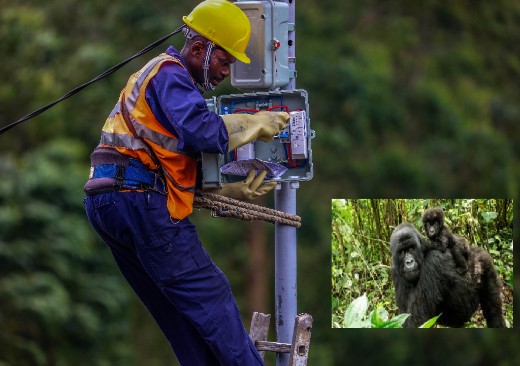
Virunga National Park was founded in 1925 by King Albert I of Belgium as Africa’s first national park. At present, it is a UNESCO-designated World Heritage Site and Africa’s most biologically diverse protected area. The park’s 7 800 square kilometers include forests, savannas, lava plains, swamps, erosion valleys, active volcanoes, and the glaciated peaks of the Rwenzori mountains … but also okapis, hippopotamuses, elephants, buffaloes, lions, and many rare bird species … and a quarter of the world’s mountain gorillas, a species particularly threatened with extinction. In other words, a paradise for tourists!

Virunga National Park also conducts scientific research, specifically studies on mountain gorillas, and a development project around its hydropower plants, bringing electricity to people living near the park. This electrification program provides public lighting to villages or free electricity to social infrastructures that are close to the network (hospitals, schools, administration offices, courts, sports facilities, etc.).

SatADSL has recently made its IP connectivity solution available inside Virunga National Park. This customized satellite solution uses the C-band frequency of the Arabsat 5A satellite to allow every tourist, wherever he might be located, optimal access to the Internet.

For more information about Virunga National Park: https://visitvirunga.org/

For more information about SatADSL connectivity solutions: info@satadsl.net or +32 2 351 33 74

Mysterious death in Norway investigated in major podcast series

Mysterious death in Norway investigated in major podcast series

BBC World Service and Norway’s NRK are joining forces on a major new podcast-first production, Death in Ice Valley, which will investigate the mysterious death of a woman in Norway in the 1970s.

Death in Ice Valley has been commissioned specifically as a podcast and combines innovative production with first-class journalism and storytelling.  Listeners will join investigative reporter Marit Higraff and documentary maker Neil McCarthy on a journey in which they will attempt to piece together the woman’s life. Who was she? Why hasn’t she been missed? Was her death the result of murder or did she take her own life?

Episodes will be released weekly and Marit and Neil are poised to react to any significant leads that come into them from podcast listeners. The series preview will be made available on March 26th, with the first episode launching on April 16

Often referred to as the ‘Isdal Woman’, the body was discovered in November 1970.  No one knew who she was and almost half a century on, her identity remains a mystery.  Her badly burnt body was found in the remote Isdalen (Ice Valley) under unusual circumstances.  Police investigating at the time found her suitcases at the nearby Bergen railway station, with disguises inside.  The woman had stayed in numerous hotels using different names.  Labels had been removed from her clothing.  It is a case which has perplexed Norway.

All we know is she almost certainly wasn’t Norwegian. This is an international investigation.

NRK’s Marit Higraff has been investigating the case for two years. She and Neil McCarthy will be travelling across Norway and beyond to find out what they can about the woman at the centre of this enduring mystery. A specially commissioned soundscape has been designed by Phil Channell.

Listeners will be invited to join and contribute to a Death in Ice Valley Facebook groupwww.facebook.com/groups/deathinicevalley.

Death in Ice Valley follows the BBC World Service’s highly successful and popular podcast, The Assassination.

Mary Hockaday, Controller, BBC World Service English said: “We’re thrilled to be collaborating with NRK, combining the shared expertise of our journalists and documentary makers as they delve into this riveting and perplexing story. The growing popularity of podcasts is phenomenal, and Death in Ice Valley is just one example of how we’re exploring the power of podcasts to offer our World Service audiences new stories and new ways of listening.”

Frank Gander, chief editor for documentaries at NRK, said: “This collaboration with the BBC World Service opens up new possibilities in the case of the Ice Valley woman for NRK. Although we reach 4 of 5 Norwegians daily through radio, TV and online, the BBC has a far wider reach. And one of the main theories in this mystery is that the answers lie somewhere in Europe. It has been exciting and rewarding to work with BBC on this project, and my team and I are anxious to see what kind of feedback we will get when this podcast series starts in April”.

World Service English Podcast Editor Jon Manel, who commissioned the series, said: “We are in the process of transforming our podcast collection. Death in Ice Valley is an immersive, episodic listening experience, designed specifically with podcasting in mind. Investigating a true, very sad and perplexing story, it seeks to use both science and the power of podcasts. Can podcast listeners help to provide answers?”

Ten episodes are being made  – and there could be more.

The preview will be available from 26 March and the first episode will be available from 16 April. You can listen to or download Death in Ice Valley via the BBC World Service website or from wherever you get your podcasts. The Death in Ice Valley website is www.bbcworldservice.com/deathinicevalley

BBC makes unprecedented Human Rights Appeal to UN

BBC makes unprecedented Human Rights Appeal to UN

For the first time in its history, the BBC is making an appeal to the United Nations in Geneva to protect the human rights of BBC journalists and their families. This unprecedented move comes in response to years of persecution and harassment by the Iranian authorities, which escalated in 2017.  

Tony Hall, BBC Director General, said: “The BBC is taking the unprecedented step of appealing to the United Nations because our own attempts to persuade the Iranian authorities to end their harassment have been completely ignored. In fact, during the past nine years, the collective punishment of BBC Persian Service journalists and their families has worsened. This is not just about the BBC – we are not the only media organisation to have been harassed or forced to compromise when dealing with Iran. In truth, this story is much wider: it is a story about fundamental human rights. We are now asking the community of nations at the UN to support the BBC and uphold the right to freedom of expression.” 

Represented by Caoilfhionn Gallagher QC and Jennifer Robinson of Doughty Street Chambers, BBC World Service filed an urgent appeal to UN Special Rapporteurs David Kaye and Asma Jahangir on behalf of BBC Persian staff in October 2017. This week BBC journalists will, for the first time ever, address the Human Rights Council session to call upon member states to take action to protect BBC staff and to ensure their ability to report freely.

Working with the International Federation of Journalists (IFJ), the BBC has organised a series of events during the 37th session of the UN Human Rights Council in Geneva this week about BBC Persian. These activities include a press conference on Monday 12 March and a side event on Thursday 15 March. BBC representatives will address the Human Rights Council as IFJ spokespeople. 

Jeremy Dear, Deputy General Secretary of the International Federation of Journalists, said: “For many years Iranian journalists have suffered; been forced into hiding, fled into exile, been arrested, jailed and subjected to routine harassment, violence and intimidation. Iranians now increasingly turn to the international media to find out what is happening in their own country. Targeting family members in Iran in an attempt to silence journalists working in London must be stopped; the international community must act now.”  

BBC Persian Service journalists in London and their families in Iran have been systematically targeted since the BBC’s satellite television service was launched in 2009. In 2017 the harassment escalated when the Iranian authorities commenced a criminal investigation, alleging BBC Persian Service journalists’ work was a crime against Iran’s national security. This was accompanied by an asset-freezing injunction citing 152 named individuals, comprising mainly of current and former BBC Persian staff, and this injunction prevented journalists and their families from buying or selling their homes and other property in Iran. 

Other measures include the arbitrary arrest and detention of family members in Iran, the confiscation of passports and travel bans preventing people leaving Iran, ongoing surveillance of journalists and their families, and the spread of fake and defamatory news targeting individuals especially women journalists.  

On Monday 12 March in Geneva, the late UN Special Rapporteur for Human Rights in Iran, Asma Jahangir’s report will be tabled and discussed at the Human Rights Council. The report states: 

“In the course of her missions, the Special Rapporteur also met individuals working for the Persian Service of the British Broadcasting Corporation. They described how they and their families in the Islamic Republic of Iran had been harassed by the authorities, and threatened if they continued to work for the Service. Some were arbitrarily arrested, detained, and subjected to travel bans. In August 2017, a court in Tehran issued an injunction banning 152 members of staff, former employees, and contributors from carrying out financial transactions in the country on account of “conspiracy against national security”. Until the time of writing, the injunction has not been lifted and harassment has continued. The Special Rapporteur was disturbed after hearing the accounts of the staff members, observing that many preferred to talk individually and in strict privacy. It has been also reported that some staff members have been photographed while in London to impress upon their families that their relative was being watched. The level of fear that Iranians have whether inside the country or outside of it can be illustrated by the fact that the staff members have endured such intimidation for over twelve months. In October 2017, Special Procedure mandate holders issued a statement calling upon the Islamic Republic of Iran to cease all legal action against the staff and their families, and to cease the use of repressive legislation against independent journalism.”  

At the time of the asset-freezing injunction, the Association for International Broadcasting lodged a complaint with the Iranian Ambassador in London. The AIB received no acknowledgement or response to the complaint.

SatADSL to provide broadcasting solution to Catholic radios in Burkina Faso

SatADSL to provide broadcasting solution to Catholic radios in Burkina Faso

Catholic radios in Burkina Faso are using the SatADSL broadcasting solution, one of the many satellite IP connectivity services that SatADSL can offer radio and television broadcasters in Europe, Africa, the Middle East and Central Asia.

SatADSL offers radio and television broadcasters efficient, state-of-the-art communication solutions. Often covering very large areas, they need to install multiple local repeaters to receive and regenerate the signal and broadcast their programs everywhere. The SatADSL IP multicast technology provides the perfect solution that meets their requirements. The SatADSL satellite solution is at present the fastest to implement, easiest to use, technically most reliable, and cheapest solution on the market.

The SatADSL solution is straightforward and can be implemented in only a few weeks. A standard satellite terminal with a parabolic dish antenna of 1 meter diameter will be installed and connected to an MP3 stream decoder with the analog output reserved for the FM transmitter. The stream is routed to Brussels over an optical fiber or satellite link where SatADSL broadcasts it via satellite.

The SatADSL multicast technology allows for simultaneous distributions to repeaters, regardless of the number of sites to cover. This makes the SatADSL solution much cheaper than fiber or any other technology. To guarantee perfect quality, a dedicated satellite channel is used for each FM transmitter. On top of that, SatADSL can provide radio and television broadcasters with specialized tools to monitor the entire network performance.

In Burkina Faso, the Catholic radio network RCBurkina was recently launched. The 14 diocesan radios of the network broadcast daily, focusing on human development and social cohesion. The RCBurkina network operates from a central radio station in the capital Ouagadougou, equipped with a studio and a satellite terminal. This station uses the SatADSL multicast solution to broadcast all programs to every radio of the network ‒ with a part of these daily programs being live broadcasts. For more information ‒ and to listen to the RCBurkina network: http://rcburkina.org.

Want to learn more about this customized, reliable and affordable SatADSL broadcasting solution? Contact us at +32 2 351 33 74 or by email at info@satadsl.net.