AI assistants misrepresent news content, says major study

AI assistants misrepresent news content, says major study

AI assistants misrepresent news content, says major study

New research coordinated by the European Broadcasting Union (EBU) and led by the BBC has found that AI assistants – already a daily information gateway for millions of people – routinely misrepresent news content no matter which language, territory, or AI platform is tested.

The intensive international study of unprecedented scope and scale was launched at the EBU News Assembly, in Naples. Involving 22 public service media (PSM) organizations in 18 countries working in 14 languages, it identified multiple systemic issues across four leading AI tools.

Professional journalists from participating PSM evaluated more than 3,000 responses from ChatGPT, Copilot, Gemini, and Perplexity against key criteria, including accuracy, sourcing, distinguishing opinion from fact, and providing context. 

Key findings: 

  • 45% of all AI answers had at least one significant issue.
  • 31% of responses showed serious sourcing problems – missing, misleading, or incorrect attributions.
  • 20% contained major accuracy issues, including hallucinated details and outdated information.
  • Gemini performed worst with significant issues in 76% of responses, more than double the other assistants, largely due to its poor sourcing performance.
  • Comparison between the BBC’s results earlier this year and this study show some improvements but still high levels of errors.

Why this distortion matters

AI assistants are already replacing search engines for many users. According to the Reuters Institute’s Digital News Report 2025, 7% of total online news consumers use AI assistants to get their news, rising to 15% of under-25s.

‘This research conclusively shows that these failings are not isolated incidents,’ says EBU Media Director and Deputy Director General Jean Philip De Tender. ‘They are systemic, cross-border, and multilingual, and we believe this endangers public trust. When people don’t know what to trust, they end up trusting nothing at all, and that can deter democratic participation.’

Peter Archer, BBC Programme Director, Generative AI, says: ‘We’re excited about AI and how it can help us bring even more value to audiences. But people must be able to trust what they read, watch and see. Despite some improvements, it’s clear that there are still significant issues with these assistants. We want these tools to succeed and are open to working with AI companies to deliver for audiences and wider society.’

Next steps

The research team have also released a News Integrity in AI Assistants Toolkit, to help develop solutions to the issues uncovered in the report. It includes improving AI assistant responses and media literacy among users. Building on the extensive insights and examples identified in the current research, the Toolkit addresses two main questions: “What makes a good AI assistant response to a news question?” and “What are the problems that need to be fixed?”.

In addition, the EBU and its Members are pressing EU and national regulators to enforce existing laws on information integrity, digital services, and media pluralism. And they stress that ongoing independent monitoring of AI assistants is essential, given the fast pace of AI development, and are seeking options for continuing the research on a rolling basis.

About the project

This study built on research by the BBC published in February 2025, which first highlighted AI’s problems in handling news. This second round expanded the scope internationally, confirming that the issue is systemic and is not tied to language, market or AI assistant.

Participating broadcasters:

  • Belgium (RTBF, VRT)
  • Canada (CBC-Radio Canada)
  • Czechia (Czech Radio)
  • Finland (YLE)
  • France (Radio France)
  • Georgia (GPB)
  • Germany (ARD, ZDF, Deutsche Welle)
  • Italy (Rai)
  • Lithuania (LRT)
  • Netherlands (NOS/NPO)
  • Norway (NRK)
  • Portugal (RTP)
  • Spain (RTVE)
  • Sweden (SVT)
  • Switzerland (SRF)
  • Ukraine (Suspilne)
  • United Kingdom (BBC)
  • USA (NPR)

Separately, the BBC has today published research into audience use and perceptions of AI assistants for News. This shows that many people trust AI assistants to be accurate – with just over a third of UK adults saying that they trust AI to produce accurate summaries, rising to almost half for people under-35.

The findings raise major concerns. Many people assume AI summaries of news content are accurate, when they are not; and when they see errors, they blame news providers as well as AI developers – even if those mistakes are a product of the AI assistant. Ultimately, these errors could negatively impact people’s trust in news and news brands.

The full findings can be found here: Research Findings: Audience Use and Perceptions of AI Assistants for News

16th TRT International Documentary Awards open for entry

16th TRT International Documentary Awards open for entry

16th TRT International Documentary Awards open for entry

The 16th edition of the TRT International Documentary Awards returns this year, once again bringing powerful stories about people, nature, life, and history to audiences around the world.

In line with its mission to support documentary storytelling, the competition is open not only to completed films that meet the entry requirements but also to projects still in the idea or story stage that have not yet entered production. Detailed information about the competition rules, schedule, awards, and application guidelines can be found at www.trtbelgesel.com/en

Participation is entirely free of charge. Awards will be presented across four categories: International Category, National Professional Category, National Student Films Category, and Project Development Category. In total, 12 awards will be granted to outstanding works.

The deadline for submissions is October 3, with the results of the preliminary selection to be announced on October 10. Jury evaluations will take place between November 6-9, and the winners will be honored at the official award ceremony on November 9.

ABC and the Broadcasting Corporation of Niue join forces on Alofi building upgrade

ABC and the Broadcasting Corporation of Niue join forces on Alofi building upgrade

ABC and the Broadcasting Corporation of Niue join forces on Alofi building upgrade

The Prime Minister of Niue Hon. Dalton Tagelagi has officially reopened the Broadcasting Corporation of Niue’s (BCN) Alofi headquarters after a major refurbishment undertaken in partnership with the Australian Broadcasting Corporation (ABC).

Over 18 months, ABC International Development (ABCID) has worked with BCN, the Australian and Niue Governments and contractors from Niue, New Zealand and Australia to deliver the $2 million project, funded by the Australian Government’s Department of Foreign Affairs and Trade (DFAT).

ABCID Manager Jo Elsom said the project ensures BCN’s ongoing capacity to provide critical information to the people of Niue and demonstrates the value of the long-standing collaboration between Niue, Australia and their national broadcasters.

According to Elsom, “As the national and emergency broadcaster, BCN plays a critical role in Niue. We are pleased to have worked to restore BCN’s operations, ensuring its delivery of media services to the community. The refurbishment not only rebuilds vital infrastructure but also supports quality, independent broadcasting in Niue and the region.”

BCN General Manager Trevor Tiakia said the completion of the refurbishment gives the Corporation a renewed focus.

“The building is the pride and joy of the community, a source of entertainment and reliable information. It has created a more conducive working environment for our staff and has significantly enhanced the quality of service we are able to deliver to the community.”

To represent the friendship between Niue and Australia, ABC and BCN commissioned a large mural covering one side of the new building, designed and painted in collaboration between Niuean artist Jica Vakaafi and Torres Strait Islander artist Tori-Jay Mordey. 

Read more about the project here

BBC, AFP, AP and Reuters launch film calling for Gaza access

BBC, AFP, AP and Reuters launch film calling for Gaza access

BBC, AFP, AP and Reuters launch film calling for Gaza access

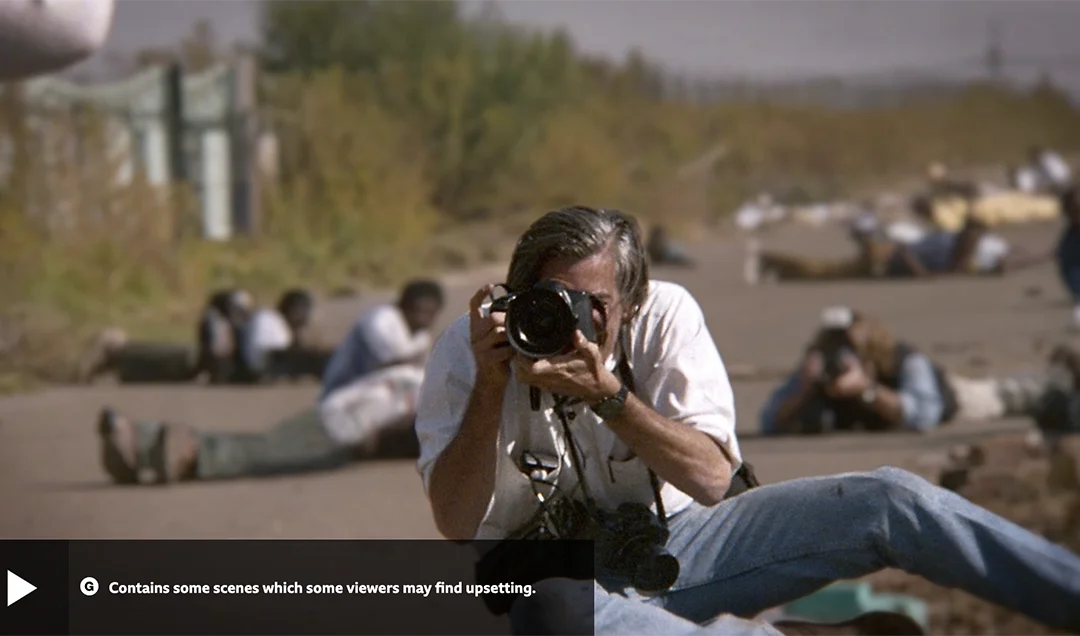
The BBC, in association with Agence France-Presse, the Associated Press, and Reuters, has launched a short film calling on the Israeli authorities to allow international journalists access to Gaza.

The film, narrated by veteran BBC journalist David Dimbleby, uses iconic news images to highlight the importance of independent journalism throughout key moments in recent history.

Deborah Turness, CEO of BBC News, says: “As journalists, we record the first draft of history. But in this conflict, reporting is falling solely to a small number of Palestinian journalists, who are paying a terrible cost.

“It is almost two years since October 7th when the world witnessed Hamas’ atrocities. Since then, a war has been raging in Gaza but international journalists are not allowed in. We must now be let into Gaza. To work alongside local journalists, so we can all bring the facts to the world.”

The film was premiered in New York on Wednesday 24 September at an event hosted by the Committee to Protect Journalists, to coincide with the United Nations General Assembly.

Independent international journalists are not currently allowed access to Gaza.

French 24, RFI and MCD secure Macron interview at the UN

French 24, RFI and MCD secure Macron interview at the UN

French 24, RFI and MCD secure Macron interview at the UN

INTERVIEW WITH EMMANUEL MACRON ON FRANCE 24, RFI, AND MCD

Wednesday, September 24 at 1800 Paris time/1600 GMT

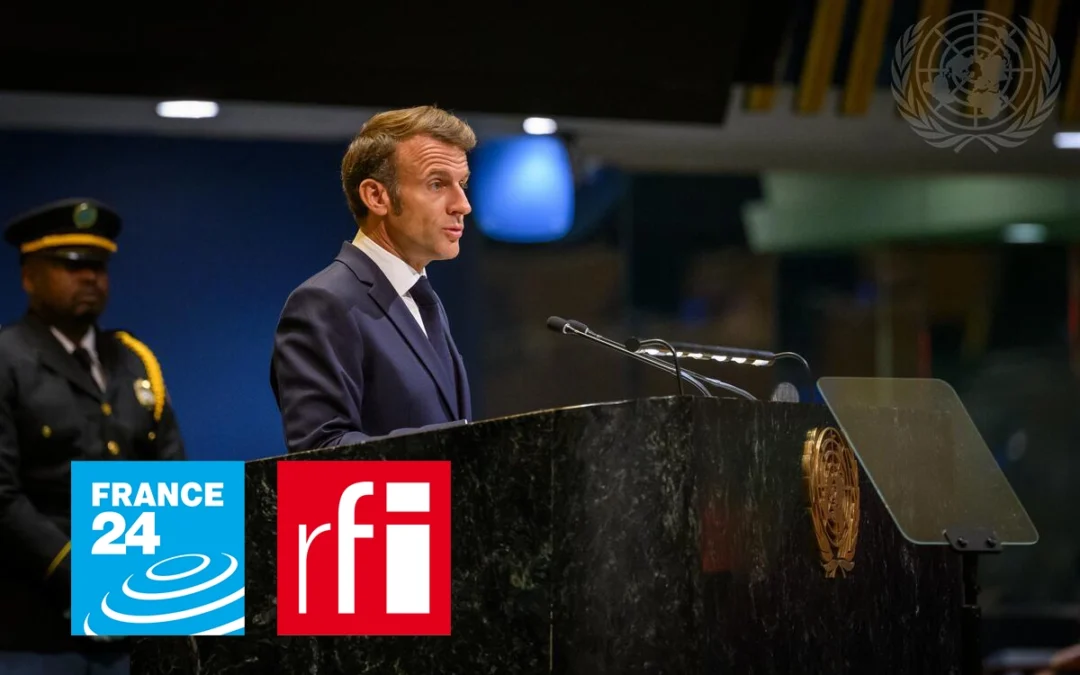
On the occasion of France’s official recognition of the State of Palestine at the 80th UN General Assembly in New York, the French President will grant an interview to France 24 and RFI.

He will answer questions from Elisabeth Allain (France 24) and Arnaud Pontus (RFI) on the recognition of Palestine and the situation in the Middle East, but also on other major international issues, such as the war in Ukraine, Europe’s relationship with Donald Trump, and the situation in Iran, amongst others.

 The interview will be broadcast multiple times across all four France 24 channels (in English, French, Arabic, and Spanish) and on RFI in French. Additionally, the full interview will be available with Arabic translation on MCD.

The interview will also be translated and broadcast in all RFI languages ​​(English, Chinese, Haitian Creole, Spanish, Hausa, Khmer, Kiswahili, Mandinka, Persian, Fulfulde, Portuguese, Brazilian Portuguese, Romanian, Russian, Vietnamese, Ukrainian).

Image: UN Photo/Loey Felipe


Rti helps spotlight need for media literacy in the AI era

Rti helps spotlight need for media literacy in the AI era

Rti helps spotlight need for media literacy in the AI era

Radio Taiwan International (Rti) joined with Taiwan’s Ministry of Foreign Affairs (MOFA), the American Institute in Taiwan, the Japan-Taiwan Exchange Association, the Australian Office, and the Canadian Trade Office in Taipei in hosting a Global Cooperation and Training Framework (GCTF) International Workshop from September 9 to 11, 2025. Themed “Building Democratic Resilience: The Role of Media Literacy in Defending the Information Space,” the event brought together nearly 140 government officials, NGO representatives, and scholars and experts from 26 countries.

The workshop highlighted the importance of strengthening media literacy to enhance democratic societies’ ability to counter disinformation and external interference. Discussions covered a wide range of topics, including election monitoring, fact-checking, the impact of emerging technologies, private sector responses, and social media literacy. The program also featured dedicated sessions spotlighting youth engagement and international cooperation. Young leaders shared hands-on experiences, while participants exchanged strategies and best practices for combating disinformation—underscoring the shared determination of democracies to confront information challenges together.

The organisers also arranged site visits for international participants to Radio Taiwan International and the National 228 Memorial Museum. These visits provided deeper insights into Taiwan’s efforts in advancing democracy and safeguarding information freedom, further enriching the workshop’s breadth and depth of exchanges

In her opening remarks at the event, Radio Taiwan International (Rti) Chairperson Cheryl Lai (pictured) noted that as of September 9 this year, Taiwan’s democracy has officially persisted longer than its period of martial law. She stressed that although Taiwan has become a vibrant democratic society since the transition and enjoys the benefits of free speech and free press, that does not mean there are no challenges. Lai pointed out that with the rise of AI, disinformation often spreads faster than it can be corrected. To improve societal resilience against fake news and cognitive warfare, it is therefore crucial to improve citizens’ media literacy.

Lai also pointed out that Rti has gained international recognition in recent years and that, as a key national infrastructure, it has been committed to combating information warfare.

The GCTF was first established by Taiwan and the U.S. in 2015 with the goal of leveraging Taiwan’s unique strengths and expertise to jointly organise training programs on issues of mutual concern. With the subsequent addition of Japan, Australia, and Canada as official partners, it has become a multilateral platform; over the past decade, GCTF has held more than 90 international workshops and attracted thousands of experts and officials from 135 countries.